
Germany’s Rhine And Danube Face Severe Low Water, Disrupting River Cruises And Travel Plans

Published
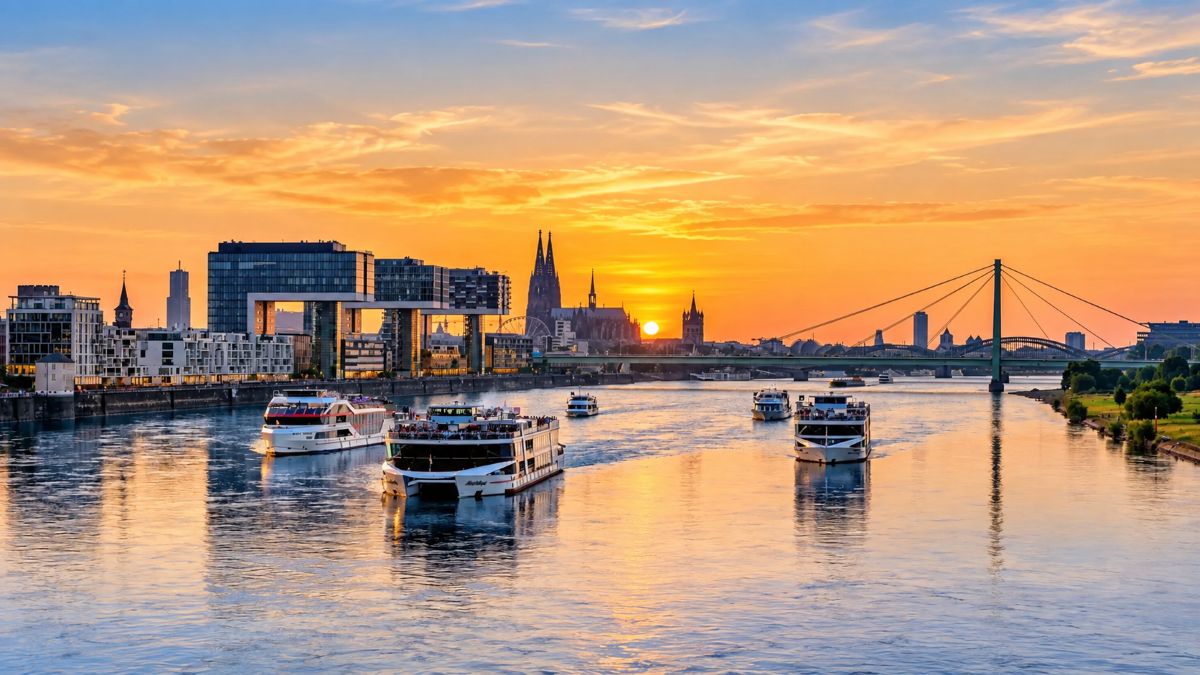
Germany’s river-cruise network is facing renewed disruption as exceptionally low water levels return to major waterways, with the Rhine and Danube experiencing particularly difficult conditions. After a brief improvement towards the end of August, water levels have fallen again, creating operational challenges for passenger vessels and forcing cruise operators to reconsider routes, ports and sailing schedules.
The latest situation is especially significant for travellers planning autumn river cruises through Germany and neighbouring European destinations. At Kaub on the Rhine, the gauge level fell to 2 centimetres on 25 September, below the previous low recorded in August. Other Rhine locations, including Düsseldorf, Duisburg-Ruhrort and Cologne, are also approaching or testing previous low-water records. On the Danube, the proportion of monitoring stations reporting extremely low water is even higher, while parts of the Weser are also affected.
Advertisement
Advertisement
Rhine And Danube Low Water Creates Fresh Travel Disruption
Low water does not mean that a river has completely dried up. Gauge readings are measured against an established reference point, meaning a negative reading can still correspond to a substantial depth of water.
For river cruise operators, however, the practical issue is the available depth of the navigable channel. As water levels fall, vessels have less clearance and may be unable to safely reach particular stretches, ports or locks. This can result in altered itineraries, replacement transport, port changes, ship transfers or cancellations.
Advertisement
Advertisement
The current distribution of extremely low readings illustrates the scale of the problem.
| River | Situation Reported On 25 September 2026 | Travel Impact |
|---|---|---|
| Rhine | Around 40.5% of monitoring points showing extremely low water | Route and port changes possible |
| Danube | Around 73.8% of monitoring points showing extremely low water | Significant cruise disruption |
| Weser | Around 35.6% of monitoring points showing extremely low water | Potential navigation restrictions |
| Elbe | Around 12% of monitoring points extremely low | Conditions comparatively improved |
| Oder | Around 10% of monitoring points extremely low | Conditions comparatively improved |
| Mosel | Mostly within normal range | Rhine conditions can still affect itineraries |
The figures demonstrate why travellers cannot assess cruise conditions solely by looking at the river where their ship is scheduled to operate. Connected waterways and port access can also determine whether an itinerary remains viable.
Advertisement
Advertisement
Cruise Operators Are Adjusting Autumn Itineraries
River cruise companies are monitoring water conditions closely because navigability can change rapidly. A difference of only a few centimetres can determine whether a vessel can safely pass a shallow section.
Some operators are continuing scheduled voyages while preparing alternatives. Possible changes include revised routes, different embarkation or disembarkation ports, modified excursions and transfers between ships.
Advertisement
Advertisement
Several cruises have already been cancelled during the low-water period, particularly on the Danube. Other voyages have been rerouted to Belgium, the Netherlands or alternative waterways when sections of the planned Rhine itinerary became inaccessible.
This creates a different travel experience for passengers even when a cruise itself continues. A journey marketed around particular German cities or landmarks may involve fewer scheduled stops, replacement excursions or overland transfers.
Grounding Incidents Highlight Navigation Risks
The operational difficulties are not theoretical. Earlier this summer, a river cruise vessel became stranded on a sandbank on the Rhine near Bonn, affecting passengers and crew and requiring assistance.
Another serious incident occurred on the Danube near Vidin in Bulgaria, where a cruise vessel ran aground and passengers and crew had to be evacuated.
Advertisement
Advertisement
Such incidents underline why operators cannot rely simply on historical sailing patterns. Water depth, the vessel’s draught, river conditions and the precise characteristics of each navigational section all influence decisions.
How Cruise Companies Are Responding
Operators are using different measures depending on the water levels and the route affected. Some are making daily assessments, while others have introduced temporary booking or rebooking arrangements for selected voyages.
A-Rosa has indicated that individual sections are being assessed according to current conditions, with alternative arrangements possible if an itinerary cannot be completed as originally planned.
Nicko Cruises has also reported cancellations and itinerary adjustments, particularly involving the Danube. Depending on circumstances, affected passengers may receive options involving rebooking, refunds or compensation arrangements connected with altered journeys.
Phoenix Reisen has sought to operate scheduled river cruises where conditions permit, while acknowledging that route changes may become necessary. Some previously planned Rhine and Mosel journeys have been redirected towards Belgium and the Netherlands.
Thurgau Travel has reported a combination of cancellations and itinerary changes across several routes. The company has also indicated that affected travellers can be offered alternative arrangements depending on the circumstances.
Advertisement
Advertisement
Viva Cruises has likewise had cancellations and amended itineraries, while continuing to monitor voyages scheduled for late September and October.
Who Decides Whether A River Cruise Can Sail
There is no single low-water threshold that automatically determines whether every river cruise must stop. The decision depends on the characteristics of the vessel, the navigable channel and conditions along the specific route.
Cruise operators and their nautical teams assess available information and determine whether a ship can safely navigate the planned section. Ship masters also have an important role because they must consider the actual conditions encountered by their vessel.
This differs from situations involving officially defined high-water restrictions, where specific regulatory measures can apply to navigation.
For passengers, this means a cruise may be technically possible while still requiring substantial itinerary changes.
What Travellers Should Know About Their Rights
Passengers whose river cruise is affected should distinguish between a minor itinerary adjustment and a substantial change to the contracted holiday.
Advertisement
Advertisement
If a complete package holiday is cancelled by the organiser, travellers generally do not have to accept an alternative booking and may be entitled to a refund under applicable package-travel rules.
For significant itinerary changes announced before departure, the consequences can depend on how substantially the contracted travel services have been altered. Missing one port on a multi-stop itinerary is not necessarily equivalent to losing a large proportion of the planned programme.
Low water may constitute circumstances beyond the operator’s control, but that does not automatically remove all consumer protections. The specific contractual arrangements, extent of the alteration and applicable travel law can affect the passenger’s rights.
Travellers should therefore obtain any proposed changes in writing and carefully examine the replacement itinerary before accepting an alternative.
What This Means For Germany River Cruise Travel
The renewed low-water conditions are an important consideration for travellers planning Rhine, Danube, Mosel or connected European river itineraries during the autumn season.
The Rhine remains particularly important because it connects several major cruise destinations and transport corridors. Conditions around Düsseldorf, Duisburg-Ruhrort, Cologne and Kaub can influence the operation of journeys even when other sections of a cruise route have adequate water.
Advertisement
Advertisement
The Danube presents an even more challenging picture, with a high proportion of monitoring locations reporting extremely low conditions.
For passengers with upcoming departures, flexibility is therefore increasingly important. Cruise schedules can change quickly, and the final itinerary may depend on conditions immediately before or during the voyage.
10 FAQs About Germany’s Low Water And River Cruises
1. Why are river cruises being affected in Germany?
Very low water levels are reducing the navigable depth available to cruise vessels on several major rivers.
2. Is the Rhine completely dry in some places?
No. A negative or very low gauge reading does not mean that the river has no water. It refers to a designated measurement reference point.
3. Which rivers are most affected?
The Rhine and Danube are facing particularly serious conditions, while the Weser is also experiencing widespread low water.
4. Can a river cruise still operate during low water?
Yes. Whether a voyage can operate depends on the vessel, route, available depth and conditions at individual river sections.
Advertisement
Advertisement
5. Can cruise companies change ports?
Yes. Low water can require changes to embarkation or disembarkation points and other planned stops.
6. Can a cruise itinerary be replaced completely?
In some circumstances, operators may redirect a voyage to alternative waterways or destinations.
7. Can passengers receive refunds after a cancellation?
Where a package holiday is cancelled by the organiser, applicable package-travel rules may provide a right to repayment.
8. Does missing one port automatically mean passengers can cancel for free?
Not necessarily. The legal consequences depend on the significance of the change to the contracted holiday.
9. Can low water cause a ship to run aground?
Yes. Reduced navigable depth can increase the risk of vessels encountering shallow areas or sandbanks.
10. Should travellers check their cruise before departure?
Yes. Passengers with upcoming Rhine or Danube cruises should monitor official updates from their tour operator because conditions can change rapidly.
Advertisement
