
Iceland Unites Poland and more as Gdansk Flights Open Exciting New Routes for Global Tourists

Published
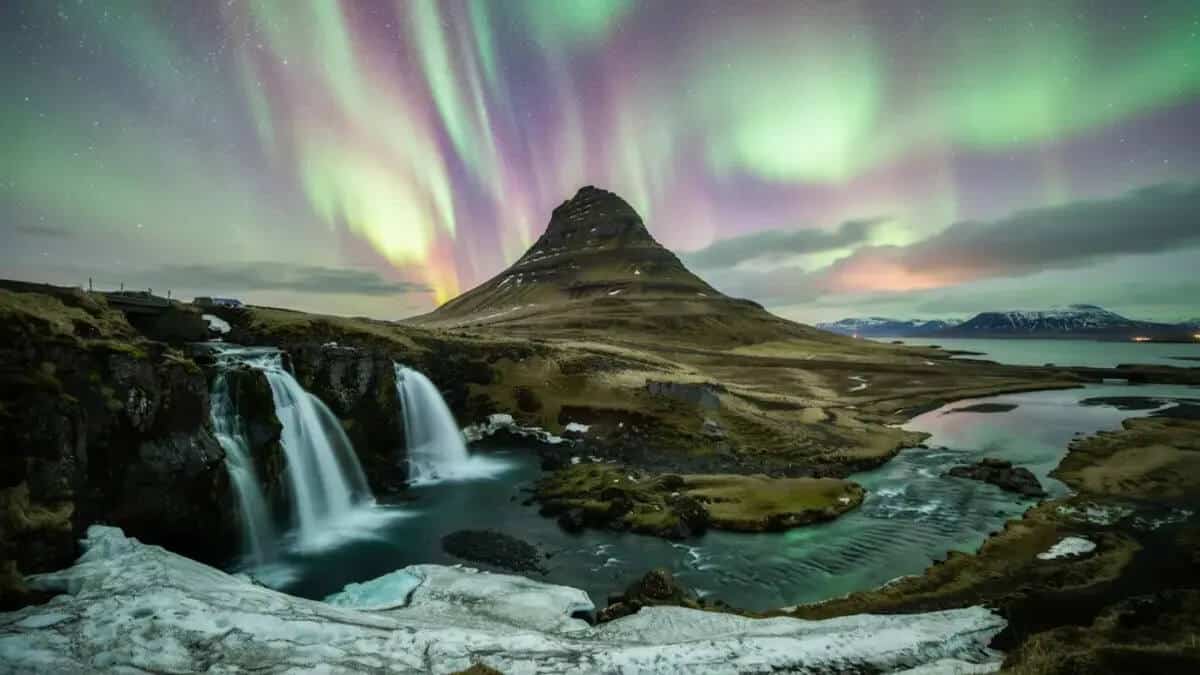
Iceland now unites Poland and more through an exciting new aviation link, as Gdansk flights open fresh routes for global tourists. The new Gdansk flights create fresh opportunities to explore Iceland, Poland and more destinations through one convenient travel network. Moreover, Iceland gives Poland another gateway for international journeys, while Gdansk gives tourists a new route towards Iceland and beyond. For global tourists, these routes could make multi-destination holidays easier to plan. Travel And Tour World explores how Iceland, Poland, Gdansk and more destinations are becoming connected through this new flight opportunity. Read the full story for essential travel insights.
Icelandair Flights to Poland Open New Tourism Routes Across Gdansk, Iceland and North America
Icelandair’s launch of its first Polish route gives travellers a new way to combine northern Poland with Iceland and onward North American journeys.
Advertisement
Advertisement
The Gdansk–Keflavik service began on September 18, 2026, with three weekly flights. An additional Saturday operation is scheduled for part of the winter season. The route is planned to operate through May 31, 2027. Icelandair uses Boeing 737 MAX 8 aircraft on the service.
For travellers, the importance of the new connection extends beyond a simple Poland-Iceland link. Gdansk becomes an entry point into Iceland’s tourism network, while Keflavik becomes a gateway for passengers travelling from northern Poland towards North America.
Advertisement
Advertisement
The connection is particularly relevant because Gdansk Airport already handled 7,393,016 passengers in 2025. That was more than 10% above its 2024 result. The airport also had 98 scheduled connections to 27 countries during 2025.
Icelandair Gdansk Route: Key Numbers Travellers Should Know
The new service operates between Gdansk Lech Walesa Airport and Keflavik International Airport.
Advertisement
Advertisement
Gdansk Airport states that the initial timetable has flights on Mondays, Thursdays and Fridays. A Saturday flight is planned from October 25 through March 15. The published timings also provide daytime operations between the two airports.
Keflavik is located around 50 kilometres from Reykjavik. It is Icelandair’s principal hub and handles international flights connecting Iceland with Europe and North America.
Passengers continuing to another destination in Iceland should remember that domestic flights use Reykjavik Airport rather than Keflavik. Travellers therefore need to allow time for the transfer between the two airports.
New Gdansk-Keflavik Route: Important Statistics
| Item | Detail |
|---|---|
| Route | Gdansk–Keflavik |
| First operating date | September 18, 2026 |
| Initial frequency | 3 flights weekly |
| Additional winter frequency | Saturday service |
| Aircraft | Boeing 737 MAX 8 |
| Planned operating period | September 18, 2026–May 31, 2027 |
| Gdansk airport passengers, 2025 | 7,393,016 |
| Scheduled Gdansk connections, 2025 | 98 |
| Countries served by scheduled routes from Gdansk, 2025 | 27 |
| Airlines operating scheduled services from Gdansk, 2025 | 11 |
| Iceland foreign visitors, 2025 | Nearly 2.3 million |
| Iceland tourism share of GDP, 2025 | 8.8% |
| Iceland tourism consumption, 2025 | Nearly ISK 914 billion |
The Gdansk airport figures come from the airport’s annual 2025 results. Iceland’s tourism figures come from the Icelandic Tourist Board and Statistics Iceland.
Five-Year Tourism Comparison: Iceland Shows a Major Recovery
Iceland provides the strongest national tourism data for understanding the potential significance of the new connection.
The Icelandic Tourist Board records foreign visitors using passenger departure and entry measurements. The methodology changed during the pandemic period, so the figures should be interpreted within that context.
Advertisement
Advertisement
In 2021, Iceland recorded around 700,000 foreign passenger departures through Keflavik. About 95% of the year’s departures occurred during the second half after restrictions were eased.
The number climbed sharply in 2022. Almost 1.7 million international visitors came to Iceland, more than one million above the 2021 figure. Visitors from the United States represented about 27% of the total. Poland was also among the five largest source markets that year.
The recovery continued in 2023, when Iceland recorded about 2.2 million foreign passenger departures. The Icelandic Tourist Board subsequently revised the figures following a statistical review.
In 2024, the total remained above 2.2 million. In 2025, Iceland recorded nearly 2.3 million foreign visitors across all entry points. Approximately 2.27 million arrived through Keflavik, representing 98.7% of the total.
Iceland Foreign Visitor Comparison
| Year | Foreign visitors/passengers | Key tourism development |
|---|---|---|
| 2021 | About 0.7 million | Recovery began after international travel restrictions |
| 2022 | Nearly 1.7 million | Strong reopening and long-stay travel recovery |
| 2023 | About 2.2 million | Visitor numbers approached pre-pandemic levels |
| 2024 | About 2.29 million | Tourism remained at a high level |
| 2025 | Nearly 2.3 million | Second-highest annual result; Keflavik handled about 2.27 million |
The figures are based on Icelandic Tourist Board measurements and should not be directly compared with hotel guest counts because they represent different statistical concepts.
Gdansk Tourism Has Also Expanded Strongly
Gdansk provides another important indicator for the new route.
Advertisement
Advertisement
The city recorded 3,036,995 visitors in 2021, according to the Gdansk municipal tourism report. Domestic visitors represented about 86% of the total. Foreign visitors were led by Germans and Scandinavian travellers.
In 2022, Gdansk welcomed 3.728 million guests. Domestic visitors accounted for close to 81% of the tourism movement.
The city reached another record in 2023. Gdansk reported 4.1 million tourists and visitors, including more than 968,000 international guests. The city also recorded 1.5 million museum and exhibition visits during the year.
The 2024 municipal report recorded approximately 4.5 million tourists, an increase of 11% from the previous year.
Statistics Poland separately reported that Gdansk accommodated approximately 2.9 million tourists in accommodation establishments during 2025. This figure should not be confused with the city’s broader visitor estimate because day visitors are not measured in the same way.
Gdansk Tourism Comparison
| Year | Gdansk tourism indicator | Important detail |
|---|---|---|
| 2021 | 3,036,995 visitors | About 86% domestic |
| 2022 | 3.728 million visitors | About 81% domestic |
| 2023 | 4.1 million visitors | More than 968,000 international |
| 2024 | 4.5 million tourists | About 11% above 2023 |
| 2025 | 2.9 million accommodated tourists | Statistics Poland accommodation measure |
The difference between the 2025 accommodation figure and earlier municipal visitor totals illustrates why tourism statistics need to be compared by methodology. A citywide visitor survey can include day visitors, while accommodation statistics count people using registered lodging establishments.
Advertisement
Advertisement
Gdansk Could Become the Main Polish Tourism Beneficiary
Gdansk is the destination most directly connected with the new Icelandair service.
The city combines Baltic coastline, historic architecture, museums, maritime heritage and a large restaurant scene. The official Gdansk tourism organisation lists the Main Town, Neptune’s Fountain, Main Town Hall, Artus Court, the European Solidarity Centre and the Museum of the Second World War among major attractions.
Travellers arriving from Iceland or North America can comfortably create a two- or three-night city break before continuing through Poland.
A first day can focus on the historic centre. Visitors can walk around Długi Targ, see Neptune’s Fountain and explore Artus Court. The second day can focus on maritime and twentieth-century history.
The waterfront provides another useful area for travellers. Motlawa riverfront walks can be combined with museums and restaurants. Travellers seeking quieter surroundings can visit Oliwa Park or Sobieszewo Island.
Food is another reason to extend a stay. The official tourism organisation promotes local dishes, seasonal ingredients, seafood and modern interpretations of regional cuisine.
Advertisement
Advertisement
Visitors can choose accommodation in the historic centre for easy access to attractions. Beach-oriented travellers can stay around the coastal districts, while longer-stay visitors can consider apartments or accommodation around Wrzeszcz and other connected districts. The official tourism organisation maintains listings covering hotels, apartments, hostels and seaside accommodation.
Suggested Three-Day Gdansk Plan
| Day | Morning | Afternoon | Evening |
|---|---|---|---|
| Day 1 | Main Town and Neptune’s Fountain | Artus Court and waterfront | Polish and Pomeranian dinner |
| Day 2 | Museum of the Second World War | European Solidarity Centre | Motlawa riverside |
| Day 3 | Oliwa Park | Sobieszewo Island or Baltic beach | Local food and departure preparation |
The official tourism organisation also promotes Gdansk’s Tourist Card, which can provide access or discounts at selected attractions and restaurants.
Pomerania Could Benefit Beyond Gdansk
The new route does not have to stop at the city boundary.
Travellers arriving in Gdansk can use the city as a base for exploring the wider Pomeranian region. This creates opportunities for Sopot, Gdynia, coastal communities and inland destinations.
The strongest immediate extension is the Tricity area. Gdansk, Sopot and Gdynia can be combined within one itinerary, allowing travellers to experience historic architecture, resort culture and maritime attractions.
Sopot works particularly well for visitors wanting a coastal break. Gdynia provides a more modern maritime atmosphere and access to the wider Baltic coast.
Advertisement
Advertisement
The wider region also offers beaches, nature areas and cultural attractions. This matters because Icelandic and North American visitors may be particularly interested in combining urban sightseeing with coastal experiences.
Statistics Poland’s coastal-area data underline the scale of existing summer tourism. During July and August 2025, Gdansk recorded 372,000 accommodated tourists and approximately 952,500 overnight stays. Across Poland’s coastal areas, more than 2.12 million tourists were accommodated during those two months.
Pomeranian Coastal Tourism Data
| Destination/area | July-August 2025 tourists | Overnight stays |
|---|---|---|
| Gdansk | 372,000 | 952,500 |
| Entire Polish coastal area | 2.123 million | 8.952 million |
| Kolobrzeg urban gmina | 176,400 | 985,800 |
| Wladyslawowo | — | 559,100 |
| Mielno | — | 555,700 |
| Swinoujscie | — | 529,100 |
| Rewal | — | 683,800 |
Gdansk therefore has a substantial existing summer tourism base, while the Icelandair route introduces a new international market during a schedule that also includes winter operations.
Reykjavik and the Capital Region Stand to Gain from Polish Access
Reykjavik is the most important Icelandic urban destination connected indirectly by the new route.
Keflavik is Icelandair’s international hub, while Reykjavik provides the main concentration of accommodation, culture, restaurants, museums and geothermal swimming facilities.
The Icelandic Tourist Board reported that 86% of foreign travellers visited the capital region during 2025. That made it the most visited region in the country in the annual survey.
Advertisement
Advertisement
The same research found that 92.3% of international travellers visited Iceland for holidays. The average stay was 7.1 nights.
This provides useful planning information for passengers arriving through Keflavik. A short city break can work as part of a longer Iceland itinerary rather than replacing regional travel.
Reykjavik has 18 geothermal swimming pools, according to the official city tourism organisation. Visitors can combine geothermal bathing with museums, galleries, Harpa, the waterfront and the city’s restaurant districts.
For accommodation, travellers can select central Reykjavik for walkability and public transport. Visitors planning excursions can also consider the wider capital area.
Food choices range from seafood and lamb to modern Nordic cuisine. Travellers should reserve popular restaurants during busy periods and consider traditional Icelandic dishes alongside contemporary menus.
Reykjavik Traveller Plan
| Day | Main experience | Suggested area |
|---|---|---|
| Day 1 | City centre, harbour and museums | Central Reykjavik |
| Day 2 | Geothermal pool and cultural attractions | Reykjavik |
| Day 3 | Golden Circle excursion | Thingvellir, Geysir area and Gullfoss |
| Day 4 | South Coast | Waterfalls and black-sand coastline |
| Day 5 | Reykjavik or Reykjanes | Flexible weather day |
| Day 6 | Northern or southern Iceland extension | Regional overnight |
| Day 7 | Return towards Keflavik | Departure |
Travellers should not assume that a seven-day itinerary must cover the entire country. Weather and road conditions can change rapidly, and the official Reykjavik visitor guidance recommends checking SafeTravel before journeys into remote areas.
Advertisement
Advertisement
South Iceland Could Capture Longer-Stay Visitors
South Iceland is another potential beneficiary because it was visited by 79% of international tourists in 2025, according to the Icelandic Tourist Board.
The region offers some of Iceland’s best-known natural attractions and can be reached as part of a road trip from the capital area.
Travellers can plan visits around waterfalls, volcanic landscapes, glaciers, geothermal areas and the country’s southern coastline. The region is particularly suited to visitors who want nature rather than a purely urban holiday.
Accommodation ranges from hotels and guesthouses to countryside properties. A regional overnight stay can reduce driving time and create more flexibility for weather-dependent sightseeing.
Food planning should focus on local produce and regional restaurants. Travellers should also plan fuel stops carefully when driving between communities.
The Icelandic Tourist Board’s 2025 figures show that 79% of international visitors reached South Iceland. That share demonstrates that the region already has a substantial international tourism base.
Advertisement
Advertisement
A new Polish connection could therefore make it easier for travellers to include South Iceland in a first or second visit, although the route itself does not guarantee additional visitor numbers.
Reykjanes Becomes Important Because of Keflavik Access
Reykjanes has a special position in the new travel network because Keflavik International Airport is located there.
The Icelandic Tourist Board reported that 65% of international visitors visited Reykjanes during 2025.
Travellers can use the area for a short stop before heading towards Reykjavik or other regions.
The peninsula offers coastal scenery, volcanic landscapes and geothermal experiences. It can work particularly well for travellers with a short Iceland itinerary.
However, visitors should check current safety information before travelling around areas affected by volcanic or geological activity. The Icelandic Tourist Board has repeatedly provided travel information concerning Reykjanes volcanic activity and advises travellers to follow current official guidance.
Advertisement
Advertisement
For travellers with limited time, a Reykjanes stop can be combined with airport transfer planning. Those staying longer can use Reykjavik as their primary base.
North Iceland Can Benefit from Longer Iceland Itineraries
North Iceland is less directly connected to the new Gdansk flight because international passengers first arrive through Keflavik.
However, the region becomes relevant when visitors extend their stay beyond the capital and south.
The Icelandic Tourist Board reported that 34% of international visitors reached North Iceland during 2025.
Travellers can build a longer itinerary around Akureyri and surrounding natural attractions. The region is suited to visitors interested in landscapes, outdoor activities and quieter travel experiences.
A seven-to-ten-night Iceland itinerary can therefore spread tourism beyond Reykjavik and South Iceland.
Advertisement
Advertisement
The practical requirement is time. Travellers should not attempt to combine every region into a short visit, particularly during winter.
Weather, daylight and road conditions should influence the itinerary. Flexible bookings can be valuable when planning longer self-drive journeys.
North America Becomes the Wider Connectivity Story
The new Gdansk service also has importance for travellers whose final destination is outside Iceland.
Gdansk Airport lists onward connections through Keflavik to major North American cities including New York, Washington, D.C., Chicago and Miami. Toronto and Vancouver are also included among Canadian destinations.
Icelandair’s published 2026-27 schedule shows a much wider North American network. It includes destinations such as Baltimore, Boston, Chicago, Denver, Miami and Minneapolis-St Paul.
The network creates several itinerary possibilities.
Advertisement
Advertisement
A traveller could start in Gdansk, spend several days in Poland, fly to Iceland, take a short Iceland stopover and then continue towards North America.
Another traveller could begin in North America, connect through Keflavik and spend several days in Gdansk before continuing elsewhere in Europe.
Example Multi-Destination Itinerary
| Day | Destination | Main purpose |
|---|---|---|
| 1 | Gdansk | Arrival and Old Town |
| 2 | Gdansk | History and culture |
| 3 | Gdansk/Sopot | Baltic coast |
| 4 | Gdansk–Keflavik | Iceland transfer |
| 5 | Reykjavik | City and geothermal experience |
| 6 | Golden Circle | Nature |
| 7 | South Iceland | Waterfalls and coastline |
| 8 | Reykjavik | Flexible weather day |
| 9 | Keflavik | North American connection |
| 10 | New York/Chicago/Toronto etc. | Continue wider journey |
Icelandair also promotes stopovers of up to seven days for eligible Europe-North America itineraries, allowing passengers to turn a connection into a short Iceland holiday.
Five-Year Gdansk Airport Passenger Recovery
Airport data provide another useful measurement of how the travel market around Gdansk has developed.
Gdansk Airport handled 2,154,563 passengers in 2021. The number more than doubled in 2022 to 4,576,705.
In 2023, the airport handled 5,907,280 passengers. That was 29.1% above 2022 and 9.9% above the previous 2019 record.
Advertisement
Advertisement
The airport reached 6,714,149 passengers in 2024. Passenger traffic was 13.7% higher than in 2023.
The 2025 total reached 7,393,016 passengers, representing another year of record traffic.
Gdansk Airport Five-Year Passenger Table
| Year | Passengers | Change from previous year |
|---|---|---|
| 2021 | 2,154,563 | +25.9% vs 2020 |
| 2022 | 4,576,705 | +112% vs 2021 |
| 2023 | 5,907,280 | +29.1% vs 2022 |
| 2024 | 6,714,149 | +13.7% vs 2023 |
| 2025 | 7,393,016 | More than 10% vs 2024 |
This trajectory does not prove that the Icelandair service will generate a specific number of additional visitors. It does show that the airport has developed a large and expanding passenger base before the new carrier entered the Polish market.
Iceland Tourism Economy Adds Context to the New Route
Tourism has substantial economic importance for Iceland.
Statistics Iceland reported that tourism accounted for 8.8% of Iceland’s GDP in 2025, compared with 8.2% in 2024. Tourism generated an estimated 30.5 million working hours, representing approximately 9.5% of all hours worked.
Total tourism consumption reached nearly ISK 914 billion in 2025, an increase of 4.2% from the previous year.
Advertisement
Advertisement
Accommodation also remained significant. Iceland recorded approximately 10.16 million overnight stays across all accommodation types in 2025, according to preliminary Statistics Iceland figures.
The Icelandic Tourist Board reported approximately 8.8 million foreign overnight stays in 2025. Foreign visitors therefore represented the overwhelming majority of registered tourism accommodation nights.
Iceland Tourism Economy: 2025 Snapshot
| Indicator | 2025 figure |
|---|---|
| Foreign visitors | Nearly 2.3 million |
| Keflavik foreign visitors | About 2.27 million |
| Average stay | 7.1 nights |
| Foreign overnight stays | About 8.8 million |
| Total registered overnight stays | More than 10 million |
| Tourism share of GDP | 8.8% |
| Tourism working hours | 30.5 million |
| Share of total working hours | About 9.5% |
| Tourism consumption | Nearly ISK 914 billion |
| Holiday purpose | 92.3% of foreign visitors |
These figures provide context for the new air connection but should not be interpreted as forecasts for the Gdansk route.
Where Travellers Should Stay
The choice of accommodation depends heavily on the type of journey.
In Gdansk, the historic centre works well for first-time visitors who want to walk between major attractions. Beach districts provide a different experience for travellers seeking a coastal stay.
For longer Polish itineraries, accommodation near transport links can reduce transfer times.
Advertisement
Advertisement
In Reykjavik, central accommodation is useful for travellers relying on walking and public transport. Visitors planning self-drive tours can also consider accommodation outside the city.
For the Golden Circle, countryside accommodation can reduce repeated journeys back to Reykjavik. Official Iceland tourism listings include hotels, guesthouses and other accommodation options in regional destinations.
Where Travellers Should Eat
Gdansk offers a particularly broad food experience.
Travellers can explore Pomeranian flavours, seafood, seasonal produce and contemporary interpretations of traditional dishes. The official Gdansk tourism organisation maintains culinary information covering restaurants, cafes, street food and Michelin-recognised establishments.
In Iceland, visitors should try local seafood, lamb, dairy products and contemporary Nordic dishes.
Reykjavik provides the widest choice, while countryside destinations generally offer smaller menus and locally sourced ingredients.
Advertisement
Advertisement
Travellers should remember that restaurant prices can differ considerably between Poland and Iceland. Budget planning is therefore important when combining the two destinations.
Practical Planning Advice for the New Route
Travellers should first verify the exact operating date because the route is seasonal and its published frequency changes during the winter schedule.
Passengers making a North American connection should book the complete itinerary carefully. A protected connection can simplify baggage and disruption management compared with unrelated tickets.
Travellers continuing within Iceland should remember that Keflavik is an international airport. Domestic Icelandic flights operate from Reykjavik Airport.
Visa and entry rules must be checked according to nationality and travel purpose. Travellers should use official Icelandic and Polish government sources for the latest requirements.
Weather planning is equally important in Iceland. Conditions can change quickly, and roads can close. Official Reykjavik visitor guidance recommends checking SafeTravel before travelling into remote areas.
Advertisement
Advertisement
A Seven-Day Poland-Iceland Travel Plan
Day 1: Arrive in Gdansk
Check into accommodation near the historic centre. Walk around Main Town and Długi Targ. Finish the evening with regional food.
Day 2: Discover Gdansk’s History
Visit the Museum of the Second World War and European Solidarity Centre. Spend the evening around the Motlawa waterfront.
Day 3: Explore the Baltic Coast
Travel towards Sopot or explore Gdansk’s beaches. Visitors with more time can extend the journey into the wider Pomeranian region.
Day 4: Fly to Keflavik
Take the Icelandair service to Keflavik. Continue to Reykjavik and use the evening for a relaxed city walk.
Day 5: Explore Reykjavik
Visit museums, the harbour and a geothermal swimming pool. Enjoy an Icelandic dinner.
Day 6: Golden Circle
Plan a day trip around the Golden Circle. Keep the itinerary flexible because weather conditions can change.
Advertisement
Advertisement
Day 7: South Iceland or Departure
Travellers with a late departure can explore part of South Iceland. Those continuing to North America should return towards Keflavik with sufficient transfer time.
Which Destinations Are Most Relevant to the New Connection?
| Destination | Connection relevance | Key tourism attraction | 2025 tourism evidence |
|---|---|---|---|
| Gdansk | Direct | Historic city, Baltic coast, museums | 2.9m accommodated tourists |
| Pomerania | Regional extension | Beaches, Tricity, nature | Gdansk recorded 952,500 summer overnight stays |
| Reykjavik/Capital Region | Main Iceland gateway | Culture, geothermal pools, dining | 86% of Iceland visitors visited region |
| South Iceland | Major road-trip extension | Waterfalls, volcanic scenery, coastline | 79% visitor reach |
| Reykjanes | Airport-region extension | Geothermal and volcanic landscapes | 65% visitor reach |
| North Iceland | Longer itinerary | Nature and regional experiences | 34% visitor reach |
| North America | Onward connection | Major US and Canadian cities | Multiple Icelandair destinations |
The percentages for Iceland represent the share of foreign visitors who visited each region during their Iceland trip. They are not individual arrival totals and therefore should not be added together.
What the New Route Means for Global Travellers
The Icelandair Gdansk connection creates a useful travel bridge between the Baltic coast, Iceland and North America.
For Polish travellers, it provides direct access to Iceland. For Icelandic visitors, it creates a new route into northern Poland. For North American travellers, it adds Gdansk to the range of European destinations accessible through Icelandair’s network.
The biggest opportunity for tourists is itinerary flexibility.
A traveller does not have to choose between Poland and Iceland. The two can become parts of one holiday.
Advertisement
Advertisement
A longer journey can then continue to North America, subject to the relevant schedule, fare and entry requirements.
The statistics also show why both sides of the route are significant tourism markets. Gdansk has moved from 2.15 million airport passengers in 2021 to more than 7.39 million in 2025. Iceland has recovered from around 700,000 foreign passengers in 2021 to nearly 2.3 million visitors in 2025.
The new service therefore arrives against two established tourism and aviation networks rather than creating a connection between two small markets.
For travellers, that means more itinerary possibilities, more ways to combine destinations and a practical new gateway between northern Poland, Iceland and transatlantic journeys.
Conclusion
Iceland’s new connection with Poland creates another exciting option for global tourists planning multi-destination journeys. With Gdansk flights linking travellers to Keflavik, visitors can combine Poland’s Baltic charm with Iceland’s dramatic landscapes and potentially continue towards North America. The new route also gives travellers greater flexibility when designing European and transatlantic holidays. As schedules develop, tourists should check official airline and airport information before booking. Travel And Tour World will continue following how this new connection shapes travel between Iceland, Poland and destinations beyond. For travellers seeking fresh routes and memorable experiences, Gdansk and Iceland now offer an intriguing combination to explore.
Advertisement
