
Georgetown to Port Kaituma Ferry Disaster Rocks Guyana as MV Barima Sinks with 116 People on Board, Massive Rescue Operation Raises Fresh Questions Over Maritime Travel Safety – What Travellers, Cruise Operators and the Global Ferry Industry Need to Know

Published
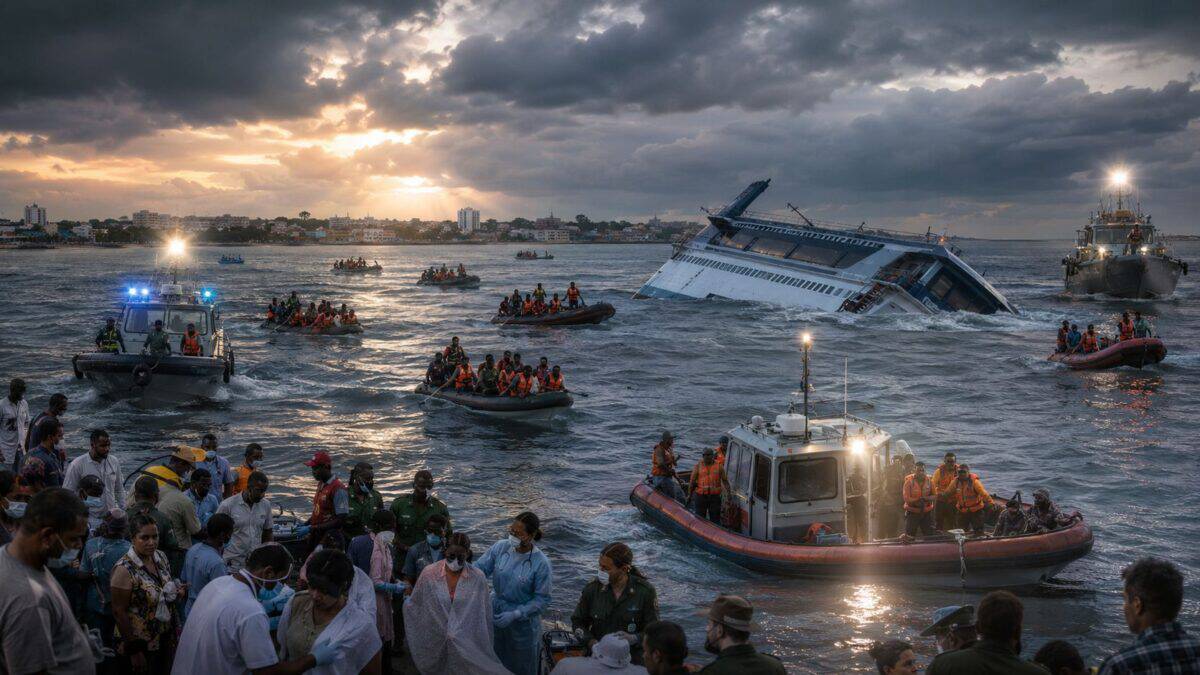
The Guyana ferry sinking has sparked an extensive maritime search and rescue operation after the MV Barima, carrying 116 passengers, went down off the country’s northern coastline during a scheduled voyage between Georgetown and Port Kaituma. The incident unfolded late on Saturday after the vessel transmitted a distress signal to the national coast guard, prompting an immediate emergency response involving government agencies and privately operated boats. At least 66 people were rescued during the initial phase of the operation, while authorities continued searching for those still unaccounted for as daylight improved visibility over the Atlantic waters. The sinking has rapidly become one of the most significant maritime emergencies in Guyana in recent years, drawing attention not only to the fate of those onboard but also to the resilience and safety standards of passenger ferry services connecting some of the country’s most remote communities.
The incident carries significance far beyond Guyana’s domestic transport network. The MV Barima serves as a critical passenger and cargo connection for the North West District, a region where waterways remain the primary transport corridor for thousands of residents, workers and visitors. Consequently, the disruption has immediate implications for regional mobility, tourism, commercial supply chains and essential travel. While emergency responders continue their efforts, the accident has reignited wider discussions across the travel and maritime industries regarding vessel maintenance, ageing passenger fleets, emergency preparedness, life-saving equipment, and the operational challenges of providing reliable ferry services in geographically isolated destinations.
Advertisement
Advertisement
Emergency Rescue Operation Unfolds After Distress Alert
A routine coastal passenger voyage transformed into a major maritime emergency when the MV Barima issued a distress call shortly after 11:00 pm local time while travelling along Guyana’s north-western coastline.
The vessel had departed Georgetown shortly after 3:00 pm, operating one of the country’s regular scheduled ferry services towards Port Kaituma, a remote settlement situated within Guyana’s North West District.
Advertisement
Advertisement
Within minutes of receiving the distress signal, Guyana’s coast guard initiated an emergency response, deploying rescue assets towards the reported location. Nearby privately operated vessels also joined the operation, illustrating the collaborative nature of maritime emergency response in coastal Guyanese waters where commercial, fishing and government vessels frequently assist one another during incidents.
Rescue efforts continued throughout the night despite darkness and challenging operating conditions at sea. Survivors were gradually located, recovered from the water or rescue craft, and transported safely ashore, where medical personnel were prepared to provide immediate assessment and treatment.
Advertisement
Advertisement
Authorities confirmed that 66 passengers had been rescued during the initial operation, while search efforts remained active for those who had not yet been accounted for.
The operation continued into daylight, significantly improving visibility and expanding the search area for rescue crews.
Advertisement
Advertisement
The Incident at a Glance
| Key Information | Details |
|---|---|
| Vessel | MV Barima |
| Country | Guyana |
| Voyage | Georgetown – Port Kaituma |
| Passengers on board | 116 |
| Distress call received | Shortly after 11:00 pm (local time) |
| Initial rescue response | Guyana Coast Guard and private vessels |
| Confirmed rescued (initial official update) | 66 |
| Search operation | Continued after sunrise |
| Primary vessel role | Passenger and cargo ferry |
A Lifeline Connecting Remote Communities
Unlike ferry services operating primarily for tourism or short commuter routes in many countries, the MV Barima performs a much broader transport function within Guyana.
The ferry forms part of a transport network linking the capital with settlements that remain difficult to access by road. Large sections of Guyana’s north-west depend on maritime transport because extensive rainforest, river systems and limited highway infrastructure restrict overland connectivity.
For residents of Port Kaituma and neighbouring communities, scheduled ferry services represent more than passenger transport. They facilitate the movement of food supplies, medicines, commercial goods, construction materials and government services while also enabling business travel, family visits and regional tourism.
The temporary loss of a vessel operating such a strategically important route therefore extends beyond the immediate emergency, affecting economic activity and mobility throughout the wider region.
Advertisement
Advertisement
Medical Teams Mobilised as Survivors Reach Shore
Emergency planning shifted rapidly from maritime rescue to medical response as survivors began arriving at landing points.
Healthcare personnel were dispatched to receive rescued passengers, conduct medical assessments and provide treatment where necessary. Maritime accidents frequently expose survivors to prolonged immersion, dehydration, shock, exhaustion and minor injuries, making immediate medical evaluation a standard component of rescue operations even when visible injuries appear limited.
Coordinated emergency management between rescue services and medical authorities remains especially important in coastal regions where specialist healthcare facilities may be located significant distances from the rescue site.
The swift deployment of medical teams reflected established emergency procedures designed to stabilise survivors before any onward transportation to larger healthcare facilities became necessary.
Safety Equipment on Board Draws Immediate Attention
As authorities concentrated on rescue efforts, official information regarding the vessel’s emergency equipment became an important aspect of the unfolding incident.
According to government information released following the sinking, the ferry carried:
Advertisement
Advertisement
| Emergency Equipment | Quantity |
|---|---|
| Life jackets | 250 |
| Rigid lifeboats | 2 |
| Inflatable life rafts | 6 |
The reported inventory indicates that the vessel carried significantly more life jackets than the total number of passengers travelling at the time of the incident.
Such equipment forms a fundamental element of passenger vessel safety under internationally recognised maritime practices. However, the presence of emergency equipment alone does not determine the outcome of a maritime accident. Factors including crew training, emergency communication, weather conditions, evacuation procedures, passenger response and the speed of rescue operations all influence survival rates.
Investigators are expected to assess how emergency procedures unfolded during the incident alongside the deployment and effectiveness of life-saving equipment.
MV Barima’s Historic Service Comes Under Fresh Scrutiny
The sinking has also directed attention towards the vessel itself.
Available maritime records indicate that the MV Barima was originally built in 1939, making it one of the older passenger vessels operating within Guyana’s domestic maritime fleet.
Measuring approximately 40 metres in length, the ferry has long served the Georgetown–Port Kaituma route, transporting both passengers and cargo across coastal waters that remain essential to Guyana’s national transport system.
Advertisement
Advertisement
Older vessels are not automatically considered unsafe. Around the world, passenger ships can remain operational for decades provided they undergo rigorous maintenance, structural inspections, regulatory certification and periodic upgrades. Nevertheless, incidents involving ageing vessels frequently prompt renewed public discussion regarding fleet modernisation and long-term investment in replacement programmes.
Maritime investigators will likely examine the vessel’s maintenance history, operational condition, inspection records and the sequence of events leading to the emergency as part of the official investigation.
Why This Maritime Emergency Matters Beyond Guyana
Although Guyana has increasingly gained international recognition through rapid economic expansion driven by its offshore energy sector, large sections of the country continue to rely on rivers and coastal shipping for everyday mobility.
This reality makes passenger ferries indispensable infrastructure rather than optional transport services.
For travellers exploring Guyana’s interior regions, domestic ferry services remain among the few practical transport options connecting remote settlements with the capital and regional centres. Consequently, any disruption to these services can affect tourism itineraries, commercial travel, government logistics and local communities simultaneously.
The Guyana ferry sinking therefore represents more than an isolated transport accident. It highlights the continuing importance of resilient maritime infrastructure for countries where waterways remain central to national connectivity while reinforcing the critical role of emergency preparedness in protecting passengers travelling across essential domestic ferry routes.
Advertisement
Advertisement
Guyana Ferry Sinking Highlights the Critical Role of Maritime Transport in National Connectivity
The Guyana ferry sinking has once again underscored the country’s unique transport geography. Unlike many destinations where highways and railways dominate domestic mobility, Guyana depends heavily on a combination of rivers, coastal waterways and limited road infrastructure to connect distant communities.
Although the country’s economy has expanded rapidly over the past decade, particularly through offshore oil production, transport infrastructure remains unevenly distributed. Vast rainforest, extensive river systems and sparsely populated regions mean that ferries continue to provide an essential public service rather than simply a convenient travel option.
For residents living in the North West District, regular ferry services enable access to employment, education, healthcare, government services and commercial markets. Travellers visiting the region also rely on these vessels to reach destinations that remain inaccessible by conventional road transport.
Consequently, any disruption to scheduled ferry operations creates immediate logistical challenges extending far beyond passenger inconvenience.
Georgetown–Port Kaituma Route Remains One of Guyana’s Most Important Coastal Links
The route served by the MV Barima plays a strategic role in Guyana’s domestic transport network.
Port Kaituma, located in the country’s Barima-Waini region, lies hundreds of kilometres from Georgetown. While charter flights serve some travellers, air services remain comparatively expensive and weather dependent. Ferry transport therefore continues to provide one of the most practical and affordable travel options for residents, workers and visitors.
Advertisement
Advertisement
The service also supports the movement of commercial cargo, helping maintain supply chains into communities where alternative freight routes remain limited.
A disruption along this corridor affects multiple sectors simultaneously, including retail businesses, healthcare deliveries, educational travel, government administration and regional tourism.
Strategic Importance of the Georgetown–Port Kaituma Ferry Corridor
| Category | Importance for the Region |
|---|---|
| Passenger mobility | Primary transport option for many residents |
| Tourism | Connects visitors to remote destinations and eco-tourism areas |
| Cargo transport | Delivers food, fuel, medicines and commercial goods |
| Local economy | Supports trade and employment across the North West District |
| Government services | Enables movement of officials, equipment and essential supplies |
| Community access | Connects isolated settlements with the capital |
Search and Rescue Operations Demonstrate the Importance of Maritime Emergency Preparedness
Search and rescue operations at sea differ significantly from emergency responses on land.
Unlike road incidents, maritime emergencies require coordinated communication between multiple agencies while operating in an environment where darkness, tides, currents, visibility and weather conditions can rapidly complicate rescue efforts.
The response to the MV Barima incident demonstrated the importance of immediate coordination between the coast guard and privately operated vessels already navigating nearby waters.
Across the maritime industry, the first few hours following a distress alert are widely recognised as the most critical period for locating survivors. Rapid deployment of rescue assets, effective communication systems and accurate location information frequently determine operational success.
Advertisement
Advertisement
Modern passenger ferry operators increasingly integrate emergency drills, satellite communications, GPS tracking and life-saving equipment into routine operations to improve preparedness for unexpected incidents.
Maritime Safety Relies on Multiple Layers of Protection
Passenger ferry safety is based upon overlapping systems rather than a single safeguard.
Operators are expected to maintain vessels through scheduled inspections, ensure crews receive emergency training, conduct safety briefings, provide sufficient life-saving appliances and comply with national maritime regulations governing passenger operations.
International maritime practice also places significant emphasis on voyage planning, weather monitoring, communications capability and emergency evacuation procedures.
While investigations into the MV Barima incident are expected to establish the precise sequence of events, maritime experts generally assess several key areas following passenger vessel accidents.
Key Areas Typically Examined During Maritime Investigations
| Investigation Area | Purpose |
|---|---|
| Vessel condition | Assess structural integrity and mechanical performance |
| Maintenance records | Review inspection history and repairs |
| Crew procedures | Examine emergency response actions |
| Passenger evacuation | Evaluate evacuation efficiency |
| Navigation | Determine route conditions and operational decisions |
| Weather conditions | Assess environmental factors |
| Communication systems | Review distress alert timing and effectiveness |
| Safety equipment | Verify deployment and operational readiness |
Growing Tourism Places Greater Focus on Transport Reliability
Guyana has steadily strengthened its position within South America’s tourism market.
Advertisement
Advertisement
International arrivals have increasingly been driven by eco-tourism, wildlife experiences, rainforest expeditions, birdwatching and cultural tourism, alongside rapidly expanding business travel linked to the country’s energy sector.
Many visitors travel beyond Georgetown into remote regions where transport infrastructure differs significantly from that found in larger urban destinations.
Domestic flights, river boats and passenger ferries therefore remain essential components of many visitor itineraries.
Transport reliability plays an increasingly important role in maintaining traveller confidence as Guyana continues investing in tourism development and international connectivity.
What the Incident Means for Travellers Planning Visits to Guyana
For international visitors, the sinking serves as a reminder that transport conditions may differ substantially from those encountered in more developed tourism markets.
However, isolated maritime accidents should not automatically discourage travel. Instead, they reinforce the value of careful journey planning, particularly when travelling to remote destinations where transport options may be limited.
Advertisement
Advertisement
Travellers planning domestic ferry journeys should remain attentive to operational updates, seasonal weather conditions and local travel advice.
Those travelling on organised tours may also wish to confirm transport arrangements in advance, particularly where itineraries involve coastal or river crossings.
Travel insurance covering domestic transport disruptions and emergency medical assistance remains advisable for visitors exploring remote regions of Guyana.
Practical Considerations for Ferry Travellers
| Travel Consideration | Why It Matters |
|---|---|
| Confirm sailing schedules | Weather and operational factors may affect departures |
| Arrive early | Boarding procedures may change following major incidents |
| Keep identification accessible | May be required during embarkation |
| Wear life jackets if instructed | Essential during emergency situations |
| Monitor official travel updates | Authorities may issue operational advisories |
| Carry essential medication | Remote routes may have limited onboard facilities |
Ageing Ferry Fleets Remain a Challenge Across Many Regions
The MV Barima’s reported construction date has also revived wider discussion surrounding ageing passenger fleets operating in developing maritime markets.
Many countries continue operating vessels that have served communities for several decades. Age alone does not determine seaworthiness, provided operators comply with inspection requirements, maintenance schedules and regulatory standards.
Nevertheless, governments around the world increasingly face pressure to modernise ferry fleets in order to improve passenger comfort, fuel efficiency, accessibility and safety technology.
Advertisement
Advertisement
Newer passenger vessels typically incorporate enhanced navigation systems, improved stability, advanced communications equipment, modern evacuation systems and more efficient propulsion technologies.
Fleet renewal programmes, however, require substantial investment and long-term planning, particularly for countries operating extensive domestic ferry networks.
Global Maritime Safety Continues to Evolve Through Lessons Learned
Every significant passenger ferry accident contributes to broader improvements in maritime safety.
Following major incidents worldwide, regulators have frequently introduced stronger inspection regimes, revised operational procedures, enhanced crew training requirements and upgraded emergency communication standards.
Technological advances have also transformed passenger vessel safety over recent decades.
Digital navigation systems, Automatic Identification System (AIS) tracking, satellite communications, electronic weather forecasting and improved search-and-rescue coordination have collectively strengthened emergency response capabilities across many maritime regions.
Advertisement
Advertisement
Although investigations into the Guyana ferry sinking remain ongoing, the findings are likely to contribute valuable operational lessons for passenger ferry services both within Guyana and across other coastal nations that depend heavily on domestic maritime transport.
Maritime Transport Continues to Support Guyana’s Economic Expansion
Guyana’s remarkable economic growth has attracted increasing international attention, particularly following major offshore energy discoveries.
As investment flows into the country, demand for efficient domestic transport has expanded alongside population mobility, commercial activity and tourism.
Yet much of Guyana’s geography still requires a multimodal transport network combining aviation, roads, river transport and coastal ferry services.
Passenger ferries therefore remain fundamental infrastructure supporting national development rather than simply regional transport providers.
The future resilience of this network will depend not only on emergency response capability but also on sustained investment in fleet maintenance, regulatory oversight, crew training and long-term transport planning—all of which are increasingly important as Guyana welcomes higher volumes of domestic and international travellers.
Advertisement
Advertisement
How the Incident Compares with Wider Maritime Safety Developments
Passenger ferry safety has evolved considerably over recent decades as regulators and operators around the world have strengthened vessel inspections, emergency preparedness and crew training.
Many maritime administrations now place greater emphasis on proactive safety management rather than relying solely on technical compliance. Regular emergency drills, improved passenger accounting systems, enhanced communication technology and digital vessel monitoring have all become more common across modern ferry operations.
The incident involving the MV Barima is therefore likely to renew attention on several important operational areas, including vessel maintenance, fleet modernisation, emergency response coordination and public confidence in domestic ferry services.
While investigations will determine the exact circumstances surrounding the sinking, transport experts generally view every significant maritime accident as an opportunity to strengthen future safety practices across the wider industry.
Comparison with Broader Maritime Safety Priorities
| Safety Area | Current Industry Direction | Relevance Following the MV Barima Incident |
|---|---|---|
| Vessel inspections | Increasingly risk-based maintenance programmes | Likely to receive heightened attention |
| Fleet renewal | Gradual replacement of ageing vessels | May accelerate policy discussions |
| Emergency preparedness | More frequent drills and response exercises | Critical during passenger emergencies |
| Crew training | Greater focus on evacuation procedures | Expected area of review |
| Passenger safety | Improved life-saving equipment and awareness | Reinforces importance of preparedness |
| Digital monitoring | Wider adoption of vessel tracking technology | Supports faster emergency response |
The Broader Outlook for Maritime Travel in Guyana
Despite this serious incident, ferry services remain indispensable to Guyana’s transport system.
The country’s geography means waterways will continue to play a central role in connecting communities, supporting commerce and facilitating tourism for many years to come. Continued investment in transport infrastructure, vessel maintenance and emergency preparedness will therefore remain essential as Guyana’s economy and visitor numbers expand.
Advertisement
Advertisement
The Guyana ferry sinking has highlighted both the importance of effective emergency response and the resilience of coordinated rescue operations involving government agencies and private vessels. At the same time, it reinforces the need for ongoing attention to maritime safety standards, fleet sustainability and traveller confidence.
For international visitors, the incident serves as a reminder to remain informed, monitor official travel advisories and prepare appropriately when travelling to remote destinations where ferries remain an integral part of everyday transport. As the investigation progresses, the lessons learned are likely to contribute to future improvements that strengthen the safety and reliability of passenger ferry operations across Guyana.
Advertisement
