
Lebanon Along with Other Nations Navigates Flight Disruptions and Adjusted Movement Restrictions Amid Regional Tensions

Updated
Published
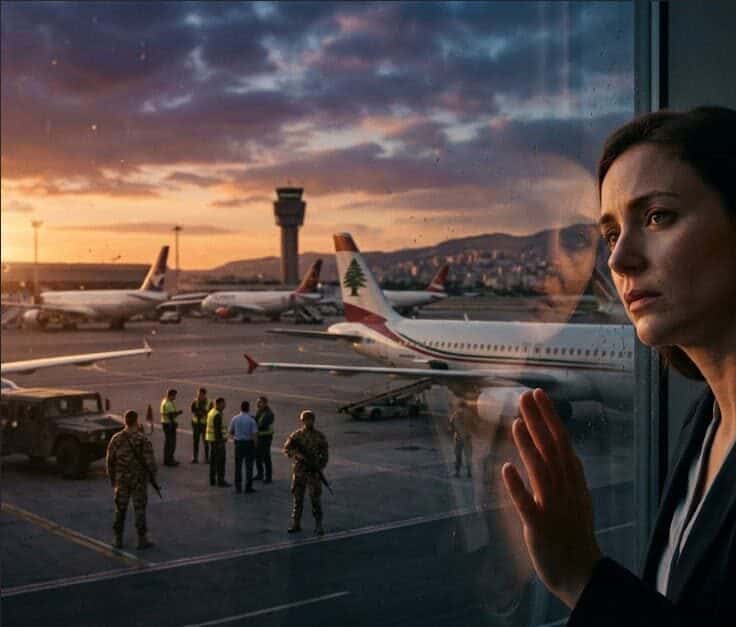
The escalating regional tensions in the Middle East have triggered unprecedented Lebanon flight disruptions, significantly impacting global aviation networks in October 2026. As nations navigate complex geopolitical landscapes, international carriers face mounting operational challenges, leading to widespread cancellations and strict movement restrictions. This developing crisis extends beyond immediate travel inconveniences, threatening economic stability and diplomatic relations across the region. With aviation authorities issuing urgent safety advisories and governments implementing stringent airspace protocols, understanding these flight disruptions is crucial for global travellers, aviation stakeholders, and policymakers. The ongoing situation demands rigorous monitoring as official directives continuously reshape regional aviation connectivity today.
Background: The Catalyst for the Aviation Crisis
The geopolitical landscape in the Middle East has seen persistent volatility throughout the latter half of the decade, but the events leading up to October 2026 have proven exceptionally disruptive for international travel. Historically, Lebanon has functioned as a critical intersection for commercial flights linking Europe, Asia, and the wider Arab world. However, renewed military engagements and escalating diplomatic disputes have severely compromised the safety of the airspace above and around the country.
The genesis of the current Lebanon flight disruptions can be traced back to compounded security concerns along international borders and heightened military activities spanning multiple neighbouring states. During recent months, intelligence reports and security assessments from global aviation watchdogs indicated a marked increase in uncoordinated military operations. This environment inherently elevates the risk for civil aviation, evoking memories of past aviation tragedies in conflict zones. Governments and civil aviation authorities were left with little choice but to prioritise passenger safety, enacting sweeping measures that have effectively restructured flight corridors across the entire region. The resulting airspace closures and movement restrictions are not merely precautionary; they represent a fundamental shift in how international travel operates in politically fragile regions.
Latest Official Developments and Geopolitical Strain
As of October 2026, the situation has rapidly evolved into a coordinated international response aimed at mitigating risks associated with traversing Middle Eastern airspace. A myriad of global airlines, including major UAE-based carriers like Emirates, Etihad Airways, flydubai, and Air Arabia, have implemented critical route suspensions. These suspensions are a direct response to the escalating threats that compromise flight safety.
Advertisement
Advertisement
On October 5, 2026, the aviation system experienced what industry experts described as a paralysis of regional connectivity. Flights bound for Beirut were unilaterally cancelled, leaving tens of thousands of passengers stranded and prompting a cascading effect on global flight schedules. The disruption was not limited to Lebanon alone; overlapping closures affected adjoining airspaces including Syria, Jordan, and Iraq, forcing airlines to adopt extensive rerouting protocols. These diversions add upwards of 90 to 120 minutes to flight times, fundamentally breaking aircraft rotation schedules and pushing flight crews beyond their legal duty limits.
The European Union Aviation Safety Agency (EASA) and the United Kingdom’s Civil Aviation Authority (CAA) have subsequently issued stern warnings. A definitive Notice to Airmen (NOTAM) from the UK advised all registered operators to avoid the Beirut Flight Information Region (FIR) except for highly regulated routes occurring strictly over the Mediterranean Sea. This approach underscores the severe, time-critical nature of the hazard.
Advertisement
Advertisement
Government Announcements and Regulatory Mandates
Government bodies worldwide have not remained silent amidst the escalating Lebanon flight disruptions. The United States Department of State recently issued security alerts across multiple Middle Eastern locations, warning citizens of imminent flight cancellations, airspace closures, and escalating regional threats. The U.S. Embassy in Beirut reinforced these warnings, advising citizens to maintain a heightened state of awareness, secure essential travel documents, and consider alternative means of departure.
Furthermore, an internal report by the International Civil Aviation Organization (ICAO), prepared at the behest of the Lebanese Civil Aviation Authority, identified critical safety shortcomings at Beirut-Rafic Hariri International Airport. The UN aviation agency’s assessment highlighted the absence of a comprehensive emergency plan, a lack of qualified inspectors, and the deficiency of an independent aircraft accident investigation authority. These revelations have severely complicated bilateral efforts, specifically stalling Washington’s previous initiatives to restart direct air travel between the United States and Lebanon. The lack of valid certification poses a formidable regulatory roadblock, demanding immediate and rigorous institutional reform before normal operations can be entertained.
Simultaneously, international aviation authorities from Germany, Italy, and France have instituted their own respective airspace bans. German operators have been explicitly instructed to integrate the heightened risks of anti-aviation weaponry into their routing decisions, effectively avoiding Lebanese airspace entirely. Similarly, Italian and French directives mandate full coordination with local air traffic control and robust risk assessments prior to any operation nearing the affected zones.
Statistical Breakdown of the Travel Chaos
The sheer scale of the Lebanon flight disruptions is reflected clearly in official aviation statistics for October 2026. On October 7 alone, real-time tracking data revealed a staggering 1,692 flight delays and 131 absolute cancellations across the Middle East. The broader impact of these airspace constraints is estimated to have affected upwards of 600,000 passengers globally, as the interconnected nature of modern aviation means a delay in Beirut or Dubai cascades seamlessly into airports in London, Bangkok, and New York.
Reports indicate that Dubai experienced 61 immediate cancellations and 248 delays during the peak of the crisis, while Doha recorded 18 cancellations and 117 delays. The financial and logistical toll on airlines is massive. Widebody aircraft remain grounded or displaced in the wrong hubs, creating an equipment shortage that further exacerbates the ability of airlines to recover from the initial shock.
In Lebanon, the warnings regarding GPS jamming and spoofing add another layer of statistical severity. Pilots navigating the Mediterranean area have reported a marked increase in the loss of Global Navigation Satellite System (GNSS) signals, forcing a reliance on conventional Air Traffic Services (ATS) routes and ground navigational aids. This technological interference not only slows down operations but significantly increases the workload on air traffic controllers and flight crews alike.
Advertisement
Advertisement
Policy Implications for the Global Aviation Sector
The current paradigm of Lebanon flight disruptions forces a critical re-evaluation of international aviation policies. The immediate implication is the reinforcement of sovereign airspace as a strategic and highly vulnerable asset. Policymakers at ICAO and the International Air Transport Association (IATA) are currently tasked with developing more resilient contingency frameworks. The inability of Beirut’s primary airport to meet basic international emergency standards, as highlighted by the UN report, mandates a shift in how international bodies audit and support civil aviation authorities in politically unstable regions.
Furthermore, the extensive rerouting protocols necessitate a review of environmental and sustainability policies within the aviation sector. The additional 90 to 120 minutes of flight time required to bypass restricted airspaces results in vastly increased fuel consumption and greenhouse gas emissions. Governments that are aggressively pushing for net-zero aviation targets by 2050 must now account for the unpredictable nature of geopolitical disruptions, which frequently force airlines to abandon optimal, fuel-efficient flight paths in favour of safety.
Industry Impact: Airlines Under Immense Pressure
The aviation industry is bearing the brunt of the financial and logistical strain. Carriers are forced to operate in a reactionary mode, constantly monitoring intelligence feeds and NOTAMs to adjust schedules in real-time. For major connectors like Emirates and Etihad Airways, the disruption dismantles their core business model: seamless global transit through Middle Eastern hubs.
Crew management has emerged as one of the most critical logistical hurdles. Flight duty time limitations are stringently regulated by aviation safety authorities to prevent fatigue. However, the extended flight times caused by the Lebanon flight disruptions frequently push crews dangerously close to or beyond these legal limits. When a crew times out, the flight is grounded, leading to sudden cancellations and the stranding of passengers. This requires airlines to position relief crews at strategic locations, a costly and complex endeavour when commercial air travel is already restricted.
Additionally, the insurance premiums for aircraft operating near designated conflict zones have skyrocketed. Underwriters are demanding comprehensive risk assessments, and in many cases, outright refusing to insure flights traversing specific coordinates. This financial burden is inevitably passed onto the consumer, resulting in elevated ticket prices during a period of extreme economic uncertainty.
Economic Implications for Lebanon and the Region
The economic ramifications of the sustained Lebanon flight disruptions are profound and multifaceted. Lebanon’s economy, already fragile from years of internal crises, relies heavily on remittances from its extensive diaspora and, historically, on tourism and international commerce. The suspension of direct flights severs vital economic arteries. The inability to seamlessly transport cargo hampers the import of essential goods, medical supplies, and technological equipment, exacerbating inflation and local shortages.
Advertisement
Advertisement
Regionally, the disruption challenges the economic diversification strategies of neighbouring Gulf states. Nations that have invested hundreds of billions of dollars into transforming their cities into global tourism and aviation mega-hubs find their returns threatened by regional instability. When international travellers perceive the Middle East as a cohesive conflict zone, the resultant drop in consumer confidence impacts hotel occupancy rates, retail sectors, and broader foreign direct investment. The perception of risk, amplified by massive flight delays and cancellations, creates an economic chilling effect that transcends borders.
Tourism, Business, and Public Impact
For the general public and the business sector, the uncertainty is paralysing. Business travellers, who rely on predictable schedules for international negotiations and supply chain management, are finding it increasingly difficult to operate within the region. The disruption to cargo holds on passenger flights—often used for high-value or time-sensitive exports—has forced logistics companies to seek alternative, significantly more expensive freight solutions.
From a tourism perspective, the impact is devastating. Travel agencies and tour operators have seen a massive surge in cancellations, not just for Lebanon, but for broader regional itineraries. The public is fundamentally deterred by the prospect of being stranded in a foreign country, subjected to cascading delays, or caught amidst escalating military actions. The U.S. State Department’s explicit advice against travelling to Lebanon due to heightened military activity serves as a stark deterrent to any remaining prospective visitors.
Families remain separated, and the diaspora finds it increasingly perilous to return home. The human element of these disruptions is often overshadowed by statistics, but the reality involves thousands of individuals stranded in transit lounges, facing immense stress, financial loss, and physical exhaustion.
Expert and Official Statements
Official rhetoric strictly aligns with the paramount importance of safety. The UN summary regarding Beirut’s airport was unequivocal: “This is a serious and time-critical matter that must be addressed immediately to preserve the airport’s operational status”.
Aviation authorities emphasize that the risk from anti-aviation weaponry, including the potential for errant long-range surface-to-air missiles originating from Syrian territory, necessitates the severe measures currently in place.
Advertisement
Advertisement
The European Union Aviation Safety Agency clearly outlined that EU airlines remain fundamentally responsible for conducting their own rigorous assessments of an airport’s safety and operational readiness before launching or continuing services. These statements reflect a collective regulatory stance: until verifiable, long-term geopolitical stability is achieved and institutional safety standards are unambiguously met, the restrictions will remain an immovable reality of Middle Eastern aviation.
Future Outlook: Rebuilding Trust in the Skies
Looking ahead, the resolution of the Lebanon flight disruptions is deeply tethered to broader diplomatic peace processes. While temporary ceasefires or de-escalation agreements may offer brief respites, the underlying structural deficiencies identified by ICAO at Lebanon’s primary airport must be comprehensively addressed. The Lebanese Civil Aviation Authority faces the monumental task of recruiting qualified inspectors, establishing an independent accident investigation body, and formulating robust emergency protocols.
The aviation industry will likely adopt a permanent posture of heightened vigilance regarding Middle Eastern airspace. Advanced technologies, such as enhanced GNSS spoofing detection systems, will become standard requirements for commercial aircraft operating in the region. Airlines will continue to refine their crisis management strategies, building greater resilience into their scheduling and crew deployment models.
Ultimately, restoring seamless connectivity requires more than just the cessation of hostilities; it demands the rebuilding of institutional trust. Global regulators, national governments, and international airlines must collaborate closely to ensure that the skies above Lebanon and the wider Middle East can once again serve as safe, reliable corridors for global commerce and human connection. Until such guarantees are firmly established, travellers must remain adaptable, heavily relying on official advisories and real-time data to navigate this complex operational landscape.
Advertisement
