
Flights Cancelled Throughout Middle East with 233 Cancellations and 1,818 Delays at Doha, Riyadh and More Airports

Published
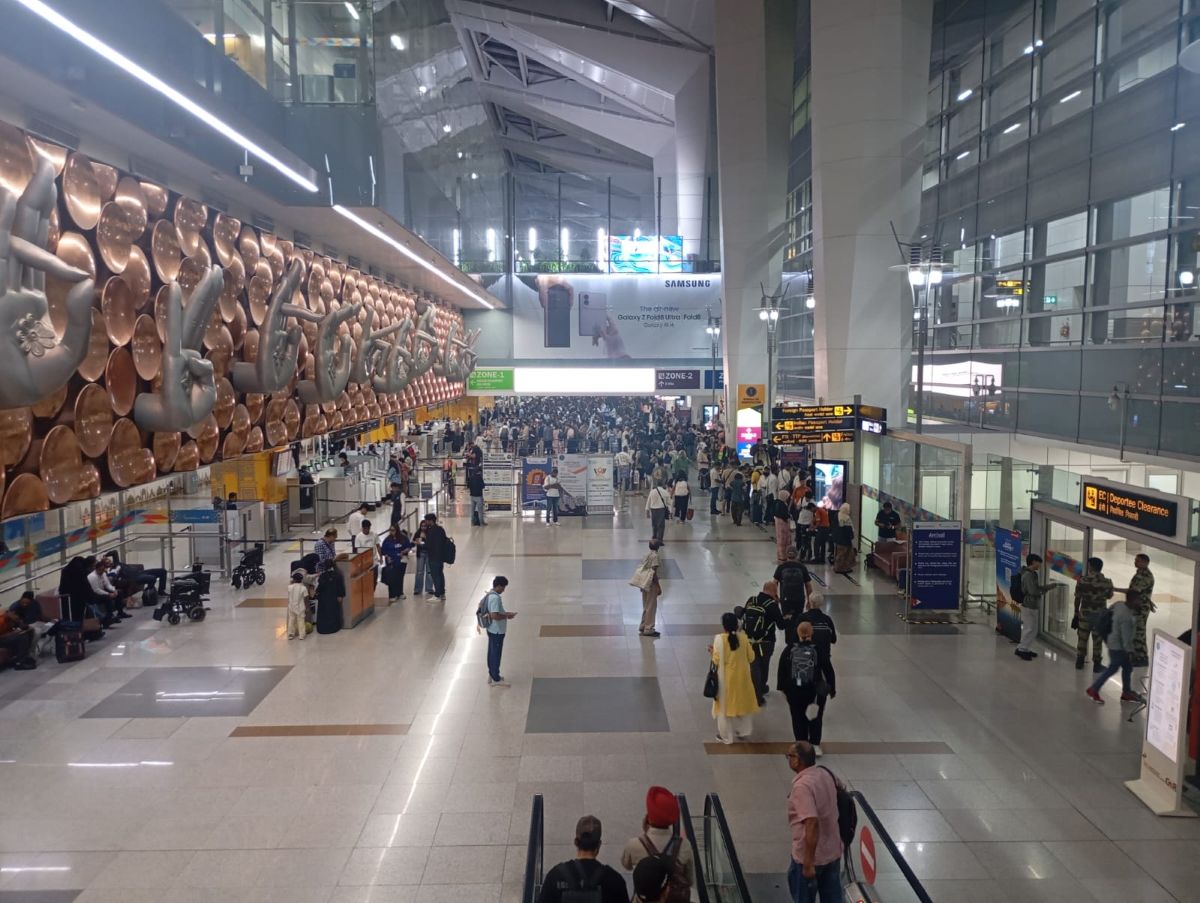
With 233 cancellations and 1,818 delays recorded at Doha, Riyadh, and other airports, travel has been severely disrupted throughout the Middle East, leaving thousands of passengers in the dark. Major aviation hubs in Saudi Arabia, Qatar, the United Arab Emirates, and surrounding nations have been impacted by the interruption. The disruption has been exacerbated by regional airspace limitations, security concerns, and airline operational difficulties. Due to security-related airport closures, Riyadh has seen a large number of flight cancellations, while regional routing restrictions have caused delays in Doha and Dubai. Additionally, Istanbul airport operations have recently been hampered by bad weather and strong winds. As a result, travellers face longer waiting times, missed connections and unexpected itinerary changes. However, the exact causes of individual flight disruptions remain unconfirmed.
Which Middle East Airports Have Recorded the Most Flight Cancellations and Delays?
Saudi Arabia recorded significant disruption across four airports. King Abdulaziz International Airport in Jeddah reported 181 delays and 57 cancellations, the highest cancellation figure among the airports surveyed. King Khalid International Airport in Riyadh recorded 36 cancellations and four delays, while King Fahd International Airport in Dammam reported 37 cancellations and 45 delays. Prince Mohammad bin Abdulaziz International Airport in Medina registered nine cancellations and 32 delays.
In the UAE, Dubai International Airport recorded 226 delays and 14 cancellations, making it one of the busiest disruption points in the dataset. Sharjah International Airport reported 63 delays and 16 cancellations. Meanwhile, Zayed International Airport in Abu Dhabi registered 121 delays and two cancellations, while Al Maktoum International Airport in Dubai recorded 12 delays and one cancellation.
Hamad International Airport in Doha, Qatar, reported 145 delays and 16 cancellations. Bahrain International Airport registered 35 delays and nine cancellations, while Queen Alia International Airport in Amman, Jordan, recorded 29 delays and eight cancellations.
Advertisement
Advertisement
Elsewhere, Cairo International Airport in Egypt reported 176 delays and seven cancellations. Muscat International Airport in Oman registered 43 delays and one cancellation, while Larnaca International Airport in Cyprus recorded 56 delays and one cancellation.
Istanbul Airports Record the Highest Combined Delay Figures
Türkiye experienced particularly high delay numbers. Istanbul Airport reported 391 delays and nine cancellations, while Sabiha Gökçen International Airport registered 259 delays and eight cancellations.
Advertisement
Advertisement
Together, the two Istanbul airports accounted for 650 delays and 17 cancellations. Their figures highlight the scale of disruption affecting services through Türkiye, although the supplied data does not establish the reasons behind individual flight delays.
Which Airlines Are Most Affected by Middle East Flight Disruptions?
The airline figures reveal contrasting patterns of cancellations and delays.
Qatar Airways reported 16 cancellations, representing 2% of its recorded flights, alongside 121 delays at 19%. Air Arabia also registered 16 cancellations, equivalent to 6%, and 56 delays at 22%.
Saudi Arabia’s Saudia recorded 11 cancellations at 2% and 88 delays at 18%. Riyadh Air reported nine cancellations, representing a comparatively high 32% cancellation rate, with no delays recorded.
EgyptAir registered eight cancellations at 2% and 88 delays at 31%. Royal Jordanian recorded eight cancellations at 5% and 12 delays at 8%, while Gulf Air reported seven cancellations at 5% and 23 delays at 16%.
Turkish Airlines and Pegasus Face Substantial Delays
Turkish Airlines recorded 393 delays, representing 25% of its flights, alongside six cancellations shown as 0% after rounding. Pegasus Airlines reported 292 delays at 40%, with five cancellations shown as 0%.
Advertisement
Advertisement
Among UAE carriers, Emirates recorded 126 delays at 24% and five cancellations at 0%. Etihad Airways reported 90 delays at 26% and two cancellations at 0%.
Saudi low-cost carrier flyadeal registered 24 delays at 12% and four cancellations at 2%, while flynas recorded 45 delays at 15% and two cancellations at 0%. Jordan Aviation reported one delay at 8% and two cancellations at 16%.
What Does the Airport and Airline Data Reveal About Regional Travel?
The figures indicate that disruption differs considerably between airports and airlines.
Saudi Arabia accounts for a particularly large share of airport cancellations, with Jeddah, Dammam and Riyadh reporting 130 cancellations between them. Meanwhile, Dubai and Doha recorded more delays than cancellations, suggesting that schedule reliability is a significant concern at these international hubs.
Türkiye stands out for delayed flights, with Istanbul and Sabiha Gökçen recording the highest combined airport delay count.
Importantly, airline figures and airport figures represent different reporting categories and should not be added together. The supplied information also does not confirm whether individual delays or cancellations resulted from weather, airspace restrictions, technical problems or other operational factors.
Advertisement
Advertisement
What Should Affected Passengers Do Now?
Travellers flying through affected Middle East airports should check their flight status directly with their airline before leaving for the airport. Passengers with connecting journeys should also confirm that onward services remain scheduled.
Those experiencing cancellations should contact their airline or booking provider to discuss alternative flights, refunds or rebooking arrangements. Travellers facing extended delays should retain booking confirmations, receipts and airline notifications in case they become eligible for assistance or compensation under applicable rules.
Passengers should also monitor official airport announcements and allow additional time for journeys involving connections.
What Happens Next for Middle East Air Travel?
The reported 1,818 airport delays and 233 cancellations demonstrate the scale of disruption across the surveyed aviation network on 16 October 2026. Saudi Arabia recorded the most significant cancellation concentrations, while Dubai, Doha and Istanbul experienced substantial delays.
For travellers, the immediate priority is to verify flight arrangements and stay informed about schedule changes. Although the figures reveal considerable operational pressure, they represent a snapshot rather than a forecast. Further airline and airport updates will determine how quickly affected services return to their normal schedules.
Data Verification Notice
The data presented in this report has been carefully compiled and reviewed by our editorial team using real-time aviation statistics recorded on 15 October 2026 at 5:37 pm ET (USA), corresponding to 16 October 2026 at 1:37 am GST.
Advertisement
Advertisement
Primary Sources: FlightAware and local correspondent reports.
Editorial Verification: All reported figures have undergone independent assessment and cross-verification by our editorial desk. Timestamped flight records, aviation data logs and original feed snapshots have been securely archived for future reference, ensuring historical accuracy, accountability and editorial transparency.
Important Note: Flight-tracking statistics reflect operational conditions at the time of data collection. As airline schedules and airport operations change continuously, minor differences may appear between these figures and subsequent updates published by airlines, airport authorities or departure information systems.
You can read our earlier reports of disruptions across middle east.
Advertisement
Verified by Somudranil Sarkar
