Home»Latest Travel News» UK and Canada Update Travel Advisories for France and Spain Amid Surging Wildfires and Warnings Issued by WHO and UN Amid Peak Summer Travel in Europe
UK and Canada Update Travel Advisories for France and Spain Amid Surging Wildfires and Warnings Issued by WHO and UN Amid Peak Summer Travel in Europe
Written By: Debomita Dutta
Debomita Dutta
As a debater, researcher and writer I have always been passionate about making complex global developments accessible, accurate and impactful. It has always been my aim to combine a strong analytic approach with incredible storytelling - and here at Travel and Tour World I get to do just that! Bridging research, public discourse and meaningful communication through informed and engaging narratives.
July 25, 2026 6:11 PM
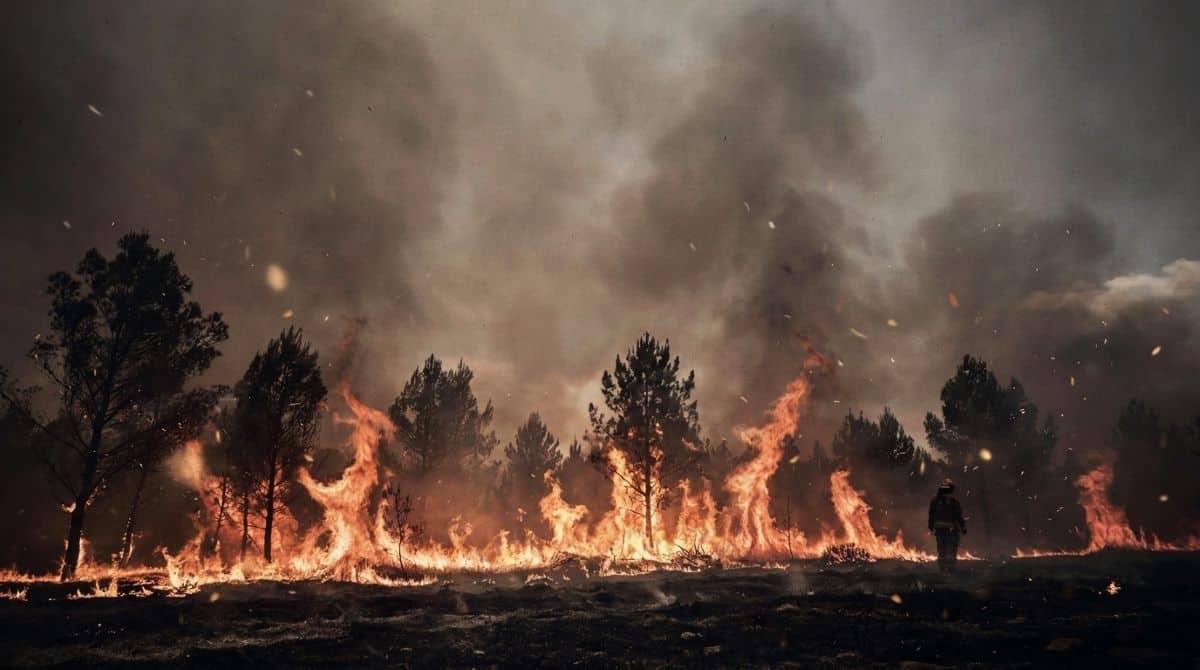
Image generated with Ai
Uncontrolled wildfires have forced over 200,000 mass evacuations across Southwestern France and Central Spain, prompting fresh travel advisories from the UK Foreign Office (FCDO) and Global Affairs Canada. A national emergency now covers parts of Madrid and Ávila, while the World Health Organization (WHO) and United Nations (UN) warn of severe health risks from extreme heat and toxic smoke. In this article, I break down the latest travel advisories, emergency health protocols, and real-time transit disruptions impacting peak European summer travel.
UK Travel Advisory (FCDO)
The UK Foreign, Commonwealth & Development Office (FCDO) issued official risk updates for British nationals traveling to or staying in Western Europe:
Advertisement
Emergency Directives for Spain: FCDO updated its Spain advisory to reflect the declared national emergency across parts of Madrid and Ávila due to uncontrolled wildfires. Travelers in affected rural areas are urged to follow local authority instructions, avoid travelling through active fire zones, and call 112 for emergency assistance.
France Operational Warnings: British authorities highlighted ongoing forest fires across southwestern France (Gironde and Landes), advising travelers to confirm that accommodation and road access remain open before departure.
Transit & Border Checks: Travelers driving through land borders between France, Spain, or Gibraltar must monitor traffic updates from the Spanish Directorate-General for Traffic (Dirección General de Tráfico – DGT).
Schengen Entry Regulations: British passport holders are reminded that their passports must be issued less than 10 years before the entry date and remain valid for at least 3 months beyond their planned exit. Tourists must adhere to the 90-day visa-free limit per 180-day period and prepare for new biometric registrations under the EU Entry/Exit System (EES).
Canada Travel Advisory (Global Affairs Canada)
Global Affairs Canada updated its transatlantic travel warnings to assist Canadian citizens navigating Southern Europe during peak summer travel:
Official Risk Assessment: Canadian authorities advise travelers to “Exercise a high degree of caution“ when traveling in Spain and France due to volatile seasonal wildfires, intense ambient heat, and degraded air quality.
Real-Time Safety Registration: Canadian citizens are advised to sign up for the free Registration of Canadians Abroad (ROCA) service to receive direct emergency updates, local security notices, and consular notifications on their mobile devices.
Emergency Preparedness & Insurance: Travelers are urged to verify that their emergency medical and travel insurance policies cover natural disasters and trip interruptions. In an emergency, Canadians can reach the Emergency Watch and Response Centre in Ottawa via phone or email for direct consular assistance.
How Peak Summer Travel in Europe Is Being Impacted
The convergence of historic heatwaves, smoke plumes, and active fire perimeters has transformed European summer vacation logistics into a complex challenge:
Advertisement
Advertisement
Transit and Rail Delays: Extreme ambient temperatures cause steel railway tracks to expand and overhead electrical cables to sag. Operators such as France’s SNCF have instituted precautionary speed restrictions and canceled select regional runs, while rail authorities in Germany and Spain have adjusted heat policies.
Aviation Pressure: High surface heat reduces air density, forcing airlines to adjust passenger loads or delay departures during mid-day heat spikes. Combined with heavy air traffic constraints, travelers face rolling delays across major European airport hubs.
Schedule Restructuring: Iconic tourist destinations and open-air monuments across Southern Europe are limiting peak afternoon hours (12:00 PM to 4:00 PM). Vacationers are heavily shifting activities to early morning or late evening hours to avoid severe thermal stress.
Hospitality and Accommodation Shift: Evacuations in coastal pine-forest campsites have forced thousands of tourists into emergency shelters or alternative inland hotel bookings, causing sudden surges in regional room demand.
Key Takeaways for Summer Travelers
Official Travel Upgrades: Foreign ministries in the United Kingdom and Canada have formally updated their travel guidance, urging travelers across Western Europe to exercise heightened caution due to aggressive wildfire fronts and historic heatwaves.
National Emergency Declarations: Spanish officials have declared a national emergency response across Madrid and Ávila, while emergency crews in southwestern France continue fighting large-scale forest blazes in Gironde and Landes.
Health and Safety Advisories: The World Health Organization (WHO) and United Nations (UN) recommend limiting outdoor exertion during peak heat hours and protecting against heavy smoke plume inhalation,
Universal Emergency Hotline: Travelers requiring urgent emergency support in France or Spain should contact local responders immediately by calling 112.
WHO and UN Health Guidelines
The World Health Organization (WHO Europe) and the United Nations Meteorological Framework have issued health directives to protect tourists from extreme heat and wildfire pollution:
Air Quality Protection: High levels of fine particulate matter (PM2.5) in wildfire smoke pose significant respiratory risks. High-risk groups, including children, the elderly, and individuals with respiratory conditions, should wear fitted FFP2/N95 masks outdoors.
Thermal Stress Mitigation: Limit physical activity outdoors between 11:00 AM and 4:00 PM. Stay hydrated with water and electrolyte drinks, avoiding excessive alcohol consumption during extreme heat alerts.
Emergency Medical Support: Verify that your comprehensive travel insurance explicitly includes coverage for natural disasters, emergency medical care, and medical repatriation costs.
Traveler Action Checklist
To ensure personal safety and seamless transit during peak summer travel in Europe, complete these preparation steps:
Monitor Official Information: Check daily travel alerts directly on government portals like the UK FCDO or Travel.gc.ca before heading to transit hubs.
Keep Essential Records: Carry digital and physical copies of passports, insurance papers, emergency contact lists, and medical prescriptions.
Confirm Accommodations: Contact hotel or rental operators directly to confirm that your destination is fully accessible and clear of active evacuation zones.
In conclusion, UK and Canada updated their travel advisories for France and Spain because surging European wildfires and extreme heatwaves have created genuine safety hazards for millions of vacationers. With official warnings issued by WHO and UN urging precautions against dangerous smoke plumes and thermal stress, navigating peak summer travel in Europe now requires extra vigilance. Blazes across central Spain and southwestern France have closed critical transit corridors and forced mass evacuations, proving that environmental risks can suddenly disrupt holiday plans. By staying informed on regional alerts and following emergency guidance, travelers can protect their health and navigate these summer journey disruptions safely.
We use cookies on our website to give you the most relevant experience by remembering your preferences and repeat visits. By clicking “Accept”, you consent to the use of ALL the cookies.
This website uses cookies to improve your experience while you navigate through the website. Out of these, the cookies that are categorized as necessary are stored on your browser as they are essential for the working of basic functionalities of the website. We also use third-party cookies that help us analyze and understand how you use this website. These cookies will be stored in your browser only with your consent. You also have the option to opt-out of these cookies. But opting out of some of these cookies may affect your browsing experience.
Necessary cookies are absolutely essential for the website to function properly. These cookies ensure basic functionalities and security features of the website, anonymously.
Cookie
Duration
Description
cookielawinfo-checkbox-analytics
11 months
This cookie is set by GDPR Cookie Consent plugin. The cookie is used to store the user consent for the cookies in the category "Analytics".
cookielawinfo-checkbox-functional
11 months
The cookie is set by GDPR cookie consent to record the user consent for the cookies in the category "Functional".
cookielawinfo-checkbox-necessary
11 months
This cookie is set by GDPR Cookie Consent plugin. The cookies is used to store the user consent for the cookies in the category "Necessary".
cookielawinfo-checkbox-others
11 months
This cookie is set by GDPR Cookie Consent plugin. The cookie is used to store the user consent for the cookies in the category "Other.
cookielawinfo-checkbox-performance
11 months
This cookie is set by GDPR Cookie Consent plugin. The cookie is used to store the user consent for the cookies in the category "Performance".
viewed_cookie_policy
11 months
The cookie is set by the GDPR Cookie Consent plugin and is used to store whether or not user has consented to the use of cookies. It does not store any personal data.
Functional cookies help to perform certain functionalities like sharing the content of the website on social media platforms, collect feedbacks, and other third-party features.
Performance cookies are used to understand and analyze the key performance indexes of the website which helps in delivering a better user experience for the visitors.
Analytical cookies are used to understand how visitors interact with the website. These cookies help provide information on metrics the number of visitors, bounce rate, traffic source, etc.
Advertisement cookies are used to provide visitors with relevant ads and marketing campaigns. These cookies track visitors across websites and collect information to provide customized ads.