

India’s Himalayan Rail Expansion Puts Gangtok in Focus as Sikkim Moves Towards Major Tourism Transformation

Published
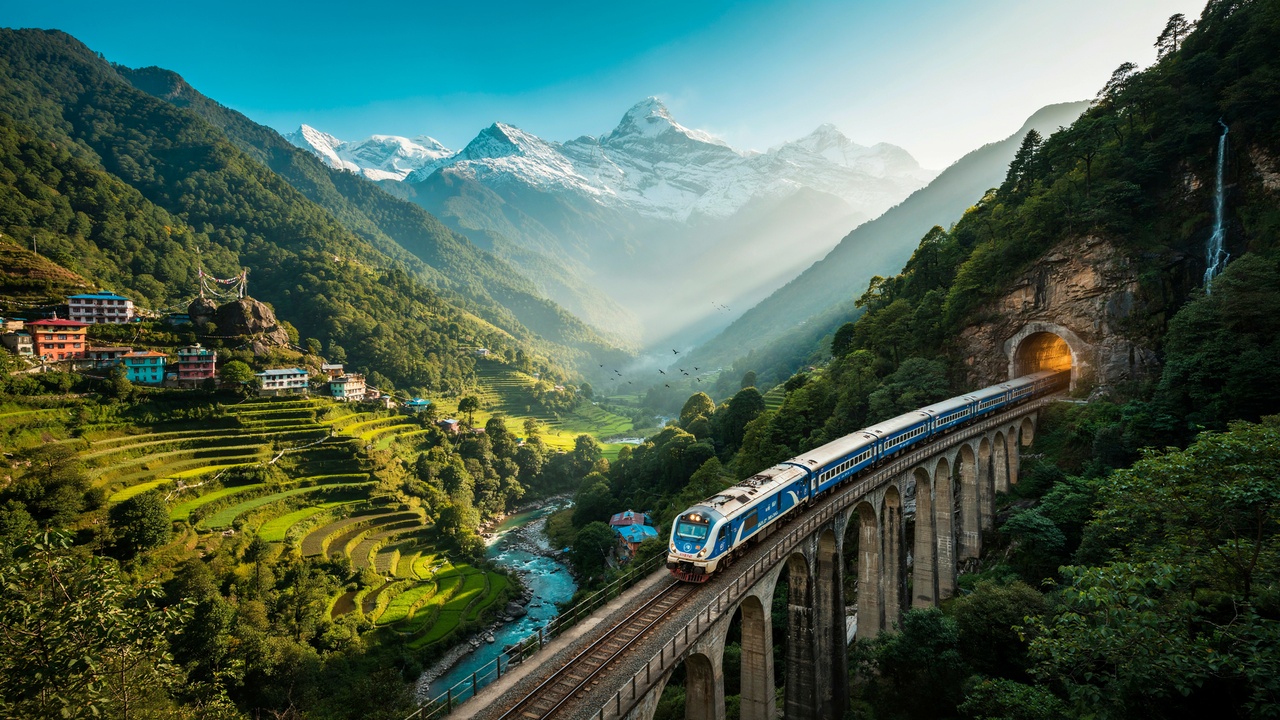
India is advancing plans to bring railway connectivity to Gangtok, potentially transforming access to one of the eastern Himalayas’ most distinctive tourism destinations. The proposed ₹9,000 crore Rangpo–Gangtok railway extension has gained priority within Indian Railways’ infrastructure planning, while the separate Sivok–Rangpo line remains targeted for completion in December 2027. The development could eventually create new rail-based travel opportunities for domestic tourists and international visitors exploring Sikkim. However, the Gangtok extension remains under examination, and its construction timetable, passenger services and opening date have not yet been confirmed.
India Prioritises Gangtok Railway Connectivity in a Major Himalayan Infrastructure Push
India’s railway expansion into the eastern Himalayas has reached another important planning milestone. The Ministry of Railways has prioritised the proposed 34-kilometre railway connection between Rangpo and Gangtok, bringing Sikkim’s capital closer to a potential place on the country’s extensive passenger rail network.
The estimated ₹9,000 crore project is being examined as an extension of the Sivok–Rangpo railway currently under construction between West Bengal and Sikkim. It represents the proposed second stage of a broader effort to overcome the state’s longstanding dependence on road transport.
Reports published in October 2026 indicate that the Rangpo–Gangtok proposal has been considered by the Integrated Multimodal Network Planning Group under the PM GatiShakti National Master Plan.
Advertisement
Advertisement
The group’s involvement is important because major transport projects require coordination across several infrastructure sectors. Railway development in mountainous regions must account for highways, land use, environmental requirements and connections between different modes of transport.
For Gangtok, this means that the proposal is receiving attention beyond conventional railway route planning.
Advertisement
Advertisement
However, prioritisation does not amount to a final construction sanction. The reported ₹9,000 crore remains an estimated project cost, and a confirmed construction start or commissioning date has not been announced.
The immediate infrastructure priority remains the Sivok–Rangpo line, which is intended to provide Sikkim with its first direct connection to India’s railway network.
Advertisement
Advertisement
If both stages are eventually completed, passengers could benefit from a rail corridor reaching beyond Rangpo towards Gangtok.
For international travellers, the significance lies in the potential to introduce an additional transport option for journeys into Sikkim, a destination recognised for its Himalayan scenery, Buddhist monasteries, mountain landscapes and distinctive cultural experiences.
What Is the Status of the Rangpo–Gangtok Railway Project in October 2026?
The Rangpo–Gangtok railway is still a proposed extension undergoing examination. The Ministry of Railways has reportedly given the project greater planning priority, but there is no verified passenger opening date.
The following table separates the two stages and their different levels of development.
Advertisement
Advertisement
| Project detail | Sivok–Rangpo railway | Rangpo–Gangtok railway |
|---|---|---|
| Location | West Bengal to Sikkim | Within Sikkim |
| Route length | 44.96 km | Approximately 34 km |
| Development status | Under construction | Proposed and under examination |
| Project cost | ₹11,775 crore in an August 2026 ministry statement | Approximately ₹9,000 crore reported estimate |
| Completion target | December 2027 | Not announced |
| Network significance | First railway connection into Sikkim | Proposed extension towards Gangtok |
| Progress | Approximately 80% in September 2026 official briefing | Construction progress not established |
| Planning authority | Ministry of Railways and project agencies | Ministry of Railways; considered under PM GatiShakti planning |
The two corridors together would cover approximately 79 kilometres, based on their reported lengths.
The financial figures also require careful interpretation. The supplied October report cites approximately ₹17,124 crore for Sivok–Rangpo, while an official Ministry of Railways statement dated 5 August 2026 lists ₹11,775 crore. The figures therefore should not be presented as an identical, independently reconciled cost estimate.
Likewise, completion percentages vary between publications and official updates. The most recent detailed official site briefing identified during this research, dated 16 September 2026, reported approximately 80% overall completion. This differs from the 75% figure in the supplied October article.
These distinctions matter because construction progress, financial sanction and operational readiness represent different stages of railway development.
Sivok–Rangpo Railway Targets December 2027 to Deliver Sikkim’s First Train Connection
The most immediate change to Sikkim’s transport network is expected to come from the Sivok–Rangpo railway.
The Ministry of Railways has repeatedly identified December 2027 as its targeted completion period. A Press Information Bureau statement issued in February 2026 confirmed that the project extends for 44.96 kilometres and is designed to introduce railway connectivity into Sikkim.
Advertisement
Advertisement
A subsequent government update on 16 September 2026 reported that approximately 80% of the project had been completed.
The construction programme includes extensive tunnelling and bridge development through the Himalayan foothills and the Teesta river corridor.
Key Engineering Features of the Sivok–Rangpo Line
- Route length: 44.96 kilometres between Sivok and Rangpo.
- Tunnels: 14 tunnels are identified in the September 2026 government briefing.
- Bridges: 23 bridges are identified in the same official update.
- Stations: Five stations are being developed along the corridor.
- Teesta Bazar: A major tunnel-station development, described by the government as India’s first railway station of its kind.
- Target completion: December 2027, subject to the remaining construction and commissioning requirements.
These specifications demonstrate why the project is considerably more complex than a railway built across relatively flat terrain.
Much of the alignment passes through mountainous landscapes, where tunnels and bridges are essential to creating a continuous route.
The September government statement also indicated that the Teesta Bazar station was nearing completion, while work on other stations continued.
Once operational, the railway would introduce an entirely new transport gateway for Sikkim. The precise launch of passenger services, their frequency and their destinations will depend on subsequent railway announcements.
Advertisement
Advertisement
Why Himalayan Geography Makes This Railway Expansion Particularly Challenging
Constructing railways in the Himalayas involves geological and engineering difficulties that rarely arise on conventional railway routes.
Steep mountain slopes, narrow valleys, sensitive landscapes and areas vulnerable to landslides create major challenges for infrastructure development.
The Sivok–Rangpo railway illustrates these difficulties through its extensive network of tunnels and bridges.
Instead of following a straightforward surface alignment, engineers must create a railway through difficult terrain while addressing geological conditions and construction safety.
The Ministry of Railways has identified land acquisition, statutory permissions, forest clearances, geological conditions and seasonal construction constraints as factors that can influence the completion of major railway projects.
Such requirements are especially significant for the proposed Gangtok extension.
Advertisement
Advertisement
Although its estimated length is only 34 kilometres, the route would require development through another section of challenging Himalayan terrain.
The proposed ₹9,000 crore cost also reflects the substantial financial scale associated with a relatively short mountain railway.
At the reported estimate, the project would represent an investment of approximately ₹265 crore per route kilometre. This is a simple calculation based on the published proposal, not a confirmed breakdown of construction expenditure.
For travellers, the practical implication is that official completion targets should be treated as planning objectives rather than guaranteed service commencement dates.
Environmental permissions, construction progress, safety certification and operational testing can all influence when a completed railway becomes available for passengers.
International Tourism Could Benefit as India Expands Rail Access to the Eastern Himalayas
For international tourism, the most significant aspect of the proposed rail expansion is the prospect of improving access to Sikkim through India’s wider transport network.
Advertisement
Advertisement
Gangtok is one of the principal gateways for travellers visiting the state. Its position within the eastern Himalayas makes it an important base for exploring Buddhist heritage, mountain viewpoints, monasteries and surrounding settlements.
However, tourists travelling to the capital currently rely primarily on road connections for the final stage of their journey.
The development of the Sivok–Rangpo railway could introduce a rail-based alternative for reaching the state. A later extension to Gangtok would carry that connectivity closer to the capital itself.
This could become relevant to overseas visitors who combine Sikkim with other Indian destinations, particularly Darjeeling, Kolkata and the wider eastern Himalayan region.
For the international travel trade, better rail access could eventually support more varied itinerary planning.
Tour operators might be able to incorporate railway journeys into packages that currently depend heavily on private vehicles and road transfers.
Advertisement
Advertisement
However, there is an important limitation.
Indian Railways has not confirmed new international tourism services, direct long-distance trains to Gangtok or specific passenger schedules for the proposed extension.
Any future reduction in journey times will depend on station locations, operating patterns and the transport arrangements available after the railway opens.
The potential tourism benefit is therefore substantial, but the commercial and passenger-service details remain to be established.
Sikkim Tourism Records Strong Visitor Numbers as Railway Investment Gains Attention
The railway development comes against a backdrop of considerable visitor activity in Sikkim.
Official figures released by India’s Ministry of Tourism in 2026 provide a useful indication of the state’s tourism market and its potential relevance to transport infrastructure planning.
Advertisement
Advertisement
The ministry’s statistics show that Sikkim recorded 1,654,838 domestic tourist visits and 68,992 foreign tourist visits during 2025.
For January to June 2026, the state tourism department reported 2,352,725 domestic tourist visits and 43,734 foreign tourist visits.
These are recorded tourist visits, rather than counts of unique individual travellers. The 2026 figures also cover only the first six months of the year and should not be treated as a completed annual total.
Official Sikkim Tourism Figures
| Reporting period | Domestic tourist visits | Foreign tourist visits | Combined reported visits |
|---|---|---|---|
| Full year 2025 | 1,654,838 | 68,992 | 1,723,830 |
| January–June 2026 | 2,352,725 | 43,734 | 2,396,459 |
Source: State Tourism Department figures published by India’s Ministry of Tourism in August 2026.
The figures indicate the scale of travel activity taking place before Sikkim receives its first direct railway connection.
They also reveal why transport investment is important for a destination where mountainous geography influences accessibility.
Advertisement
Advertisement
The reported domestic visitor total for the first half of 2026 exceeds the figure recorded for the entire preceding year. However, differences in reporting periods and possible data revisions should be considered before interpreting this as a definitive measure of year-on-year tourism growth.
No official forecast establishing how many additional tourists the proposed Rangpo–Gangtok railway would attract has been verified.
Consequently, the railway should not be credited with any increase in current tourism numbers. Its potential influence concerns future travel accessibility, rather than an already demonstrated rise in arrivals.
Why This Matters
The proposed Gangtok railway matters because it could change how one of India’s important Himalayan destinations connects with the national transport system.
The implications extend beyond passengers travelling directly to the capital.
For domestic visitors, a railway into Sikkim would introduce an additional transport option in a state where road travel remains central to tourism.
Advertisement
Advertisement
For international visitors, future rail connectivity could make it easier to combine Sikkim with other destinations served by Indian Railways.
For hotels, travel agencies and destination management companies, an expanded railway network could create opportunities to redesign itineraries and connect accommodation with different transport gateways.
Freight connectivity is another consideration. Railways can offer a means of transporting goods over longer distances, although the commercial benefits of the Gangtok extension cannot be quantified without confirmed freight arrangements.
The project also holds significance for regional development.
Better transport integration can help connect residents and businesses with larger markets, educational institutions, healthcare services and employment centres.
From a tourism perspective, the most meaningful result would be greater choice in how visitors reach the state.
Advertisement
Advertisement
Nevertheless, a railway cannot eliminate every challenge associated with mountain tourism.
Road transport would remain necessary for many destinations beyond railway stations, especially remote valleys, trekking locations and protected areas.
The project should therefore be understood as a potential improvement to Sikkim’s wider transport network, rather than a complete replacement for existing travel arrangements.
Gangtok, Tsomgo Lake and Sikkim’s Mountain Destinations Could Gain Greater Travel Accessibility
Gangtok is an important starting point for journeys across Sikkim, and the proposed railway extension could eventually change how tourists arrive in the capital.
The potential benefits differ by destination because the proposed railway would connect to Gangtok, not directly to every major attraction in the state.
Gangtok: A Potential New Railway Gateway
Gangtok would be the principal beneficiary of the proposed Rangpo–Gangtok extension.
Advertisement
Advertisement
The capital is known for its urban tourism facilities, mountain scenery, cultural sites and Buddhist heritage.
Visitors use Gangtok as a base for local sightseeing and excursions into other parts of Sikkim.
A future railway connection could provide another way to reach the city, although passengers would still require local transport between the station, accommodation and attractions.
Tsomgo Lake: Road Excursions Would Remain Essential
Tsomgo Lake is among the protected-area destinations accessible from Gangtok, subject to the relevant permits and operating conditions.
The Sikkim Tourism Department confirms that foreign tourists can visit Tsomgo Lake under the applicable Protected Area Permit arrangements.
A Gangtok railway station would not provide direct rail access to the lake. Visitors would still need authorised road transport for the onward journey.
Advertisement
Advertisement
Nevertheless, rail connectivity to the capital could eventually become part of a combined rail-and-road itinerary.
Rumtek: Religious and Cultural Tourism Opportunities
Rumtek is another destination that could benefit indirectly from improved access to Gangtok.
The area is associated with Buddhist religious and cultural heritage, which forms an important part of Sikkim’s tourism identity.
A railway reaching the capital could create an additional arrival option for visitors interested in monasteries and cultural excursions.
Any increase in tourist numbers would depend on service availability, visitor preferences and the wider development of tourism infrastructure.
Pelling and West Sikkim: Potential Multi-Destination Itineraries
Pelling and the surrounding areas of western Sikkim attract travellers seeking mountain landscapes, cultural heritage and outdoor experiences.
Advertisement
Advertisement
These destinations are not part of the announced Rangpo–Gangtok railway proposal.
However, improved access to the capital could eventually support itineraries that combine Gangtok with destinations in western Sikkim.
Road transfers would remain necessary for these journeys.
North Sikkim: Tourism Access Remains Subject to Restrictions
North Sikkim is recognised for its high-altitude landscapes and mountain valleys.
Its tourism arrangements are affected by protected-area rules, geographical conditions and local access requirements.
The proposed railway does not remove restrictions on travel to areas such as the Lachen–Lachung–Yumthang corridor.
Advertisement
Advertisement
International visitors must continue following official eligibility requirements and the relevant permit procedures.
The distinction is particularly important for travel companies promoting future Himalayan railway holidays. Easier access to Gangtok would not automatically mean unrestricted access to every destination within Sikkim.
What International Travellers Should Know Before Planning a Sikkim Railway Holiday
Although the railway proposals offer a compelling long-term travel development, neither stage currently provides the newly announced passenger journey described in the plans.
International travellers considering Sikkim should continue arranging their transport through existing gateways and monitor official railway announcements for future developments.
The Sivok–Rangpo project has a December 2027 completion target. The Rangpo–Gangtok extension does not yet have a confirmed completion deadline.
No verified booking window, passenger fare structure or train timetable has been announced for the new Gangtok connection.
Advertisement
Advertisement
Before Booking
- Railway availability: Do not assume that trains to Rangpo or Gangtok are operating merely because construction has reached an advanced stage.
- Opening dates: December 2027 is the current target for Sivok–Rangpo, not a confirmed commencement date for Gangtok railway services.
- Current access: Plan existing road transfers and check the latest transport information before departure.
- Foreign visitor documentation: Check passport, visa and Sikkim permit requirements applicable to your nationality.
- Restricted areas: Confirm whether additional permits are required for destinations beyond Gangtok.
- Travel conditions: Monitor official road and weather advisories when visiting mountainous areas.
- Tour packages: Verify the transport arrangements included in any itinerary advertising future railway access.
These considerations are especially relevant to overseas visitors who may be unfamiliar with the separate rules governing entry to Sikkim and travel within protected areas.
Foreign Tourists Must Continue Following Sikkim’s Permit Requirements
The prospect of railway connectivity does not alter Sikkim’s existing restrictions on foreign tourist access.
According to the Government of Sikkim’s Tourism and Civil Aviation Department, foreign visitors generally require a Restricted Area Permit when entering applicable restricted areas of the state.
Additional Protected Area Permits are necessary for specified destinations.
Official guidance states that foreign tourists may visit designated places such as Gangtok and Rumtek subject to the relevant entry arrangements.
For certain protected destinations, applications must be handled through authorised travel agencies or designated government offices.
Advertisement
Advertisement
Important Entry Rules for International Visitors
Foreign visitors should be aware of several requirements published by Sikkim Tourism.
First, the Restricted Area Permit system applies to foreign nationals under the eligibility rules set out by the authorities. The official guidance provides particular provisions for visitors of Nepalese and Bangladeshi origin.
Second, additional prior clearance requirements apply to certain nationalities and categories of visitors. These include specific rules involving nationals or persons of origin connected with China, Pakistan and Afghanistan, as well as other categories identified by the authorities.
Third, access to protected areas differs according to the destination. Permission to stay in Gangtok does not automatically authorise travel to every border or high-altitude location.
Fourth, the state’s official guidance provides for a typical Restricted Area Permit validity of up to 30 days, with extensions governed by separate requirements.
Finally, foreign tourists must comply with the registration procedures specified by the state authorities.
Advertisement
Advertisement
These conditions should be verified immediately before travel because permit rules and access arrangements can change.
For international travel businesses, this distinction is critical: future railway connectivity would improve physical accessibility but would not itself amend immigration or protected-area regulations.
PM GatiShakti Planning Could Shape the Next Phase of Himalayan Transport Development
The consideration of the Rangpo–Gangtok railway under PM GatiShakti gives the proposal broader infrastructure significance.
PM GatiShakti is India’s national master-planning framework for coordinating multimodal connectivity and infrastructure development.
Its planning process is intended to help different government agencies examine how railway, road, logistics and other infrastructure investments interact.
For the Gangtok proposal, this is relevant because rail connectivity would need to integrate with existing roads and local transport facilities.
Advertisement
Advertisement
A railway terminus that reaches the capital would still require practical links to hotels, residential areas, transport terminals and tourist attractions.
The surrounding road network would therefore remain an important part of the passenger journey.
Recent road investment announcements illustrate the wider transport priorities in Sikkim. In October 2026, the government also announced a ₹993.64 crore improvement project for the Rangpo–Ranipool section of National Highway 10, involving tunnels, bridges, viaducts and slope-protection measures.
That highway scheme is separate from the proposed Rangpo–Gangtok railway, and no combined completion timetable has been established.
Taken together, the developments indicate substantial government attention to improving connectivity along the approach to Gangtok.
For tourism, the benefit would ultimately depend on how effectively different transport services connect once infrastructure projects become operational.
Advertisement
Advertisement
Northeast India Railway Expansion Places Sikkim Within a Wider Regional Development Programme
Sikkim’s railway ambitions form part of India’s extensive investment in northeastern transport connectivity.
The Ministry of Railways reported in August 2026 that 27 railway infrastructure projects, involving approximately 2,184 kilometres, had been sanctioned within the Northeast Frontier Railway network as of 1 April 2026.
These projects represented a combined sanctioned cost of ₹76,631 crore, with expenditure of ₹43,379 crore recorded up to March 2026.
The programme includes new railway lines, gauge conversion and multitracking schemes.
Major projects identified by the ministry include connections towards Imphal in Manipur and Kohima in Nagaland, alongside infrastructure works serving other parts of the region.
The Bhairabi–Sairang railway in Mizoram was also listed among recently completed projects.
Advertisement
Advertisement
These developments are important because improved railway access to northeastern state capitals can expand the range of transport options available to both residents and visitors.
However, individual railway projects are at different stages of completion, and their benefits should not be treated as interchangeable.
For Sikkim, the initial milestone is the planned railway connection to Rangpo. Extending that network to Gangtok remains a subsequent objective requiring further progress through the approval and implementation process.
What Happens Next for the Proposed Gangtok Railway?
The immediate priority is completing the Sivok–Rangpo railway and progressing the necessary steps towards operational readiness.
Indian Railways continues to target December 2027 for the line, but a detailed passenger service launch schedule has not been confirmed.
The separate Rangpo–Gangtok proposal must advance beyond its current examination stage before construction and opening arrangements can be established.
Advertisement
Advertisement
Important developments to watch include a formal project sanction, an updated cost estimate, confirmed construction arrangements, environmental and statutory clearances, and an official implementation timetable.
For travel businesses, these milestones will determine when the proposed railway can realistically be incorporated into tourism packages.
For travellers, the decisive announcement will be the confirmation of operational passenger services and published booking arrangements.
Until then, the proposed extension should be regarded as a significant future connectivity opportunity rather than an available travel product.
Frequently Asked Questions
Will Gangtok Get Its First Railway Connection?
Indian Railways has prioritised a proposed 34-kilometre extension from Rangpo to Gangtok. The project remains under examination, and no confirmed opening date has been announced.
When Will Sikkim’s First Railway Line Open?
The Sivok–Rangpo railway is targeted for completion in December 2027, according to the Ministry of Railways. This is a project completion target, not a confirmed passenger service start date.
Advertisement
Advertisement
How Much Will the Rangpo–Gangtok Railway Cost?
The proposed 34-kilometre Rangpo–Gangtok railway has a reported estimated cost of approximately ₹9,000 crore. A final reconciled project cost has not been independently established.
Can International Tourists Travel to Sikkim by Train Now?
The new Sivok–Rangpo railway has not yet entered passenger service. International visitors must continue using existing transport arrangements and comply with applicable Sikkim entry and protected-area permit requirements.
Will the Railway Connect Directly to Tsomgo Lake and North Sikkim?
No. The reported Rangpo–Gangtok proposal concerns a railway connection to the state capital. Onward journeys to Tsomgo Lake and destinations in North Sikkim would continue to require road transport and any relevant travel permits.
India’s Gangtok Railway Ambition Marks an Important Step for Future Himalayan Tourism
India’s proposed ₹9,000 crore Rangpo–Gangtok railway represents an important effort to improve connectivity to Sikkim’s capital and potentially reshape travel across the eastern Himalayas.
The more immediate milestone remains the Sivok–Rangpo railway, which is targeted for completion in December 2027 and is intended to introduce the state’s first connection to the national railway network.
For international visitors, the longer-term opportunity lies in the prospect of incorporating rail travel into journeys that currently depend largely on road access.
Advertisement
Advertisement
For Sikkim’s tourism industry, improved transport connections could provide additional options for linking the capital with wider domestic and international travel itineraries.
Yet the distinction between ambition and delivery remains essential. The Gangtok extension has gained planning priority, but construction dates, passenger services and an opening timetable have not been confirmed.
The coming stages of project approval and railway development will determine when this Himalayan destination can move from a proposed rail connection to a practical new option for travellers.
Advertisement
