
Hong Kong and China Unlock Multi-City Tourism as High-Speed Rail Links Expand to 113 Destinations

Published
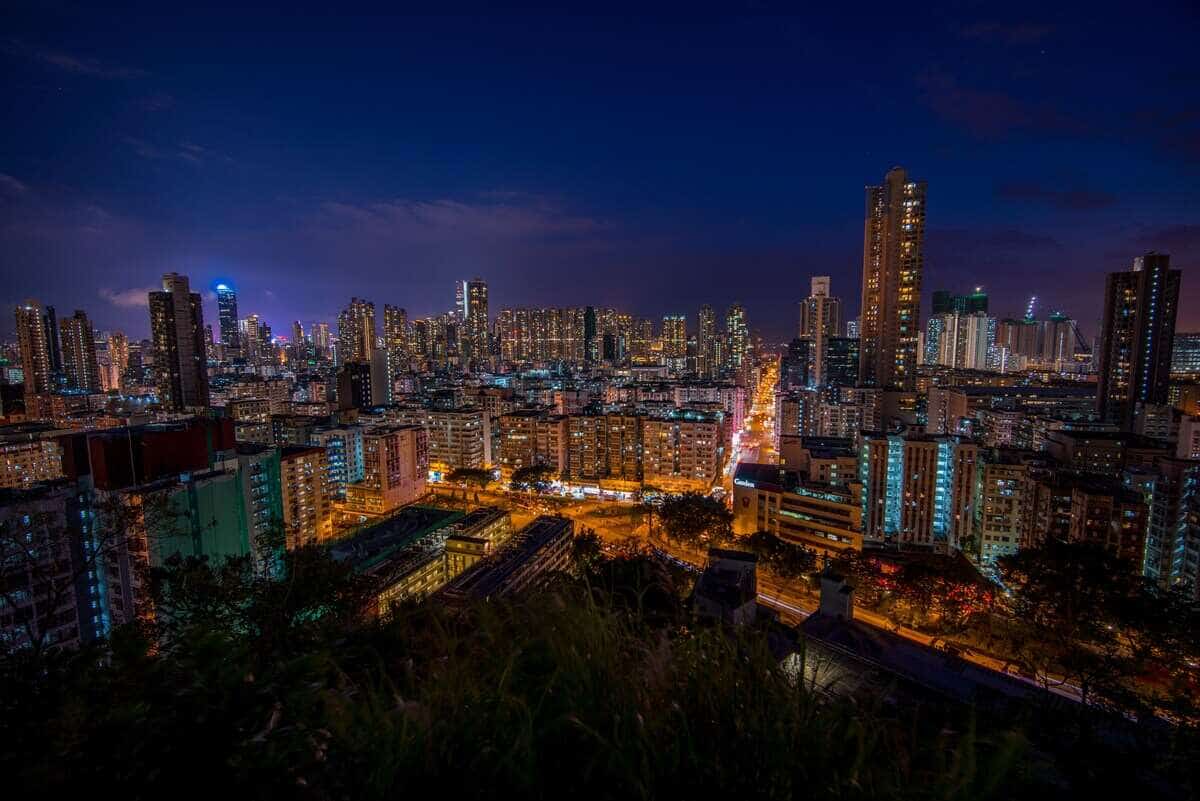
Hong Kong and China are unlocking multi-city tourism as high-speed rail links expand to 113 destinations, giving international travellers more opportunities to combine a Hong Kong holiday with cities across the Chinese Mainland. The Hong Kong Government is strengthening its multi-destination tourism strategy as the share of overseas visitors continuing from Hong Kong into the Mainland rises above 20%. The Hong Kong Tourism Board is being tasked with promoting combined itineraries and working with airlines on tourism products and offers, while the expanding High Speed Rail network gives visitors a practical way to travel onwards from West Kowloon to Shenzhen, Guangzhou, Xiamen, Shanghai, Beijing and dozens of other destinations.
Hong Kong Turns Multi-Destination Tourism Into a Major Strategy
Hong Kong is increasingly presenting itself as more than a standalone city-break destination.
Advertisement
Advertisement
The government’s tourism strategy positions the city as both an international tourism hub and a core demonstration zone for multi-destination tourism.
The objective is straightforward.
Advertisement
Advertisement
An overseas traveller could arrive in Hong Kong, spend several days exploring the city and then continue into the Chinese Mainland instead of ending the holiday there.
The Hong Kong Tourism Board will promote these itineraries internationally and work with airlines on relevant tourism products and promotional offers.
Advertisement
Advertisement
This approach could increase the attractiveness of Hong Kong to long-haul travellers who want to experience several destinations during one journey.
More Than 20% of Overseas Visitors Already Continue to Mainland China
The strategy is responding to an existing travel pattern rather than trying to create one from nothing.
During the first half of 2026, more than 20% of Hong Kong’s overseas visitors continued onwards to the Chinese Mainland.
That proportion has been increasing.
For tourism planners, this creates an opportunity to position Hong Kong as the first stage of a broader China itinerary.
Hong Kong’s multi-destination tourism opportunity
| Indicator | Current position |
|---|---|
| Overseas visitors continuing to Mainland | More than 20% in H1 2026 |
| Direct Mainland HSR stations | 113 |
| Hong Kong HSR gateway | West Kowloon |
| Hong Kong HSR section | 26 kilometres |
| First train from West Kowloon | Around 7am |
| Last train | Around 11pm |
| Long-haul train frequency | Around 25 pairs daily |
| Main tourism strategy | Hong Kong + Mainland multi-destination travel |
The growing rail network makes this tourism model increasingly practical.
Advertisement
Advertisement
High-Speed Rail Now Reaches 113 Mainland Stations Directly
Hong Kong’s High Speed Rail network expanded again on 1 July 2026.
Three stations — Guangzhoubei, Yiwu and Fuqingxi — were added to direct services, bringing the number of Mainland stations directly connected with Hong Kong to 113.
The network covers both nearby and long-distance destinations.
Short-haul travellers can reach places including Shenzhen, Dongguan and Guangzhou.
Longer-distance services connect Hong Kong with destinations such as Xiamen, Shanghai, Beijing, Hangzhou, Wuhan, Chongqing and Chengdu.
Travellers can also change trains within the national high-speed rail network to reach additional destinations.
Advertisement
Advertisement
West Kowloon Becomes the Gateway for Rail-Based Holidays
Hong Kong West Kowloon Station sits at the centre of the strategy.
The station is located in the urban area and connects with other parts of Hong Kong’s transport system.
Passengers can reach Austin Station on the Tuen Ma Line and Kowloon Station on the Tung Chung Line and Airport Express through pedestrian connections.
Bus, minibus and taxi services provide additional access.
This integration is particularly useful for international tourists.
A visitor arriving through Hong Kong International Airport can spend several nights in the city and later travel to West Kowloon for the next stage of the holiday.
Advertisement
Advertisement
There is no need to return to the airport simply to reach a nearby Mainland destination.
Shenzhen and Guangzhou Make Short Extensions Easy
The strongest opportunities may initially come from cities close to Hong Kong.
Shenzhen and Guangzhou can be incorporated relatively easily into a wider Greater Bay Area itinerary.
High Speed Rail services on the Guangzhou-Shenzhen-Hong Kong corridor operate more frequently than long-haul routes.
This gives travellers flexibility over how they structure a regional holiday.
A visitor could potentially combine:
Advertisement
Advertisement
- Hong Kong’s urban attractions and harbour
- Shenzhen’s technology, shopping and contemporary city experiences
- Guangzhou’s Cantonese food and cultural heritage
- Other Greater Bay Area destinations through connecting transport
This model can transform a conventional Hong Kong city break into a multi-city journey without requiring additional flights.
Shanghai and Beijing Extend the Concept Much Further
The rail network also allows Hong Kong to be combined with major Mainland destinations much farther north.
Direct services extend to Shanghai Hongqiao and Beijing West.
Other possibilities include Hangzhou, Nanjing, Wuhan, Xi’an, Chongqing and Chengdu.
For long-haul visitors from Europe, North America, the Middle East and other Asian markets, this can change how a China holiday is constructed.
Hong Kong can function as an international gateway before travellers continue into the Mainland by rail.
Advertisement
Advertisement
The return journey does not necessarily need to follow the same route if the traveller’s visa and immigration arrangements allow another departure point.
240-Hour Visa-Free Transit Could Support Some Travellers
China’s expanded visa-free transit policy can also support certain multi-destination itineraries.
Eligible citizens from 55 designated countries can use the 240-hour visa-free transit system when they satisfy the required conditions.
Hong Kong West Kowloon Station is among the designated ports where eligible travellers can apply for the arrangement.
A qualifying itinerary could, for example, involve travelling from another country into Hong Kong, entering Mainland China and then departing for a third country or region within the permitted period.
Travellers must still meet the nationality, itinerary, documentation and onward-ticket requirements.
Advertisement
Advertisement
The system therefore should not be confused with unrestricted visa-free entry for every visitor.
New Stations Broaden the Tourism Map
The three stations added in July create additional opportunities.
Guangzhoubei provides access to the Huadu area and connections towards Guangzhou Baiyun International Airport.
Yiwu is internationally recognised as a major commercial and wholesale trading centre, making the route potentially important for business travellers as well as tourists.
Fuqingxi expands connectivity into Fujian.
The significance is not simply the addition of three stations.
Advertisement
Advertisement
Every expansion increases the number of itineraries that tourism businesses can potentially build around Hong Kong.
Airlines Could Become Part of the Multi-City Strategy
The Hong Kong Government’s plan is not based solely on rail.
HKTB is also expected to work with airlines to create relevant tourism products and promotional offers.
This could allow Hong Kong to be marketed as part of a larger itinerary from the moment an overseas traveller begins planning.
A long-haul visitor could fly into Hong Kong, explore the city and continue by High Speed Rail into Mainland China.
Depending on the itinerary, another airport could potentially be used for the return journey.
Advertisement
Advertisement
Such arrangements can make multi-city holidays easier than requiring travellers to return to their original arrival point.
Greater Bay Area Tourism Could Gain the Most
The Guangdong-Hong Kong-Macao Greater Bay Area is especially important to the strategy.
Hong Kong’s tourism blueprint explicitly supports multi-destination travel involving the Greater Bay Area and other Mainland provinces and municipalities.
This gives Hong Kong an opportunity to operate as a southern gateway for international visitors.
The geographical proximity of several major destinations makes the region suitable for shorter multi-city holidays.
Rail, bridges, ferries and other cross-boundary transport infrastructure provide several ways for visitors to move around the area.
Advertisement
Advertisement
Hong Kong Wants Visitors to Stay Longer
There is also a clear economic reason behind the policy.
Multi-destination tourism can make Hong Kong more attractive to travellers considering longer Asian holidays.
A visitor from Europe or North America may be more willing to fly long-haul if the trip offers several destinations rather than one city alone.
Hong Kong also wants to extend visitor stays and increase tourism spending.
The government’s 2026 tourism strategy connects multi-destination travel with mega events, culture, aviation and other sectors designed to increase the economic contribution of tourism.
Hong Kong estimates inbound tourism expenditure at HK$238.1 billion in 2026, around 10% higher than the previous year.
Advertisement
Advertisement
Tourism Promotion Will Target Overseas Markets
The government intends to strengthen promotion in established long-haul source markets such as the United States and Canada.
It is also targeting high-potential markets including the Middle East, ASEAN and other parts of Asia and Europe.
These markets are particularly relevant to multi-destination tourism.
Travellers coming from farther away often have stronger reasons to combine several destinations because of the time and cost involved in reaching East Asia.
A Hong Kong-plus-Mainland itinerary can therefore provide greater perceived value than a short standalone trip.
High-Speed Rail Gives Tourism a Lower-Friction Connection
The advantage of rail lies in the continuity of the journey.
Advertisement
Advertisement
Hong Kong’s High Speed Rail section runs 26 kilometres from West Kowloon before joining the Mainland network.
Trains operate at up to 200 kilometres per hour on the Hong Kong section and up to 350 kilometres per hour on Mainland sections.
Direct trains eliminate the need for interchange on many routes.
The service is also less affected by road congestion, making journey times more predictable than some surface alternatives.
For tourists unfamiliar with regional transport, simplicity can be as important as speed.
Multi-Destination Tourism Could Spread Visitor Spending
The strategy has potential benefits beyond Hong Kong.
Advertisement
Advertisement
If more international visitors continue into Mainland cities, tourism spending can be distributed across hotels, restaurants, attractions and transport providers in several destinations.
Hong Kong benefits by strengthening its role as an international gateway.
Mainland cities benefit from easier access to overseas travellers already visiting the region.
This creates a tourism relationship based on complementarity rather than competition.
The traveller does not necessarily have to choose between Hong Kong and a Mainland destination. The objective is to encourage them to visit both.
Conclusion: Hong Kong and China Unlock Multi-City Tourism as High-Speed Rail Links Expand to 113 Destinations
Hong Kong and China are unlocking multi-city tourism as high-speed rail links expand to 113 destinations because international visitors increasingly want flexible journeys that combine several places within one holiday.
Advertisement
Advertisement
The trend is already visible. More than 20% of Hong Kong’s overseas visitors continued into the Chinese Mainland during the first half of 2026.
Hong Kong now wants to turn that behaviour into a larger tourism strategy.
HKTB will promote multi-destination itineraries overseas and work with airlines on travel products, while the High Speed Rail gives tourists direct access from West Kowloon to 113 Mainland stations.
Nearby Shenzhen and Guangzhou provide simple short-haul extensions. Shanghai, Beijing, Chengdu, Chongqing and other cities make much larger itineraries possible.
For Hong Kong, the opportunity is to become more than the final destination on an airline ticket. By combining its international aviation gateway with one of the world’s largest high-speed rail networks, the city can position itself as the starting point for wider journeys through the Greater Bay Area and Mainland China.
Advertisement
