
Europe Stuns Travellers as River Cruise Boom Surges to 1.39 Million Passengers

Published
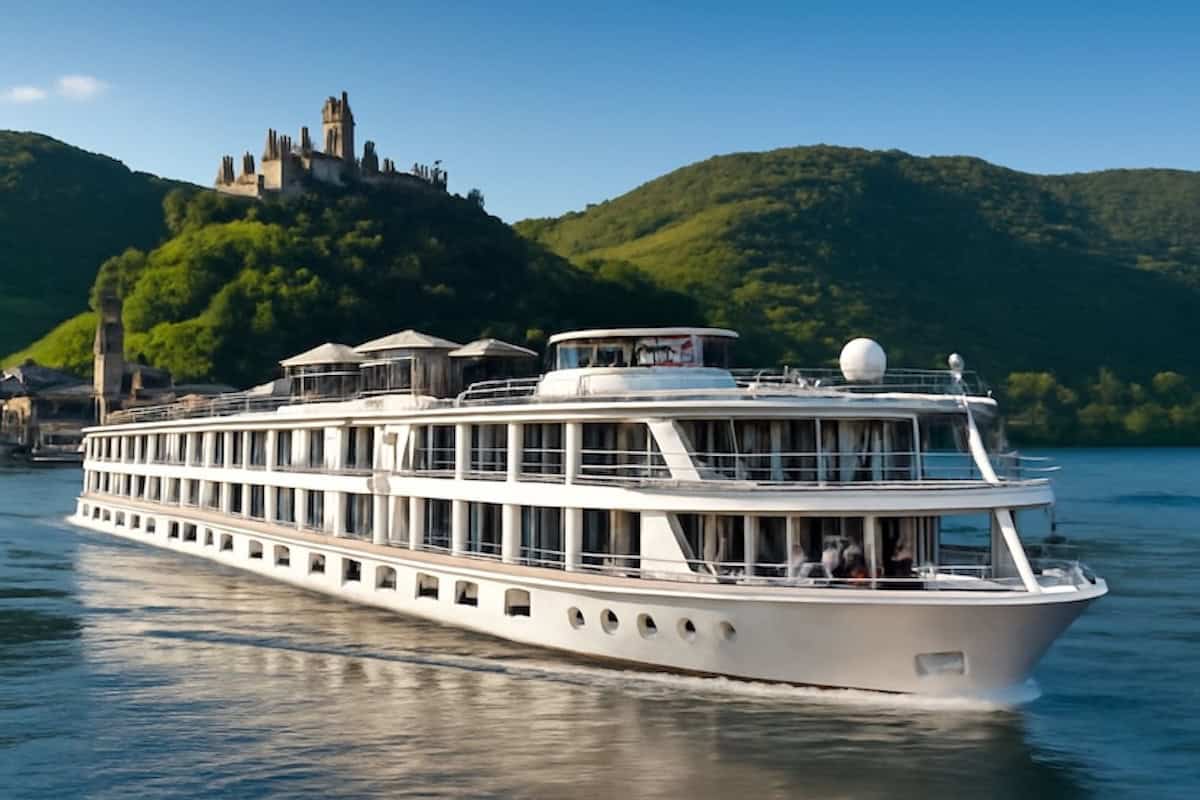
Image generated with Ai
Europe stuns travellers as the European river cruise boom reaches a remarkable 1.39 million passengers, signalling powerful momentum across the continent. Travellers are watching Europe closely as river cruise holidays regain popularity and cruise demand strengthens. Moreover, the river cruise boom is reshaping European travel, with millions of passengers choosing scenic waterways, historic cities and immersive experiences. As Europe attracts more travellers, river cruising is becoming an increasingly important part of the tourism landscape. Meanwhile, Travel And Tour World urges readers to explore the entire story, because these figures reveal how Europe, river cruises and travellers are driving a remarkable tourism recovery across the continent.
European River Cruise Disruptions Continue as Rhine and Danube Water Levels Challenge Summer Travel
European river cruise disruptions remain a major concern for travellers in August 2026. Recent rainfall has provided limited relief, but water levels across important waterways remain exceptionally low.
The European Commission’s Joint Research Centre reported on August 12 that prolonged poor rainfall and repeated heatwaves had intensified drought conditions across Europe. The Loire, Po, Rhine and Danube had reached record-low levels in August.
For international tourists, the situation means that a planned Rhine or Danube holiday may not always operate exactly as advertised.
Advertisement
Advertisement
Rhine Water Levels Remain Exceptionally Low
The Rhine is particularly important for European river cruising, freight transportation and regional tourism.
Advertisement
Advertisement
Officially monitored water conditions remained problematic during August. Reuters reported on August 19 that Rhine levels were still close to record lows despite a modest increase earlier in the week.
The most sensitive location is Kaub in Germany, where water depth has become a critical operational concern.
Low levels can prevent vessels from navigating certain sections normally. Cruise companies may therefore have to adjust routes, transfer passengers or use alternative operational arrangements.
Advertisement
Advertisement
For travellers, the effect can extend beyond the ship itself. A change in navigation may affect sightseeing schedules, hotel arrangements and transportation between destinations.
Danube Conditions Create Another Challenge
The Danube is equally significant for river cruise tourism.
Advertisement
Advertisement
The river passes through several European countries and connects major destinations used by international cruise itineraries.
The current drought has affected navigation conditions along parts of the river. Recent reporting indicates that exceptionally low water levels have affected sections in Germany, Austria and Romania.
The situation is also affecting sectors beyond tourism.
Bulgaria’s Kozloduy nuclear power plant announced a reduction of approximately 120 megawatts from one reactor because of critically low Danube water levels. The reduction represented about 12% of that unit’s capacity.
That demonstrates how serious the river’s water shortage has become.
Advertisement
Advertisement
Cruise Lines Are Adjusting Traveller Plans
Low water does not automatically mean every river cruise will be cancelled.
Operators can use several strategies to keep holidays moving.
These can include changing embarkation points, arranging coach transportation, transferring passengers between vessels, modifying sightseeing schedules and, in some cases, cancelling individual departures.
Recent industry reporting said more than half of Viking’s European river-cruise days were affected by low-water issues between mid-July and mid-August. Around 10% to 12% of customers on affected itineraries reportedly chose to cancel.
For passengers, this highlights the importance of checking their specific sailing rather than assuming that conditions are identical across an entire river.
Advertisement
Advertisement
Why Recent Rain Has Not Solved Everything
Rainfall can raise river levels, but its impact is not necessarily immediate or uniform.
The European Commission says the continent’s drought worsened through July and August following poor rainfall and repeated heatwaves.
The European Drought Observatory is also monitoring low-flow conditions across Europe.
This explains why a period of rain does not automatically restore normal navigation throughout the Rhine or Danube.
Some stretches can recover faster than others.
Advertisement
Advertisement
What Travellers Should Do Before Departure
Travellers with upcoming European river cruises should monitor their cruise operator’s latest sailing updates.
Passengers should also avoid making tightly connected flight or hotel arrangements without allowing additional flexibility.
Travel insurance terms should be checked carefully, particularly regarding cancellations, itinerary alterations and missed connections.
Most importantly, tourists should understand that an itinerary modification does not necessarily mean their entire holiday has been lost.
Cruise companies can often preserve major sightseeing experiences through alternative transportation and revised schedules.
Advertisement
Advertisement
Europe River Cruises Face a New Travel Reality
The current disruption demonstrates how closely river tourism depends on weather and water conditions.
The UK’s government has also documented declining river flows and increasing localised navigation restrictions during the country’s 2026 dry conditions.
For global travellers, the lesson is straightforward.
European river cruising remains possible, but flexibility is increasingly important.
Before boarding a Rhine or Danube cruise, tourists should check the latest operator announcement, understand possible changes and keep their wider travel schedule adaptable.
Advertisement
Advertisement
Recent rain has offered some hope, but Europe’s major rivers continue to face unusually difficult conditions.
A Five-Year Data Review Shows How Europe’s River Tourism Recovered From COVID-19 and Reached New Records
European river cruising has undergone one of the most dramatic recoveries in the travel industry over the past five years. However, the available official data needs to be interpreted carefully because there is no single European statistical series covering every year from 2020 through 2025 on exactly the same basis.
The most comparable industry-government dataset is produced through the Central Commission for the Navigation of the Rhine (CCNR) and its European inland-waterway market observation work. It measures passengers travelling on European rivers in cabin vessels. The latest fully comparable figure is 1.39 million passengers in 2024, up 14% from 2023, with gross ticket sales reaching €3.54 billion.
Five-Year European River Cruise Passenger Data
| Year | European river cruise passenger picture | Change/trend | Key reason |
|---|---|---|---|
| 2020 | Near-complete collapse in activity | Massive decline | COVID-19 restrictions and suspension of cruising |
| 2021 | Recovery began, but below normal levels | Rising from 2020 | Reopening, health protocols and pent-up demand |
| 2022 | Strong recovery | Passenger demand increased | International travel reopened and postponed holidays returned |
| 2023 | 1.22 million passengers | Positive recovery | Capacity and vessel movements approached pre-pandemic levels |
| 2024 | 1.39 million passengers | +14% year on year | Strong international demand and higher vessel utilisation |
| 2025 | No comparable Europe-wide passenger total yet published by CCNR | Evidence points to continued strong demand | High bookings, expanding capacity and renewed investment |
The figures demonstrate an important point for travellers: European river cruising has moved from pandemic disruption into a period of strong demand.
2020: European River Cruising Nearly Stopped
The first year of the five-year period was dominated by COVID-19. The CCNR described passenger transport, including river cruises and day excursions, as coming to an almost complete standstill during the first half of 2020. This makes 2020 fundamentally different from the following years and explains why a clean year-on-year passenger comparison is not available.
Advertisement
Advertisement
The collapse followed international border restrictions, travel bans, health requirements and widespread suspension of tourism operations. European river cruising was particularly vulnerable because many itineraries cross several national borders. A single country’s restrictions could therefore affect an entire multi-country itinerary. The industry entered 2020 from a position of strength: European rivers had carried approximately 1.79 million cruise passengers in 2019, after demand grew 9.9%. That provides a useful pre-pandemic benchmark against which the subsequent collapse can be understood.
2021: Demand Returned as Europe Reopened
River cruising began rebuilding in 2021 as European destinations gradually reopened. However, passenger volumes remained affected by changing border requirements, health regulations and uneven reopening schedules.
The recovery was not simply driven by new customers. A major component was postponed travel. Travellers who had cancelled or deferred 2020 holidays began returning when sailing became possible.
This period also changed how passengers viewed river cruises. Smaller vessels and outdoor destination experiences became attractive to travellers seeking less crowded ways to explore Europe. The recovery therefore established the foundation for the much stronger growth recorded later.
2022: Recovery Accelerated but Low Water Became a New Risk
By 2022, international tourism had reopened much more extensively. River cruise operators were able to restore additional capacity, and European itineraries attracted returning North American and European passengers.
Advertisement
Advertisement
Yet 2022 also demonstrated that the sector faced risks beyond COVID-19. Severe low-water conditions affected important waterways, particularly the Rhine and Danube. CCNR data show that the Rhine experienced substantially more low-water days in 2022 than in 2021. At Kaub, for example, the number of days below the equivalent water level increased from 10 in 2021 to 41 in 2022. At Cologne, the figure increased from 9 to 52 days, while Emmerich increased from 27 to 65 days.
The Danube also experienced difficult conditions. At Pfelling, days below the low navigable water level increased from 36 in 2021 to 71 in 2022, while Calafat increased from 53 to 127 days.
For travellers, these figures show why river cruising can remain operationally vulnerable even when passenger demand is strong.
2023: Europe Reached 1.22 Million River Cruise Passengers
The recovery became much clearer in 2023. The CCNR recorded 1.22 million passengers from around the world travelling on European rivers.
The Rhine and Danube remained Europe’s most frequently used river cruise corridors. The largest source markets were the United States and Canada with 515,157 passengers, followed by Germany, Austria and Switzerland with 450,701, while France accounted for approximately 100,100 passengers.
Advertisement
Advertisement
The 2023 results were important because vessel movements and capacity utilisation were also approaching pre-pandemic conditions. The European river cruise fleet contained 408 active vessels with 60,702 beds, compared with 410 vessels and 60,639 beds in 2022.
The recovery therefore became more than a temporary rebound. Operators were seeing enough demand to maintain substantial capacity.
2024: Passenger Numbers Jumped 14% to 1.39 Million
2024 delivered the strongest comparable growth in the five-year recovery period. European rivers welcomed approximately 1.39 million river cruise passengers, an increase of 14% from 2023.
The economic value was equally significant. Gross river cruise ticket sales reached approximately €3.54 billion, also increasing 14% year on year.
North American travellers remained the largest international customer group. USA and Canada supplied 571,682 passengers, representing approximately 41% of the market. Germany, Austria and Switzerland contributed 506,003 passengers, equivalent to approximately 37%. Together, these two groups represented roughly 78% of the recorded market.
Advertisement
Advertisement
The fleet remained stable at 408 vessels. Seven new river cruise vessels entered service, while seven were withdrawn. Another notable development was the repurposing of 18 older vessels as floating hotels, largely because of increased accommodation demand linked to the continuing war in Ukraine.
2025: Strong Demand Continued, but Europe-Wide Passenger Data Remain Pending
A complete, directly comparable CCNR passenger total for the 2025 European river cruise season is not yet available in the sources reviewed. Therefore, it would be misleading to invent a continent-wide passenger number.
However, available official and industry evidence indicates that demand remained strong. CCNR reported that some operators were already seeing exceptional booking performance. Navibelle, for example, reported that all its vessels were fully booked during 2024 and that its 2025 programme was already sold out. CCNR also said river cruise capacity utilisation was recovering strongly.
Viking’s financial filing provides another useful market indicator. Its river operation carried 414,758 passengers in 2025, compared with 381,870 in 2024 and 366,730 in 2023. That represents an increase of approximately 8.6% between 2024 and 2025 and about 13.1% over two years. Viking’s 2025 river occupancy reached 96.0%, compared with 95.4% in 2024 and 95.5% in 2023.
These figures are company-specific, not European market totals, but they provide evidence that demand continued expanding into 2025.
Advertisement
Advertisement
Why European River Cruising Recovered So Strongly
Several factors explain the passenger increase. The first was the release of enormous pent-up demand after COVID-19. International travellers returned to Europe, while postponed holidays were converted into actual bookings.
The second factor was the strength of North American demand. In 2024, USA and Canadian travellers alone represented 41% of European river cruise passengers. Their long-haul travel patterns also helped generate disproportionately high revenue. Overseas passengers represented only 46% of total passengers but generated 71% of revenue, according to CCNR.
A third factor was improved vessel utilisation. On the Danube at Jochenstein, first-half 2024 river cruise vessel capacity utilisation reached 75.2%, compared with 52.1% during the same period in 2023 and 76.0% during the first half of 2019. This shows the market had almost returned to its pre-pandemic utilisation level.
What the Numbers Mean for Travellers
The five-year story is therefore not simply one of passenger growth. It is a story of collapse, reopening, recovery and expansion.
The sector moved from near-total disruption in 2020 to 1.22 million passengers in 2023 and 1.39 million in 2024. At the same time, demand has encouraged operators to maintain and expand capacity.
Advertisement
Advertisement
However, today’s traveller faces a different challenge from the pandemic years.
Instead of primarily worrying about border closures, passengers increasingly need to consider water levels, drought, extreme weather and navigation conditions. The same rivers that attracted record demand in 2024 are also exposed to environmental disruption.
For tourists planning a Rhine, Danube, Seine, Rhône or Douro holiday, the lesson is clear. Demand for European river cruising is exceptionally strong, but the operating environment is becoming more complicated.
The historical data suggest that river cruising has recovered remarkably well. The latest evidence also suggests that 2025 continued that upward trajectory, although a definitive Europe-wide passenger figure should only be published once the relevant annual statistical series becomes available.
Conclusion
Europe’s river cruise boom shows how strongly travellers have returned to European waterways. The rise to 1.39 million passengers highlights growing interest in scenic journeys, historic destinations and multi-country holidays. However, changing river conditions remain an important challenge for future travellers. Rhine and Danube itineraries can be influenced by drought, rainfall and water levels. Therefore, tourists should check sailing updates before departure and keep their plans flexible. As European river cruising continues evolving, its strong passenger recovery signals lasting travel demand. For global travellers, Europe remains a compelling river cruise destination, offering culture, scenery and memorable experiences across some of the continent’s most iconic waterways.
Advertisement
