
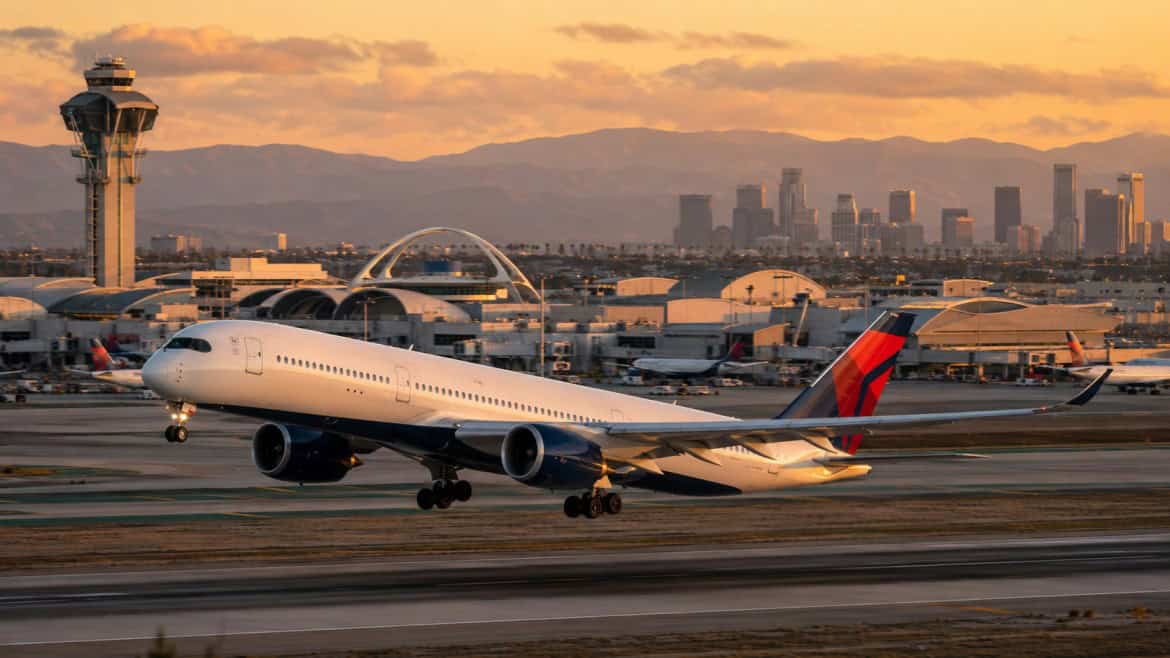
Image generated with Ai
Delta Air Lines Flight DL2196 from Fort Lauderdale to Boston safely diverted to Syracuse, New York, after leaving Florida, with no reported injuries.
Delta Air Lines Flight DL2196 shocked passengers after the Fort Lauderdale to Boston journey ended in a dramatic flight diversion across the United States, drawing widespread attention from travellers following airlines operations in the USA. The aircraft safely diverted to Syracuse instead of reaching its planned destination, prompting questions about what unfolded during the evening service. Although diversions are uncommon, they remain an important safety procedure whenever crews determine that continuing to the original airport may not be the best option. Consequently, this incident highlights how airlines across the United States prioritise passenger safety above operational convenience.
Delta Air Lines Flight DL2196 departed Fort Lauderdale-Hollywood International Airport for Boston Logan International Airport aboard a Boeing 737-800 on 5 July 2026. The service left shortly after its scheduled departure time before eventually carrying out a flight diversion to Syracuse Hancock International Airport in New York rather than continuing to Boston. Flight-tracking records confirmed the aircraft reached Syracuse safely, while passengers remained on board without reports of injuries or emergency evacuations, making the event another example of how airlines in the United States carefully manage unexpected operational situations.
At present, Delta Air Lines has not publicly confirmed why the aircraft decided to divert, and no official statement has identified whether weather, air traffic congestion, a technical precaution, crew requirements or another operational factor influenced the decision. Because of that, aviation observers should avoid speculation until verified information becomes available from the airline or aviation authorities. Nevertheless, a flight diversion is a recognised safety measure used by airlines throughout the USA, allowing crews to respond quickly whenever conditions change during flight without compromising passenger wellbeing.
Advertisement
Advertisement
Whenever airlines operating in the United States initiate a flight diversion, several coordinated procedures immediately begin behind the scenes. Air traffic controllers guide the aircraft towards the alternate airport while airport emergency services remain prepared, even when no emergency has been declared. Ground handling teams organise passenger support, fuel requirements and any maintenance inspections that may become necessary before the aircraft can either continue its journey or remain overnight. These well-practised procedures help minimise disruption while ensuring that safety remains the highest priority.
Passengers affected by a flight diversion are normally kept informed through cabin announcements, airline mobile applications and customer service representatives once the aircraft reaches the alternate airport. Depending upon the reason for the decision to divert, travellers may continue on the same aircraft, transfer to another service or receive overnight accommodation if required. Such responses demonstrate how airlines across the USA prepare contingency plans for unusual events, ensuring that operational flexibility supports passenger care whenever flights cannot proceed exactly as scheduled.
Although no official cause has yet been confirmed, aviation experts frequently note that a flight diversion may result from changing weather conditions, congestion at the destination airport, medical situations, technical inspections or precautionary operational decisions. Airports across the United States regularly experience rapidly changing weather patterns that can affect arrival sequencing, runway availability and air traffic management. Even when conditions appear manageable from the ground, flight crews receive real-time operational data that may justify choosing an alternate airport.
Boston Logan International Airport occasionally experiences arrival delays during busy travel periods, particularly during holiday weekends when passenger demand increases across the USA. However, there is currently no official evidence linking congestion or weather directly to Delta Flight DL2196. Until Delta Air Lines releases further information, the exact reason why the aircraft chose to divert remains unknown. Regardless of the eventual explanation, this flight diversion once again illustrates why airlines operating throughout the United States place safety and operational judgement ahead of maintaining scheduled arrival times.
Advertisement
Advertisement
Delta Air Lines Flight DL2196 safely completed a flight diversion after leaving Fort Lauderdale for Boston, ultimately landing at Syracuse Hancock International Airport in the United States. While the precise reason remains unconfirmed, the incident demonstrates how modern airlines are prepared to divert aircraft whenever operational circumstances demand immediate action. Throughout the USA, such decisions are made to protect passengers, crew members and aircraft rather than preserve schedules. Until an official explanation is released, the diversion should be viewed as a precautionary measure that reflects the aviation industry’s unwavering commitment to safety, professionalism and responsible decision-making.
The confirmed answer is that Delta Air Lines Flight DL2196 carried out a flight diversion and safely diverted to Syracuse instead of Boston during its journey across the United States. The cause, however, has not yet been officially disclosed by the airline. Therefore, no verified evidence currently attributes the diversion to weather, mechanical issues, a medical event or air traffic restrictions. The reason remains under review until Delta provides further information. Nevertheless, airlines across the USA routinely make precautionary diversion decisions whenever flight crews determine that an alternate airport offers the safest operational outcome.
Advertisement
Tags: Boston Logan Airport, delta air lines, flight diversion, Syracuse Hancock International Airport, United States
Advertisement
Advertisement












Saturday, September 5, 2026

Saturday, September 5, 2026

Saturday, September 5, 2026

Saturday, September 5, 2026

Saturday, September 5, 2026
Saturday, September 5, 2026

Saturday, September 5, 2026

Saturday, September 5, 2026



