
American, United and More Lead the Busiest Airlines Ranking across the Globe Since 2024

Updated
Published
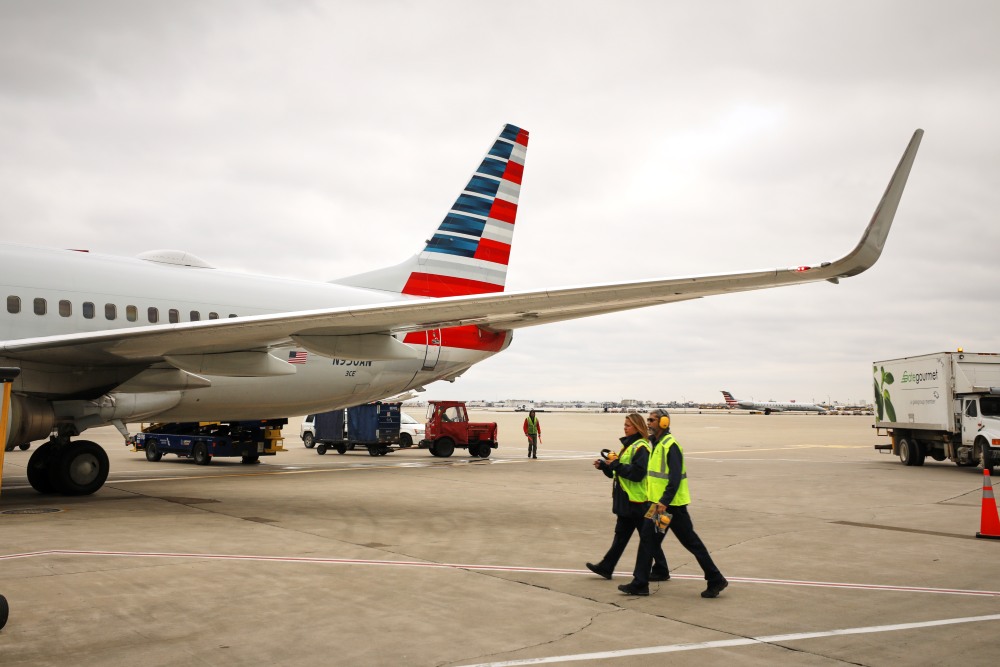
Additionally, American and United Airlines topped the Globe’s Busiest Airlines Ranking since 2024, demonstrating how big airlines influenced global aviation expansion. More airlines, including more up-and-coming rivals, are growing their networks with more robust schedules, according to the most recent data. American operated about 2.18 million flights in 2024, while United expanded its domestic and foreign lines to increase its worldwide footprint. The top ten airlines are highlighted in the list, along with an explanation of how they were able to hold their positions. As carriers boost capacity, enhance connectivity, and compete in international markets, aviation demand will continue to rise by 2026. These modifications demonstrate why the aviation sector is still fiercely competitive and always changing. Using data from the global years 2024 and 2026, this study looks at the major themes driving airline expansion.
Which airlines dominated the global flight rankings in 2024?
The world’s busiest airlines ranking in 2024 was led by American Airlines, which operated approximately 2.18 million scheduled one-way flights, according to data published by Visual Capitalist. The US carrier secured the top position because of its enormous domestic network, extensive hub system and strong regional connectivity.
The ranking revealed a powerful mix of traditional aviation giants and low-cost carriers. Ireland’s Ryanair secured the second position with more than 1.1 million scheduled flights, proving the continued strength of Europe’s low-cost aviation model. Meanwhile, Delta Air Lines, United Airlines and Southwest Airlines maintained their positions among the world’s busiest carriers because of the scale of the US domestic market.
The top 10 list also highlighted the growing importance of Asia. China Eastern Airlines, China Southern Airlines, Air China and India’s IndiGo ranked among the leading airlines by flight frequency. The presence of IndiGo was particularly significant because it reflected India’s rapid aviation expansion and increasing demand for affordable air travel.
Advertisement
Advertisement
The data shows that flight frequency is heavily influenced by domestic connectivity. Airlines serving large populations with dense city networks naturally achieve higher numbers of daily departures.
Why did American Airlines remain the world’s busiest carrier?
American Airlines’ leadership in the global flight ranking is largely connected to the size and structure of the US aviation market. The United States remains one of the largest aviation markets worldwide, supported by strong domestic passenger demand and a vast network of airports. The International Air Transport Association (IATA) reported that the US remained the world’s biggest aviation market in 2024, handling 876 million passengers.
Advertisement
Advertisement
American Airlines benefits from a hub-and-spoke model built around major airports including Dallas/Fort Worth, Charlotte, Miami, Chicago and Phoenix. These hubs allow the airline to operate hundreds of daily flights connecting passengers across the country.
Another important factor is American’s regional network. Through regional partners operating under the American Eagle brand, the airline can provide frequent services to smaller cities while feeding passengers into major hubs.
The carrier’s dominance also reflects the importance of short-haul domestic flights. While international airlines may operate longer journeys, American’s large number of domestic routes creates significantly higher flight frequency.
According to aviation data from OAG, American Airlines also ranked first for flight volume and seat capacity in 2024, reinforcing its position as one of the largest aviation operators globally.
How did Ryanair challenge traditional airline giants?
Ryanair’s second-place position in the Visual Capitalist ranking demonstrates how low-cost airlines have transformed the global aviation industry. Unlike traditional network carriers that depend heavily on major hubs, Ryanair built its success around high aircraft utilisation, secondary airports and frequent short-haul services.
The Irish airline operated more than one million scheduled flights in 2024, making it Europe’s strongest airline by flight frequency. Its growth has been driven by strong leisure travel demand across Europe and a business model focused on affordable fares.
Advertisement
Advertisement
Ryanair’s fleet strategy has also supported expansion. Operating large numbers of Boeing 737 aircraft allows the airline to maintain efficient schedules and quickly increase capacity on popular routes.
The airline’s success reflects a broader trend in global aviation. Passengers increasingly choose affordable regional connections, particularly for tourism and short breaks.
European aviation has recovered strongly after pandemic disruption, and low-cost carriers have captured much of the returning leisure demand. Ryanair’s position among the world’s busiest airlines proves that high-frequency operations are no longer dominated only by traditional flag carriers.
Why are IndiGo and Asian airlines becoming aviation growth leaders?
India’s IndiGo has emerged as one of the most important aviation growth stories between 2024 and 2026. The airline’s appearance among the world’s busiest carriers reflects India’s expanding middle class, rising tourism demand and increasing domestic air travel.
IndiGo’s growth has been supported by a large Airbus A320neo family fleet, allowing the airline to operate frequent flights between major cities while expanding into regional markets.
India’s airport development has also played a major role. Government investment in airport infrastructure and regional connectivity has created opportunities for airlines to increase services beyond traditional metropolitan routes.
Advertisement
Advertisement
Chinese airlines also remain highly influential because of the size of China’s domestic aviation market. China Eastern Airlines, China Southern Airlines and Air China continue operating extensive networks connecting major population centres.
However, Asia’s aviation recovery has developed differently across markets. While China has been rebuilding international capacity, India has experienced one of the strongest domestic growth trajectories.
This shift means future airline rankings may increasingly feature Asian carriers alongside established US and European leaders.
What changed in airline competition between 2024 and 2026?
Between 2024 and 2026, the global airline industry experienced several major changes. The biggest trend was the increasing importance of emerging aviation markets, particularly India and Southeast Asia.
Fleet availability became another critical factor. Aircraft delivery delays from manufacturers affected airline expansion plans worldwide. Carriers with access to additional aircraft gained an advantage in increasing flight frequencies.
Passenger behaviour also influenced airline strategies. Leisure travel remained a major growth driver, supporting low-cost carriers such as Ryanair and IndiGo.
Advertisement
Advertisement
At the same time, traditional US airlines maintained their strength because of their extensive domestic networks. American Airlines, Delta Air Lines, United Airlines and Southwest Airlines continued benefiting from strong internal demand.
The ranking changes show that airline success depends on more than international reach. A carrier’s domestic market size, aircraft utilisation, airport access and operational efficiency are equally important.
Will Asian airlines overtake US carriers in the future?
The future battle for the world’s busiest airline will depend on how quickly emerging aviation markets expand. American Airlines currently holds a significant advantage because of the scale of US domestic travel.
However, IndiGo represents a new generation of airline growth. India’s aviation market is expanding rapidly, and increasing passenger demand could push Indian carriers higher in future rankings.
Asian airlines are also benefiting from rising regional travel, economic growth and improved airport infrastructure.
The global aviation industry is therefore entering a new competitive era. US airlines continue to dominate flight frequency, but Asian carriers are becoming powerful challengers.
The 2024 ranking from Visual Capitalist shows a clear message: the busiest airlines are those that combine massive networks, efficient operations and access to fast-growing passenger markets. As aviation continues expanding through 2026 and beyond, the competition between established giants and emerging champions is expected to become even stronger.
Advertisement
