
South Africa Tourism Investment Push Raises Big Questions About Local Benefits

Published
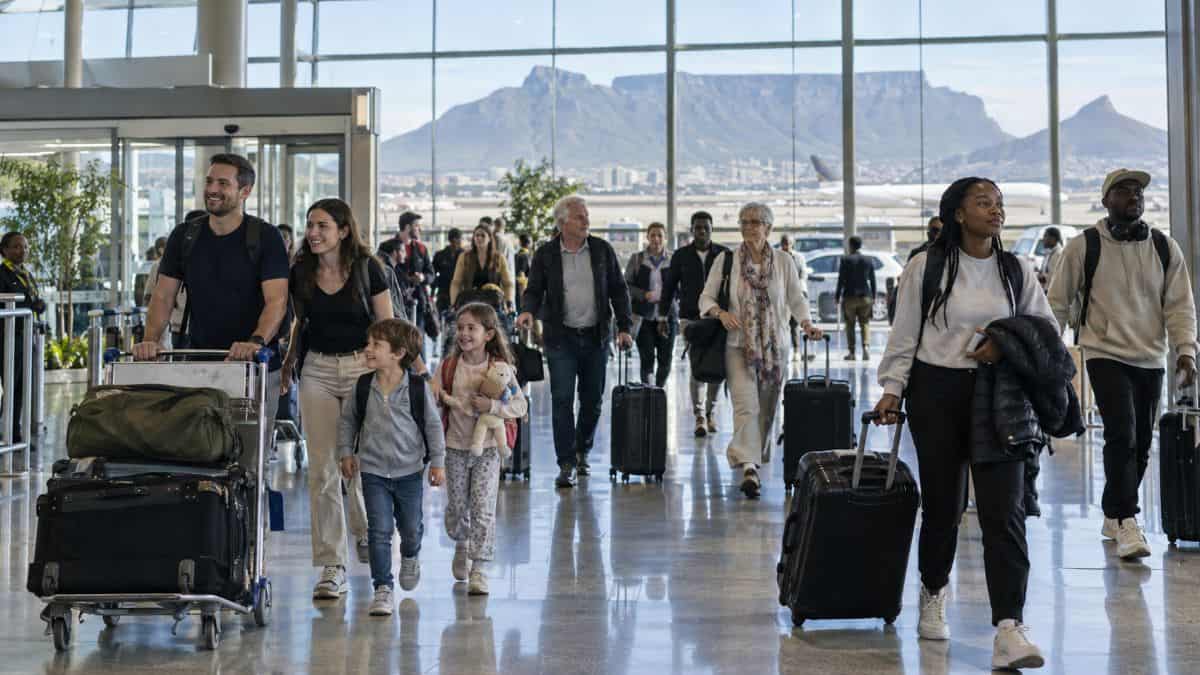
The South African initiative to invest in tourism poses serious concerns regarding who would benefit from increased tourism activities in the country. The country had over one million visitors in August, while there was an increase in visitor numbers by 11.7 percent within the first eight months of 2026. Increased interest does not necessarily mean that local businesses will benefit. Accommodation figures during July indicated increased income in guesthouses, moderate income in hotels, and reduced income in camping sites. However, the government has set out an investment plan worth R3.5 billion. The issue now is whether this investment plan will lead to sustained employment creation and other developments.
One Million Tourists Arrived in August
South Africa received 1,005,286 international tourists in August 2026. That was 7.4% more than in August 2025. From January to August, the country recorded 7,581,455 international tourist arrivals, an increase of 11.7% on the same period last year.
Advertisement
Advertisement
The August result gives the story a strong opening. But the figures need careful wording. They count tourists, meaning visitors who stayed overnight. They do not represent every traveller who crossed a border, and they do not prove that every visitor stayed in a hotel.
The safest description is simple: South Africa welcomed more than one million international tourists in August. The figures show strong growth. They do not, on their own, explain how much each visitor spent or which businesses benefited.
Advertisement
Advertisement
July Figures Show the Hotel Challenge
The latest official accommodation report covers July 2026, one month before the August arrival figures. It shows that hotel occupancy stood at 56.2% in July. Hotels sold about 1.28 million stay-unit nights, up 4.8% on July 2025.
Yet hotel accommodation income rose by just 0.8% year on year. The average income per stay-unit night sold fell by 3.9%. These measures suggest that more hotel nights were sold, but the increase in room income was much smaller. The figures do not show why that happened, and they do not measure hotel profits.
Advertisement
Advertisement
That gap gives the article a strong analytical question: when more visitors come, are accommodation businesses earning more from each night they sell?
Guest Houses and Camping Sites Tell Different Stories
Hotels were not the only part of the accommodation picture. In July, guest houses and guest farms recorded a 28.2% rise in accommodation income compared with the same month a year earlier. Other accommodation grew by 15.7%. Caravan parks and camping sites moved in the opposite direction, with accommodation income falling by 19.7%.
The overall sector still grew. Stay-unit nights sold increased by 7.4%, while accommodation income rose by 7.0%. Average income per stay-unit night sold edged down by 0.3%. The data therefore point to a broad rise in activity, but with very different results across accommodation types.
This makes the story more useful than a report that focuses only on hotel occupancy. South Africa’s visitor economy includes many kinds of places to stay, and their latest results vary.
Regional African Travel Drives Arrivals
South Africa’s August tourist numbers were strongly shaped by travel from nearby countries. Visitors from the Southern African Development Community, or SADC, made up 78.3% of all tourists. Mozambique, Zimbabwe and Lesotho were the largest SADC source markets in the month.
Road travel also played a major role. Nearly three quarters of all tourists arrived by road. Among SADC tourists, the share was higher still: 92.2%. These figures show why South Africa’s tourism story cannot be told only through airports and long-distance flights. Road routes and regional connections are central to the visitor picture.
Advertisement
Advertisement
The United States was South Africa’s largest overseas source market in August, followed by the United Kingdom and Germany. Those markets matter, but they should not be described as the largest international sources overall. Nearby African countries accounted for far more arrivals.
The Spending Question Is Still Open
Visitor numbers tell readers how many tourists arrived. They do not show how much each group spent, how long each person stayed, or which businesses received the money.
That distinction matters when comparing arrivals with hotel income. Some tourists stay with friends or family. Some use other types of accommodation. Others may travel through a destination without booking a hotel. So a rise in international arrivals does not automatically mean hotel revenues will rise at the same rate.
The July data show increased stay-unit nights sold across the accommodation industry. They also show that average income per night sold was slightly lower. Together, these figures allow an article to explore the link between demand and earnings, while avoiding claims the data cannot support.
A strong follow-up would ask where visitors stay, how long they remain and how much they spend in local businesses. Those answers would help show whether growth is spreading beyond arrival totals.
A R3.5 Billion Project Pipeline Raises the Stakes
At the South African Tourism Investment Summit on 1 October 2026, Tourism Minister Patricia de Lille said the country’s tourism project pipeline had grown from eight projects valued at R1 billion to 15 projects valued at R3.5 billion. She said three projects had secured funding commitments.
Advertisement
Advertisement
The projects include accommodation, tourist attractions, heritage spaces, entertainment facilities and infrastructure. This gives the tourism growth story a new dimension. The government is seeking investment in places and experiences that could broaden what visitors can see and do.
The article must describe this accurately. A project pipeline is not the same as completed investment. A funding commitment does not mean a project has opened. The R3.5 billion figure is the stated value of the pipeline, not proof that all the money has been spent.
That distinction can help readers understand both the ambition and the work still ahead.
New Projects Could Expand the Visitor Map
The tourism investment summit pointed to projects across accommodation, attractions, heritage and entertainment. The Minister also highlighted the potential of places such as the Wild Coast, the Karoo and the Drakensberg, as well as towns and rural areas.
This creates an opportunity to ask whether new projects will draw visitors beyond the country’s best-known destinations. Will they encourage longer stays? Will they give tourists more reasons to travel between regions? Could local businesses supply goods and services to the new developments?
Those are useful reporting questions. They should not be presented as proven results. Government statements describe plans and potential. The arrival and accommodation statistics show recent activity. Further evidence will be needed to show how investment changes travel patterns or local incomes.
Advertisement
Advertisement
A compelling article can place the proposed developments beside the recent arrival figures, then examine how the plans move from presentation to construction and operation.
Infrastructure Needs to Work for Communities
Parliament’s Portfolio Committee on Tourism received an update on tourism infrastructure projects in August. It was told that the Development Bank of Southern Africa had been responsible for 71 projects. Of these, 54 had reached practical completion. The delivered infrastructure was valued at about R885 million. The programme had created 1,323 employment opportunities and benefited 299 small businesses and subcontractors.
The committee also raised concerns. These included poor contractor performance, budget pressure, vandalism, delays in municipal services and disputes involving communities. It stressed that completed facilities must remain useful and sustainable.
This evidence adds an important test to the investment story. Tourism infrastructure matters when visitors can use it and communities can benefit from it. A completed building alone does not show whether a site attracts tourists, supports local businesses or remains in good condition.
The article can use these findings to explore what successful delivery looks like after construction ends.
Government Is Trying to Improve Project Preparation
In August, the Department of Tourism and the Department of Public Works and Infrastructure announced a three-year agreement. Infrastructure South Africa will provide specialist support, including investment expertise and advice on preparing projects for investors. The Tourism Department will retain responsibility for its investment facilitation service.
Advertisement
Advertisement
In plain terms, the agreement is meant to help tourism projects move from an idea to a plan that can attract funding and proceed towards delivery. Better preparation may help remove some barriers. But the announcement does not prove that projects will finish faster or that every project will secure investment.
That makes the agreement a useful part of the policy context. It shows a government response to challenges around project readiness. Later reporting can test whether the support produces results.
Readers will want to know how many projects reach construction, how many open to visitors and whether the facilities continue to operate. Those measures will matter more than the size of a pipeline alone.
Tourism Already Supports Jobs and Economic Activity
Tourism directly employed 953,981 people in 2024, equal to 5.7% of total employment. The sector’s direct contribution to GDP reached 4.9% that year. These are annual estimates, not a count of jobs created by the 2026 visitor increase.
The figures help explain why tourism investment attracts attention. The sector includes accommodation, transport, food, retail and visitor experiences. It can support many kinds of businesses, from large operators to small local firms.
But the article should not imply that every new tourist creates a job or that every tourism project benefits nearby residents. The 2024 figures describe the sector’s overall contribution. They do not show how the latest arrivals affected individual workers or communities.
Advertisement
Advertisement
A useful analysis can connect the sector’s economic importance with the questions raised by the infrastructure data: who gains from tourism growth, and what helps those gains last?
Domestic Travel Adds Another Layer
At the investment summit, the Minister said domestic overnight trips reached 44.7 million in 2025, with spending of R111.6 billion. She also said South Africa welcomed a record 10.5 million international arrivals in 2025, with expenditure of R102.2 billion.
These figures suggest that the country’s tourism industry serves both local and international demand. Domestic trips may support businesses at different times and in different places from overseas travel. But the two measures should remain separate in the article: domestic trips are not the same as international arrivals.
The domestic market also gives the investment story wider scope. New attractions and accommodation can serve residents as well as overseas visitors. The key question is whether projects offer experiences that people can access and businesses can sustain.
Use these figures as context, and clearly label them as 2025 results.
Keep the Numbers in Their Proper Context
The available statistics measure different things and cover different periods. The August tourist figure counts international overnight visitors. The July accommodation report measures registered short-stay commercial accommodation. The investment pipeline describes proposed projects. The employment figures refer to 2024.
Advertisement
Advertisement
These measures should not be blended into one claim. In particular, more tourists do not prove that hotel occupancy rose in August. July’s hotel occupancy figure cannot be presented as an August result. Nor does accommodation income show profit.
Border data count movements, so one person may appear more than once if they travel across the border several times. A tourist is an overnight visitor, and that person may stay in private accommodation rather than a hotel.
Clear labels will make the story stronger. Readers can then see what grew, when it grew and what the figures do not yet reveal.
South Africa’s Next Tourism Test
The rising tourism numbers in South Africa will now show whether an increase in tourists translates to increased hotel profits. Over one million tourists visited South Africa in August. The number of tourists that came to South Africa from January to August increased by 11.7 percent. However, there are several complications with the accommodation industry in July. More accommodations have been sold, but there is only a marginal increase in hotel revenue. Guest houses have been doing better than camping sites. On the other hand, the government currently has R3.5 billion worth of projects for the tourism industry.
Advertisement
