
Prague Joins Rome and Amsterdam Airports Introduce AI Skincare Experiences for Travellers

Published
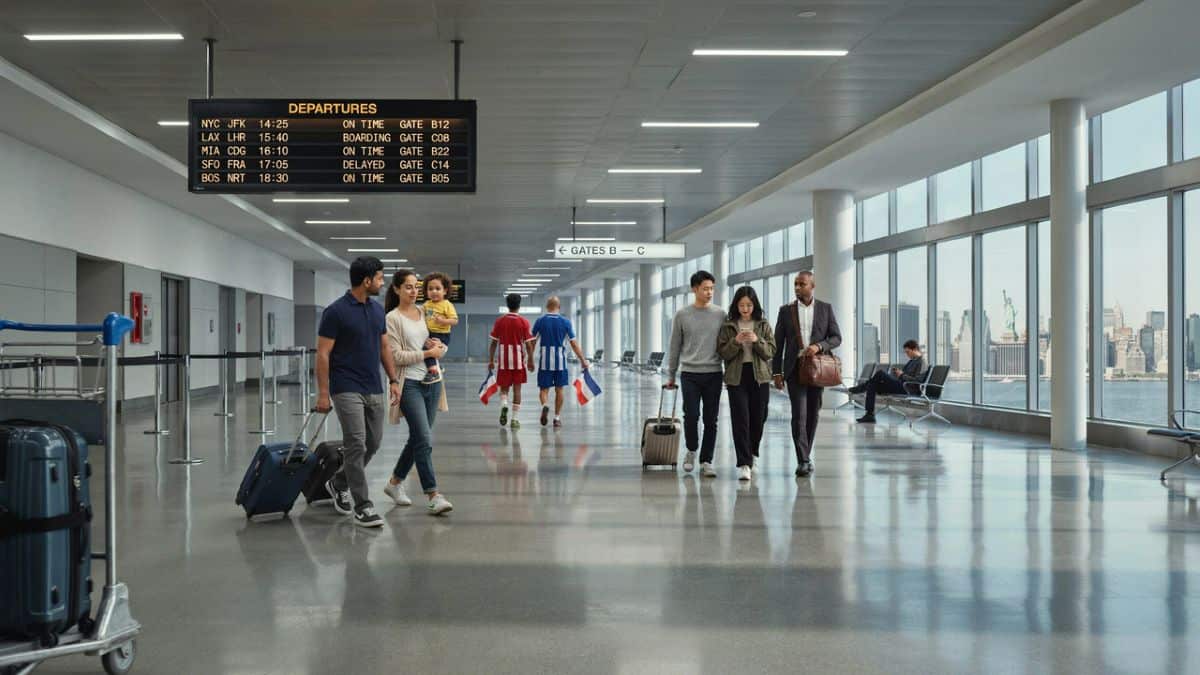
Image generated with Ai
A trip through Prague, Rome or Amsterdam could soon include something travellers do not usually associate with airports: a personalised skincare consultation powered by artificial intelligence. Lagardère Travel Retail has introduced Perfect Corp.’s AI-powered Skincare Pro technology at beauty retail operations in Václav Havel Airport Prague, Rome Fiumicino Airport and Amsterdam Airport Schiphol, bringing a new digital layer to the airport shopping experience.
AI Turns Airport Beauty Shopping Into a Personal Experience
The new service is designed to help passengers move beyond simply browsing shelves of cosmetics before their flights. Skincare Pro analyses 12 skin concerns, including wrinkles, pores, spots, texture, dark circles, redness, oiliness, moisture, eye bags, radiance, acne and firmness.
After the analysis, travellers receive product suggestions tailored to the concerns identified by the technology. The experience currently covers around 200 skincare products from 11 international brands, giving passengers a more guided way to navigate the beauty assortment available at participating airport stores.
For travellers rushing between check-in, security and the departure gate, the appeal is straightforward: instead of spending valuable airport time comparing numerous products, passengers can receive recommendations within the retail environment and then decide whether to make a purchase.
Advertisement
Advertisement
Prague, Rome and Amsterdam Form the First European Rollout
The technology is currently operating at three major European aviation gateways: Prague, Rome Fiumicino and Amsterdam Schiphol. Lagardère Travel Retail plans to extend the deployment to two additional European airports before the end of 2026.
Advertisement
Advertisement
The choice of locations places the technology in airports with substantial international passenger flows.
Václav Havel Airport Prague handled 17.75 million passengers in 2025, an 8.5% increase from the previous year. The airport reported connections to 194 destinations through 84 airlines and said its 2026 outlook could see passenger numbers reach as high as 18.9 million. Foreign passengers accounted for 58.5% of its 2025 traffic.
Rome Fiumicino is an even larger international gateway. Italy’s civil aviation authority ENAC reported that the airport handled about 50.9 million passengers in 2025, making it the country’s busiest airport. International traffic represented 68% of total Italian airport passenger traffic that year and grew 8% compared with 2024.
Growing Passenger Numbers Are Reshaping Airport Retail
The move comes as European airports continue to see strong passenger demand.
ACI EUROPE reported that European airports handled a record 2.6 billion passengers in 2025, representing a 4.4% increase from 2024. International passenger traffic was the main driver, rising 5.6%, while domestic traffic increased only 0.2%.
Advertisement
Advertisement
For airport retailers, a growing international passenger base creates an opportunity to make shopping more relevant to people from different markets.
The European Commission describes airports as important gateways connecting Europe with the wider world, while also highlighting their role in economic activity and connectivity. As passenger journeys become increasingly digital, airport retail is evolving alongside the wider travel environment.
A New Way to Use Time Before a Flight
Airport shopping has traditionally depended on convenience and the limited time passengers have between security and boarding. AI introduces another possibility: using technology to make that short window more useful.
Lagardère Travel Retail says its wider retail strategy already includes digital services such as Click & Collect and Shop & Collect, while its innovation programme highlights AI-powered product recommendations and other immersive experiences designed to increase engagement and dwell time.
The skincare initiative therefore fits into a broader attempt to make the airport shopping journey more interactive rather than simply transactional.
Advertisement
Advertisement
The experience also connects digital engagement with an immediate physical purchase. Travellers who complete the skin analysis can receive a discount through a QR code, creating a direct path from the technology to the participating airport store.
K-Beauty Adds an International Dimension
Rome Fiumicino’s participating skincare selection also reflects the changing tastes of international travellers.
Four K-Beauty brands are included in the Rome offer alongside the wider collection of international skincare products. The addition reflects the growing presence of Korean beauty products within global beauty retail and gives international passengers another category to explore while travelling.
This is particularly relevant in airports, where shoppers can come from dozens of countries within a single day. Retailers have increasingly had to balance global brands with products that resonate with different passenger groups.
Airport Shopping Is Becoming More Digital
Lagardère Travel Retail operates more than 4,800 stores and restaurants across 50 countries and nearly 300 airports. The company reported €6.133 billion in revenue for 2025, highlighting the scale at which changes in airport retail can potentially be deployed.
Advertisement
Advertisement
Its current approach combines physical stores and staff expertise with digital tools. The new skincare service follows that model rather than attempting to remove human interaction altogether. Beauty advisors remain part of the experience, helping travellers navigate the products after receiving their personalised recommendations.
The development also comes as airport retail itself becomes increasingly digital. At Schiphol, for example, the airport’s VAT-refund process for eligible non-EU travellers has been fully digitised since January 2026, showing how technology is becoming more deeply embedded in different parts of the passenger shopping journey.
What Travellers Can Expect Next
The European airport experience is gradually moving beyond the traditional model of browsing duty-free shelves before boarding. Personalised recommendations, digital shopping services and interactive technologies are increasingly becoming part of the journey.
Lagardère’s AI skincare rollout offers a small but visible example of that transformation. For a traveller with only a short period before departure, an AI consultation could make it easier to discover products without navigating an entire beauty counter.
As the service expands to two more airports later this year, the next question will be whether passengers adopt these tools as a useful part of their journey or simply regard them as another airport novelty.
Either way, the experience of waiting for a flight is changing. A few minutes once spent wandering through airport shops can now become a personalised digital consultation, followed by a recommendation, a discount and potentially a purchase before the boarding call. For travellers passing through Prague, Rome and Amsterdam, the airport shopping experience is beginning to look a little more like the personalised retail experiences they encounter beyond the terminal.
Advertisement
