
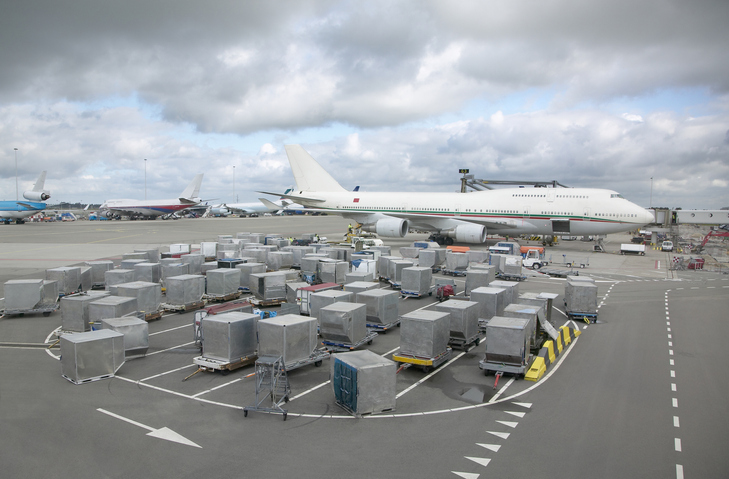
Image generated with Ai
The International Air Transport Association (IATA) releases new enhancements to its leading cargo and airport handling manuals for 2027. New manuals include new regulations, enhance safety and include provisions for format and process automation to better align with global requirements of modern aviation operations. New enhancements contain new cargo safety rules, improved airport handling procedures, and new technology that builds flexibility, consistency, and assurance throughout the aviation domain.
The revised publications bring updated procedures for dangerous goods transport, battery shipments, live animal handling and airport ground services. The changes aim to improve operational reliability, strengthen compliance with international standards and help aviation businesses adopt more automated and technology-driven processes.
The latest edition of IATA’s Dangerous Goods Regulations (DGR) introduces several modifications to improve clarity and strengthen safety practices throughout the transportation of hazardous materials.
The updated guidance provides clearer explanations of packaging requirements for dangerous goods and introduces revised rules covering spare batteries and power banks. These changes are designed to address the increasing use of battery-powered devices and the operational challenges linked to their safe transport.
Advertisement
Advertisement
Additional requirements have been introduced for lithium battery-powered mobility aids, including new obligations for operators handling devices with batteries exceeding 300Wh capacity. The updated DGR also includes revised State and Operator Variations, incorporating new regulatory differences submitted by 17 countries.
IATA’s updated Battery Shipping Regulations (BSR) reflect the rapid development of new battery technologies and the growing demand for safer battery transportation practices.
The revised regulations now include provisions for hybrid battery systems that combine lithium-ion and sodium-ion technologies. Further updates have been made to packing instructions related to sodium-ion batteries and prototype battery shipments.
The new guidance also provides clearer explanations regarding shipments that are excluded from the existing four-cell or two-battery restrictions. In addition, battery identification requirements have been strengthened, with new rules requiring battery marks to be placed on the same package surface as other relevant hazard labels.
Advertisement
Advertisement
The 2027 edition of IATA’s Live Animals Regulations (LAR) introduces improvements aimed at creating greater consistency and safety in the international movement of animals by air.
The updated standards expand species listings by adding specific pathogen-free laboratory animals and introduce more consistent terminology and metric measurements for animal transport container requirements.
The revised regulations also include updated procedures for cleaning and disinfecting aircraft cargo compartments used during live animal transportation. To improve accessibility for operators in different regions, a Portuguese-language version will also be available following Brazil’s adoption of LAR standards.
The updated Airport Handling Manual (AHM) reflects the aviation sector’s growing focus on automation, contactless processing and advanced airport technologies.
New guidance has been added for biometric handling systems used in contactless travel environments. The updates cover passenger touchpoint procedures, operational requirements, privacy protection and ethical considerations associated with biometric technology.
The revised manual also provides additional recommendations for the use of autonomous ground service equipment around aircraft. These developments support airports and airlines as they introduce more automated solutions to improve efficiency and reduce operational risks.
Alongside regulatory updates, IATA is expanding its digital tools to create stronger connections between industry standards and real-time aviation processes.
The organisation’s latest digital solutions increasingly use artificial intelligence and automation to support faster decision-making, improve compliance monitoring and create more connected operational environments across the aviation sector.
Among the major digital advancements are:
The introduction of the 2027 IATA manuals highlights the aviation industry’s continued transformation towards safer, smarter and more digitally connected operations. By combining updated regulations with advanced technology solutions, the new standards provide airlines, airports, cargo operators and ground service providers with improved tools to manage complex aviation activities in a rapidly evolving global environment.
“Our 2027 manual revisions reflect advancements in technology, regulation, and customer needs. As our manuals are used in a more digitally connected environment, we are focusing on creating tools that integrate them into the critical processes and activities that underpin cargo and ground operations. This is a major step toward advancing safer, more efficient airline operations, and is soon to be super-charged by the power of AI,” said Frederic Leger, IATA’s Senior Vice President of Products and Services.
Advertisement
Advertisement
Advertisement













Monday, September 7, 2026

Monday, September 7, 2026

Monday, September 7, 2026

Monday, September 7, 2026

Monday, September 7, 2026

Monday, September 7, 2026