Guatemala is promoting the practice of community-based tourism throughout the area of Petén as those communities engage in activities that link ecological forestry practices to archaeology in the context of the Maya Biosphere Reserve. The effort is spearheaded by the local association ACOFOP (Association of Forest Communities of Petén). ACOFOP claims that 13 of its member organisations are currently involved in developing various forms of community tourism, thus increasing the important role of tourism in local economies alongside forestry. Major communities in this respect include Uaxactún and Carmelita, both of which have diversified into tourism as a form of economic activity in addition to forestry and other activities.
Carmelita has particular importance for archaeological tourism because its community forest concession provides the principal access route to El Mirador.
Advertisement
The community’s cooperative brings together most of Carmelita’s residents and provides logistical services for visitors travelling toward the archaeological complex. Its tourism commission organises community tourism activities in Carmelita and the surrounding concession area.
The journey is substantially different from conventional short-duration archaeological sightseeing. Guatemala’s protected-area authorities describe access to the wider Mirador-Río Azul landscape as remote, with journeys from Flores taking between one and two days depending on the route and package. Access is permitted with authorised tourism commissions from Carmelita, Uaxactún and other communities.
Advertisement
Advertisement
This creates a tourism model where reaching the archaeological landscape is itself part of the experience, with communities providing transport, guiding and logistical services.
Tourism is not replacing the forest concession system. Instead, it is being developed as an additional economic activity within a broader model of sustainable natural-resource management.
ACOFOP reports that its member organisations manage more than 486,000 hectares of natural forest through concession contracts in the Maya Biosphere Reserve. Their activities include sustainable harvesting of timber and non-timber forest products under management plans and government-authorised licences.
Products such as chicle, derived from chicozapote trees, remain connected to longstanding forest practices. Community organisations also harvest other non-timber resources while undertaking monitoring, forest management and fire-prevention activities.
Advertisement
Advertisement
Young residents are being trained as community forest technicians and baquianos with knowledge of local flora, fauna and forest navigation. ACOFOP says these programmes support both conservation activities and the transfer of knowledge between generations.
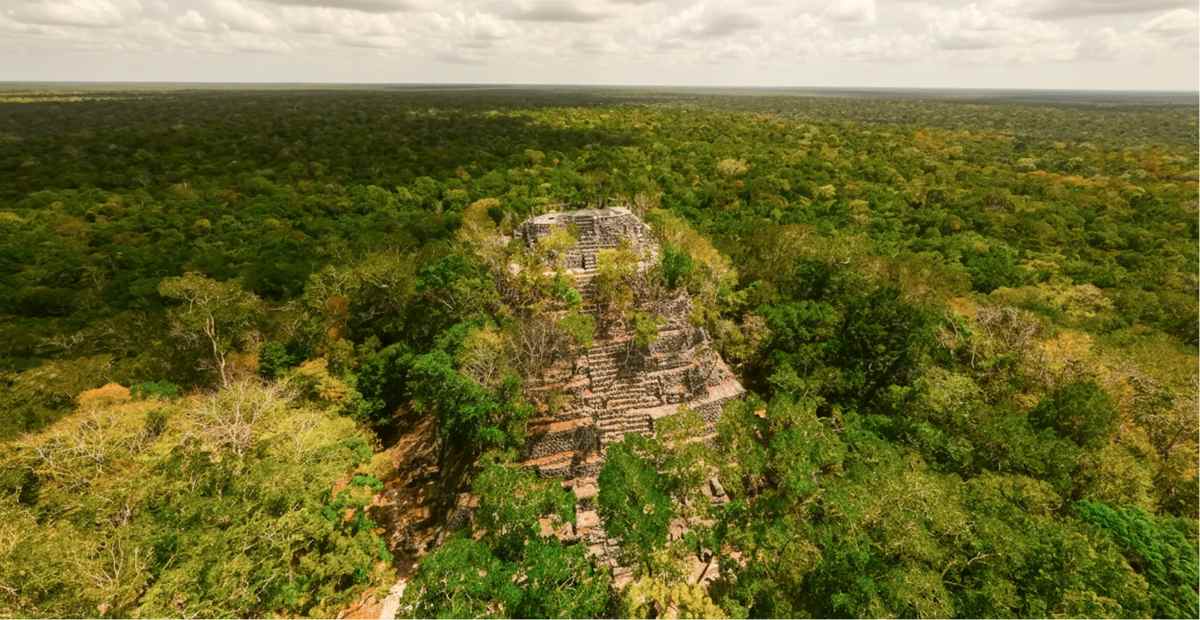
El Mirador is among the most significant archaeological destinations associated with this community tourism network. Located deep within the northern Petén forest, the site is known for monumental Maya architecture dating principally to the Preclassic period.
Nearby archaeological landscapes include Nakbé and other sites distributed through the protected forest. Guatemala’s National Council for Protected Areas identifies Mirador, Nakhtun, Uaxactún and several other major archaeological locations as part of the cultural heritage contained within the Maya Biosphere Reserve.
The remoteness of these sites limits conventional mass tourism and makes local logistical knowledge particularly important. Community operators can provide guides, food, accommodation arrangements and other services needed for journeys into areas where infrastructure is limited.
Rather than separating archaeological tourism from conservation, the approach places visitors within a landscape where forests, wildlife and ancient settlements are managed as interconnected resources.
ACOFOP describes community tourism as an economic alternative that strengthens local organisations while generating income from natural and cultural resources.
Its tourism programme provides technical assistance and training in areas including birdwatching, photography, food and beverage services, heritage interpretation, customer service and knowledge of local flora and fauna.
That approach allows communities to add tourism services to existing forestry activities instead of relying on a single source of income.
The model also gives visitors a direct route into locally managed landscapes. Revenue from guiding, transport, food and other services can remain connected to the communities that maintain the access routes and participate in conservation.
The connection between tourism and conservation is particularly relevant in a region facing pressure from fires, illegal logging and land conversion.
ACOFOP states that community forest management contributes to reducing deforestation while supporting sustainable use of timber and non-timber resources. Community monitoring and patrol activities also form part of the wider management system.
The organisation’s current tourism strategy is also being updated. In April 2026, ACOFOP opened a consultancy process to update its community tourism strategy, reinforcing tourism as part of the broader community forest-management model.
This signals an ongoing effort to expand tourism capacity while maintaining the underlying conservation framework.
In Petén, community concessions are creating a tourism corridor through which archaeological exploration can be linked with forest stewardship. The cases of the community of Carmelita as the main entrance point to El Mirador and the use of access routes by Uaxactún show that by working together, local communities can open remote Maya sites to visitors. Until now, Guatemala’s park authorities have recognised the role of local communities in creating a tourism management strategy.
For tourists seeking non-mainstream archaeological tourism experiences, this is a route where they can also experience some certain local tourism activities and facilitate some ‘slow tourism’ experiences. Most importantly, it has found a place for those communities that manage the surrounding forest in the tourism economy. The Petén region, doing community tourism through ACOFOP, is showing how forest concessions can add sustainable resource management to the tourism model, incorporating archaeological accessibility into this system.
Advertisement
Advertisement
Advertisement













Monday, September 7, 2026

Monday, September 7, 2026

Monday, September 7, 2026

Monday, September 7, 2026

Monday, September 7, 2026

Monday, September 7, 2026

Monday, September 7, 2026