
Miami Rises With Orlando and More Florida Cities in Fueling US Tourism With Over 63% Share of Brazilian Tourist Arrivals in 2026

Published
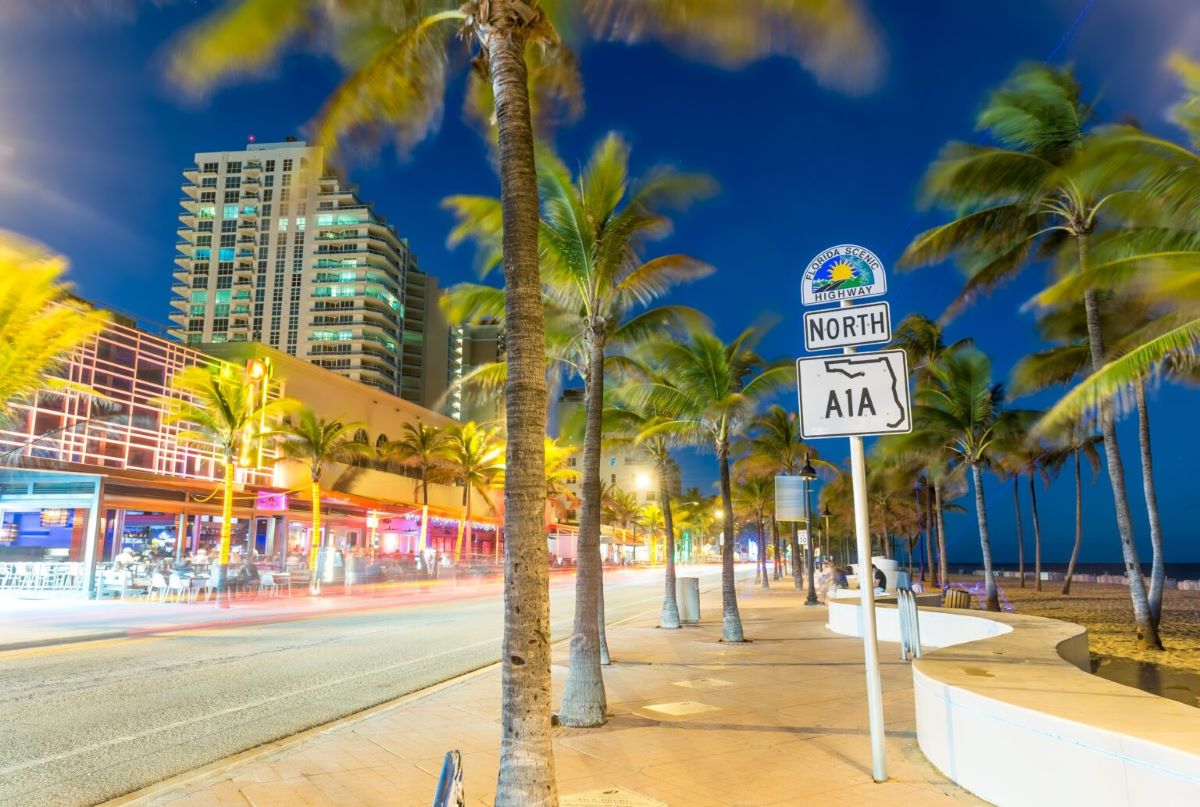
Miami rises with Orlando and more Florida cities in fueling US tourism with over 63% share of Brazilian tourist arrivals in 2026 as Florida’s major gateways capture the majority of Brazilian visitors entering the United States through strong air connectivity, world-class attractions, cruise access and diverse travel experiences that continue to strengthen the state’s position as a leading destination for Brazilian travellers.
Florida is emerging as the dominant gateway for Brazilian tourism to the United States in the January-June 2026 port-of-entry data, with Miami, Orlando, Fort Lauderdale, Port Canaveral and Port Everglades collectively handling 580,761 Brazilian visitor arrivals.
Advertisement
Advertisement
Across all US ports represented in the supplied dataset, there were 914,648 Brazilian arrivals. Florida’s five gateways therefore accounted for approximately 63.5% of arrivals across those listed ports. The concentration is even sharper inside Florida: Miami and Orlando alone handled 514,847 Brazilian visitors, equal to about 88.6% of Florida’s listed gateway total.
The underlying performance, however, is far more complicated than Florida’s 63.5% share suggests. Orlando is expanding rapidly, Miami continues to dominate by volume, Port Everglades is growing strongly from a small base and Port Canaveral is essentially stable. Fort Lauderdale, meanwhile, has suffered a severe 38.2% contraction.
Advertisement
Advertisement
The result is a Florida market where Brazilian tourism remains extraordinarily important but where visitor traffic is being redistributed between individual gateways.
Official tourism data provides important context. Brazil was Florida’s second-largest international source market in 2025, generating approximately 1.3 million visitors, while Brazilian visitation increased 10.4% that year. Florida then recorded another 8.5% increase in overall overseas visitation during the first quarter of 2026.
Advertisement
Advertisement
Florida Captures More Than 63 Percent of Brazilian Arrivals Across Listed US Gateways
Florida’s dominance reflects a combination of aviation access and destination diversity. Brazilian travellers can use the state for family holidays, shopping trips, theme-park visits, cruises, beaches, dining and entertainment without needing to build a complicated multi-state itinerary.
The five Florida gateways represented in the supplied data generated 580,761 Brazilian arrivals, compared with 576,893 during January-June 2025. That translates into a modest statewide gateway increase of 0.7%.
But the statewide figure masks dramatic differences between individual ports.
| Florida Gateway | Jan–Jun 2026 Brazilian Arrivals | Jan–Jun 2025 | Difference | YoY Change | Share of Florida Total |
|---|---|---|---|---|---|
| Miami | 274,412 | 269,122 | +5,290 | +2.0% | 47.3% |
| Orlando | 240,435 | 214,276 | +26,159 | +12.2% | 41.4% |
| Fort Lauderdale | 46,409 | 75,138 | -28,729 | -38.2% | 8.0% |
| Port Canaveral | 11,842 | 11,827 | +15 | +0.1% | 2.0% |
| Port Everglades | 7,663 | 6,530 | +1,133 | +17.4% | 1.3% |
| Florida Total | 580,761 | 576,893 | +3,868 | +0.7% | 100% |
The figures are port-of-entry counts. They identify where Brazilian visitors entered the United States rather than necessarily where they spent their entire trip. A visitor entering through Miami could subsequently travel to Orlando, New York or elsewhere.
Miami Commands Nearly Half of Floridas Brazilian Gateway Market
Miami remains Florida’s largest Brazilian gateway, recording 274,412 arrivals during January-June 2026, up from 269,122. The additional 5,290 visitors produced growth of 2%.
More significantly, Miami alone accounted for approximately 47.3% of Brazilian arrivals through the five Florida gateways.
Advertisement
Advertisement
Its dominance is rooted in both connectivity and destination appeal. Miami functions as one of the United States’ most important international aviation gateways while offering beaches, luxury accommodation, shopping, nightlife, restaurants and a deeply established Latin American cultural environment.
For Brazilian travellers, Miami can function as both destination and gateway. Some visitors stay in South Florida, while others use Miami as the first stage of a wider US itinerary.
The relatively modest 2% increase should therefore not be mistaken for weakness. Miami already operates from a huge base. Mature gateways frequently produce more incremental visitors through small percentage increases than emerging destinations produce through much faster growth.
Miami added 5,290 Brazilian visitors despite growing only 2%. That makes the commercial priority increasingly about visitor yield: hotel nights, average expenditure, shopping, dining and repeat visitation.
Orlando Becomes the Main Brazilian Growth Engine
Orlando delivered the most important large-scale growth in Florida.
Brazilian arrivals jumped from 214,276 to 240,435, adding 26,159 visitors and producing growth of 12.2%.
Advertisement
Advertisement
Orlando consequently accounted for 41.4% of Florida’s listed Brazilian arrivals, bringing it much closer to Miami in absolute volume.
The performance reflects Orlando’s exceptional position in the Brazilian leisure market. Theme parks remain the destination’s primary international magnet, but the tourism economy extends much further into resorts, outlet shopping, dining, entertainment and family travel.
Brazilian visitors are particularly valuable because Orlando has considerable potential for repeat travel. Major attractions continuously introduce new experiences, giving families reasons to return rather than treating Orlando as a once-in-a-lifetime destination.
This creates a strong tourism economics model. Repeat visitors require less destination education and can be encouraged to stay longer, explore outside the traditional attraction corridor or combine Orlando with another Florida destination.
Orlando’s 26,159 additional Brazilian arrivals were nearly five times Miami’s absolute gain. It is therefore Orlando, rather than Miami, that is currently providing the largest incremental boost to Florida’s Brazilian gateway market.
Fort Lauderdale Becomes the Major Weak Spot
Fort Lauderdale sharply breaks Florida’s otherwise positive pattern.
Advertisement
Advertisement
Brazilian arrivals collapsed from 75,138 to 46,409, removing 28,729 visitors and producing a 38.2% decline.
The scale of the contraction is extraordinary when compared with Florida’s gains elsewhere.
Orlando added 26,159 visitors. Miami added 5,290. Port Everglades added 1,133. Port Canaveral added 15. Collectively, those four gateways gained 32,597 Brazilian arrivals.
Fort Lauderdale alone lost 28,729.
As a result, almost nine out of every ten additional visitors generated by the four growing gateways were effectively offset by Fort Lauderdale’s decline.
Port-of-entry data cannot establish the exact cause. Airline capacity, schedules, fares and passenger-routing decisions can redistribute traffic between nearby airports without necessarily producing an equivalent decline in demand for the broader destination.
Advertisement
Advertisement
That distinction is particularly important in South Florida because Miami and Fort Lauderdale operate within a connected tourism region. Fort Lauderdale’s decline could therefore partly represent a gateway redistribution effect rather than a 38.2% collapse in Brazilian interest in South Florida itself.
Nevertheless, the scale warrants attention. Fort Lauderdale’s share of Florida’s listed Brazilian gateway traffic has fallen to only 8%.
Port Canaveral Holds Steady as Cruise Tourism Adds Another Florida Entry Point
Port Canaveral recorded 11,842 Brazilian arrivals, almost unchanged from 11,827 a year earlier.
Its 0.1% increase represents just 15 additional visitors, but stability can still be strategically important.
Port Canaveral operates within a different tourism model from Miami or Orlando airports. Cruise tourism creates opportunities to combine sea travel with Central Florida attractions.
That relationship could become increasingly valuable as Orlando’s Brazilian market expands. A visitor arriving for theme parks can add a cruise, while cruise passengers can extend their trip with hotel nights and attractions before or after sailing.
Advertisement
Advertisement
Port Canaveral therefore does not need to rival Miami or Orlando in absolute arrivals. Its opportunity is to increase the economic value per Brazilian itinerary through stronger land-and-sea integration.
Port Everglades Posts the Fastest Growth Rate
Port Everglades recorded the strongest percentage increase of any Florida gateway in the dataset.
Brazilian arrivals rose from 6,530 to 7,663, an increase of 17.4%.
Scale, however, changes the commercial interpretation. The port generated only 1,133 additional visitors and represented 1.3% of Florida’s listed Brazilian arrivals.
This illustrates an important tourism-analysis principle: percentage growth and market impact are different measurements.
Port Everglades grew faster than Orlando, but Orlando generated more than 23 times as many additional Brazilian visitors.
Advertisement
Advertisement
Still, Port Everglades has an opportunity to build on its momentum. Cruise passengers can generate spending beyond the ship through hotels, dining, shopping and ground transportation, particularly when travellers add pre- or post-cruise stays.
Miami and Orlando Together Control Nearly 89 Percent of Florida Brazilian Arrivals
The concentration around Florida’s two largest gateways is one of the strongest findings in the data.
| Gateway Combination | Brazilian Arrivals | Share of Florida Listed Total |
|---|---|---|
| Miami | 274,412 | 47.3% |
| Orlando | 240,435 | 41.4% |
| Miami + Orlando | 514,847 | 88.6% |
| Remaining Florida gateways | 65,914 | 11.4% |
| Florida Total | 580,761 | 100% |
Almost nine in every ten Brazilian arrivals entering through the listed Florida gateways came through Miami or Orlando.
The two cities, however, serve somewhat different tourism needs.
Miami combines aviation connectivity with beaches, shopping, nightlife and urban tourism. Orlando is built around family entertainment, theme parks, resorts and repeat leisure travel.
That complementarity is strategically powerful. Brazilian travellers do not necessarily need to choose between Miami and Orlando. Florida can sell them together.
Advertisement
Advertisement
Multi-city itineraries can increase length of stay and spread expenditure across accommodation, attractions, rental cars, restaurants and retail.
Florida Accounts for More Than 63 Percent Across the Listed US Gateway Market
Florida’s dominance becomes clearer when its five gateways are compared with all the states and territories represented in the supplied port dataset.
| State / Territory | Brazilian Arrivals | Share of Listed Arrivals |
|---|---|---|
| Florida | 580,761 | 63.5% |
| New York | 109,121 | 11.9% |
| Texas | 58,869 | 6.4% |
| Georgia | 41,998 | 4.6% |
| California | 37,862 | 4.1% |
| Illinois | 30,526 | 3.3% |
| New Jersey | 23,538 | 2.6% |
| Massachusetts | 16,142 | 1.8% |
| District of Columbia | 15,831 | 1.7% |
| Listed Market Total | 914,648 | 100% |
Florida therefore handled approximately 63.5% of Brazilian arrivals across the US gateways represented in this dataset.
This wording is important. The figure should not be described as Florida receiving 63.5% of every Brazilian tourist entering the United States, because the supplied table does not include every US port.
What it does show is Florida’s overwhelming dominance within this major-gateway sample.
Why Brazil Matters So Much to Florida Tourism
Brazil entered 2026 as Florida’s second-largest international source market after Canada, having supplied approximately 1.3 million visitors in 2025. Brazilian visitation to Florida grew 10.4% that year. Florida’s overseas market also began 2026 strongly, with overall overseas visitation increasing 8.5% during the first quarter.
Advertisement
Advertisement
The Brazilian traveller also aligns closely with Florida’s tourism product. Official state tourism research identifies shopping, sightseeing and amusement or theme parks among the most popular activities for overseas visitors.
Brazilian demand for US travel has also received an additional 2026 catalyst from major sports tourism. US government tourism analysis has identified accelerating Brazilian travel demand connected with the 2026 international football tournament, alongside demand for shopping, entertainment, gastronomy and multi-city trips.
Florida is well positioned to convert that broader demand because Miami and Orlando are already deeply established in Brazilian travel patterns.
Florida Growth Is Really a Story of Gateway Redistribution
The 0.7% Florida total initially looks unremarkable.
But that number hides one of the most important conclusions.
| Gateway Performance Group | Net Visitor Change |
|---|---|
| Orlando | +26,159 |
| Miami | +5,290 |
| Port Everglades | +1,133 |
| Port Canaveral | +15 |
| Four Growing Gateways Combined | +32,597 |
| Fort Lauderdale | -28,729 |
| Florida Net Change | +3,868 |
Without Fort Lauderdale’s contraction, Florida’s listed gateways would have recorded a far stronger increase.
Advertisement
Advertisement
The state is therefore not experiencing uniform Brazilian tourism growth. It is experiencing gateway redistribution, with Orlando capturing substantial new volume while Miami retains leadership and Fort Lauderdale loses ground.
For airlines, airports and destination marketing organisations, this distinction matters because it identifies where future capacity and marketing partnerships may produce the greatest returns.
Florida Needs to Turn Gateway Dominance Into Greater Tourism Yield
The next opportunity extends beyond attracting additional Brazilians.
Florida already possesses extraordinary gateway concentration. The larger commercial objective is converting those arrivals into longer stays, higher visitor expenditure and repeat travel.
Miami can focus on extracting greater economic value from a mature, high-volume market. Orlando can use its double-digit growth to encourage repeat visits and longer holidays. Fort Lauderdale needs to understand the causes of its gateway contraction. Port Canaveral and Port Everglades can build stronger cruise-and-land packages.
For the state as a whole, Miami and Orlando can be marketed as complementary rather than competing destinations.
Advertisement
Advertisement
A Brazilian traveller combining Miami, Orlando and a Florida cruise generates significantly more economic activity than one visiting a single gateway for a short stay.
That is where Florida’s 63.5% share becomes commercially meaningful.
The January-June 2026 figures show that Florida is not simply receiving a large volume of Brazilian visitors. It has developed an interconnected tourism ecosystem capable of capturing Brazilian demand through aviation, theme parks, beaches, shopping and cruises.
Miami remains the volume leader with 274,412 arrivals. Orlando is the growth engine with 240,435 visitors and a 12.2% increase. Together, they control nearly 89% of Florida’s listed Brazilian gateway traffic, while Florida commands more than 63% of Brazilian arrivals across the US gateways represented in the dataset.
The challenge for the remainder of 2026 is turning that extraordinary gateway advantage into greater tourism value — more nights, more spending, more repeat visits and wider economic benefits across Florida.
Miami rises with Orlando and more Florida cities in fueling US tourism with over 63% share of Brazilian tourist arrivals in 2026 as strong connectivity, attractions and diverse experiences drive Florida’s dominance among Brazilian travellers entering the United States.
In conclusion, Miami rises with Orlando and more Florida cities in fueling US tourism with over 63% share of Brazilian tourist arrivals in 2026 as Florida’s powerful gateway network, global attractions, cruise connectivity and diverse visitor experiences continue to attract Brazilian travellers. Miami remains the leading entry point by volume, while Orlando emerges as a major growth driver, together shaping Florida’s strong position in the Brazilian travel market. The performance of other Florida cities further highlights how aviation access and tourism infrastructure influence visitor distribution. As Brazilian demand continues to support the US tourism sector, Florida’s ability to combine multiple destinations, experiences and travel options will remain central to sustaining growth throughout 2026.
Advertisement
