

Miami to Tokyo Flights Could Transform US–Japan Travel as Airport Targets American Airlines and JAL

Published
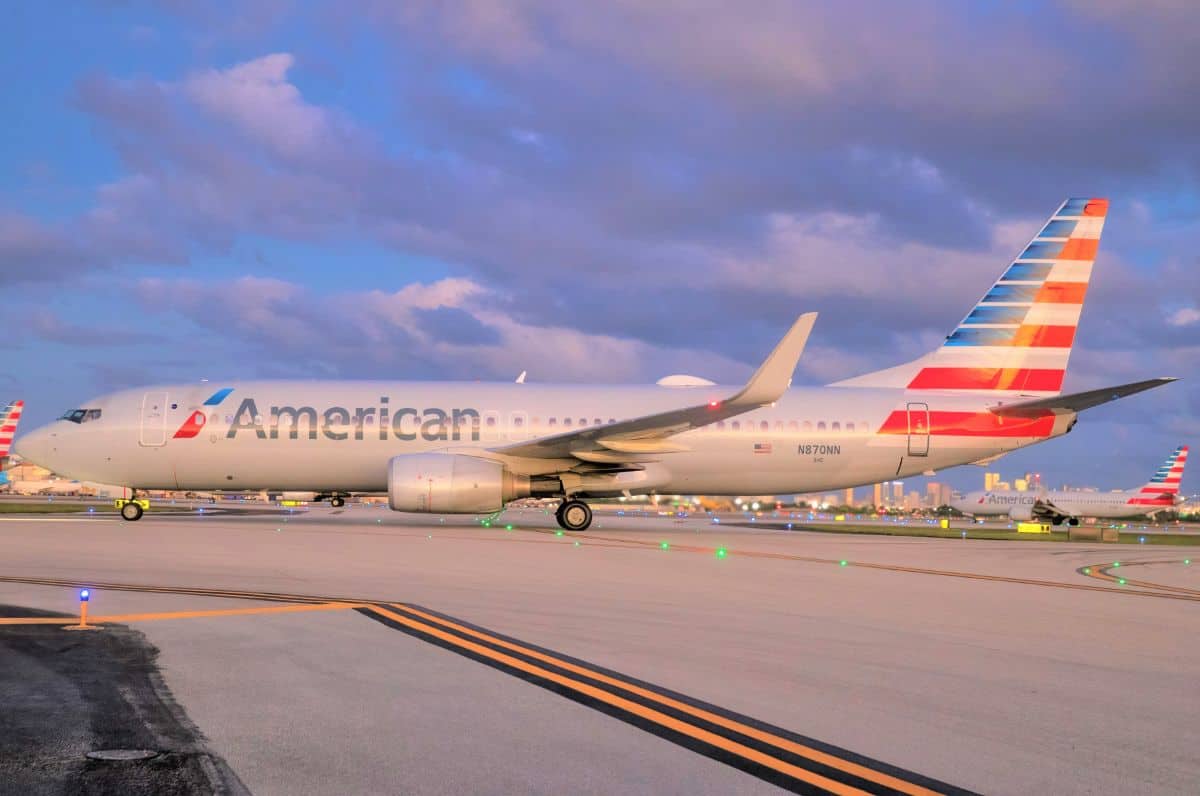
Miami International Airport is renewing its push for nonstop flights to Tokyo, with local authorities considering financial incentives to persuade an airline to launch the long-haul route. Miami Mayor Daniella Levine Cava is evaluating a minimum revenue guarantee, which would protect an airline against revenue falling below an agreed threshold during an introductory period. American Airlines and Japan Airlines are the leading potential candidates, given their existing partnership and complementary networks. However, the proposal remains under consideration, and neither carrier has confirmed a launch. Japan Airlines’ incoming long-haul aircraft could improve the route’s prospects, although fleet availability alone will not guarantee commercial viability. For travellers, the proposed connection could eventually improve access between South Florida and Japan without an intermediate stop.
Miami Revives Its Ambitious Tokyo Flight Plan
Miami International Airport (MIA) is intensifying efforts to establish a direct air link with Tokyo, addressing a longstanding gap in its international network. The proposed service would connect South Florida with Japan’s capital and potentially expand access to Northeast Asia. However, the airport still needs an airline willing to commit aircraft, capacity and substantial operating resources.
Miami’s latest approach centres on making the route financially attractive during its early years. Mayor Daniella Levine Cava is examining a minimum revenue guarantee to reduce the commercial risks associated with launching an untested or uncertain long-haul service. Under this arrangement, an eligible airline would receive financial support if qualifying route revenue fell below a predetermined level.
Such guarantees can help airports compete for new international services. Nevertheless, they require careful financial assessment because projected passenger demand does not always translate into sufficient ticket revenue. The precise funding structure, guarantee amount, duration and eligibility conditions for the proposed Miami–Tokyo service have not been established in the information available.
Advertisement
Advertisement
Miami Aviation Director Ralph Cutié has expressed optimism about the possibility of a future launch, although he acknowledged uncertainty over its timing. His assessment suggests that officials see a potential opportunity rather than a confirmed airline commitment.
The distinction matters for travellers and the tourism industry. Miami–Tokyo nonstop flights remain a proposal, not an announced service with published schedules, fares or booking dates.
Advertisement
Advertisement
American Airlines and Japan Airlines Lead the Race
American Airlines and Japan Airlines appear to be the most obvious candidates for the route because of their existing commercial relationship. American maintains a major hub at Miami, while Japan Airlines operates an extensive network from Tokyo and participates in a transpacific joint business arrangement with American.
That partnership could help the airlines coordinate schedules, fares and connecting itineraries. It may also provide access to customers beyond the two cities, improving the potential commercial reach of a new service.
Advertisement
Advertisement
However, the two carriers would face different operational considerations. American could use Miami’s established domestic network to attract passengers from across the United States. Japan Airlines, meanwhile, could draw on its Tokyo connections and established brand presence in the Japanese market.
Neither advantage automatically makes the route profitable. Airlines must assess premium-cabin demand, economy-class yields, cargo opportunities, fuel expenditure, aircraft utilisation and the availability of more attractive alternatives for their fleets.
| Route consideration | American Airlines | Japan Airlines |
|---|---|---|
| Existing network advantage | Major hub at Miami and extensive US connections | Tokyo-based network and established Japanese market |
| Potential customer base | Florida residents, US domestic connections and international travellers | Japanese visitors, business travellers and connecting passengers |
| Commercial opportunity | Extend its hub’s international reach | Add a South Florida gateway to its US network |
| Principal challenge | Long-haul aircraft availability and competing fleet priorities | Aircraft deployment, operating costs and ultra-long-haul profitability |
| Partnership advantage | Existing commercial relationship with Japan Airlines | Coordination with American on eligible connecting itineraries |
| Current status | No confirmed Miami–Tokyo launch | No confirmed Miami–Tokyo launch |
The comparison highlights the complementary strengths of both airlines. Nevertheless, a final decision would depend on route economics, aircraft deployment and the airlines’ wider network strategies.
New Aircraft Could Improve Route Prospects
Japan Airlines’ planned fleet expansion has become an important part of Miami’s argument for pursuing the route. New-generation long-haul aircraft could provide the range and operating capabilities required for a nonstop service between Tokyo and South Florida.
Advertisement
Advertisement
However, aircraft deliveries do not necessarily translate into additional routes. Airlines also use incoming aircraft to replace older jets, improve fuel efficiency and support existing services. Consequently, the number of aircraft available for genuine network expansion may remain limited even as deliveries increase.
The proposed service would also represent a demanding deployment decision. Tokyo–Miami would require a substantial block of aircraft time, leaving fewer opportunities to operate other international routes. Japan Airlines would therefore need to compare the expected returns against competing destinations across North America, Europe and other regions.
American Airlines faces its own fleet considerations. Although Miami provides a strong base for international operations, the airline must balance long-haul expansion against existing commitments and other growth opportunities.
For that reason, the most realistic timeline depends on more than aircraft deliveries. A carrier would need to establish that the route can generate sustainable revenue after any introductory support ends.
Miami’s Passenger Market Strengthens the Case
Miami has a substantial aviation market that could support a broader international network. Official airport figures show that Miami International Airport handled approximately 55.3 million passengers in 2025, reinforcing its position as a major gateway for international travel. The airport also processed nearly 3.5 million tons of cargo, following a 13.6% annual increase.
These figures strengthen the commercial case for additional long-haul services. However, airport-wide traffic does not establish how many passengers would pay for a direct Tokyo connection. Airlines would need more detailed evidence covering origin-and-destination demand, passenger spending, premium-cabin bookings and seasonal travel patterns.
Advertisement
Advertisement
| Miami airport indicator | 2025 reported figure | Relevance to a Tokyo route |
|---|---|---|
| Total passengers | Approximately 55.3 million | Demonstrates the scale of the airport’s market |
| International passengers | Approximately 24.9 million | Indicates substantial cross-border demand |
| Domestic passengers | Approximately 30.5 million | Provides a potential feeder market |
| Total cargo | Nearly 3.5 million tons | Highlights the airport’s freight-handling strength |
| Annual cargo growth | 13.6% | Signals expanding cargo activity |
Figures are rounded from Miami-Dade County and airport reporting. Cargo totals include freight and mail where specified by the reporting authority.
Miami also benefits from its geographical position and established links with Latin America and the Caribbean. American Airlines’ network gives the airport considerable reach across these markets, potentially supporting connecting traffic beyond Florida.
Nevertheless, the route’s commercial performance would depend on the balance between connecting and local passengers. A nonstop service must attract enough travellers willing to pay fares that cover its substantial operating costs. Consequently, the airport’s overall passenger numbers provide useful context, but they cannot substitute for a route-specific demand forecast.
Revenue Guarantees Could Change Airline Decisions
A minimum revenue guarantee offers airports a mechanism to encourage airlines to open strategically important routes. Under a typical arrangement, the sponsoring authority agrees to cover an eligible shortfall between actual qualifying revenue and an agreed minimum. The contract usually specifies the covered period, financial ceiling and conditions for payment.
For an airline, this support can reduce the downside risk of entering a market with uncertain initial demand. For a destination, it can help establish connectivity that might otherwise struggle to secure aircraft allocation.
However, a guarantee is not the same as a direct payment for every flight. Nor does it automatically compensate an airline for all operating losses. The precise contractual terms determine which revenues qualify, how any shortfall is calculated and when support ends.
Advertisement
Advertisement
| Policy element | Potential application to Miami–Tokyo | Key consideration |
|---|---|---|
| Minimum revenue threshold | Establishes an agreed revenue floor | Must reflect realistic market assumptions |
| Introductory support period | Helps cover early route-development risk | Support should have a defined end date |
| Financial ceiling | Limits the sponsor’s maximum exposure | Public spending requires transparent safeguards |
| Airline performance conditions | May link support to service delivery | Frequency and continuity require clear terms |
| Post-support viability | Tests whether demand can sustain the route | Long-term profitability remains essential |
Miami’s proposal should therefore be assessed against measurable outcomes. Relevant indicators include passenger numbers, local visitor spending, business travel demand, cargo revenue and the route’s performance after the guarantee expires.
The public-interest argument is equally important. If the route attracts additional visitors, supports trade and improves business access, the benefits could extend beyond the airport. Yet officials must distinguish genuinely new economic activity from passengers who would otherwise travel through another gateway.
Tokyo Connectivity Could Benefit Travellers
A direct Miami–Tokyo service could simplify journeys for passengers travelling between South Florida and Japan. Travellers would no longer need to change aircraft at an intermediate airport when their itinerary used the proposed nonstop flight. Depending on the eventual schedule, the service could also improve convenience for business travellers and visitors with limited time.
Tourism operators could benefit from a simpler journey between two major international markets. Hotels, destination-management companies, tour operators and attractions could explore joint campaigns if an airline confirms the service. Japanese visitors could gain easier access to Miami, while Florida residents could find a more convenient starting point for trips to Japan.
The route could also support educational exchanges and corporate travel. Miami officials have identified business, investment, cultural and educational links as part of the rationale for direct connectivity. However, the scale of these benefits would depend on the final timetable, fares and available seats.
For now, travellers should avoid planning around an unconfirmed launch date. There are no confirmed schedules or ticket sales established by the information provided. Anyone arranging a future trip should compare existing one-stop itineraries and check entry requirements for every transit country.
Advertisement
Advertisement
The distinction is particularly important for passengers connecting through the United States from Latin America. The United States generally requires arriving international passengers to clear immigration and customs, even when they intend to continue to another international destination. Visa or transit-document requirements depend on nationality and individual circumstances, so travellers must check the relevant official rules before booking.
A nonstop Miami–Tokyo flight could remove that intermediate US connection for some international itineraries. However, it would not eliminate Japan’s own entry requirements or guarantee that every passenger could travel without additional documentation.
Japan’s Fleet Strategy Remains Crucial
Japan Airlines’ aircraft plans offer a useful indication of its potential expansion capacity. Its published fleet data recorded 22 Boeing 787-9 aircraft and 11 Airbus A350-1000 aircraft as of 31 March 2026. The airline has also announced plans to introduce 20 new A350 aircraft for international operations from financial year 2027.
However, fleet growth serves several purposes, including replacing older aircraft and increasing capacity on established routes. Japan Airlines must therefore evaluate Miami against other destinations competing for the same aircraft. Its published 2026 network plans also demonstrate continuing demand across existing North American and Asian markets.
| Development | Published position | Implication for Miami |
|---|---|---|
| Boeing 787-9 fleet | 22 aircraft as of 31 March 2026 | Provides a base of long-haul aircraft, subject to route suitability |
| Airbus A350-1000 fleet | 11 aircraft as of 31 March 2026 | Offers another long-haul fleet option |
| Planned international A350 expansion | 20 aircraft from financial year 2027 | Could create future deployment opportunities |
| Existing network commitments | Multiple international routes and frequency changes | Competing priorities could delay new services |
These figures do not establish that Japan Airlines has allocated aircraft to Miami. The airline would still need to evaluate operational performance, payload restrictions, winds, seasonal demand and aircraft utilisation. A commercially attractive route must also fit within crew scheduling, maintenance and airport operating requirements.
Miami Must Compete With Other Gateways
Miami’s ambition reflects a broader contest among airports to secure direct international connectivity. New long-haul routes can attract visitors, strengthen corporate links and improve access to distant markets. However, airlines generally prioritise routes that offer a convincing combination of demand, revenue and operational efficiency.
Advertisement
Advertisement
Miami’s strong Latin American network creates an opportunity, but it also presents a challenge. Passengers connecting from South America may already have access to Tokyo through established gateways elsewhere. The additional travel time required to reach Miami could weaken its appeal for certain itineraries.
Furthermore, ultra-long-haul operations demand careful cost management. Aircraft spend more time on each rotation, reducing their availability for other flights. Airlines must generate sufficient revenue across cabins while accounting for fuel, crew, maintenance and airport charges.
For Miami, the strongest argument may therefore combine several markets rather than depend on leisure demand alone. Corporate travel, premium passengers, Japanese tourism, connecting traffic and air cargo could contribute to the business case. Even then, the route would require robust forecasting and a credible plan for operating without long-term financial assistance.
What Travellers Should Expect Next
Miami’s pursuit of a Japanese gateway is significant, but the next steps will determine whether the proposal becomes a real travel option. Officials must develop the business case, clarify any proposed financial guarantee and persuade an airline to commit aircraft and operating capacity. Japan Airlines’ fleet expansion could improve the opportunity, although its broader network priorities remain decisive.
For travellers, the immediate priority is to monitor official announcements rather than assume a launch is imminent. A confirmed service would need published schedules, booking availability and details of the operating airline before passengers could plan around it.
Ultimately, Miami’s proposed Tokyo connection represents a strategic ambition, not a confirmed route. If demand, aircraft availability and financial terms align, the service could strengthen South Florida’s international reach. Until then, existing connecting itineraries remain the practical choice for passengers travelling between Miami and Japan.
Advertisement
