

Asia’s Growing Glacier Tourism Faces Rising Flash-Flood Risks as Ice Melts in Nepal and Beyond

Published
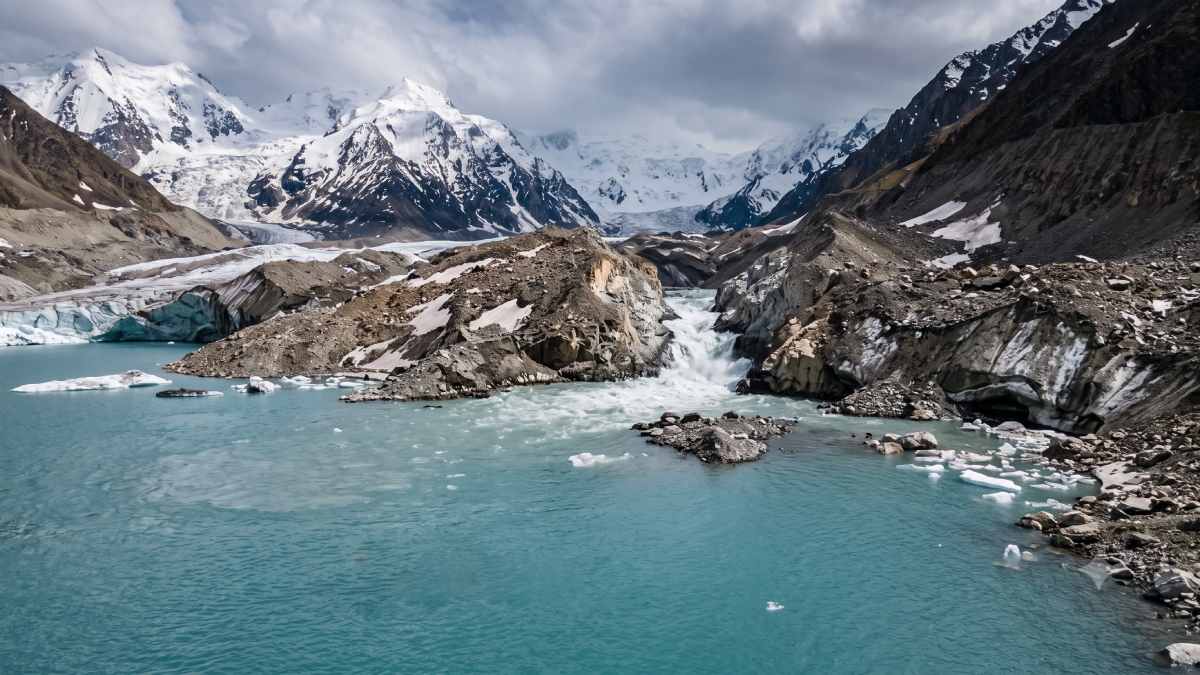
Throughout High-Mountain Asia, alpine exploration is seeing a revolutionary shift from traditional trekking routes to icy alpine rivers. The emergence of glacial adventures in the high mountains clearly shows that there is a trend towards aquatic micro-adventures like paddling and paddleboarding in freezing water under melting glaciers. As a result of growing climate awareness, adventurers are exploring these areas before they disappear completely. However, entering the glacial lakes poses serious dangers of cryospheric origin to the adventure teams. Thus, the need to balance adventure tourism and environmental conservation with indigenous economy has become a necessity.
The Shifting Cryosphere and the Rise of High-Altitude Glacial Experiential Tourism
The glaciated mountain ranges of High-Mountain Asia—encompassing the Himalayas, the Karakoram, the Hindu Kush, and the Tien Shan—harbour the largest volume of frozen freshwater outside the polar regions. For more than a century, commercial recreation across this transboundary territory was restricted to terrestrial ascents: high-altitude trekking, fixed-trail mountaineering, and seasonal valley walks. Over the past decade, however, mountain hydrological regimes have been altered by rising surface temperatures and cryospheric melt, resulting in the creation of thousands of proglacial lakes, the expansion of moraine-dammed tarns, and the opening of navigable alpine river corridors.
In step with these physical landscape transformations, global travel preferences have evolved away from passive observation towards high-intensity experiential recreation. Rather than glaciers being viewed from distant ridgelines, tactile engagement with glacial hydrology is increasingly pursued by adventure travellers. The commercial outcome of this shift is the emergence of high-altitude glacial experiential tourism, wherein freezing meltwaters are navigated via technical packrafting, stand-up paddleboarding, and extreme cold-water kayaking.
Urgent regulatory and operational dilemmas are introduced by this aquatic transition. The headwaters hosting these expeditions feed twelve major river basins that support hundreds of millions of mountain residents and over a billion people downstream. Because high-mountain permafrost is being destabilised, ice mass loss is being accelerated, and the frequency of catastrophic glacial lake outburst flood events is escalating, unstable, climate-sensitive corridors must be navigated by commercial operators. For destination management organisations, environmental authorities, and regional outfitters, the oversight of this sector requires that commercial micro-adventure demand be reconciled with real-time early warning telemetry, border restrictions, and indigenous equity models.
Advertisement
Advertisement
Macro Drivers: The Transition to Aquatic Micro-Adventures
The proliferation of alpine water sports across High-Mountain Asia aligns with broader trends tracked by the United Nations World Tourism Organization and the Food and Agriculture Organization, whereby mountain tourism accounts for a substantial share of worldwide tourism arrivals. Within this market, conventional trekking is increasingly complemented by micro-adventures: short, physically demanding wilderness itineraries combining multiple travel modes.
This transition has been catalysed technologically by the development of modern ultralight packrafts. Constructed from lightweight, high-tensile thermoplastic polyurethane fabrics, these single-person inflatables fold into an ordinary backpack. Unlike traditional rigid kayaks or multi-person commercial rafts requiring road transit, packrafts can be carried over high passes by hikers, allowing remote tarns to be paddled across and glacial outwash streams to be descended. Previously inaccessible proglacial lakes have thus been converted into new frontiers for adventure travel.
Advertisement
Advertisement
Consumer Psychology, Demographics, and the “Last-Chance” Imperative
Demand for high-altitude riparian expeditions across the region is driven by a pronounced demographic shift within Asian adventure travel markets. While Himalayan itineraries were historically dominated by Western climbers, regional demand is now propelled by travellers originating from East Asia, Southeast Asia, and major urban centres across South Asia.
Demographic Cohorts: Affluent Millennial and Generation Z Expeditions
The consumer base for high-altitude glacial watersports diverges sharply from conventional trekking demographics, with two dominant cohorts being identified:
Advertisement
Advertisement
- High-Net-Worth Individuals and Executive Adventurers: Originating primarily from metropolitan hubs such as Singapore, Shanghai, Seoul, Mumbai, and Tokyo, fully outfitted expedition logistics that combine wilderness access with premium comfort—including luxury glamping, private helicopter transport, and personal alpine safety teams—are demanded by this demographic. Price sensitivity remains exceptionally low.
- Generation Z and Millennial Micro-Adventurers: Heavily influenced by outdoor subcultures, digital storytelling, and endurance athletics, technical gear, ultralight equipment, and guided certifications are heavily prioritised by this expanding segment. Experiential novelty, physical challenges, and visual documentation across digital channels are placed at the forefront of travel decisions.
The “Last-Chance” Motivation and Cryospheric Loss
Underpinning this demographic enthusiasm is the phenomenon of last-chance tourism. Scientific documentation published by the International Centre for Integrated Mountain Development in its regional assessments has revealed that glacier mass loss in the Hindu Kush Himalaya has undergone dramatic acceleration. Significant portions of total regional glacier volume are projected to be lost within the century.
A powerful psychological driver has been created among environmentally conscious travellers by this widely publicised retreat: the desire for vanishing landscapes to be witnessed, navigated, and photographed before they disappear. Glacial tarns and high-altitude lake systems are no longer viewed simply as static scenery; rather, they are perceived as dynamic, impermanent ecological wonders.
A complex environmental paradox is generated by this dynamic. Human footfall, vehicle emissions, black carbon deposits, and litter in sensitive headwaters are inevitably increased by the arrival of travellers eager to observe retreating glaciers, accelerating the degradation of the very environments being visited. Consequently, operations must be conducted by adventure outfitters within a market where client motivation is intimately tied to ecological urgency and landscape change.
Specialised Operations, Safety Governance, and Risk Mitigation
Operational and physical hazards rarely encountered in conventional maritime navigation or terrestrial mountaineering are introduced by high-altitude aquatic recreation. Severe hypoxia, intense solar radiation, acute thermal shock, and sudden cryospheric land movement are experienced by participants operating watercraft at extreme elevations above sea level.
Advertisement
Advertisement
Hyper-Niche Infrastructure and Thermal Protocols
Standard whitewater equipment is recognised as structurally inadequate for glacial waters. Water temperatures in proglacial lakes and permafrost melt corridors hover consistently near freezing. If accidental immersion occurs without specialised protection, a severe cold-shock response is induced, characterised by involuntary gasping, hyperventilation, cardiac stress, and rapid loss of motor function, swiftly followed by hypothermia.
Specialised technical infrastructure is mandated by professional outfitting standards for high-altitude glacial experiential tourism:
- Immersion Barrier Systems: Commercial usage of expedition-grade, four-layer waterproof breathable drysuits fitted with integrated latex or neoprene neck and wrist gaskets is made mandatory, paired with heavyweight polar fleece thermal undergarments and neoprene booties. Standard recreational wetsuits are deemed structurally insufficient due to evaporative wind-chill and inadequate core insulation in sub-zero ambient mountain air.
- Specialised Hull Integrity: Technical packrafts and kayaks featuring multi-chambered high-denier thermoplastic polyurethane hulls are required, reinforced with puncture-resistant aramid or Kevlar base strips to withstand sharp moraine slate and subsurface glacial ice shards.
- Active Ice-Calving Perimeter Buffers: Dynamic navigational protocols must be maintained, enforcing a strict minimum exclusion zone from floating icebergs, calving terminus cliffs, and unstable moraine walls. Sudden displacement waves capable of flipping watercraft and throwing paddlers into freezing waters are generated by calving ice.
- Sub-Zero Buoyancy Aids: High-buoyancy, rescue-certified Personal Flotation Devices equipped with integrated safety harness lines, whistle alerts, and cold-resistant distress strobes are deployed.
Aeromedical Search and Rescue and Insurance Frameworks
Traditional search-and-rescue infrastructure across High-Mountain Asia has been calibrated primarily for terrestrial mountaineering accidents and lost trekkers. Water-based alpine emergencies present distinct logistical challenges. High-altitude rotorcraft operate under strict density altitude limitations at extreme elevations, causing maximum payload limits to drop substantially and restricting helicopter winch operations over open water.
Furthermore, visual flight rules helicopter missions are strictly forbidden across regional aviation jurisdictions during severe weather, monsoon periods, or after sunset. If a paddler capsizes and suffers from severe hypothermia, aeromedical evacuation may be delayed for prolonged intervals. Field expedition guides must hold wilderness first responder qualifications, emergency hypothermia re-warming wraps must be carried, and two-way satellite communicators must be deployed to relay real-time coordinates.
An underwriting gap in international travel insurance further compounds these operational challenges. Standard adventure policies regularly exclude activities conducted on high-elevation water bodies under non-standard maritime exclusions. Hybrid insurance packages that combine technical alpine mountaineering riders with whitewater marine rescue cover are increasingly being formulated by destination management organisations and outfitters to ensure medical evacuation and repatriation guarantees remain fully funded.
Environmental Carrying Capacity, Climate Risk, and GLOF Telemetry
The headwater lakes and alpine tarns of High-Mountain Asia are among the most ecologically sensitive aquatic systems on Earth. Characterised by ultra-oligotrophic nutrient profiles, low biological productivity, and pristine water chemistry, these environments are exceptionally vulnerable to human disturbance.
Advertisement
Advertisement
Glacial Lake Outburst Flood Early Warning Protocols
A critical operational reality across the mountain ranges is the threat posed by glacial lake outburst flood events. Expanding glacial lakes are naturally impounded by loose, unconsolidated moraine dams composed of rock debris and thawing ice cores. When destabilised by rockfalls, ice avalanches, seismic activity, or extreme rainfall, these moraine dams can breach suddenly, releasing immense volumes of water downstream within minutes.
Conducting high-altitude glacial experiential tourism on or directly downstream from moraine-dammed lakes requires close integration with disaster monitoring systems. Coordination with national hydrometeorological departments must be undertaken by responsible commercial operators to verify that river basins are equipped with:
- Automated Water-Level Telemetry: Real-time solar-powered radar or pressure sensors installed at glacial lake outlets that transmit hydrologic variations via satellite networks.
- Downstream Early Warning Systems: Automated sirens, cellular broadcast alerts, and local observer networks that notify trekking teams, riparian paddlers, and riverbank communities to evacuate to high ground.
- Permafrost Slope InSAR Monitoring: Synthetic aperture radar satellite data utilised to track slope movement and unstable rock faces surrounding glaciated lakes before seasonal operations are launched.
Strict Ecological Limits and Waste Thresholds
Due to low temperatures and the relative absence of organic microbial life, biological decomposition occurs extremely slowly in alpine lakes. A single piece of discarded waste or the introduction of human pathogens can persist in these headwater ecosystems for decades, degrading downstream water supplies.
To safeguard alpine catchments, strict carrying capacity regulations are being instituted by regional destination authorities:
- Zero-Discharge Sanitation Caps: Portable waste containment systems, including self-contained human waste removal bags and dry toilet systems for guided camps, are made mandatory. Pit latrines and chemical toilet dumping are strictly prohibited within defined buffer zones of lake shores or glacial river banks.
- Strict Daily Visitor Quotas: Daily lake access permits for paddlecraft are capped at minimal allocations to prevent shoreline soil compaction, noise pollution, and ecological disturbance.
- Biosecurity Cleansing Protocols: Packrafts, paddles, and footwear must be sanitised using biodegradable disinfectant solutions prior to launching, ensuring the transfer of non-native aquatic micro-organisms and invasive algae between disconnected mountain water bodies is prevented.
Detailed Country-by-Country Asian Comparative Matrix
High-altitude glacial and alpine watersports across Asia operate under diverse geopolitical frameworks, security regulations, and land management policies.
| Country & Sub-Region | Primary Landscape Features | Core Adventure Modality | Key Regulatory & Safety Constraints | Governing Authority & Agency |
| Nepal (Solukhumbu / Khumbu) | Imja Tsho, Gokyo Lakes, Ngozumpa Glacier tarns | Technical packrafting combined with high-altitude trekking circuits | GLOF risks, sudden katabatic winds, high trail congestion | Sagarmatha National Park, Khumbu Pasang Lhamu Municipality |
| Pakistan (Gilgit-Baltistan) | Attabad Lake, Passu Glacier tarns, Hunza Valley | Cold-water sea kayaking, glaciological boat tours, packrafting | Heavy silt suspension, submerged debris, road access limits | Gilgit-Baltistan Department of Tourist Services, Alpine Club |
| China (Tibet Autonomous Region) | Ranwu Lake, Midui Lagoon, Karola Glacier ponds | Controlled scenic paddling, photography boat journeys | Restricted zone permits, bans on entering ice caves | Tibet Tourism Development Bureau, Forestry & Grassland Bureau |
| India (Ladakh, Sikkim, Uttarakhand) | Pangong Tso, Tsomgo, Gurudongmar, Bhagirathi tarns | Regulated border water routes, whitewater river packrafting | Strict military Line of Actual Control bans, sacred lake rules | Ministry of Home Affairs, Ladakh Tourism, Sikkim Tourism |
| Kazakhstan (Central Tien Shan) | Merzbacher Lake, Inylchek Glacier corridor | Extreme wilderness kayaking on dynamic jökulhlaup lake | Sudden seasonal draining events, complete lack of roads | Committee of Tourism Industry, Ministry of Ecology |
| Kyrgyzstan (Naryn / At-Bashi) | Kel-Suu Alpine Lake, Big Almaty border tarns | Expedition packrafting and cold-water SUP with yurt stays | Border zone clearances, cold water shock, limited local SAR | Department of Tourism, State Border Guard Service |
| Bhutan (Punakha / Upper Paro) | Pho Chhu, Mo Chhu, Upper Paro glacial valleys | Exclusive low-volume whitewater packrafting and kayaking | Bans on climbing sacred peaks, daily Sustainable Development Fee | Department of Tourism Bhutan, Environment Commission |
Nepal: High-Altitude Hydrology in the Khumbu and Gokyo Valleys
In Nepal, glacial water expeditions centre around the Everest region within Sagarmatha National Park. The turquoise Gokyo Lakes and Imja Tsho represent primary operational hubs. At Imja Tsho, an engineering intervention was carried out by the Nepal Army to construct a regulated drainage spillway, lowering water levels to mitigate GLOF risks to downstream settlements.
Advertisement
Advertisement
Recreational operations require close coordination with local administrative bodies. In line with regional decentralisation, local permits and independent tourist levies are managed by the Khumbu Pasang Lhamu Rural Municipality. Clearances from both municipal authorities and Sagarmatha National Park must be obtained by operators coordinating combined trekking and packrafting itineraries. Operational safety protocols focus on monitoring moraine slope stability and sudden katabatic winds that regularly sweep across high lake basins after midday, generating hazardous wave conditions for small craft.
Pakistan: Karakoram Moraines and the Transformation of Attabad Lake
Dramatic glacial landscapes along the Karakoram Range are featured in Pakistan’s Gilgit-Baltistan region. Attabad Lake, formed after a massive landslide dammed the Hunza River, has transitioned from a disaster recovery zone into a commercial alpine adventure tourism centre. Silt-laden glacial water framed by steep peaks along the Karakoram Highway is navigated by commercial watercraft.
Strict safety and licensing guidelines—including mandatory certified life jackets, seaworthiness inspections, and guide registrations—are enforced by the Gilgit-Baltistan Department of Tourist Services. Commercial offerings are expanding beyond basic motorboat tours to include high-end cold-water kayaking, packrafting, and glaciological excursions near glacier outwash zones. Operations require the active management of heavy suspended glacial silt, which reduces paddle efficiency, cold water temperatures, and sudden river surges caused by accelerating summer melt.
China and Tibet Autonomous Region: Regulated Glacial Lagoons and Ecotourism
Across the Tibetan Plateau, high-altitude adventure travel is supported by an affluent domestic outdoor recreation market and substantial highway infrastructure investments. Primary destinations include Ranwu Lake along China National Highway 318, the proglacial lagoons of Midui and Laigu Glaciers, and the roadside Karola Glacier.
Structured ecological management protocols are enforced by the Tibet Autonomous Region Tourism Development Bureau. High-altitude paddling and glacier tourism are restricted to designated scenic reserves equipped with environmental monitoring stations, marked walkways, and viewing docks. The entry into melting ice caves, walking beneath active serac walls, and unregulated paddling on high-risk glacial tarns are prohibited to prevent ice-collapse accidents and safeguard water quality. Mandatory Tibet Travel Permits and licensed agency management are enforced for foreign visitors, enabling strict oversight of environmental compliance and waste management.
India: Geopolitical Inner Line Permits and Sacred Water Sanctuaries
In India’s border regions across Ladakh, Sikkim, and Uttarakhand, high-altitude water expeditions operate within a multifaceted matrix of environmental protection, religious tradition, and national security oversight.
Advertisement
Advertisement
In Ladakh, because of Pangong Tso’s position along the Line of Actual Control and its status as a breeding sanctuary for migratory birds—including the bar-headed goose and black-necked crane—civilian water sports, commercial packrafting, and recreational boating are strictly prohibited on the lake. High-altitude water recreation in Ladakh is redirected toward permitted river corridors, notably regulated rafting and packrafting runs on the glacial-fed Zanskar and Indus rivers. Protected Area Permits or Inner Line Permits must be secured through the Leh District Administration to access border corridors.
In Sikkim, high-altitude lakes such as Gurudongmar and Tsomgo fall under the regulatory authority of the Sikkim Tourism and Civil Aviation Department. These lakes are venerated as sacred cultural sites by Buddhist and Hindu communities. Boating, paddling, or walking on frozen water surfaces is strictly prohibited by state regulations to preserve ecological and spiritual sanctity. Consequently, high-altitude water expeditions in India focus on dynamic glacial rivers—such as the upper Teesta in Sikkim or the Alaknanda and Bhagirathi in Uttarakhand—where river safety standards, monitored put-in zones, and mandatory environmental clearances are enforced by disaster management and forestry authorities.
Kazakhstan and Kyrgyzstan: Central Asian Disappearing Lakes and Nomadic Corridors
Extensive terrain for remote water expeditions is offered by the glaciated Tien Shan mountains in Central Asia. The standout destination is Lake Merzbacher, situated between the branches of the Inylchek Glacier. Lake Merzbacher is globally renowned as an ice-dammed “disappearing lake”, where rising meltwaters periodically trigger a subglacial breach—a classical jökulhlaup outburst—draining the lake into the Inylchek River over several days and leaving giant icebergs stranded on the exposed basin floor.
Specialised multi-agency logistics are demanded for packrafting or cold-water kayaking expeditions in Lake Merzbacher or Kyrgyzstan’s remote Kel-Suu Lake:
- Border Zone Clearances: Because international frontiers lie adjacent to these water bodies, official border permits must be secured through the State Border Guard Service several weeks in advance.
- Helicopter and Horseback Logistics: Put-in sites must be accessed via multi-day horse-packing or chartered transport helicopters, requiring substantial logistical planning and investment.
- Nomadic Tourism Integration: High-altitude packrafting has been successfully integrated with community-based nomadic yurt camps by Kyrgyz operators, allowing horse-supported portage, catering, and riverside accommodation to be provided by local pastoralists.
Bhutan: High-Value, Low-Impact Sovereign Cryospheric Stewardship
Glacial river tourism is approached by the Kingdom of Bhutan through its constitutional mandate to preserve national forest cover and maintain ecological integrity. Operating under the national tourism doctrine of High-Value, Low-Impact, ecological conservation is prioritised over mass visitor volumes by the Royal Government.
A mandatory Sustainable Development Fee is levied on foreign visitors to filter arrivals, directly finance carbon-neutral infrastructure, and protect fragile ecosystems. Water-based alpine adventures are concentrated along the glacial-fed river valleys of Punakha and Upper Paro, including descents along the Pho Chhu and Mo Chhu. Because commercial mountaineering on high peaks is prohibited out of respect for sacred mountains, recreational boating on high glacial tarns is barred. Riparian packrafting and luxury kayaking along lower-valley glacial outwash corridors are overseen by the Department of Tourism, which mandates certified local guides, zero-litter compliance, and comprehensive river-safety equipment on all guided departures.
Advertisement
Advertisement
Managing High-Altitude Glacial Experiential Tourism Across Fragile Watersheds
Active coordination among government agencies, adventure outfitters, and local communities is necessitated by the rapid commercial expansion of high-altitude glacial and riparian tourism. Fragile environments must be managed by transitioning from reactive administrative curbs toward coordinated, science-based destination planning.
Institutional Upskilling: Mountain Porters to Certified Water Rescue Guides
The long-term success of indigenous economic resilience in the experiential water sector is dependent upon targeted professional upskilling. Historically, indigenous mountain workers—such as Sherpas in Nepal, Balti and Wakhi highlanders in Pakistan, Bhutias in Sikkim, and nomadic horsemen in Central Asia—were often restricted to low-wage load-bearing roles, exposing them to environmental risks without proportionate commercial equity.
Formal training programmes are now being funded by forward-looking tour operators and regional tourism boards:
- Swiftwater Rescue Technician Certification: High-altitude trekking porters and climbing guides are being trained to become certified rescue technicians capable of managing river hazards, executing rope systems, and administering emergency trauma care in remote waters.
- Cryosphere Field Interpretation: Formal glaciological and environmental education is being provided so that cryospheric processes and climate impacts can be explained to international clients by local guides, elevating service standards and commanding higher daily remuneration.
- Standardised Commercial Guiding Credentials: Guiding standards are being formalised through national canoeing and rafting bodies to license local guides, reducing historical dependence on foreign expedition leaders.
Local earning capacity is directly augmented when porters are converted into certified river and packraft guides. Substantially higher daily earnings are commanded by certified cold-water river guides compared to traditional cargo porters, improving household incomes across remote valleys.
Community Cooperatives and Local Wealth Distribution
Economic leakage remains a frequent challenge in remote adventure tourism, whereby a dominant proportion of trip fees paid by travellers is retained by urban travel agencies, international airlines, and foreign operators, leaving host communities with limited resources to manage climate-related risks.
Local equity frameworks are being established by indigenous communities to address this disparity:
Advertisement
Advertisement
- Community Gear Rental Cooperatives: Shared fleets of commercial packrafts, drysuits, and safety gear have been acquired through pooled tourism revenues by village trusts in the Khumbu and Hunza valleys. This equipment is rented locally to outside operators, ensuring equipment rental revenue is retained within host communities.
- Village Homestay Networks: Multi-day river itineraries are being structured to include overnight stays in community-run homestays and nomadic yurt camps, preventing reliance on external mobile camps.
- Municipal Revenue Sharing: A fixed percentage of local entry fees is allocated by local authorities to finance flood defenses, community schools, trail maintenance, and drinking water systems.
Policy Implications, Regulatory Frameworks, and Strategic Outlook
As high-altitude water sports grow across High-Mountain Asia, an evolving set of governance challenges is faced by regional policymakers, environmental ministries, and outdoor outfitters. Piecemeal municipal rules must be replaced by coordinated, science-based destination planning.
Multilateral Mountain Governance and Transboundary Risk Sharing
Because mountain river catchments cross international borders, the management of glacial hazards is inherently transboundary in nature. A glacial outburst flood originating in one jurisdiction can travel downstream within hours, causing destruction to infrastructure, hydroelectric installations, and riverbank communities in neighbouring countries.
Regional policy frameworks must therefore focus on:
- Cross-Border Early Warning Data Sharing: Real-time hydrological and meteorological telemetry exchanges among regional member countries must be expanded to provide early flood warnings across national frontiers.
- Standardised Adventure Safety Codes: Unified alpine aquatic safety standards specifying equipment requirements, guide-to-guest ratios, and cold-water rescue procedures must be established across the region.
- Environmental Carrying Capacity Audits: Environmental impact assessments must be required prior to the permitting of commercial water sports on high-altitude lakes, ensuring drinking water supplies and aquatic ecosystems remain fully protected.
The necessity of regional mountain cooperation has been strongly articulated by leadership at the International Centre for Integrated Mountain Development. It has been noted by the Director General, Dr Pema Gyamtsho, that past data and experience can no longer serve as reliable guides to the future on their own, and that because risks do not stop at national borders, responses must not either. It was further asserted that sharper science focused on accelerating risk zones is urgently required rather than unused reports, along with enhanced transboundary collaboration and rapid translation of scientific knowledge into practical action, ensuring that communities living closest to these risks are kept fully informed.
Future Strategic Outlook
The development of high-altitude glacial experiential tourism across Asia will depend upon the effectiveness with which accelerating cryospheric change is managed. Demand for specialised, nature-based travel among regional and international adventurers is expected to expand steadily over the coming decade. As glaciers continue to recede, available aquatic corridors will shift dynamically as new moraine-dammed lakes form and older glacial dams drain or collapse.
The long-term resilience of this sector depends entirely on sustainable management. Mountain destinations that balance micro-adventure demand with rigorous scientific safety monitoring, enforce strict carrying-capacity caps, and provide indigenous communities with genuine economic ownership will lead the sustainable development of Asia’s mountain regions.
Advertisement
Advertisement
High-altitude glacial experiential tourism represents a critical frontier for mountain economies across High-Mountain Asia. Long-term sector sustainability requires institutional search-and-rescue networks, robust carrying capacities, real-time hydrological telemetry, and equitable community ownership models. By embedding adventure activities within proactive transboundary environmental frameworks, local livelihoods and vulnerable headwaters are safeguarded for future generations.
Conclusion
Glacial adventure tourism at high altitudes presents new opportunities in Asia, but the need for immediate action to deal with glacial retreat and flash floods has become increasingly pressing. It is imperative that Nepal, India, Pakistan, China, Bhutan, and the Central Asian states adopt scientific monitoring, safety norms, environmental preservation, and community involvement.
Advertisement
