
Egypt Emerges Alongside Ethiopia as African Aviation Hubs Enter a New Era of Global Travel Connectivity

Published
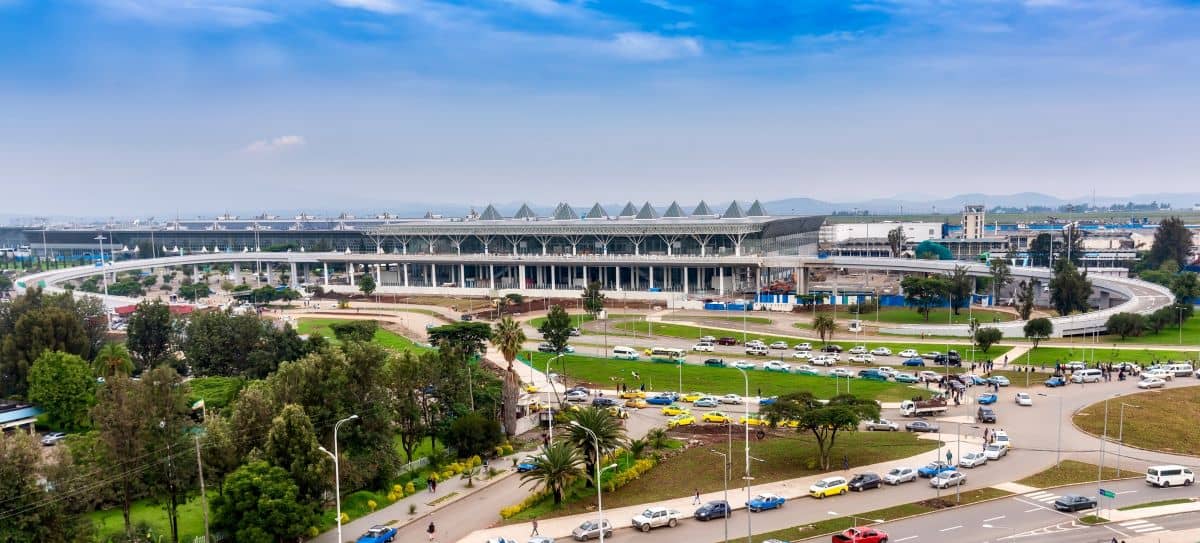
Africa’s aviation map is entering a more consequential phase as Cairo, Addis Ababa, Johannesburg, Casablanca, Nairobi, Lagos and Kigali deepen their international networks. Cairo handled 28.97 million passengers in 2024, while Johannesburg processed 18.46 million and Addis Ababa 11.80 million. Casablanca reached 10.45 million and Nairobi stood at roughly 9 million, according to comparable airport statistics. More revealingly, Cairo handled 24.43 million international passengers, while Addis Ababa handled 10.10 million. OAG data for September 2026 shows Cairo leading current scheduled capacity, with Lagos recording the fastest growth among the leading airports. The figures point towards several distinct hub models rather than one continental winner.
Scale Tells Only Half the Story
Passenger throughput remains the easiest way to measure an airport, but it does not fully explain its international influence. A global hub needs scale, geographic reach, connecting traffic and a carrier capable of sustaining those links. The distinction becomes clear when the seven airports are placed beside comparable annual traffic data.
ACI Africa’s 2024 statistics put Cairo firmly at the top, with 28,974,638 passengers. O.R. Tambo in Johannesburg followed with 18,459,076, while Addis Ababa Bole recorded 11,799,224. Casablanca reached 10,449,372, and Nairobi handled approximately 8.75 million passengers in the same year.
| Airport | Country | 2024 passenger traffic | Key reading |
|---|---|---|---|
| Cairo International | Egypt | 28.97m | Largest overall and international market |
| O.R. Tambo | South Africa | 18.46m | Major Southern African gateway |
| Addis Ababa Bole | Ethiopia | 11.80m | Strong pan-African connecting role |
| Mohammed V | Morocco | 10.45m | Africa-Europe-Americas bridge |
| Jomo Kenyatta | Kenya | 8.75m* | East African gateway |
| Murtala Muhammed | Nigeria | 6.60m | Major West African market |
| Kigali International | Rwanda | 1.3–1.5m | Smaller strategic connecting hub |
ACI Africa figures use comparable airport statistics; Kenyan national reporting can differ because of methodology and reporting periods. Kigali figures are reported separately by airport management sources.
Advertisement
Advertisement
The hierarchy changes when only international passengers are considered. Cairo processed 24.43 million international passengers, followed by Addis Ababa at 10.10 million, according to ACI Africa. Casablanca also has an unusually international-heavy profile, while Johannesburg carries a much larger domestic component.
That difference matters for travellers. A passenger flying between African countries may value frequency and regional connections more than absolute airport size. Conversely, a traveller moving between Africa and North America may care more about nonstop reach and convenient transfer windows.
Advertisement
Advertisement
Cairo Builds From Exceptional Scale
Cairo has the strongest numerical foundation among the seven airports. Its 2024 passenger total was 52.6 per cent above its 2019 level, while international passenger traffic rose 54.6 per cent over the same comparison. That recovery gives Cairo both scale and an extensive international demand base.
The current capacity picture reinforces that position. OAG recorded 1.79 million scheduled seats at Cairo in September 2026, up 11.2 per cent year on year. Cairo therefore combines a huge underlying market with continuing capacity expansion.
Egypt also remained Africa’s largest country aviation market that month. OAG counted 3.08 million departing seats, representing 13.4 per cent annual growth. This creates an important distinction between airport and country strength. Cairo benefits from Egypt’s large domestic, inbound tourism and international travel markets rather than depending solely on transfer passengers.
For travellers, that scale can mean greater schedule choice and more alternative routings. It can also make Cairo relevant for itineraries linking North Africa with Europe, the Middle East and wider international markets.
Addis Ababa Turns Geography Into Connectivity
Addis Ababa presents a different proposition. Its passenger total remains well below Cairo’s, yet its international traffic is extraordinarily important relative to its overall throughput. ACI Africa recorded 10.10 million international passengers in 2024 against 11.80 million total passengers.
The central force is Ethiopian Airlines. Its published network currently spans more than 60 African destinations, alongside extensive links across Europe, Asia, the Middle East and the Americas. Its network includes Lagos, Nairobi, Johannesburg, Cairo, Accra, London, Paris, New York, Atlanta, Mumbai, Delhi, Tokyo and Singapore.
Advertisement
Advertisement
OAG placed Ethiopian Airlines first among African carriers in September 2026. It operated 2.09 million scheduled seats, up 10 per cent from the previous year. That capacity is considerably ahead of EgyptAir, which recorded 890,773 seats.
The network is still expanding. Ethiopian launched Addis Ababa–Mauritius in July 2026 and plans additional services to Nacala, Port Harcourt and Durban later in the year. It also restored its Atlanta service in May 2026.
The significance extends beyond tourism. Ethiopian’s dense African network allows travellers from smaller African markets to connect through Addis Ababa rather than routing through Europe or the Gulf. That gives the airport a distinctive continental-distribution function.
Johannesburg Anchors Southern Africa
Johannesburg’s O.R. Tambo International Airport remains one of the continent’s largest aviation gateways. It handled 18.46 million passengers in 2024, second only to Cairo among African airports in the ACI Africa dataset. However, its passenger composition differs substantially from Addis Ababa’s.
ACI Africa notes that domestic traffic accounted for 69 per cent of South Africa’s total airport traffic in 2024. O.R. Tambo therefore operates within a substantial domestic aviation ecosystem, alongside international services linking Southern Africa with other world regions.
OAG recorded 1.16 million scheduled seats at Johannesburg in September 2026, up 5 per cent year on year. That places it third among Africa’s airports by monthly scheduled capacity, behind Cairo and Addis Ababa.
Advertisement
Advertisement
The airport also has a major cargo role. AFRAA’s third-quarter 2024 analysis placed Johannesburg first among the listed African airports for freight, at more than 286,000 tonnes. Nairobi followed at roughly 251,000 tonnes and Cairo at 245,000 tonnes.
That cargo dimension matters to business travellers and tourism alike. Air connectivity often follows commercial demand, while cargo networks can reinforce an airport’s strategic importance beyond passenger traffic.
Casablanca Bridges Continents
Casablanca is one of the clearest examples of why raw passenger volume can mislead. Mohammed V handled 10.45 million passengers in 2024, but its international orientation is unusually pronounced. Its network links Africa with Europe, North America, the Middle East and South America.
Royal Air Maroc currently lists an extensive African network covering markets from Abidjan and Accra to Lagos, Cairo, Dakar, Kinshasa and Johannesburg. Its long-haul network includes New York, Miami, Montreal, Toronto, Washington and São Paulo.
The airline is also expanding rapidly. OAG recorded 793,257 scheduled seats for Royal Air Maroc in September 2026, an annual increase of 19.2 per cent. That was the fastest growth among the larger established African network carriers in OAG’s top-ten table.
For travellers, Casablanca offers an important geographic proposition. A journey between West Africa and North America can potentially use Casablanca as a natural intermediate gateway. That reduces the need to route through European airports for some itineraries.
Advertisement
Advertisement
Nairobi Strengthens East Africa’s Gateway
Nairobi’s position rests on a combination of tourism demand, regional commerce and Kenya Airways’ network. Jomo Kenyatta International Airport handled about 9.07 million passengers in 2024, according to Kenyan statistical reporting, although datasets can vary by methodology.
A major JKIA development study provides an even more revealing measure. It found that approximately 36 per cent of airport traffic was connecting traffic in 2019, demonstrating the airport’s established transfer function. The study also recorded 55 nonstop services in 2023, including 36 within Africa.
The African component is particularly important. About 60 per cent of JKIA’s international passengers were associated with African destinations in the cited analysis. Africa therefore remains the airport’s network foundation rather than merely a secondary market.
OAG shows Nairobi continuing to grow, with 520,000 scheduled seats in September 2026, up 11.9 per cent year on year. Kenya’s national scheduled capacity was almost flat, however, rising only 0.8 per cent.
This suggests that Nairobi’s future hub potential depends increasingly on network efficiency and connecting traffic rather than simply expanding the domestic market.
Lagos Emerges Through Rapid Expansion
Lagos introduces a different West African dynamic. Murtala Muhammed International Airport handled about 6.60 million passengers in 2024 in the ACI-based annual comparison. Separately, FAAN data recorded 4.3 million international passengers at the airport during 2024 under its ICAO State Profile methodology.
Advertisement
Advertisement
International traffic increased 6.5 per cent, while international aircraft movements rose 7.7 per cent to 40,250. International cargo also climbed 11.3 per cent to 150 million kilograms, giving Lagos a substantial logistics dimension.
The more striking signal appears in the latest capacity data. OAG recorded 470,000 scheduled seats at Lagos in September 2026, up 24.1 per cent year on year. It was the fastest growth among Africa’s ten largest airports in that monthly comparison.
Nigeria itself recorded an even stronger expansion. Scheduled capacity rose 37.4 per cent year on year to 1.19 million seats. Air Peace capacity increased 54.7 per cent, making it the fastest-growing carrier in OAG’s African top ten.
For travellers, that creates a potentially important shift. Lagos already has the market depth of one of Africa’s largest cities. Its next challenge is converting that demand into a more dependable international connecting network.
Kigali Tests the Smaller-Hub Formula
Kigali is the smallest airport in this comparison, but it may be the most revealing strategic case. Kigali International Airport handled around 1.3 million passengers in 2024, with airport management targeting 1.5 million.
Its importance instead comes from RwandAir’s deliberate network-building strategy. The airline added Zanzibar and Mombasa services, creating more links between Kigali and East Africa’s major leisure markets.
Advertisement
Advertisement
In June 2026, RwandAir and EgyptAir announced a codeshare and interline agreement adding Cairo, Rome and Amman to RwandAir’s network through Kigali. The agreement explicitly strengthens connectivity between Africa, Europe and the Middle East.
That model shows how a smaller airport can build relevance through partnerships. Hub strength does not always require enormous local passenger demand when an airline can assemble connecting flows across several regions.
The Numbers Reveal Seven Hub Models
The comparison therefore produces a more useful picture than a conventional airport ranking.
| Hub | Distinctive strength | Current signal |
|---|---|---|
| Cairo | Scale and international volume | 1.79m September 2026 seats |
| Addis Ababa | Pan-African network depth | Ethiopian 2.09m seats |
| Johannesburg | Southern African scale and cargo | 1.16m September seats |
| Casablanca | Africa-Europe-Americas bridge | RAM +19.2% capacity |
| Nairobi | East African transfer network | 11.9% airport capacity growth |
| Lagos | West African growth momentum | +24.1% airport capacity |
| Kigali | Partnership-led connectivity | New EgyptAir links |
The latest OAG data also places the broader market in perspective. Africa had 25.8 million scheduled seats in September 2026, up 9.4 per cent year on year. International capacity represented 78 per cent of the market, while Central and Western Africa recorded particularly rapid growth.
This is important for tourism. More international seats can improve destination accessibility, support hotel demand and create more practical multi-country itineraries. However, capacity alone does not guarantee sustained demand or profitable routes.
What Travellers Should Watch Next
Travellers should look beyond airport size when choosing African connections. Frequency, nonstop destinations, minimum connection times and alternative services can matter more than annual passenger totals.
Advertisement
Advertisement
A larger hub can provide more fallback options when schedules change. A smaller hub can sometimes offer simpler transfers and shorter airport journeys. Travellers should therefore compare the complete itinerary rather than choosing a gateway solely because it handles more passengers.
For tourism businesses, the implications are broader. New routes can open markets that previously required two connections. Higher frequencies can make weekend and short-break travel more viable, while stronger intra-African links can encourage travellers to combine several countries in one journey.
Why the Hub Race Is Changing
Africa’s aviation expansion is increasingly shaped by network architecture rather than airport size alone. Cairo has immense traffic scale, Addis Ababa has exceptional continental reach, Johannesburg commands Southern African volume, and Casablanca offers a powerful Atlantic bridge.
Nairobi remains strategically important for East Africa, while Lagos has entered a faster growth phase. Kigali demonstrates another model, using airline partnerships and network connectivity to compensate for a comparatively small local market.
The most important change for travellers is therefore not the emergence of one dominant African gateway. It is the creation of multiple specialised connection systems, each serving a different geographic corridor.
As capacity expands, the decisive question will be whether airports can convert new seats into reliable transfer flows. The hubs that combine airlines, infrastructure, route diversity and commercially sustainable demand will shape Africa’s next aviation chapter.
Advertisement
