
Mona Island Vessel Capsizing Leaves 3 Dead and 10 Missing as Puerto Rico Faces Fresh Travel Safety Concerns

Published
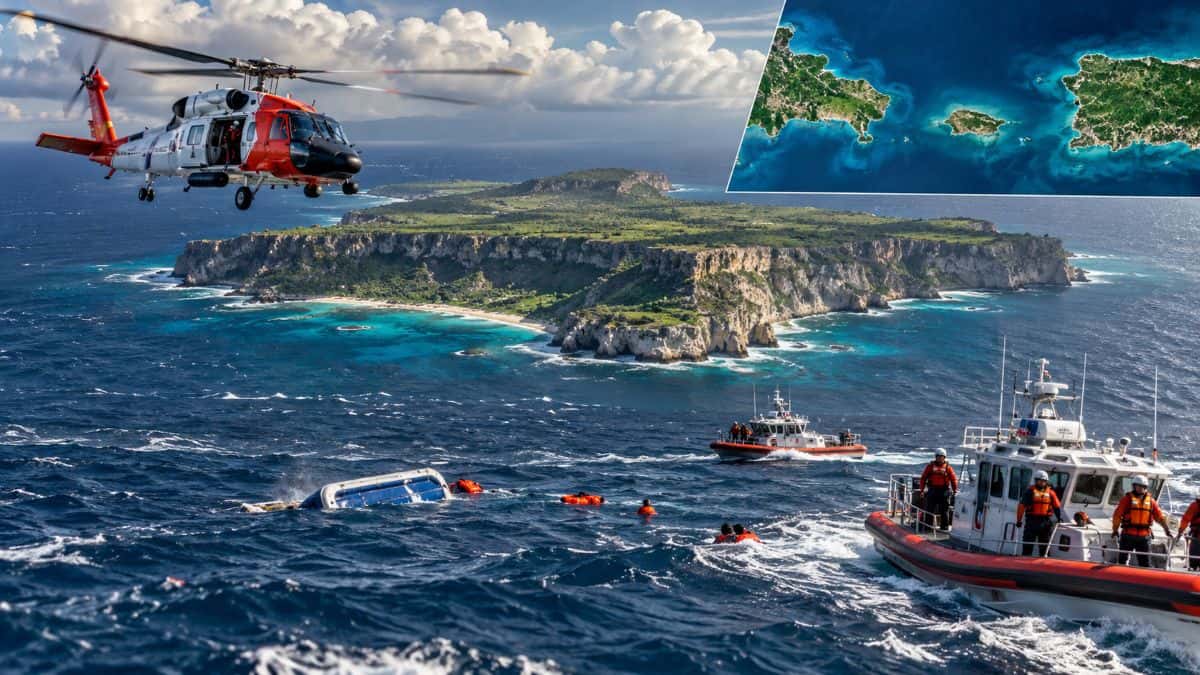
Image generated with Ai
At least three people have died and 10 remain missing after a makeshift vessel carrying 62 people capsized about 10 miles from Mona Island, Puerto Rico. The United States Coast Guard said 49 people had been rescued by Tuesday, following a major multi-agency search operation. None of those aboard reportedly wore life jackets. The incident occurred in the Mona Passage, a challenging stretch of Caribbean water between Hispaniola and Puerto Rico. Authorities said a violent altercation involving a machete preceded the disaster. The emergency highlights risks around one of Puerto Rico’s most remote islands. It also underscores why travellers must distinguish regulated marine tourism from unauthorised crossings.
Search Operation Continues Across Mona Passage
The vessel overturned late Sunday night near Mona Island, according to the United States Coast Guard. The remote island sits in the Mona Passage, between Puerto Rico and Hispaniola, creating a strategically important but demanding maritime corridor.
The Coast Guard said a fight erupted aboard the vessel before the capsizing. People were reportedly injured with a machete, prompting passengers to enter the water and attempt to reach Mona Island.
A passing vessel rescued four people from the water around midday Monday. Coast Guard crews and other agencies subsequently expanded the search. By Tuesday, 49 people had been rescued and three bodies recovered.
Advertisement
Advertisement
Ten people remained missing as the search continued. The response involved the U.S. Coast Guard, Puerto Rico Police and the Dominican Republic Air Force. The Coast Guard has not identified the vessel’s origin.
The survivors were being transferred to U.S. Homeland Security Investigations and U.S. Customs and Border Protection. Authorities said those agencies would conduct further investigation.
Advertisement
Advertisement
| Key Incident Detail | Confirmed Information |
|---|---|
| Location | About 10 miles from Mona Island |
| Maritime zone | Mona Passage |
| People aboard | 62 |
| Rescued | 49 |
| Deaths recovered | 3 |
| Missing | 10 |
| Life jackets | None reportedly worn |
| Incident timing | Late Sunday night |
| Search partners | U.S. Coast Guard, Puerto Rico Police, Dominican Republic Air Force |
| Investigation | Homeland Security Investigations and Customs and Border Protection |
The figures also explain the scale of the emergency. Fifty-two people had been accounted for through rescue or recovery, leaving 10 still unaccounted for at the time of the Coast Guard’s Tuesday update.
Why Mona Island Matters to Travellers
Mona Island is not a conventional Caribbean holiday destination. It is an uninhabited nature reserve administered by Puerto Rico and is widely recognised for its remote landscape and distinctive wildlife.
The island’s remoteness is central to its appeal. It is also central to its logistical challenges. Official tourism information describes Mona as Puerto Rico’s most remote surrounding island, requiring a lengthy boat journey to reach it.
That distinction matters for travellers. A visitor joining an authorised excursion is operating within a very different framework from someone aboard an improvised vessel crossing open water.
The island’s management system reinforces that difference. Puerto Rico’s Department of Natural and Environmental Resources, known as DRNA, provides formal procedures for visiting and camping on Mona Island.
Travellers planning a legitimate visit should therefore arrange access through recognised authorities and operators. They should not assume that the presence of a navigable route makes the island freely accessible.
Advertisement
Advertisement
A Remote Island With Strict Access Rules
Mona Island’s environmental status creates additional obligations for visitors. DRNA’s current information includes a formal application process for visiting or camping on the island.
Camping permits must be obtained at least five working days before arrival, according to the department. Designated camping areas include Playa Pájaros and Playa Sardinera, with stated capacities of 50 and 60 people respectively.
The rules also prohibit several activities within the reserve. They cover waste disposal, alcohol, certain fishing practices and access to sensitive locations.
For travellers, those restrictions provide an important lesson. Remote tourism requires planning rather than improvisation, particularly when reaching an island depends entirely on maritime transport.
| Mona Island Visitor Information | Official Guidance |
|---|---|
| Access | Subject to DRNA procedures |
| Camping permit lead time | Minimum five working days |
| Playa Pájaros camping capacity | 50 people |
| Playa Sardinera camping capacity | 60 people |
| Camping fee | $10 per person per night |
| Alcohol in reserve | Prohibited |
| Waste | Visitors must manage and remove generated waste |
| Monito Island access | Restricted to authorised researchers |
The tragedy does not indicate that ordinary tourism in Puerto Rico has been disrupted. Rather, it highlights the difference between regulated tourism infrastructure and dangerous maritime movement.
Puerto Rico Tourism Continues Expanding
The incident comes as Puerto Rico enters another strong period for visitor demand. Discover Puerto Rico estimates that the island received 8.1 million visitors in 2025, generating approximately $8.2 billion in economic impact.
Advertisement
Advertisement
The destination recorded an estimated eight per cent increase in visitors compared with 2024. Tourism authorities have described 2025 as the fifth consecutive year of record performance.
That growth has increased attention on experiences beyond San Juan. Destination marketing efforts are encouraging visitors to explore different regions, communities and nature-based attractions.
However, greater destination dispersal also makes visitor safety information increasingly important. Remote attractions can involve different transport requirements, weather exposure and emergency-response times.
San Juan’s aviation and cruise sectors also underline the scale of Puerto Rico’s tourism ecosystem. The San Juan airport recorded approximately 6.8 million arriving passengers in 2025, while the cruise port handled more than 1.59 million passengers.
These numbers concern mainstream tourism rather than the incident itself. They nevertheless show why maritime safety remains relevant to a destination with extensive coastal and island experiences.
What The Incident Means for Travellers
The accident does not mean travellers should avoid Puerto Rico or Caribbean boat excursions generally. Instead, it reinforces several practical principles for anyone planning an island or marine experience.
Advertisement
Advertisement
Travellers should first establish who operates the vessel. A legitimate excursion should provide clear information about the operator, departure point, itinerary and safety arrangements.
Life-jacket availability is particularly important. The reported absence of life jackets aboard the capsized vessel demonstrates how rapidly survivability can deteriorate when passengers enter open water.
The U.S. State Department advises travellers to exercise caution when travelling by sea. Its maritime guidance specifically identifies the Caribbean among regions where additional caution may be warranted.
Weather conditions should also influence decisions. Caribbean waters can change rapidly, while remote islands can leave rescuers with longer response distances than mainland attractions.
| Traveller Check | Why It Matters |
|---|---|
| Confirm operator legitimacy | Establishes accountability and operating standards |
| Check life-jacket provision | Critical during capsizing or water evacuation |
| Review weather conditions | Wind and sea conditions can alter voyage safety |
| Confirm departure and return plans | Remote islands offer limited alternatives |
| Carry emergency contacts | Useful when travelling outside urban areas |
| Follow protected-area rules | Helps protect both travellers and fragile ecosystems |
| Avoid unauthorised crossings | Remote maritime routes can carry severe risks |
The State Department also recommends staying informed about local conditions and using official maritime security information where appropriate.
Mona Passage Has A Long Maritime Risk
The Mona Passage is more than a geographical dividing line. It forms a strategic maritime corridor between Puerto Rico and Hispaniola and has historically presented challenges for authorities managing migration and maritime security.
Advertisement
Advertisement
U.S. Customs and Border Protection has previously described Mona as an important route for unauthorised maritime movement. Its published background material also describes the passage as a difficult maritime border requiring cooperation between multiple agencies.
That history provides context for the latest emergency. The passage carries legitimate maritime traffic while also being used for movements outside regulated travel systems.
The distinction is particularly important for tourism reporting. A maritime incident near a tourist destination does not automatically constitute a tourism-sector disruption.
At present, the available information points to a specific maritime emergency involving a makeshift vessel. There is no indication in the supplied Coast Guard account that commercial flights, cruise operations or mainstream Puerto Rico tourism have been suspended.
Safety Rules Matter Beyond The Shore
Puerto Rico’s protected natural areas operate under specific rules because visitor numbers and environmental pressures must be managed. DRNA states that permitted activities depend on the characteristics of each protected area and its visitor carrying capacity.
That principle becomes particularly significant for remote islands. Transport, rescue capability, environmental protection and visitor management are closely connected.
Advertisement
Advertisement
For international travellers, the practical message is straightforward. Remote does not mean unrestricted, and an attractive coastline does not necessarily indicate safe independent access.
Travellers should use authorised operators and confirm the requirements of the relevant Puerto Rican authorities. Those taking boat excursions should also understand the vessel’s emergency procedures before departure.
The tragedy near Mona Island therefore carries implications beyond the search itself. It highlights the safety gap that can emerge when people enter difficult maritime environments without the protections associated with regulated travel.
Tourism Growth Needs Safety Infrastructure
Puerto Rico’s tourism expansion creates substantial economic opportunities. The island’s 8.1 million visitors in 2025 generated an estimated $8.2 billion in economic impact, demonstrating the industry’s importance to the wider economy.
At the same time, growth increases demand for diverse experiences. Visitors are increasingly encouraged to explore coastal communities, nature reserves and less-developed areas beyond traditional tourism centres.
That makes safety communication a critical part of destination management. Marketing can inspire visitors to explore, but authorities and operators must also explain how those experiences should be undertaken.
Advertisement
Advertisement
The Mona incident illustrates that relationship starkly. The island’s natural appeal depends partly on its remoteness, yet that same remoteness complicates rescue and emergency response.
For tourism businesses, the wider lesson is practical. Safety information should accompany adventure, nature and marine experiences, especially where transport takes visitors far from conventional infrastructure.
What Travellers Should Remember
The Mona Island emergency remains an active search-and-investigation operation. At the latest reported stage, three people had died, 49 had been rescued and 10 remained missing after the 62-person vessel capsized.
The circumstances are still developing, including the reported altercation aboard the vessel and the precise origin of the journey. Authorities will determine further details as their investigation progresses.
For visitors to Puerto Rico, however, the immediate travel message is clear. The island continues to welcome millions of visitors, while remote marine experiences require a higher level of preparation than conventional sightseeing.
Mona Island remains a protected and remote destination, not a conventional day-trip location. Travellers should rely on authorised access arrangements, established operators and official safety information when planning maritime activities.
Puerto Rico’s tourism sector continues to expand. Ensuring that visitors understand the risks surrounding remote experiences will remain an important part of that growth.
Advertisement
