

United States Aligns with Mexico and 98 More Countries with Over 1000 Delegates Participating at 26th WTTC Global Summit in Valletta, Malta

Published
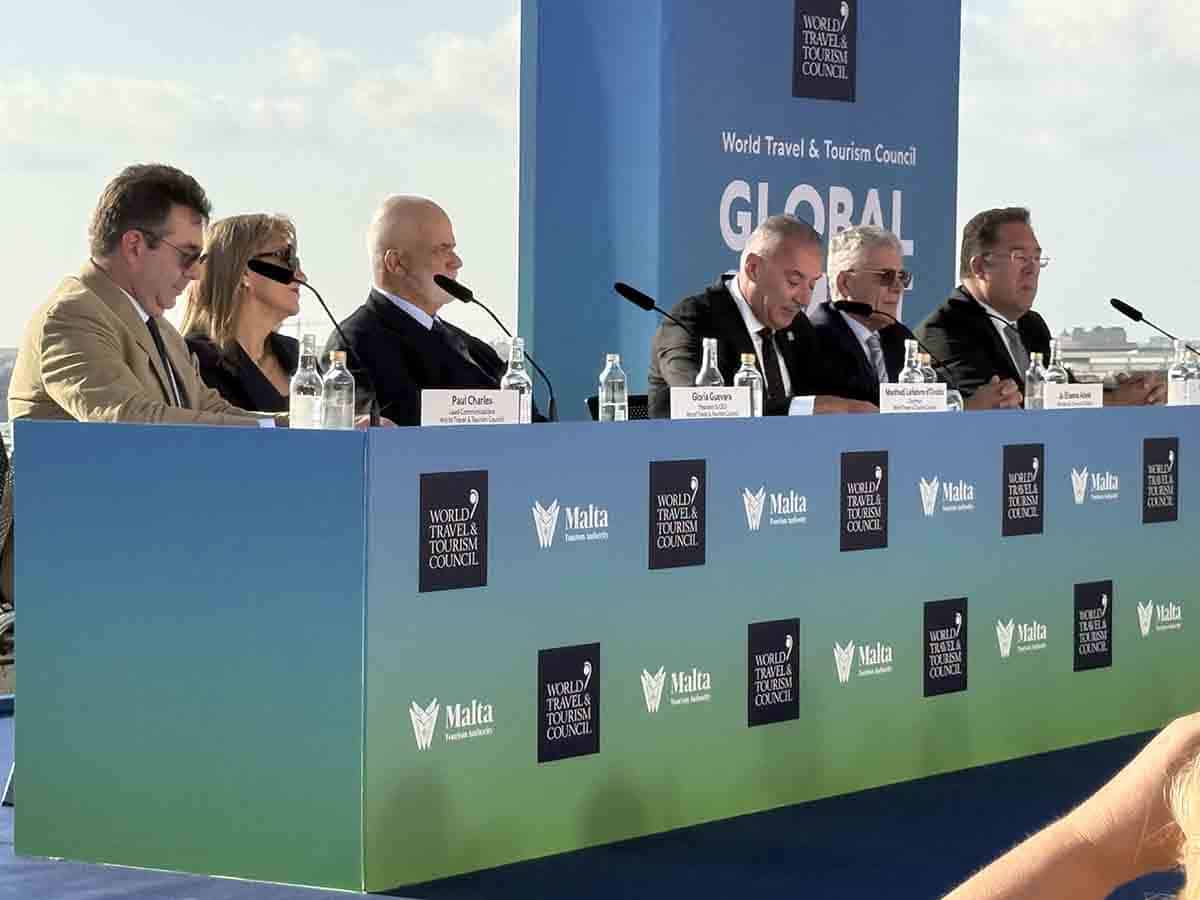
The United States aligns with Mexico and 98 more countries as more than 1,000 delegates gather for the 26th WTTC Global Summit in Valletta, Malta, from 7–9 October 2026. Tourism ministers, government officials and industry leaders are examining artificial intelligence, investment, seamless travel, sustainability and future global tourism growth.
The World Travel & Tourism Council’s 2026 Global Summit in Malta brings tourism leaders together to examine how technology, investment, connectivity and sustainability are reshaping the industry. With global Travel & Tourism forecast to grow, the event is placing greater emphasis on managing growth while improving competitiveness, resilience and visitor experiences.
What is the WTTC Global Summit 2026 about?
The 26th World Travel & Tourism Council Global Summit is taking place in Valletta, Malta, from 7 to 9 October 2026, bringing together government representatives, tourism ministers, destination leaders and senior executives from across the international travel industry.
Held under the theme “FUTU[RE]SET: Shaping the Future of Travel & Tourism”, the summit is addressing some of the most important structural changes affecting tourism, including artificial intelligence, destination management, investment, connectivity, workforce development, sustainability and seamless travel.
Advertisement
Advertisement
More than 1,000 delegates, including over 200 Travel & Tourism chief executives and senior business leaders, are participating in discussions designed to examine how destinations and companies can respond to changing traveller expectations and a more complex global operating environment.
The summit is being hosted in partnership with the Government of Malta and the Malta Tourism Authority, placing the Mediterranean destination at the centre of international discussions about the next phase of tourism growth.
Advertisement
Advertisement
Countries with government/tourism officials identified by WTTC
| Country | Confirmed representative |
|---|---|
| Malta | Silvio Schembri; Jonathan Attard; other senior Maltese leaders |
| Spain | Jordi Hereu; Rosario Sánchez Grau |
| Italy | Gianmarco Mazzi |
| South Africa | Patricia de Lille |
| Greece | Olga Kefalogianni |
| Croatia | Tonči Glavina |
| Türkiye | Mehmet Nuri Ersoy |
| India | Gajendra Singh Shekhawat; Suman Billa |
| Guatemala | Harris Whitbeck |
| Saudi Arabia | Abdulmohsen Al-Mazyad |
| Egypt | Sherif Fathy Attia |
| United States | Nick Adams; Robert O’Leary |
| Mexico | Bernardo Cueto; Michelle Fridman |
| Canada | Justin Trudeau, former Prime Minister |
| European Union | European Commission representatives |
Why is the WTTC summit important for global tourism?
The significance of the summit extends beyond the number of government and business leaders attending. Travel and Tourism has become a major contributor to economic activity, employment, investment and international connectivity, making decisions taken by governments and businesses increasingly important to the wider global economy.
WTTC says Travel & Tourism contributed US$11.6 trillion to the global economy in 2025, representing 9.8% of global GDP, while supporting approximately 366 million jobs worldwide.
For 2026, WTTC expects the global sector to expand by 2.5%. The organisation’s latest research also points to stronger growth in Europe, where Travel & Tourism is forecast to increase by 3.1%.
These figures underline why the sector’s future cannot be considered solely through international arrival numbers. Tourism growth now needs to be assessed alongside infrastructure capacity, investment, workforce availability, environmental pressures, digital transformation and the ability of destinations to deliver competitive visitor experiences.
The Malta summit is therefore being used as a platform to examine how tourism can continue expanding while becoming more resilient and better managed.
How is artificial intelligence changing the tourism industry?
Artificial intelligence is one of the most prominent themes at the 2026 summit, reflecting its rapid expansion across travel planning, hospitality, aviation, destination management and customer service.
Advertisement
Advertisement
WTTC’s programme includes discussions on AI and the emerging technologies that could influence how travellers search for destinations, plan journeys, interact with businesses and move through airports and borders.
For the tourism industry, the potential impact of AI extends well beyond chatbots and automated customer service. Airlines, hotels, travel agencies and destination management organisations are increasingly examining AI for personalisation, demand forecasting, operational efficiency and traveller communications.
Governments are also considering how artificial intelligence could improve border processes and visa systems. When combined with digital identity and biometric technology, AI could potentially reduce administrative friction while helping authorities maintain security standards.
The strategic question for tourism leaders is consequently shifting from whether AI will affect the industry to how quickly businesses and destinations can integrate it responsibly.
For travellers, the eventual outcome could be a more personalised and seamless journey, from the initial search for a destination through booking, airport processing, accommodation and activities.
Why is seamless travel becoming a major priority?
The concept of seamless travel is another major focus of the WTTC summit, particularly as international journeys continue to involve multiple stages of documentation, security checks and border procedures.
Advertisement
Advertisement
WTTC’s discussions are examining the potential role of biometric systems, digital identity and AI-enabled visa processes in creating smoother international journeys.
Airports and governments around the world have already begun adopting biometric technology, but global travel remains fragmented because different countries and transport systems operate under different regulations and technical standards.
Greater coordination between governments, airports, airlines and technology providers could reduce unnecessary friction for passengers.
The objective is not simply to make airports faster. A truly seamless travel system would connect different parts of the journey while preserving security, privacy and regulatory requirements.
This issue is particularly important for destinations competing for international visitors. Long processing times, complicated visa requirements or inefficient border procedures can influence travellers when they compare destinations.
As international tourism becomes increasingly competitive, ease of travel could become as important as attractions, accommodation and air connectivity.
Advertisement
Advertisement
Confirmed participants include:
- Justin Trudeau, former Prime Minister of Canada
- José María Aznar, former Prime Minister of Spain
- Nick Adams, US Minister for Tourism and Presidential Envoy
- Apostolos Tzitzikostas, European Commissioner for Sustainable Transport and Tourism
- Gajendra Singh Shekhawat, India’s Minister for Tourism
- Mehmet Nuri Ersoy, Türkiye’s Minister of Culture and Tourism
- Jordi Hereu, Spain’s Minister of Industry and Tourism
- Patricia de Lille, South Africa’s Minister for Tourism
- Olga Kefalogianni, Greece’s Minister of Tourism
- Tonči Glavina, Croatia’s Minister of Tourism and Sports
- Sherif Fathy, Egypt’s Minister of Tourism and Antiquities
What does WTTC say about Europe’s tourism outlook?
Europe is expected to remain a major tourism region in 2026, with WTTC forecasting Travel & Tourism growth of 3.1%.
International visitor spending in Europe is projected to increase by 5.8%, according to the organisation’s latest economic research. Leisure travel spending is forecast to rise by 3.1%, while business travel spending is expected to increase by 4.2%.
The figures point to continued demand for European destinations despite a challenging global economic and geopolitical environment.
However, growth is also creating management challenges. Major European destinations are facing questions about congestion, housing, infrastructure, environmental pressure and the relationship between visitor numbers and residents’ quality of life.
This makes destination stewardship an increasingly important component of tourism policy.
Advertisement
Advertisement
Rather than measuring success exclusively through higher visitor volumes, tourism authorities are increasingly examining visitor value, seasonality, geographic distribution, infrastructure utilisation and the economic benefits reaching local communities.
The WTTC summit’s focus on destination stewardship reflects this broader transformation in tourism strategy.

Why is investment critical to tourism competitiveness?
Investment is another central issue at the Malta summit because tourism growth depends heavily on infrastructure and private capital.
Airports, hotels, attractions, transport networks, digital systems and other tourism infrastructure require significant long-term investment. Without sufficient capacity, destinations can struggle to accommodate rising demand even when international visitor interest remains strong.
WTTC’s Global Leaders Dialogue is examining how governments can create conditions that attract investment while maintaining effective regulation.
The competition between destinations is consequently no longer limited to marketing budgets. Countries and cities are increasingly competing through infrastructure, connectivity, regulatory efficiency, investment incentives, digital capabilities and workforce availability.
Advertisement
Advertisement
For investors, predictability is particularly important. Long-term tourism projects require confidence in planning rules, market access, taxation, infrastructure and political stability.
For governments, attracting investment also requires balancing economic objectives with environmental and social considerations.
The most competitive destinations are therefore likely to be those that can combine strong visitor demand with an investment environment capable of supporting sustainable expansion.
How is Malta positioning itself through the summit?
Malta is using the WTTC Global Summit to showcase the importance of Travel & Tourism to its economy and international profile.
WTTC forecasts that Travel & Tourism will contribute US$4.9 billion to Malta’s economy in 2026, representing approximately 16.9% of national GDP.
The organisation also expects the sector to support more than 72,000 jobs in Malta, equivalent to more than one in five jobs nationally.
Advertisement
Advertisement
International visitor numbers have increased significantly over recent years. WTTC reports that Malta welcomed four million international visitors in 2025, compared with 2.75 million in 2019.
The growth demonstrates the strength of Malta’s tourism recovery and expansion, but it also illustrates the management challenge facing destinations that experience rapid increases in demand.
Malta’s position as an island destination makes connectivity, infrastructure, environmental management and seasonality particularly important. The summit therefore provides an opportunity for the country to present its tourism model while also participating in a wider debate about responsible destination growth.
Why are tourism SMEs receiving greater attention?
Small and medium-sized enterprises form the foundation of the global Travel & Tourism ecosystem, and WTTC is placing greater emphasis on their productivity and resilience.
The organisation has announced an ambition for one million tourism SMEs to benefit from its Together in Travel initiative.
WTTC estimates that approximately 85% of the global Travel & Tourism community consists of SMEs. These businesses include accommodation providers, tour operators, restaurants, attractions, travel agencies, transport companies and other local tourism enterprises.
Advertisement
Advertisement
Their performance has a direct effect on the visitor experience and the distribution of tourism income.
WTTC research presented around the summit suggests that a 10% productivity improvement among SMEs could unlock US$63 billion in direct Travel & Tourism GDP across eight major economies.
The figure is presented as an illustrative scenario rather than a formal economic forecast, but it highlights the scale of the opportunity.
Improving digital adoption, access to information, skills, financing and business networks could help smaller tourism companies compete more effectively while strengthening local tourism economies.
What does the summit say about tourism employment?
The future of tourism also depends on people.
As international travel expands and tourism businesses adopt new technologies, the sector needs workers with a broader range of skills. Hospitality, aviation, travel technology, destination management and tourism services all require employees capable of operating in an increasingly digital and international environment.
Advertisement
Advertisement
WTTC’s Youth Movement programme at the summit brings together around 90 students and 10 professors from partner institutions representing more than 30 nationalities.
The initiative reflects a wider industry concern: attracting younger generations into tourism careers.
Technology may automate certain functions, but it will not eliminate the need for skilled professionals across hospitality, aviation, food and beverage, travel management, destination services and other tourism activities.
Tourism employers will therefore need to combine digital transformation with investment in training, career development and workplace conditions.
The industry’s ability to create attractive career pathways could become an important factor in determining whether destinations can support future tourism growth.
How is sustainability influencing tourism growth?
Sustainability remains an important part of the WTTC agenda, but the discussion is increasingly linked to destination management rather than treated as a separate environmental issue.
Advertisement
Advertisement
Tourism growth can generate substantial economic benefits, but rapid expansion can also increase pressure on water supplies, waste systems, transport networks, housing and natural attractions.
Destination stewardship seeks to address these pressures by considering the wider consequences of tourism development.
This approach can involve spreading visitor demand across different seasons and locations, investing in infrastructure, protecting natural and cultural assets and ensuring that local communities benefit from tourism activity.
For businesses, sustainability is also becoming connected to operational efficiency and long-term resilience.
The challenge is to create a model in which economic growth does not undermine the resources and communities that make destinations attractive in the first place.
“WTTC’s Malta summit presents a powerful vision for tourism’s future, where innovation, responsible growth and stronger global cooperation work together. The focus on AI, seamless travel, investment and people is timely, because these priorities can create a more competitive, inclusive and sustainable travel industry while delivering greater value for destinations, businesses and travellers worldwide.”— Anup Kumar Keshan, Founder and Editor-in-Chief, Travel And Tour World
Advertisement
Advertisement
What does the WTTC summit mean for the future of travel?
The discussions in Malta indicate that the global tourism industry is entering a more sophisticated phase of growth.
Visitor numbers will remain important, but governments and businesses are increasingly measuring tourism performance through broader indicators, including visitor spending, investment, employment, productivity, connectivity, resilience and community impact.
Artificial intelligence could transform how travellers discover and experience destinations, while biometric technology and digital identity could make international journeys more seamless.
At the same time, destination stewardship will become increasingly important as governments manage the effects of concentrated tourism.
Investment and workforce development will determine whether destinations have the physical and human capacity to respond to rising demand.
The WTTC Global Summit therefore reflects a tourism industry that is moving from a simple recovery narrative towards a more complex question: how can Travel & Tourism grow in a way that remains economically valuable, technologically competitive, environmentally responsible and beneficial to local communities?
Advertisement
Advertisement
For governments, the answer will depend on coordinated policy and investment. For businesses, it will require technology, productivity and workforce development. For travellers, the result could ultimately be a more connected, personalised and responsible travel experience.
The WTTC Global Summit in Malta demonstrates how rapidly tourism priorities are changing. AI, seamless travel, investment, destination stewardship, workforce development and SME productivity are moving to the centre of industry strategy. With global Travel & Tourism continuing to expand, the next challenge will be ensuring that growth remains competitive, resilient, sustainable and valuable to destinations and communities
The 26th WTTC Global Summit highlights how international cooperation is reshaping Travel & Tourism, with the United States, Mexico and more than 100 countries represented. With over 1,000 delegates participating, discussions in Valletta are focusing on technology, investment, connectivity and sustainable growth as destinations prepare for the next era of tourism.
Advertisement
