

Exploring Bisya and Salut: Oman’s New Archaeological Gateway in Bahla

Published
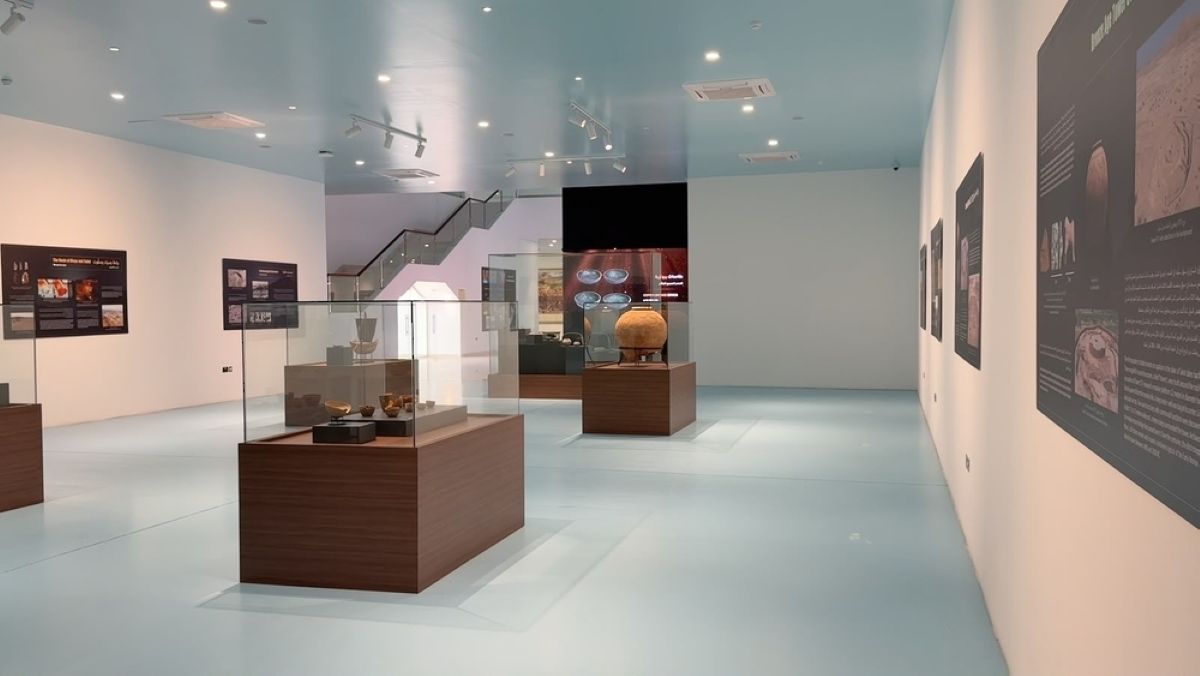
The Bisya and Salut Archaeological Site is an ancient Bronze and Iron Age complex in the Wilayat of Bahla, Oman, featuring 3rd-millennium BCE stone towers, early falaj irrigation channels, and an on-site visitor centre housing 344 catalogued artefacts that document over 5,000 years of continuous human settlement and ancient Magan trade routes.
Managed by the Ministry of Heritage and Tourism in collaboration with long-term academic excavations—most notably the Italian Archaeological Mission to the Sultanate of Oman (IMTO) from the University of Pisa—the site serves as a vital bridge between field archaeology and cultural tourism in southeastern Arabia.
Key Facts for Visitors
| Attribute | Details |
| Location | Wilayat of Bahla, Al Dakhiliyah Governorate, Oman (~40 km southwest of Nizwa) |
| Coordinates | 22°53’44” N, 57°14’28” E |
| Governing Body | Ministry of Heritage and Tourism (Sultanate of Oman) |
| Heritage Status | Included on Oman’s UNESCO World Heritage Tentative List |
| Opening Hours | Saturday – Thursday: 8:00 AM – 4:00 PM; Friday: 8:00 AM – 11:30 AM, 1:30 PM – 4:00 PM |
| Admission | Free entry / nominal fee (subject to Ministry scheduling) |
| Recommended Duration | 1 to 2 hours (visitor centre galleries plus outdoor trails) |
| Key Facilities | 3 exhibition wings, a conservation laboratory, an educational workshop, and field transport carts |
| Accessibility | Wheelchair-accessible indoor galleries; paved trail sections; electric carts for site access |
What is the Significance of the Bisya and Salut Archaeological Site?
The Bisya and Salut complex provides primary archaeological evidence for the emergence of structured community life, monumental defensive engineering, and systematic oasis agriculture in southeastern Arabia. Excavations at landmarks such as Tower ST1 and the fortified Iron Age stronghold of Husn Salut illustrate two critical developments:
- Pioneering Oasis Water Systems: Engineered rock-cut trenches across the Salut plain prove that early Bronze Age inhabitants manipulated hydrological run-off thousands of years before the formalization of Oman’s UNESCO-listed aflaj irrigation networks.
- Architectural Progression: Structural sequences reveal a clear transition from Bronze Age circular stone towers (3rd millennium BCE) and collective beehive/cairn tombs to fortified, rectilinear mud-brick Iron Age citadels (1st millennium BCE) complete with pillared interior halls and reinforced bastions.
What Can You See at the Bisya-Salut Visitor Centre?
The Bisya-Salut Visitor Centre displays 344 registered artefacts recovered from site excavations, organized chronologically across three dedicated wings to connect stratigraphy with material culture:
Advertisement
Advertisement
- The Bronze Age Wing (3rd Millennium BCE): Features soft-stone (chlorite) vessels, copper/bronze daggers, stamp seals, and agricultural tools reflecting early copper-smelting and date palm cultivation during the Umm an-Nar culture.
- The Iron Age Wing (circa 1300–300 BCE): Displays items from the architectural height of Husn Salut, including decorated ritual incense burners, fine serpent-motif ceramics, bronze arrowheads, and smelting crucible remnants.
- The World Heritage Wing: Explores Oman’s global heritage footprint, contextualizing Salut’s cultural landscape alongside nearby UNESCO sites, such as the 12th-century Bahla Fort and Falaj Daris.
The building also houses an active conservation and analysis laboratory, touchscreen multimedia stations, and a dedicated learning corner for school workshops.
What Do the Artefacts Reveal About Ancient Bronze and Iron Age Trade?
Artefacts excavated at Bisya and Salut confirm that interior Oman operated as a primary production and export hub within the ancient macro-economy of Magan—a civilization heavily cited in Mesopotamian cuneiform records as a primary supplier of high-purity copper and diorite.
Advertisement
Advertisement
Analysis of material typologies recovered at the site confirms trade across three major regional hubs:
| Trade Partner / Civilization | Evidentiary Artefacts Recovered | Macro-Economic Function |
| Indus Valley (Harappan) | Etched carnelian beads, standardized cubical stone weights, Harappan ceramic motifs | Exchange of finished luxury ornaments and standardized trade goods for raw Omani copper |
| Mesopotamia & Elam | Cylinder seals, spouted pottery vessels, carved chlorite containers | Direct trade documented in Sumerian/Akkadian texts sourcing metal for urban centres |
| Levant & Persian Plateau | Distinct late Iron Age ceramic forms, compartmentalized bronze pins, specialized metallurgy equipment | Integration into trans-Arabian caravan routes connecting coastal ports with interior valleys |
These commodities demonstrate that Bisya and Salut functioned as an inland consolidation nexus, channelling raw copper extracted from the Hajar Mountains down wadi trade arteries to coastal ports for maritime export across the Gulf and the Indian Ocean.
How Does the Centre Connect Museum Displays to Field Monuments?
The Visitor Centre functions as an integrated interpretive base that connects artefact displays directly to outdoor field ruins without degrading fragile deposits.
Visitors transition from the climate-controlled galleries onto signposted trail networks using electric transport carts. Each major field station—including Husn Salut, monumental Tower ST1, and ancient irrigation cuts—features interpretive panels referencing the exact 3D reconstructions, stratigraphic layers, and recovered artefacts viewed inside the museum.
Advertisement
