
Spain Comes Along With Singapore and Other Countries in AI Travel Innovation

Published
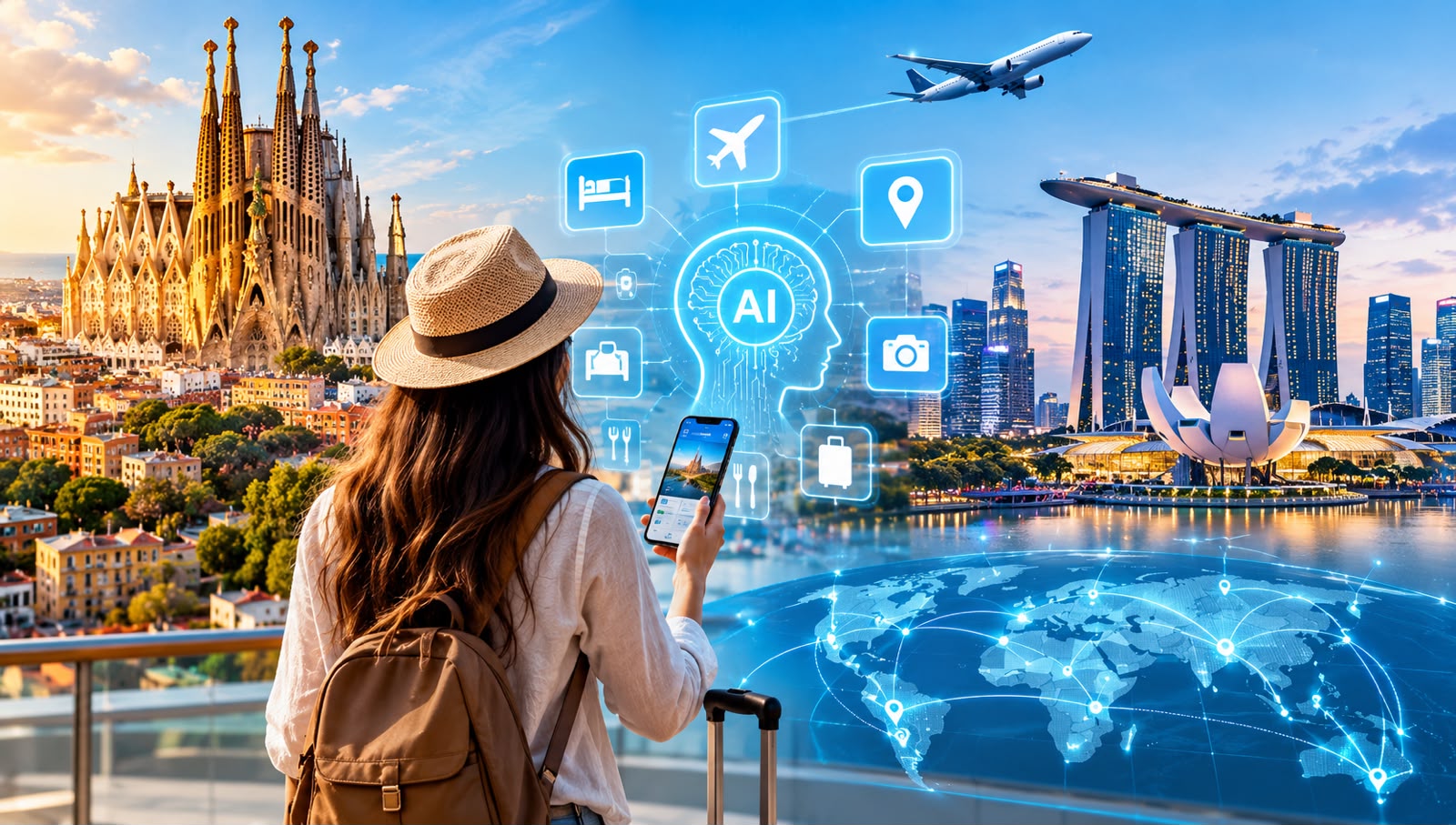
Image generated with Ai
Spain joins the ranks of Singapore and other nations in pioneering cutting-edge artificial intelligence-driven innovations that will shape the future of modern travelers. Thus, the hassle-free booking process is already being rethought by government-sponsored algorithms that seek to make obsolete the fragmented booking applications currently in use by millions of globe-trotters. Moreover, efficient digital systems are being leveraged to reinvent the way the world is being explored at an unprecedented scale. In addition, governments are capitalizing on the potential of machine learning to ensure that their constituents can rely on the best possible technology to guarantee uninterrupted vacations. Ultimately, the combination of all these spectacular achievements is bound to make future explorations increasingly convenient, sophisticated, and surprising for curious minds.
World governments are replacing disjointed third-party apps with open-sourced ‘National Digital Tourism Stacks’ utilizing integrated artificial intelligence to regulate tourist influx, ease digital visa processes, and offer localized guidance. Countries including India, Singapore, Estonia, and Spain are developing such public infrastructure to redefine tourism as a secure, sustainable public good.
What Are National Digital Tourism Stacks?
The modern travel landscape has long resembled a fragmented digital scavenger hunt where planning a single international journey requires juggling a dozen separate applications for flights, local transit, visas, and reviews. Governments are addressing this operational chaos by launching open-source public utilities known as National Digital Tourism Stacks that bridge the gap between immigration and hospitality networks. By integrating artificial intelligence directly into these state-backed platforms, public authorities can coordinate complex logistics without relying on proprietary corporate ecosystems that often prioritize commercial advertising over traveler convenience. These centralized architectures establish secure data pathways that connect digital identity verification frameworks directly with municipal transit systems and cultural heritage sites for automated coordination. Consequently, visitors experience a unified digital environment where cross-border entry, transit passes, and official itineraries function as a single continuous service rather than disconnected commercial transactions.
Why Are Governments Moving Away From Fragmented Apps?
Traditional commercial travel applications frequently trap users inside closed ecosystems while commercialising personal data and pushing high-commission tourist traps rather than authentic local experiences. Public administrators face mounting pressures from overtourism, urban congestion, and ecological degradation that third-party commercial platforms are neither designed nor incentivized to solve. By developing sovereign digital stacks, governments regain control over visitor data sovereignty, ensuring that critical infrastructure supports urban planning and heritage preservation rather than corporate profit margins. Furthermore, centralized public platforms eliminate the security vulnerabilities associated with scattering sensitive passport and travel itinerary data across dozens of unregulated foreign software applications. This strategic shift transforms tourism management from a reactive exercise in crowd control into a proactive, data-driven stewardship model that protects local resources.
Advertisement
Advertisement
How Does Artificial Intelligence Power Smart Tourism?
Artificial intelligence acts as the cognitive engine within national tourism stacks, processing millions of real-time data points regarding crowd density, weather patterns, and transportation flows. Machine learning algorithms analyze historical footfall trends to predict congestion bottlenecks at major historical monuments weeks in advance, allowing public authorities to dynamically manage visitor access. Conversational AI concierges embedded within these platforms offer multilingual, culturally verified recommendations that guide travelers toward lesser-known regional attractions and local businesses. This intelligent distribution of tourist traffic ensures that economic benefits circulate widely through regional communities while relieving environmental stress on fragile heritage landmarks and urban centers. Ultimately, artificial intelligence replaces generic algorithmic echo chambers with context-aware public guidance systems designed to enrich the traveler’s educational and cultural engagement.
How Are India, Singapore, Estonia, and Spain Leading?
Global implementation varies according to each nation’s unique technological strengths, ranging from identity verification to urban sensor integration across diverse geographic scales. India is deploying its National Digital Tourism Stack alongside an AI-enabled Incredible India platform to seamlessly guide millions of domestic and international pilgrims across complex heritage circuits. Meanwhile, Singapore expands its national smart tourism data platforms by leveraging advanced Internet of Things sensors and predictive machine learning to optimize public transit flows in real time. Estonia extends its globally renowned e-Residency and digital identity architecture into the tourism sector, enabling entirely paperless, queue-free border entry and verified service access. Finally, Spain deploys nationwide Smart Tourism Destination intelligence systems that utilize big data analytics to monitor regional carrying capacities and distribute economic impacts beyond overcrowded coastal hotspots.
Advertisement
Advertisement
“This monumental shift toward national digital tourism stacks marks a thrilling turning point for modern explorers everywhere. For too long, we have relied on a chaotic maze of fragmented third-party apps that drain our patience and compromise our personal data. Now, seeing visionary leaders like Spain and Singapore unite with other forward-thinking nations to harness artificial intelligence changes everything. By embedding smart public infrastructure directly into our travel itineraries, governments are finally eliminating border friction while protecting fragile local ecosystems. It is genuinely breathtaking to witness technology working so seamlessly to make global adventures safer, smarter, and infinitely more accessible.”
— Anup Kumar Keshan, Founder and Editor-in-Chief, Travel And Tour World
What Does This Mean for the Future of Global Travel?
The rapid proliferation of state-backed digital stacks signals a profound philosophical maturation in how societies conceptualize and manage global mobility in the digital age. Travelers will increasingly enjoy frictionless journeys characterized by automated security clearances, heightened data protection standards, and deeply personalized itineraries rooted in official cultural heritage data. For local municipalities and regional economies, these integrated platforms provide the precise analytical clarity required to preserve natural ecosystems and sustain community well-being against the pressures of mass tourism. As more nations plug their national infrastructure into these open-source frameworks, the global tourism sector stands on the threshold of an era defined by intelligent, sustainable, and equitable human exploration.
Explore official guidelines and portal resources directly via the Ministry of Tourism Government of India Portal
and the Incredible India Digital Platform.
| Country | Initiative / Platform Focus | Core Technology & Public Infrastructure Impact |
|---|---|---|
| India | National Digital Tourism Stack & AI-Enabled Incredible India | Integrates unified digital identity frameworks with multilingual AI concierges to guide millions of domestic and international travelers across complex heritage circuits. |
| Singapore | National Smart Tourism Data Platforms | Leverages advanced IoT sensors and predictive machine learning to dynamically manage urban visitor density and optimize public transit flows in real time. |
| Estonia | Cross-Border Digital Identity Integration | Extends its renowned e-Residency and digital ID architecture to tourism, enabling entirely paperless, queue-free entry and verified service access. |
| Spain | Smart Tourism Destination (DTI) Intelligence System | Utilizes nationwide big data analytics to monitor regional carrying capacities, distributing tourist economic impact more evenly beyond overcrowded coastal hotspots. |
Why are traditional booking systems for travel being abandoned all over the world at such a rapid pace? Governments are faced with an onslaught of tourists and the complications brought by third-party applications that threaten the region’s security, as well as its eco-system. The only sensible answer is to introduce open-sourced national digital tourism systems at the cutting-edge of artificial intelligence technology. The main reason why artificial intelligence is the answer to modern tourism is because sovereign digital systems give governments full control over crowds, visas, and localized advice. In the end, the technological transformation is all about replacing capitalistic approaches with a public utility for the benefit of tourists and locals who wish to protect their environment and economy from mass-visitation.
The rise of state-sponsored digital systems is an indication of how tourism is set to revolutionize around the globe. The combination of artificial intelligence and public security is an effective way of removing friction from the modern travel experience. Guests will be able to look forward to frictionless security checks, smart crowd control, and localized suggestions that help them discover the region’s culture. The people of the local community will benefit from more balanced economies and conservation of the local environment from mass tourism. In the end, the world will change as more governments adopt open-sourced travel solutions and contribute towards a new era of intelligent and seamless international exploration.
Advertisement
