
South Korea Uses Travel Rebates to Put Rural Villages on the Tourism Map

Published
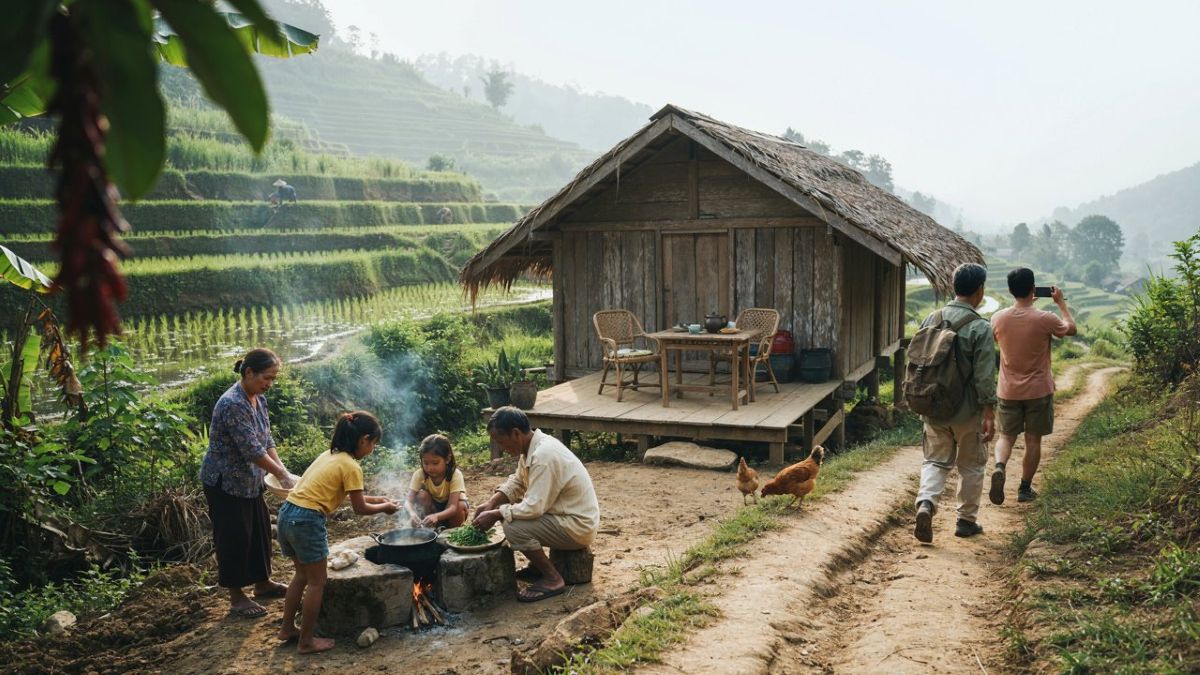
Image generated with Ai
Travel rebates are used in South Korea to highlight rural villages as tourist spots and the strategy could impact the destination of tourists. The scheme is meant to pay back a percentage of the travel expenses in the form of local gift vouchers. Therefore, the travelers would have an incentive to visit areas other than urban locations while the villages would strive to bring in business from them. It is believed that the outcomes reveal that some tourists either altered their itinerary or made new choices. Nevertheless, it is not certain that the rebate alone would ensure steady income for each village.
Why Asia’s Rural Tourism Story Is About More Than Visitor Growth
Rural tourism can mean a farm stay, a village homestay, a meal with local hosts or a guided walk through a traditional landscape. It can also connect visitors with crafts, farming, food and cultural traditions. Across Asia, governments are supporting these experiences through different tools.
South Korea uses travel rebates to encourage trips to selected areas. Japan promotes stays that combine accommodation with local food and activities. India is funding tribal homestays. China’s rural tourism figures point to a large domestic market. Vietnam offers examples where cultural heritage and village life form part of the visitor experience.
These developments do not prove that rural tourism is rising at the same rate across Asia. The countries use different measures and cover different periods. Together, however, they reveal a shift in the way some governments approach tourism: they want visitors to move beyond major cities and spend more time in regional communities. Japan’s current tourism plan, for example, links regional visits with visitor spending, transport and residents’ quality of life.
Advertisement
Advertisement
South Korea Uses Travel Rebates to Draw Visitors Into Rural Areas
South Korea provides one of the clearest current developments. On 27 August 2026, the country announced nine additional areas for the second half of its Regional Love Vacation Support programme. The selected locations include Hwacheon, Andong, Yeongcheon, Taean and Jangheung, as well as several rural counties in Gyeongsangnam-do and Chungcheongnam-do.
The scheme reimburses eligible travellers for half of their expenses through mobile local gift certificates. General participants can receive up to KRW100,000. Young travellers can receive up to KRW140,000. The programme targets rural and fishing communities facing population decline, and officials say the second-half rollout began in phases.
Advertisement
Advertisement
The government also reported results from the programme’s first half. Across 16 participating regions, KRW5.2 billion in rebates was associated with at least KRW16.2 billion in local consumption. The announcement said 31.2% of participants took trips they had not planned before joining the programme. Half said they changed their destination to a participating area.
These figures make South Korea a strong opening for the story. They suggest that an incentive can influence where some travellers go. The figures do not prove that every won of reported spending came from the programme. Some participants may have travelled anyway. A careful article should describe the relationship as reported spending associated with the scheme, rather than a guaranteed economic return.
For travellers, the practical details matter too. The support comes as local gift certificates, and the programme has eligibility and application rules. Readers should check current instructions for their chosen destination before booking. The scheme demonstrates a direct policy approach: reduce the cost of a regional trip while encouraging spending in the area visited.
Japan Tracks Overnight Stays as a Measure of Rural Tourism
Japan’s countryside-stay programme, known as nouhaku, gives the article a different lens. It centres on stays in rural farming, mountain and fishing communities. Guests can combine accommodation with regional food and activities based on local resources. Japan’s agriculture ministry says the programme aims to raise rural income, create employment and strengthen connections between visitors and countryside communities.
The ministry’s latest briefing reports around 8.68 million guest-nights across 673 supported areas in fiscal 2024. That total includes about 748,000 guest-nights by international visitors. The briefing sets a goal of 12 million guest-nights by fiscal 2029. These are figures for participating nouhaku areas, not a complete count of all rural tourism in Japan.
Japan’s national tourism plan adds a broader target. Approved in March 2026, it aims to raise foreign guest-nights in regional areas to 130 million by 2030. The plan defines “regional areas” as places outside eight major metropolitan prefectures, so the target covers more than rural villages alone. It also seeks to attract repeat visitors to regional destinations and balance tourism with residents’ quality of life.
Advertisement
Advertisement
The distinction between these two measures is important. The nouhaku total reflects supported rural-stay areas. The national target covers a much wider set of regional destinations. Neither should be used as a synonym for all countryside travel.
Still, Japan’s approach offers a useful question for the article: how can destinations turn a short visit into an overnight stay? An extra night may create opportunities to spend on a meal, accommodation or local activity. That is a reasonable reporting angle, but it should not be presented as a proven outcome for every village.
The government’s 2026 Tokai countryside-stays guide covers Gifu, Aichi and Mie prefectures. It gives the article a practical way to highlight rural experiences in a defined region, while showing how accommodation, food and activities can work together.
India’s Tribal Homestay Plans Turn Policy Into a Measurable Test
India’s rural tourism story has a clear investment angle. In March 2026, the Ministry of Tourism described an initiative to develop 1,000 tribal homestays under the Swadesh Darshan scheme and the Pradhan Mantri Janjatiya Unnat Gram Abhiyan. Its guidelines include financial support for new rooms, renovation and village community needs. They also address training and technical skills for homestay owners.
The programme’s success will depend on what happens after approval. Homes need to be built or upgraded. Hosts need to be trained. Travellers need to find the accommodation and reach the villages. Communities also need a way to manage bookings, provide services and share tourism income.
A July 2026 Ministry of Tourism disclosure lists five sanctioned tribal homestay projects for the 2025–26 financial year. They cover Maredumili in Andhra Pradesh; the Sham, Suru and Aryan valley clusters in Ladakh; Karanjiya and Pushparajgarh in Madhya Pradesh; central and southern clusters in Mizoram; and Chakrata in Uttarakhand. The disclosed total is ₹17.52 crore.
Advertisement
Advertisement
The figures show approved funding, not completed rooms or operating businesses. That distinction gives the article a strong follow-up question: how many funded homes are open, and what income do they generate for residents? A later report could track those projects from sanction to construction, training and guest bookings.
India’s example also helps explain why infrastructure is not the whole story. A homestay scheme can create accommodation, but its effect depends on whether local households can run it and connect with visitors. The government has identified training as part of the programme. Reporting can examine how that support works on the ground, without assuming that every host faces the same opportunities or challenges.
China’s Rural Figures Reveal a Gap Between Visits and Revenue
China reports the largest rural tourism numbers in this research. Government reporting, citing estimates from the Ministry of Culture and Tourism’s data centre, says rural destinations received 793 million visits in the first quarter of 2026. That was 12.2% higher than a year earlier. Revenue reached RMB457 billion, up 10.9%.
One detail deserves close attention: visits rose faster than revenue. Dividing the reported revenue by the reported visits gives an average of about RMB576 per visit. Comparing the two growth rates suggests a small decline in average revenue per visit.
That is a calculation based on rounded national estimates. It is not an official measure of household earnings or profit. It cannot show why the average changed. It does, however, point to a useful analytical question: should rural destinations aim for more visits, longer stays or higher spending during each trip?
A local example comes from Huzhou in Zhejiang province. A government portal, citing city tourism authorities, reported that the area drew nearly 130 million rural tourism visits annually. It said rural tourism revenue reached RMB15.3 billion in 2025, compared with RMB6.42 billion in 2016. The same report stated that per-capita rural tourism income represented 15% of rural residents’ per-capita disposable income.
Advertisement
Advertisement
Huzhou’s results offer a local contrast to China’s national figures. The city has 727 scenic villages, according to that report, and two villages recognised by UN Tourism as Best Tourism Villages. Yet the Huzhou figures should remain clearly attributed to the local authorities cited by the provincial portal. They do not represent every Chinese village.
For the article, China adds scale and tension. A rise in visits can signal demand, but it does not automatically reveal how much individual households earn. Revenue, visitor totals and resident income answer different questions. Keeping those measures separate will make the analysis more credible.
Vietnam Builds Rural Experiences Around Culture, Food and Place
Vietnam offers a compelling destination angle, especially for travellers seeking experiences rooted in village life. The national tourism website highlights communities where visitors can learn about local traditions and landscapes. The examples include Lo Lo Chai in Tuyen Quang, Tra Que Vegetable Village near Hoi An and Tan Hoa in Quang Tri.
At Lo Lo Chai, visitors can see traditional rammed-earth homes and learn about the culture of the Lo Lo ethnic group. The tourism authority describes experiences with host families, embroidery and local food and drink. Tra Que offers an agricultural perspective, with farming activities and cooking classes. These experiences can connect tourism with local skills and products.
Tan Hoa presents another dimension. The official tourism site describes floating homestays and tourism activities in a landscape affected by seasonal flooding. This makes the village a useful example of how local conditions can shape accommodation and visitor experiences. It does not mean that all flood risks have been removed or that travel conditions are the same throughout the year.
UN Tourism recognised Lo Lo Chai and Quynh Son among its Best Tourism Villages in 2025. The initiative assesses areas including cultural and natural resources, economic and social sustainability, infrastructure, governance and community wellbeing. That makes the recognition relevant background for a 2026 report, but it is not evidence of a new visitor surge this year.
Advertisement
Advertisement
Vietnam’s role in the article should therefore focus on the substance of rural experiences. The key issue is whether tourism supports the people who host guests, maintain cultural practices, grow food or make crafts. Official destination descriptions establish what visitors may experience. They do not, by themselves, prove that every household benefits equally.
Rural Tourism’s Real Test Is Who Benefits
In Asia, rural tourism is becoming popular due to government initiatives seeking local advantages, but the biggest challenge awaits them yet. In South Korea, rebates are used for influencing destination preferences, while Japan measures overnight stays and encourages regional tourism. In India, homestays of tribal villages are being supported by the government, and in China, visits and revenues are being counted in rural areas. Vietnam focuses on life in villages and culture. Yet all these activities measure results differently and cannot demonstrate a trend towards regional growth in tourism.
Advertisement
