
Japan Revises Ago Bay Ferry Travel as New Timetable Reduces Sailings and Challenges Coastal Tourism Access

Published
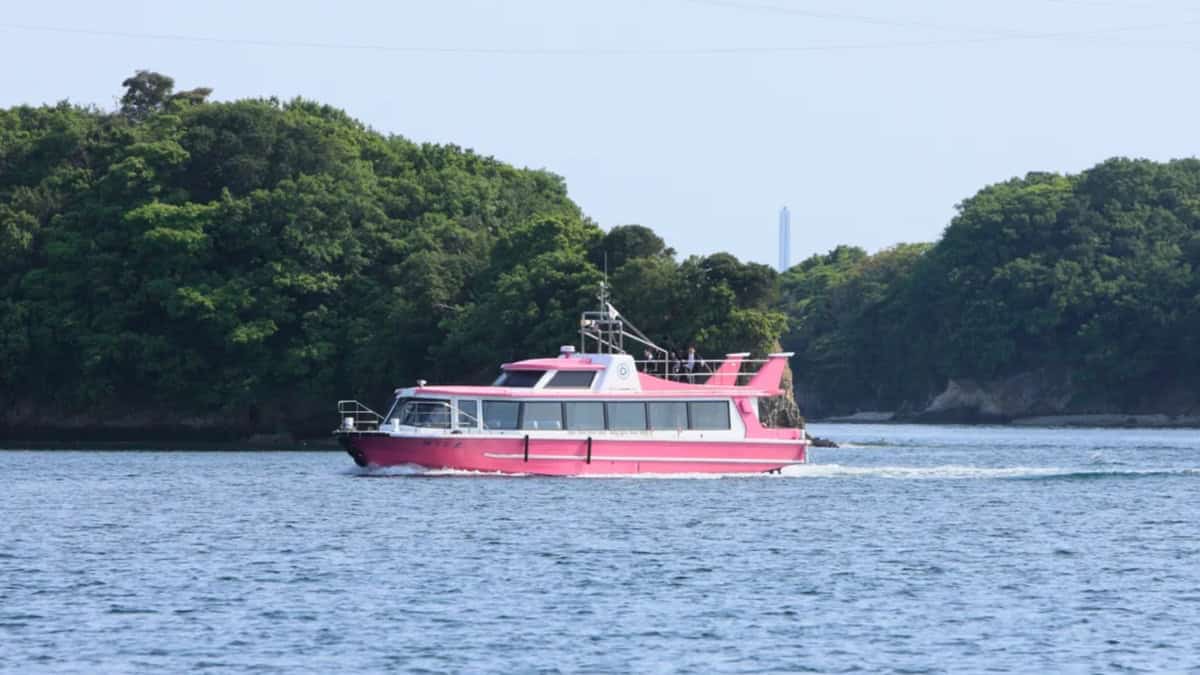
Japan’s revised Ago Bay ferry timetable takes effect today, removing an early Wagu–Kashikojima service, making the late round trip conditional during the regular season and retiming other sailings around Kintetsu rail connections. The deeper travel story is the policy test behind those changes. Shima City wants to preserve the route, improve operating efficiency and increase tourism-related ferry use, even as its population declines and local public transport faces financial pressure.
Why Japan’s Ago Bay Ferry Change Is Bigger Than One Cancelled Morning Sailing
Shima Marine Leisure’s revised Ago Bay regular ferry timetable is now in force from 1 October 2026. The route continues to connect Kashikojima, Masaki and Wagu, but passengers now face a materially different daily pattern. The former Wagu departure at 06:35, calling at Masaki at 06:45 and arriving at Kashikojima at 07:00, has been discontinued. The first Wagu departure is now 07:35.
The change also reshapes the opposite direction. Under the previous published timetable, Kashikojima had a 07:10 departure for Wagu. Under the new regular schedule, the first departure is 08:10. Other daytime departures have been shifted, with the official Shima tourism notice specifically identifying improved coordination with the Kintetsu railway network as one consideration behind the changes.
The late-day pattern becomes more important for leisure travellers. During the regular timetable period, from 1 April to 19 July and from 1 September to 31 March, the 17:05 Wagu departure and 17:30 Kashikojima departure do not operate on weekends or public holidays. They are also suspended from 25 December to 6 January and from 20 March to 5 April. The summer timetable between 20 July and 31 August retains those evening services.
Advertisement
Advertisement
How the operating pattern changes from today
| Travel factor | Previous published pattern | From 1 October 2026 | Traveller significance |
|---|---|---|---|
| Earliest Wagu departure | 06:35 | 07:35 | Removes the earliest mainland connection |
| Earliest Kashikojima departure | 07:10 | 08:10 | Later first access towards Masaki and Wagu |
| Full operating day | Nine departures each way | Eight departures each way | Fewer daily movement windows |
| Regular-season late service | Previously part of published daily pattern | Conditional 17:00-hour round trip | Weekend and holiday flexibility is reduced |
| Other daytime sailings | Earlier timetable structure | Retimed | Designed partly around Kintetsu connections |
| Kashikojima–Wagu adult fare | ¥800 | ¥800 currently published | No fare increase shown with the timetable change |
| Kashikojima–Masaki adult fare | ¥400 | ¥400 currently published | Short island access remains available |
The timetable and fare figures are from Shima Marine Leisure’s current official service information and schedule-change notice.
The Uncovered Angle Is Shima’s Conflict Between Efficiency and Tourism Growth
The important B2B issue is not simply that passengers have lost one early sailing. According to Shima City’s Regional Public Transport Plan, the Ago Bay ferry is already treated as a strategically important transport service supporting daily life, commuting, education and tourism, particularly for Masaki Island residents. The same plan states that keeping the route operating is difficult through the efforts of the operator and municipality alone and identifies public financial support as necessary for maintaining the service.
Advertisement
Advertisement
That makes today’s timetable especially significant.
Shima City’s transport policy explicitly calls for more operationally efficient timetable setting while simultaneously seeking to increase tourism use of the regular ferry. The municipality assigns itself a role in coordinating efficient scheduling, sharing financial burdens with national and prefectural authorities and working with the transport operator on demand-generation measures.
Advertisement
Advertisement
In other words, the policy is not based simply on running as many sailings as possible. It seeks to preserve connectivity by matching supply more closely with demand while generating additional use from visitors and other passengers.
That is the new travel-industry angle exposed by the 1 October change: can a smaller coastal transport network remove weak travel windows without making car-free tourism less attractive?
Shima Has Set a Measurable Ferry Tourism Target
The municipal transport plan provides an unusually useful benchmark.
Shima recorded 12,952 Ago Bay ferry passengers in 2023 in the category covering tourists and other users after excluding Masaki Island residents and season-ticket passengers such as high-school students and commuters. The city’s target for 2028 is 16,000 passengers a year in that category.
Advertisement
Advertisement
The same plan sets a separate objective for student use. Ferry commuting-pass purchases represented 11.2 per cent of the specified high-school population in the 2023 baseline, with a 15 per cent target for 2028.
These figures matter because the ferry is being asked to serve two markets with very different needs. Residents value dependable access around school, work and essential services. Visitors value convenient connections between trains, ferries, accommodation and attractions.
| Shima transport indicator | Official baseline | 2028 target | Strategic meaning |
|---|---|---|---|
| Ago Bay ferry tourists and other qualifying users | 12,952 in 2023 | 16,000 | Tourism and discretionary demand must grow while the route is rationalised |
| High-school ferry season-ticket purchase rate | 11.2% in 2023 | 15.0% | Resident and education mobility remains central |
| Non-season-ticket boardings at Ugata and Kashikojima stations | 320,915 in 2022 | 362,000 | Rail and destination mobility are expected to strengthen together |
| Public-transport strategy period | 2024–2028 | Five years | Current ferry changes fall directly inside the policy window |
This makes the 2026 timetable more than an isolated operational decision. It provides an early real-world test of the city’s stated strategy of combining higher operating efficiency with stronger visitor utilisation.
Why Car-Free Visitors Should Watch the Kashikojima Connection Carefully
Kashikojima is the critical interchange.
Japan National Tourism Organization identifies Kashikojima Station on the Kintetsu Shima Line as Ago Bay’s rail gateway. The ferry terminal provides onward sea access, while the wider destination contains islands, pearl-farming landscapes, accommodation and visitor experiences spread around an intricate ria coastline.
Masaki Island makes the transport issue particularly visible. The Shima City Tourism Association identifies it as only about a 10-minute ferry journey from Kashikojima, making the regular service relevant not only to local residents but also to visitors seeking a short island experience without a car.
Advertisement
Advertisement
The revised schedule therefore creates a trade-off rather than a simple deterioration. There are fewer departure opportunities, particularly at the edges of the day, but daytime sailings have been retimed with rail connectivity in mind.
For tour planners, that changes itinerary construction. A missed connection matters more when fewer fallback departures exist. Conversely, better alignment between rail and ferry services can reduce dead time when an itinerary is built around the new timetable.
Tourism Demand Makes the Mobility Question More Important
Shima is not adjusting this network against a backdrop of disappearing tourism.
According to Shima City’s official 2025 tourism statistics, the destination received 4,100,674 tourism visits, up 3.6 per cent year on year. Day visitors reached 2,585,132, while overnight visitors increased 6.4 per cent to 1,515,542. Foreign overnight visitors climbed 26.8 per cent to 42,248.
The city surveyed 152 accommodation establishments and calculated total daily accommodation capacity at 13,190 guests. More than 90 per cent of surveyed establishments had Wi-Fi, while more than 70 per cent supported credit-card payments.
Those figures do not mean millions of visitors use the Ago Bay ferry. They do show that Shima is dealing with growing accommodation demand and rising overseas stays at the same time that its local transport network must be made financially sustainable.
Advertisement
Advertisement
Shima tourism indicators behind the transport decision
| Tourism measure | 2025 official result | Annual change |
|---|---|---|
| Total tourism visits | 4,100,674 | +3.6% |
| Day visitors | 2,585,132 | +2.0% |
| Overnight visitors | 1,515,542 | +6.4% |
| Foreign overnight visitors | 42,248 | +26.8% |
| Accommodation establishments surveyed | 152 | — |
| Daily accommodation capacity | 13,190 | — |
This creates a genuine destination-management question. Growth in tourism demand does not automatically produce viable public transport. Visitors must actually be converted into users of buses, trains and ferries if those systems are to benefit from tourism expansion.
An Ageing Population Makes the Ferry a Rural Mobility Story Too
Shima City recorded a population of 42,329 residents as of 31 August 2026, across 22,136 households.
Its public-transport plan describes continuing population decline and projects that the proportion of people aged 65 and above will exceed half of the population during the next decade. The plan also identifies a broader pattern in which ageing is more pronounced in areas farther from the principal Ugata transport centre.
The municipal strategy therefore treats public transport as infrastructure for both residents and visitors. It identifies the continuation and promotion of the Ago Bay ferry as a specific policy measure, alongside improved transfer facilities, better integration between transport modes and stronger travel information.
That dual role is what distinguishes the story from a routine timetable notice.
For tourism businesses, a ferry designed only around visitor convenience could fail its social function. A service designed only around resident travel could miss valuable tourism revenue. Shima’s policy framework is attempting to make both markets contribute to the same transport system.
Advertisement
Advertisement
Japan’s Wider Inbound Market Raises the Stakes for Regional Connectivity
The local issue also fits Japan’s broader tourism strategy.
According to the Japan National Tourism Organization, Japan received 3,098,900 international visitors in August 2026. Although that represented a 9.6 per cent year-on-year decline, 14 source markets still reached record August levels. JNTO also links national tourism policy to targets covering visitor numbers, expenditure and overnight stays in regional areas.
For regional destinations, national arrivals alone are therefore not enough. The visitor economy depends on whether travellers can move efficiently beyond major gateways.
In places such as Ago Bay, that means the quality of the final transport chain may matter as much as the long-distance journey into Japan. Rail-to-ferry coordination, seasonal schedules, service frequency and clear passenger information become part of the destination product itself.
What Travel Agents and Tour Operators Need to Do From 1 October
- Replace old ferry timings immediately. The 06:35 Wagu service and corresponding former early-morning pattern should no longer appear in client itineraries.
- Check the operating calendar as well as departure time. The regular-season 17:00-hour services are not available on weekends, public holidays and specified school-holiday periods.
- Rebuild rail-ferry connections around the revised timetable. Several sailings were retimed specifically with Kintetsu connectivity in mind.
- Allow additional contingency time. Fewer sailing windows make missed connections more consequential for independent travellers and escorted groups.
- Verify weather status on the day of travel. Shima Marine Leisure warns that services can be suspended at short notice because of weather conditions.
- Avoid treating sightseeing cruises and the regular ferry as interchangeable. The scheduled ferry performs a transport role connecting Kashikojima, Masaki and Wagu.
- Build car-free itineraries around confirmed transport sequences. The strongest products will combine Kintetsu arrival times, ferry movements, accommodation check-in and onward activities rather than treating each mode separately.
What Happens Next Could Matter Beyond Ago Bay
The most important long-term measure will not be whether travellers quickly adapt to a timetable published a month earlier. It will be whether Shima can meet its 2028 target of 16,000 tourist and other qualifying ferry users while operating a leaner schedule and continuing to protect the service’s essential role for local communities.
That is why the 1 October change deserves attention from the wider travel industry. Japan’s regional-tourism ambitions increasingly depend on destinations that sit beyond major metropolitan rail corridors. Their success requires viable last-mile systems that can serve residents throughout the year while remaining intuitive enough for domestic and international visitors.
Advertisement
Advertisement
Ago Bay now provides a small but unusually clear case study. The route has not disappeared. Its function has not been converted purely to tourism. Instead, operating windows have been tightened while rail coordination and tourism use remain explicit policy objectives.
For travel businesses, the lesson is straightforward: regional tourism growth and rural transport sustainability can no longer be treated as separate issues. In destinations such as Shima, they increasingly depend on the same timetable.
Advertisement
