
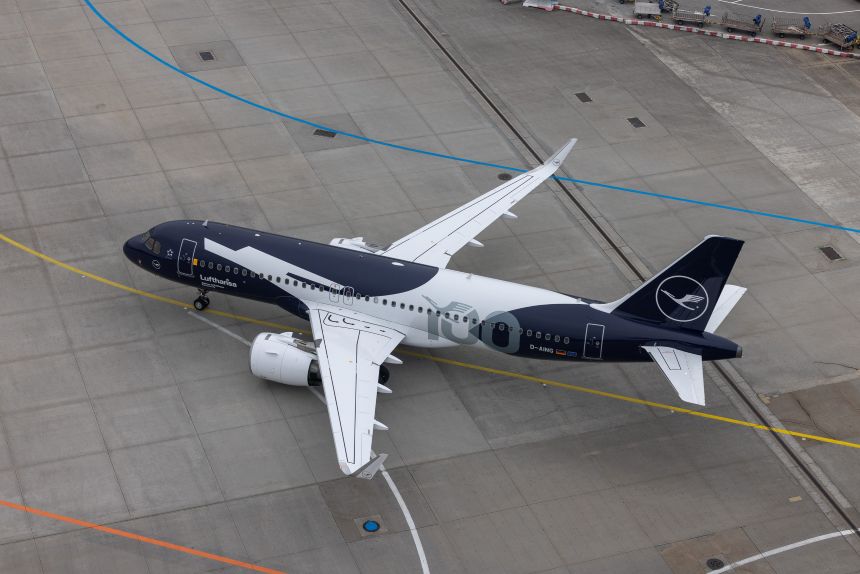
AeroSHARK Technology is being advanced in Germany through a new cooperation between Lufthansa Technik and Airbus to make existing Airbus A330ceo long-haul aircraft more fuel-efficient. Under the programme, sharkskin-inspired riblet film will be extended beyond the fuselage and engine nacelles to the wings and horizontal tailplane. A fully modified aircraft is being targeted to deliver fuel savings above two per cent, alongside corresponding reductions in carbon dioxide emissions. The technology works through millions of microscopic riblets that are precisely aligned with the airflow to reduce surface friction and aerodynamic drag. The film was originally developed by Lufthansa Technik and BASF, while existing applications on selected Boeing aircraft have produced savings of approximately one per cent. Before the expanded A330ceo package can enter commercial service, its effects on flight behaviour, structural loads, lightning protection, maintenance, flight controls, autopilot and navigation systems must be assessed. An existing Supplemental Type Certificate is expected to be extended. The programme has therefore created a promising pathway towards cleaner long-haul travel, but its above-two-per-cent saving remains a target pending successful testing, certification and airline deployment.
A major expansion of AeroSHARK Technology is being planned through the proposed installation of riblet film on additional aircraft surfaces. Operational applications have so far been concentrated mainly on fuselages and engine nacelles. Through the A330ceo development programme, wing surfaces and horizontal stabilisers are expected to be included within the broader modification package. A larger treated area could allow frictional resistance to be reduced across more of the aircraft. Nevertheless, each expected efficiency improvement must be examined through engineering analysis, certification testing and regulatory assessment before commercial use can be approved.
The technology has been inspired by the microscopic surface structure of sharkskin. Millions of small, prism-shaped riblets are embedded within the specialised film. Each riblet measures approximately 50 micrometres in height. When the film is positioned accurately and aligned with the airflow, surface friction can be reduced across the covered section of the aircraft. Aerodynamic drag can consequently be lowered without the purchase of a new aircraft or the introduction of a replacement engine. The technology is therefore being developed as a retrofit solution through which the efficiency of existing long-haul fleets could be improved.
The surface film was jointly developed by Lufthansa Technik and BASF. Protection against ultraviolet radiation, extreme temperature changes, pressure variations and commonly encountered aviation chemicals has been included within its design. Exposure to high-speed airflow and de-icing substances has also been considered. A service life of at least six years has been indicated under suitable operational conditions. Installation can be carried out during scheduled maintenance, which could prevent lengthy periods of additional aircraft downtime. These features have allowed AeroSHARK Technology to be positioned as an operational efficiency measure rather than a short-term experimental coating.
Advertisement
Advertisement

Fuel savings of more than two per cent are being targeted for an A330ceo equipped with the complete planned modification. The proposed package is expected to cover the fuselage, engine nacelles, wings and horizontal tailplane. This figure should be treated as a development objective rather than an independently certified operational result. Confirmation has not yet been published showing that a fully modified commercial A330ceo has completed certification and achieved the projected reduction during scheduled airline operations. Actual performance could be affected by installation coverage, aircraft configuration, route distance, payload and operating conditions.
By comparison, the current application stage of AeroSHARK Technology has been associated with fuel and emissions savings of around one per cent. An installation covering approximately 950 square metres on a Boeing 777 has previously been linked with an estimated efficiency improvement of about 1.1 per cent. Across the SWISS Boeing 777 fleet, annual savings exceeding 4,800 tonnes of fuel and carbon dioxide reductions of up to 15,200 tonnes have been projected. These figures demonstrate the potential of existing applications, but they cannot automatically be applied to the developing A330ceo modification.
By July 2026, more than 377,000 flight hours had been reported for the wider fleet equipped with AeroSHARK Technology. Cumulative savings exceeding 22,000 tonnes of fuel and 70,000 tonnes of carbon dioxide had also been recorded by Lufthansa Technik. Within the Lufthansa Group, 22 aircraft had been identified as modified by July 2025. These included twelve SWISS Boeing 777-300ER aircraft, five Lufthansa Cargo Boeing 777F aircraft, four Austrian Airlines Boeing 777-200ER aircraft and one Lufthansa Boeing 747-400. These official corporate records establish an existing operational foundation, while the projected A330ceo savings remain dependent upon successful testing, development and certification.
Before the expanded AeroSHARK Technology package can be introduced commercially, an extensive certification programme will be required. The application of riblet film to wings and horizontal stabilisers cannot be treated in the same way as its placement on fuselages or engine nacelles. Wing and tailplane surfaces directly influence lift, stability and aircraft control. Consequently, the proposed modification must be examined against strict airworthiness requirements. Its effects on flight dynamics, structural loading, aircraft systems and operational safety will be assessed before an extended Supplemental Type Certificate can be granted.
Airbus aircraft knowledge is expected to be combined with the modification and certification experience held by Lufthansa Technik. Through this cooperation, engineering information relating to the A330ceo structure, aerodynamic characteristics and onboard systems can be incorporated into the programme. The interaction between the riblet film and flight controls, autopilot functions and navigation systems will also be studied. Any changes to airflow across critical surfaces must be understood under normal operations and abnormal conditions. Performance must additionally be demonstrated across different speeds, altitudes, temperatures and phases of flight.
Lightning-strike protection will form another important part of the assessment. Aircraft wings and tail surfaces can be exposed to lightning, moisture, ice, ultraviolet radiation and substantial temperature differences. The film must not compromise existing protection systems or interfere with inspections and repair activity. Its influence on structural loads and maintenance procedures must also be evaluated. Certification will therefore cover far more than a calculation of expected fuel savings. Safety, durability, compatibility and continued airworthiness will be considered before commercial approval is issued.
| Assessment category | Requirement being evaluated | Operational importance |
|---|---|---|
| Flight dynamics | Changes in airflow, lift, stability and handling | Predictable aircraft behaviour must be maintained |
| Structural loads | Effects on wings, stabilisers and adjoining structures | Approved load limits must remain protected |
| Lightning protection | Compatibility with existing protective systems | Electrical and structural safety must be preserved |
| Flight-control systems | Interaction with control surfaces and aircraft responses | Reliable control must be maintained throughout flight |
| Autopilot and navigation | Possible effects on automated aircraft operation | Accurate guidance and stable performance are required |
| Maintenance | Inspection, cleaning, repair and replacement procedures | Continued airworthiness must remain manageable |
| Environmental resilience | Resistance to temperature, pressure, chemicals and ultraviolet exposure | Long-term performance must be demonstrated |
The certification process is expected to establish whether the proposed surface treatment can operate consistently throughout the A330ceo flight envelope. A modification may appear physically small, yet measurable aerodynamic changes can be produced across large treated surfaces. Those changes must be assessed through calculations, simulations, ground evaluations and flight-test evidence. Documentation must then be reviewed by the responsible aviation safety authority. Commercial installation on customer aircraft cannot be widely offered until every applicable certification requirement has been satisfied.
The Airbus A330ceo has been established as a major widebody platform across international passenger and cargo markets. The A330-300 entered commercial service in 1994, while the shorter and longer-range A330-200 followed in 1998. Both variants have been used across regional, medium-haul and intercontinental routes. More than 70 million flight hours have been accumulated by the wider A330 family since its entry into service. A substantial installed fleet has therefore been created, providing a potentially important market for efficiency-focused retrofit programmes.
Fuel-saving modifications can be particularly valuable when they are introduced across aircraft that remain operationally capable but were designed before newer widebody models entered service. Fleet replacement requires major investment and cannot always be completed quickly. Through aerodynamic retrofits, incremental efficiency improvements may be secured while existing aircraft continue to be operated. Even a relatively small percentage reduction can become significant when it is multiplied across repeated long-haul flights, several aircraft and numerous years of service.
The proposed programme is expected to support both the A330-200 and A330-300. Its importance will be shaped by the number of eligible aircraft, airline demand, installation expense, maintenance requirements and achieved fuel savings. No airline customer or fleet-wide A330ceo installation schedule should be assumed until formal commitments are announced. The project is currently centred on development and certification rather than immediate large-scale deployment.
The following benefits could be produced if the targeted performance is certified and commercially achieved:
These advantages remain dependent on certification, aircraft configuration and airline economics. Fuel prices, route structure, annual utilisation and installation costs will influence the commercial case for each operator. The above-two-per-cent target should therefore be interpreted as an anticipated outcome for the complete modification rather than a guaranteed result for every aircraft or journey.
The proposed A330ceo expansion is being supported by experience gathered from aircraft already operating with AeroSHARK Technology. Commercial applications have been completed across several Boeing long-haul aircraft types, including the Boeing 777-300ER, Boeing 777F, Boeing 777-200ER and Boeing 747-400. The film has primarily been applied to fuselages and engine nacelles, where airflow can be improved and frictional drag can be reduced. These installations have allowed operational performance, durability and maintenance requirements to be observed across international passenger and cargo networks.
Within the Lufthansa Group, 22 aircraft had been equipped by July 2025. The modified fleet included all twelve Boeing 777-300ER aircraft operated by SWISS, five Boeing 777F aircraft operated by Lufthansa Cargo, four Boeing 777-200ER aircraft operated by Austrian Airlines and one Boeing 747-400 operated by Lufthansa. Approximately 19 tonnes of kerosene and 60 tonnes of carbon dioxide were reported as being avoided every day across this fleet. These figures were published as aggregate corporate estimates and may vary according to aircraft utilisation and operating conditions.
Adoption has also been extended beyond the Lufthansa Group. AeroSHARK installations or commitments have been announced by LATAM Airlines, EVA Air and All Nippon Airways. Passenger and cargo aircraft have both been included. This wider deployment has demonstrated that the technology can be introduced across different airline networks and operational environments. However, existing Boeing approvals should not be interpreted as automatic approval for the Airbus A330ceo. A separate certification process must be completed because every aircraft type carries different structural, aerodynamic and systems requirements.
| Airline or group | Aircraft type | Reported development | Primary operational purpose |
|---|---|---|---|
| SWISS | Boeing 777-300ER | Twelve aircraft were modified | Long-haul passenger services |
| Lufthansa Cargo | Boeing 777F | Five aircraft had been modified within the reported group total | International freight operations |
| Austrian Airlines | Boeing 777-200ER | Four aircraft were equipped | Long-haul passenger routes |
| Lufthansa | Boeing 747-400 | One aircraft was included | Intercontinental passenger services |
| LATAM Airlines | Boeing 777-300ER | Fleet deployment was introduced in the Americas | Long-haul passenger operations |
| EVA Air | Boeing 777F | Cargo-fleet modification commitments were announced | International air freight |
| All Nippon Airways | Boeing 777 passenger and freighter variants | Application was introduced across both operational categories | Passenger and cargo services |
| Future A330 operators | Airbus A330-200 and A330-300 | Certification and commercial development are being pursued | Global long-haul travel |
A direct relationship is created between aviation fuel consumption and carbon dioxide emissions. When less kerosene is burned, a corresponding reduction in carbon dioxide is produced. For this reason, incremental aerodynamic improvements can deliver measurable benefits when they are repeated across high-utilisation long-haul aircraft. An efficiency gain above two per cent may appear modest in isolation, but substantial cumulative savings could be achieved when the technology is deployed across multiple aircraft and thousands of annual flight hours.
More than 22,000 tonnes of fuel and over 70,000 tonnes of carbon dioxide had been reported as saved by the global AeroSHARK-equipped fleet by July 2026. More than 377,000 flight hours had also been accumulated. These figures demonstrate that the technology has progressed beyond small-scale laboratory testing. Nevertheless, the statistics relate to the existing fleet and should not be presented as measured results from fully modified A330ceo aircraft. The A330 programme remains under development, and its projected benefits must still be demonstrated through certification and subsequent commercial operations.
The environmental value of the modification will also depend on the scale of adoption. A single installation will create limited industry-wide change. Greater reductions could be generated if the technology is certified across large fleets and used consistently over several years. Fuel-saving surface treatments will not remove aviation emissions entirely, but they can be combined with fleet renewal, sustainable aviation fuel, improved air-traffic management, lighter cabin equipment and more efficient flight planning. AeroSHARK Technology should therefore be understood as one component within a wider aviation decarbonisation strategy.
Several possible effects could be produced for airlines, travellers and international aviation markets:
Direct ticket-price reductions should not be assumed. Airline fares are influenced by demand, competition, taxation, airport charges, labour costs, fuel hedging and network strategy. Any savings generated through AeroSHARK Technology may instead be used to protect route viability, reduce operating expenses or support wider fleet investment. Travellers could benefit indirectly through more efficient long-haul services, but no guaranteed fare reduction has been announced.
A large number of A330ceo aircraft remain in service across passenger, charter, cargo and specialist operations. Many continue to connect major tourism and business markets. Immediate replacement of every older widebody would require substantial capital and manufacturing capacity. Retrofit technology can provide an intermediate pathway through which existing aircraft efficiency is improved while newer fleets are gradually introduced.
The commercial case will be determined by installation price, remaining aircraft life, annual utilisation and verified fuel savings. Aircraft flown frequently on longer sectors may produce stronger returns because fuel savings can be accumulated across more hours. Aircraft approaching retirement may offer a weaker investment case. Individual evaluations will therefore be required before fleet-wide modifications are approved.
If certification is completed successfully, a new retrofit market could be created for A330 operators worldwide. Wider adoption would still depend on airline testing, financing and maintenance availability. The above-two-per-cent target remains promising, but its real significance will only be established after fully modified aircraft are placed into routine commercial service.
The next stage of the AeroSHARK Technology programme will be determined by engineering development, testing and regulatory certification. An existing Supplemental Type Certificate covering applications on the A330 fuselage and engine nacelles is expected to be extended to the wings and horizontal tailplane. The proposed expansion will require the complete modification to be assessed as one integrated aerodynamic package. Approval cannot be assumed merely because riblet technology has already been certified for other aircraft types or surfaces. Every technical effect must be documented and accepted before commercial installation can be offered.
No confirmed date has been officially provided for completion of the expanded certification programme or entry into routine airline service. No A330ceo customer has been publicly identified as the first operator of the fully modified package. Commercial availability should therefore not be described as immediate. The programme remains focused on creating the required technical evidence, extending the applicable certification and demonstrating that the modification can be maintained safely throughout an aircraft’s operating life.
Once approval is secured, individual airlines will still be required to evaluate whether the modification suits their fleets. Aircraft age, remaining service life, annual flying hours, route length, fuel prices and scheduled maintenance periods will influence each decision. Installation plans may be aligned with heavy maintenance checks so that additional downtime can be limited. Airlines may also require aircraft-specific performance studies before investment is approved across an entire A330ceo fleet.
Specialist modification and certification experience is being contributed by Lufthansa Technik. Knowledge acquired through the development, installation and commercial operation of existing AeroSHARK Technology applications is also being incorporated. Airbus is expected to provide detailed aircraft expertise covering the A330ceo structure, aerodynamics, flight controls and associated systems. Through this division of responsibilities, the proposed wing and tailplane installation can be examined against the aircraft’s original design requirements.
BASF remains central to the technology’s development because the riblet film was jointly created with Lufthansa Technik. Material performance is particularly important in commercial aviation. The film must retain its microscopic structure despite repeated exposure to rain, ultraviolet radiation, de-icing chemicals, pressure changes and extreme temperatures. If damaged areas are identified, approved inspection, repair and replacement procedures must be available. Cleaning methods must also be standardised so that aerodynamic performance is not unintentionally reduced during routine maintenance.
The cooperation represents more than the addition of a surface film to an existing aircraft. A pathway is being developed through which biomimetic technology could be incorporated into certified commercial aviation on larger and more aerodynamically sensitive surfaces. If approval is achieved for the A330 wing and tailplane, further interest could be generated among manufacturers, maintenance providers and operators seeking practical fuel-efficiency improvements for existing aircraft.
Pressure has continued to be placed on the aviation industry to reduce fuel consumption and carbon emissions while international travel demand is maintained. No single technology is expected to deliver complete decarbonisation. Fleet renewal, sustainable aviation fuel, more efficient engines, improved airspace management, operational planning and aerodynamic upgrades will all be required. Within this wider framework, AeroSHARK Technology could provide a measurable reduction without major changes being made to the aircraft cabin, engine or airport infrastructure.
The potential value of the technology is increased by its retrofit character. New-generation aircraft can require lengthy manufacturing and delivery periods, while many existing widebody aircraft remain essential to international connectivity. An approved surface modification could allow fuel savings to be introduced more quickly across eligible aircraft. However, the environmental value must be assessed through verified operational data. Projected savings should not be confused with results already achieved by the complete A330ceo package.
Carbon reduction claims must also be calculated consistently. Savings will depend on the amount of fuel avoided, the number of annual flights and the operating profile of each aircraft. A high-utilisation long-haul aircraft may generate greater annual reductions than an aircraft flown less frequently. Transparent reporting will therefore be needed once commercial A330 operations begin. Airline-specific results should be separated from broad fleet projections so that the technology’s real contribution can be properly understood.
For travellers, the modification is unlikely to create a visible change inside the aircraft. Cabin layouts, seating and onboard services will not be directly transformed by the riblet film. Its importance will instead be found in the efficiency of the journey. Less fuel could be consumed while the same aircraft capacity and network connection are maintained. Airlines could consequently be helped to operate established long-haul routes with a lower environmental footprint.
Tourism destinations served by A330ceo aircraft could also benefit indirectly if route economics are strengthened. The aircraft continues to be used across Europe, Asia, Africa, the Middle East and the Americas. Improved fuel performance could support services linking major hubs with leisure destinations, secondary cities and long-distance markets. Nevertheless, no new route can be attributed directly to AeroSHARK Technology unless such a relationship is confirmed by an airline.
Passengers should not expect an automatic reduction in fares. Fuel savings form only one part of airline economics. Ticket prices are also shaped by market demand, competition, taxes, airport charges, labour expenditure and currency movements. The most realistic traveller benefit would be delivered through more efficient aircraft operation and potentially stronger route sustainability rather than guaranteed cheaper tickets.
The Lufthansa Technik and Airbus programme has opened a significant new stage in the development of sharkskin-inspired aviation surfaces. Existing AeroSHARK installations have provided an operational foundation, while the proposed A330ceo package is intended to move riblet film onto wings and horizontal tailplanes. Fuel savings above two per cent are being targeted when all planned surfaces are modified.
That target remains conditional. Certification has not yet been completed for the full package, routine A330ceo operations have not been launched and verified airline results have not been published. The programme should therefore be presented as a promising development rather than a completed efficiency breakthrough. Its final value will be established through regulatory approval, aircraft performance and commercial adoption.
If the projected reduction is demonstrated, a meaningful retrofit option could be created for global long-haul fleets. Lower fuel consumption, reduced carbon dioxide emissions and improved aircraft economics could then be achieved without complete fleet replacement. AeroSHARK Technology would consequently be positioned as a practical example of how natural design can be adapted to support more efficient international aviation.
Advertisement
Tags: AeroSHARK technology, Airbus A330ceo, aircraft fuel efficiency, Carbon Emission Reduction, lufthansa technik
Advertisement
Advertisement













Saturday, September 5, 2026

Friday, September 4, 2026

Saturday, September 5, 2026

Friday, September 4, 2026

Thursday, September 3, 2026

Wednesday, September 2, 2026

Saturday, September 5, 2026