
Mexico Sargassum Crisis Could Vanish Tourism Economy, But Cancún, Playa del Carmen and More Destinations Responding Smartly

Published
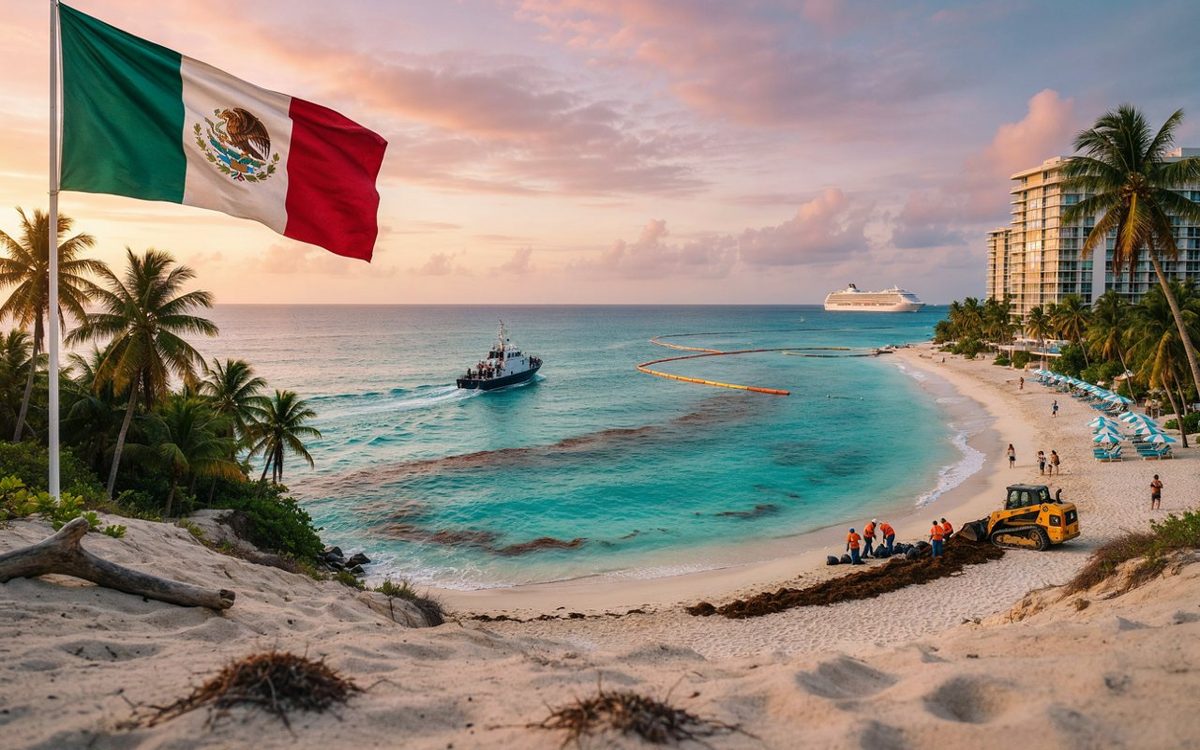
Image generated with Ai
Mexico’s sargassum crisis is testing its tourism economy, but Cancún, Playa del Carmen and other destinations are fighting back with smarter barriers, rapid beach cleaning and stronger coastal action.
Mexico’s sargassum crisis is becoming a major test for its tourism economy. However, Cancún, Playa del Carmen and more Caribbean destinations are responding with smarter coastal strategies. Instead of allowing the seaweed to define the visitor experience, authorities are expanding barriers, beach cleaning, offshore collection and monitoring. Meanwhile, hotels and tourism businesses are adapting quickly. The response matters because the crisis could damage beaches, bookings and traveller confidence if left unchecked. Yet, the situation is not uniform. Therefore, destination-specific action offers a stronger answer. Cancún, Playa del Carmen, Puerto Morelos, Tulum and Mahahual are proving that coordinated action can protect tourism.
Advertisement
Advertisement
Mexico’s Caribbean coast is facing another difficult sargassum season, with huge quantities of the brown seaweed reaching Quintana Roo and creating very different beach conditions across its leading tourism destinations. Cancún, Playa del Carmen, Puerto Morelos, Tulum and Mahahual are all responding, but the intensity varies sharply from one coastline to another.
The scale of the 2026 problem has pushed sargassum beyond a routine seasonal nuisance. Mexican authorities have expanded naval operations, offshore collection, floating barriers and beach-cleaning programmes as unprecedented volumes move through the Caribbean.
Advertisement
Advertisement
For travellers, however, the situation is not as simple as avoiding the entire Mexican Caribbean. Conditions can differ between neighbouring beaches, and wind, currents, tides and offshore accumulations can change the situation rapidly.
Advertisement
Advertisement
Cancún: The Strongest Beach Option Among the Five
Cancún remains one of the better-positioned destinations for travellers concerned about sargassum, although it is not immune.
The destination has experienced substantial arrivals during 2026, requiring sustained municipal cleaning operations. Authorities in Benito Juárez, the municipality that includes Cancún, reported the removal of more than 18,600 tonnes of sargassum during the year by July, demonstrating the scale of the challenge even in a destination that can experience comparatively favourable beach conditions.
Cancún benefits from its extensive coastline and large number of individual beaches. This gives visitors more alternatives when one section of the coast is affected. Beaches facing different directions can also experience noticeably different conditions on the same day.
Advertisement
Advertisement
Recent monitoring has shown periods of minimal sargassum around Cancún, with some popular beaches reporting little offshore accumulation. That makes the destination particularly attractive for travellers who want a Caribbean beach holiday but do not want to take the risk associated with some parts of the Riviera Maya.
However, visitors should not interpret a low-risk rating as a guarantee. Sargassum is a dynamic phenomenon. A beach that looks clear in the morning can experience accumulation later if winds and currents change.
Advertisement
Advertisement
For holidaymakers, Cancún therefore offers an important advantage: choice. If one beach is affected, another may remain substantially clearer.
Playa del Carmen: One of Quintana Roo’s Biggest Sargassum Hotspots
Playa del Carmen is facing a much more serious challenge.
The destination has become one of the principal collection points for sargassum in Quintana Roo, with municipal authorities removing tens of thousands of tonnes during the 2026 season.
The geographical position of Playa del Carmen means that large quantities of seaweed can reach its coastline. Authorities have emphasised that the volume arriving here is influenced by oceanographic conditions and is not simply a reflection of how frequently the beaches are cleaned.
That distinction matters for travellers. Playa del Carmen has extensive cleaning operations, but cleaning does not prevent new sargassum from arriving.
Advertisement
Advertisement
Recent monitoring has placed Playa del Carmen among the destinations experiencing heavy conditions, with substantial offshore quantities capable of reaching exposed beaches. The result can be a very different holiday experience from the postcard image traditionally associated with the destination.
For travellers staying in Playa del Carmen, flexibility is therefore important. Beach conditions should be checked shortly before heading to the coast, while inland attractions, restaurants, cenotes, excursions and cultural activities provide alternatives when seaweed levels become particularly high.
Playa del Carmen remains a major tourism hub, but travellers booking specifically for a pristine beach should factor sargassum into their decision.
Puerto Morelos: Barriers Offer an Important Line of Defence
Puerto Morelos presents a different picture.
The smaller Riviera Maya destination has invested significantly in physical protection designed to intercept sargassum before it reaches the beach. Anti-sargassum barriers have been installed offshore, while municipal crews continue removing seaweed that reaches the coastline.
Advertisement
Advertisement
Authorities reported thousands of tonnes collected during the first months of 2026, while the barrier system has been credited with helping reduce the quantity reaching some beaches.
Puerto Morelos also benefits from the area’s reef environment, which can influence how floating seaweed approaches the coastline.
Nevertheless, the barriers are not an absolute solution. Strong winds, waves and large offshore accumulations can overwhelm or bypass interception systems. Sargassum can also arrive through areas where barriers are less effective.
For visitors, Puerto Morelos may therefore offer a useful middle ground between the heavier conditions reported farther south and the relatively favourable situation sometimes experienced in Cancún.
Its smaller scale can also make it easier for travellers to adapt their plans around local conditions.
Advertisement
Advertisement
The key message is straightforward: Puerto Morelos has substantial protection, but no Caribbean destination can currently promise completely sargassum-free beaches.
Tulum: Heavy Sargassum Pressure Hits a Beach-Led Destination
Tulum faces one of the most difficult sargassum situations among the five destinations.
Recent monitoring has classified Tulum’s conditions as heavy, with significant offshore quantities and a heightened risk of accumulation along exposed beaches.
The issue is particularly important for Tulum because its international tourism identity is strongly connected to its beaches. A major sargassum arrival can therefore affect the destination’s appeal more directly than it might in a city where tourism is spread across a broader range of attractions.
Monitoring earlier in the season found sargassum across many of Tulum’s monitored beaches, with several locations reporting abundant or excessive accumulation.
Advertisement
Advertisement
Local authorities have continued beach-cleaning efforts, including the removal of seaweed from major coastal areas. Yet the sheer volume arriving from offshore means that collection crews can sometimes face a race against nature.
Tulum’s tourism economy does, however, have alternatives. Travellers can visit cenotes, archaeological attractions, restaurants and inland experiences when beach conditions deteriorate.
For those whose priority is swimming and spending long days on the Caribbean coast, however, Tulum currently carries a higher level of uncertainty than Cancún.
Travellers considering a Tulum holiday should check individual beach conditions close to their travel date rather than assuming that the entire coastline will have the same conditions.
Mahahual: Southern Caribbean Destination Also Under Pressure
Mahahual is sometimes less prominent in international sargassum coverage than Cancún and Tulum, but it remains an important part of Mexico’s response.
Advertisement
Advertisement
The destination has been identified by the federal government as one of Quintana Roo’s priority tourism zones for sargassum management, alongside Cancún, Playa del Carmen, Puerto Morelos and Tulum.
The Mexican Navy has been involved in operations in Mahahual, while offshore barriers and collection programmes have been deployed across the affected coastline.
This matters because Mahahual is both a beach destination and an important cruise tourism location. Large numbers of visitors can arrive during cruise calls, increasing the importance of maintaining a usable and attractive waterfront.
Like the other destinations, Mahahual’s conditions can change rapidly. A heavy offshore accumulation does not necessarily mean every section of the beach will be covered, while favourable conditions can quickly deteriorate when winds push seaweed towards the coast.
Travellers heading to Mahahual should therefore treat sargassum as a real seasonal consideration, particularly when the primary purpose of the trip is a traditional Caribbean beach holiday.
Advertisement
Advertisement
Why 2026 Has Become Such a Difficult Sargassum Year
The scale of this year’s problem explains why authorities have significantly expanded their response.
Mexico’s federal government has described 2026 as an unusually severe year for sargassum arrivals. Officials have reported exceptionally high quantities moving through the Caribbean, putting pressure on existing collection and disposal infrastructure.
More than 100,000 tonnes had been removed across Quintana Roo by August, surpassing the previous annual collection record.
The government has consequently strengthened its strategy with additional collection vessels, floating barriers, offshore interception, beach-cleaning teams and monitoring systems.
The response is not limited to individual municipalities. The federal government has designated Cancún, Playa del Carmen, Puerto Morelos, Tulum and Mahahual as priority tourism areas for enhanced intervention.
Advertisement
Advertisement
The underlying problem, however, cannot be solved simply by deploying more beach-cleaning crews. Sargassum originates offshore, and the quantity arriving at the coast is influenced by wider oceanographic and environmental conditions.
That means even an efficiently managed beach can become affected again soon after being cleaned.
“Anup Kumar Keshan, Founder and Editor-in-Chief, Travel And Tour World, said: ‘Mexico’s sargassum challenge is serious, but it should not overshadow the resilience of its tourism industry. Cancún, Playa del Carmen and other destinations are demonstrating that smart planning, rapid response and sustained investment can protect the visitor experience. Travellers need accurate, destination-specific information rather than broad assumptions about the entire Mexican Caribbean. The industry must continue combining technology, monitoring, coastal barriers and effective communication. This is also an opportunity to build stronger and more sustainable destination management systems. Mexico’s response today can help safeguard tourism confidence, jobs and long-term competitiveness.’”
What Travellers Should Expect
The biggest mistake visitors can make is treating sargassum as a destination-wide, permanent condition.
It is neither.
Advertisement
Advertisement
The Mexican Caribbean coastline stretches for hundreds of kilometres, and individual beaches can experience dramatically different conditions. Wind direction, currents, tides, beach orientation and offshore concentrations all influence what reaches the shore.
Travellers should therefore check beach-specific conditions shortly before visiting.
Those travelling during periods of heavy arrivals should also maintain some flexibility. A hotel may have a clear swimming area while a nearby public beach is heavily affected, or conditions may improve after several days of changing winds.
Hotels and resorts with pools can provide an important alternative, while cenotes and inland attractions offer additional options in destinations such as Tulum and Playa del Carmen.
The Outlook for Cancún, Playa del Carmen, Puerto Morelos, Tulum and Mahahual
The 2026 sargassum crisis is significant, but it does not make the Mexican Caribbean uniformly unsuitable for holidays.
Advertisement
Advertisement
Cancún currently stands out as the strongest option for travellers prioritising beach access, helped by its extensive coastline and comparatively favourable conditions in some monitoring periods.
Playa del Carmen faces heavier pressure, making beach conditions a more important consideration when booking.
Puerto Morelos has an advantage from its barrier infrastructure, although severe arrivals can still affect the coast.
Tulum remains one of the more vulnerable destinations, particularly because its tourism proposition is heavily dependent on its beaches.
Mahahual continues to require significant intervention, particularly given its importance to cruise and coastal tourism.
Advertisement
Advertisement
The practical conclusion is that travellers should not simply ask whether there is sargassum in the Mexican Caribbean. The more useful question is which beach is affected, how much is arriving, and what are conditions likely to be during the specific travel dates?
For tourism businesses, airlines, hotels and destination marketers, that distinction is equally important. The 2026 season shows that sargassum has become a major operational and reputational issue for Quintana Roo, but it is also a highly localised phenomenon.
As Mexico expands its response, the five destinations will continue competing not only on their beaches, but also on how effectively they can manage one of the Caribbean’s most persistent environmental challenges.
The cause is the unprecedented volume of sargassum reaching Mexico’s Caribbean coastline, driven by changing marine and environmental conditions. The answer is not simply removing seaweed after it reaches beaches. Instead, destinations need stronger offshore interception, barriers, faster collection, reliable monitoring and clear traveller communication. The reason is economic as much as environmental. Beaches support hotels, restaurants, excursions, cruise calls and thousands of tourism jobs. Therefore, Cancún, Playa del Carmen, Puerto Morelos, Tulum and Mahahual are strengthening their responses. Smart destination management can reduce disruption, protect visitor confidence and prevent a seasonal environmental challenge from becoming a deeper tourism crisis.
Advertisement
