
Türkiye Connects Turkic World Tourism Through AI Museum Access Plans and New Silk Road Routes

Published
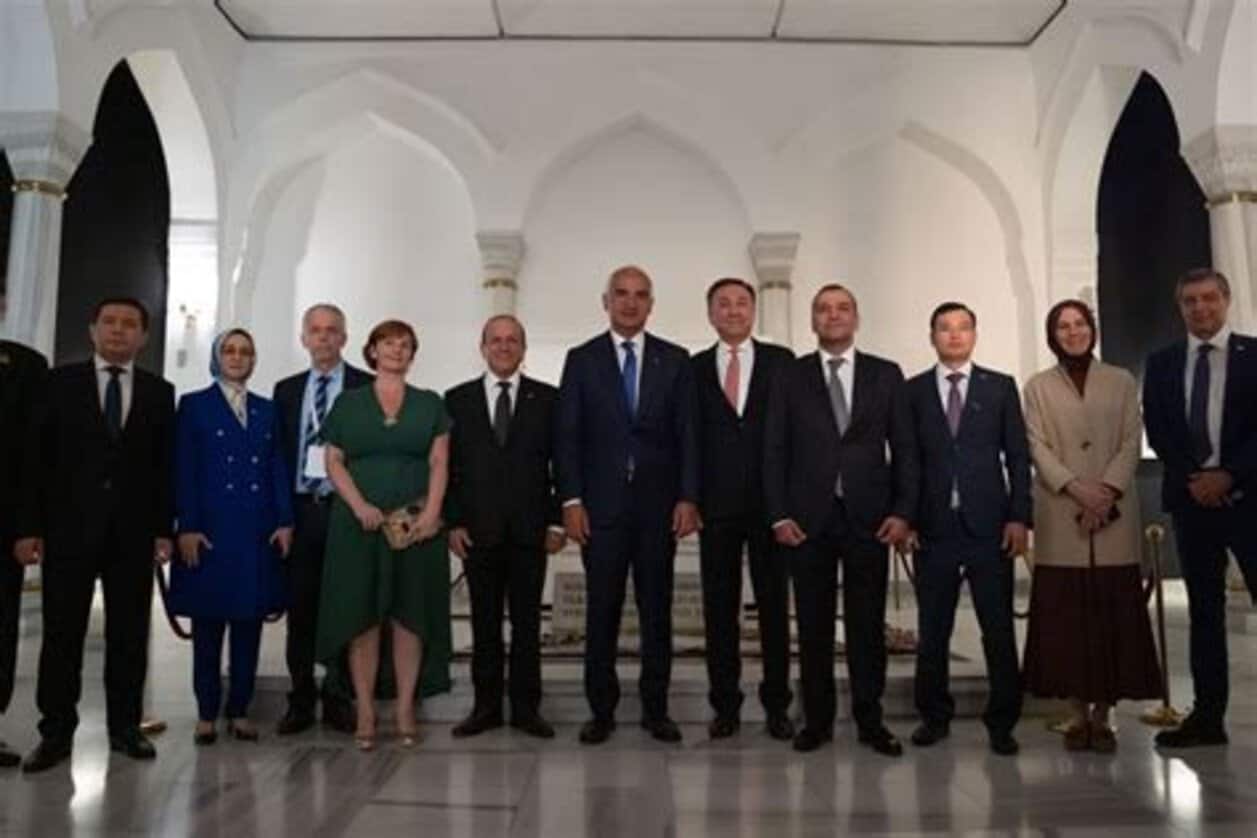
Turkey is stepping up efforts to promote tourism in the Turkic World region through an expanding network of regional projects, including museum access, Silk Road routes, tourist expertise, and digitalization. Activities are being focused in Ankara, where the 8th International Turkic World Tourism Congress will take place from 25 to 27 September 2026 in Ankara Hacı Bayram Veli University. In addition to tourism topics, the event will address artificial intelligence and digitalization issues. Meanwhile, the Organization of Turkic States is working on a Joint Museum Card and other regional tourism projects. These projects will support and facilitate the search for cultural heritage in the region. (Turk World Tourism Congress)
Ankara puts Turkic World tourism cooperation under a brighter spotlight
The 8th International Turkic World Tourism Congress gives Ankara a timely role in the region’s tourism conversation. The official congress website confirms that the event is being held from 25 to 27 September 2026 at Ankara Hacı Bayram Veli University’s Itri Congress and Culture Centre. (Turk World Tourism Congress)
The event is particularly relevant because Ankara is also the 2026 Tourism Capital of the Turkic World. The Organization of Turkic States, or OTS, confirmed that designation after its tourism ministers met in Ankara in July 2025. (Turkic States)
The title is more than a branding exercise. Türkiye’s Ministry of Culture and Tourism has developed a programme around it covering destination management, tourism marketing, cultural events and international promotion. (Ankara 2026 Türk Dünyası Turizm Başkenti)
Advertisement
Advertisement
A tourism network has been developing for more than a decade
The regional strategy did not begin with the Ankara congress.
Tourism became a priority area for the organisation after its 2014 summit in Bodrum. The subsequent Modern Silk Road Joint Tourism Package was designed to connect destinations across Turkic states and attract both regional visitors and travellers from other international markets. (Turkic States)
Advertisement
Advertisement
An early version demonstrated how ambitious the concept could become. A 2017 familiarisation journey connected destinations in Türkiye, Azerbaijan, Kazakhstan and Kyrgyzstan, including Istanbul, Cappadocia, Konya, Baku, Almaty, Turkistan, Bishkek and Issyk-Kul. (Turkic States)
The project therefore offers something different from a conventional single-country itinerary. Its underlying model is a journey built around shared Silk Road history across national borders.
Joint Museum Card could create another layer of cultural connectivity
One of the most traveller-relevant initiatives is the planned Joint Museum Card.
According to the OTS, the project aims to establish a common mechanism enabling citizens of member states to access participating museums across the Turkic world through a single museum card. The stated objectives include greater cultural exchange, tourism mobility and people-to-people contact. (Turkic States)
Travellers should note an important distinction. This is a project under development, not a universal museum pass that international tourists can currently buy and use across the region.
At the 10th Meeting of OTS Tourism Ministers in Ankara in July 2025, ministers instructed the relevant working group to finalise the preparations and formalities required for implementation. (Turkic States)
Advertisement
Advertisement
That distinction keeps the traveller proposition clear: common museum access is part of the emerging infrastructure, but visitors should continue checking the admission systems of individual countries and museums.
AI enters the conversation but is not yet a shared tourism platform
Technology adds another dimension to the Ankara discussions.
The congress programme brings academics, tourism specialists and institutions together, while reporting around the programme identifies artificial intelligence, digitalisation and hotel management among subjects being examined alongside tourism, culture and history.
However, there is currently no official evidence that the OTS has launched a unified AI tourism platform for travellers. AI should therefore be understood as part of the sector’s academic and professional discussion rather than as an operational cross-border visitor service.
There is stronger official evidence for digital capability-building. Türkiye’s Ministry of Culture and Tourism says representatives of OTS member and observer countries attended a tourism training programme in Ankara from 8 to 10 September 2026. Sessions included destination management, tourism-product marketing, digital marketing and branding, country marketing and joint promotion. (Disiliskiler)
Silk Road tourism moves from history towards bookable journeys
The Silk Road tourism proposition has deeper roots.
Advertisement
Advertisement
The OTS says its objective is to transform the historic Silk Road into an attractive and competitive tourism destination while developing cultural, pilgrimage, winter and other specialised tourism products. Its tourism framework also seeks to increase travel between member and observer states and attract visitors from outside the region. (Turkic States)
Earlier work shows that this was intended to become a commercial travel proposition. The Modern Silk Road project involved tour operators and familiarisation trips, while the route was promoted internationally at events including FITUR in Madrid and the New York Times Travel Show. (Turkic States)
The present strategy extends beyond one itinerary. The OTS now lists the Turkic Silk Road platform, Tabarruk Ziyarat pilgrimage project, Union of Turkic Ski Resorts, professional training and Joint Museum Card among its tourism mechanisms. (Turkic States)
The numbers explain why regional tourism integration matters
The potential market is substantial.
At a tourism congress in Ankara on 15 April 2026, OTS Secretary General Kubanychbek Omuraliev said the wider Turkic region had attracted nearly 100 million international tourists, generating approximately US$77 billion in tourism revenue. He also placed intra-regional travel at around 10 million visits. (Turkic States)
| Official tourism indicator | Reported figure |
|---|---|
| International tourists across the region | Nearly 100 million |
| Tourism revenue | About US$77 billion |
| Intra-regional visits | Around 10 million |
| Tourism professionals benefiting from joint training | More than 1,500 |
| Ankara status | 2026 Turkic World Tourism Capital |
The figures are OTS-reported regional indicators and should not be interpreted as Türkiye-only tourism statistics. They nevertheless explain why governments are interested in turning cultural proximity into more practical tourism cooperation. (Turkic States)
Advertisement
Advertisement
More than 1,500 tourism professionals add a workforce dimension
Tourism integration also depends on the people operating hotels, attractions, destinations and travel services.
The OTS says more than 1,500 tourism professionals and experts from member states have participated in professional training programmes delivered with tourism ministries and institutions. (Turkic States)
Türkiye’s September 2026 Ankara programme provides a current example. Representatives exchanged knowledge on destination management, marketing, digital branding and joint promotion. (Disiliskiler)
For hotels and tour operators, this type of cooperation can support knowledge exchange and more coordinated product development. The official material does not, however, establish common service standards across all participating states, so such an outcome should not yet be assumed.
Winter resorts and pilgrimage routes widen the travel calendar
The emerging network is not limited to summer cultural tourism.
The Union of Turkic Ski Resorts links winter-tourism cooperation. Its second summit took place at Amirsoy Ski Resort in Uzbekistan between 30 July and 2 August 2026, while Türkiye’s Erciyes Ski Center is scheduled to host the third summit in 2027. (Turkic States)
Advertisement
Advertisement
The Tabarruk Ziyarat initiative targets pilgrimage travel and the region’s spiritual and cultural heritage. Together with Silk Road itineraries and museum initiatives, it broadens the tourism proposition across seasons and different traveller interests. (Turkic States)
For local businesses, that diversification matters. Multi-stop journeys can potentially distribute visitor spending among accommodation providers, guides, restaurants, transport companies and attractions across several destinations, although the OTS has not published a quantified forecast for those effects.
Ankara becomes a practical meeting point for the strategy
Ankara’s 2026 programme shows how the Tourism Capital designation is being used.
Türkiye’s Ministry of Culture and Tourism planned tourism training in destination management and product marketing, alongside a dedicated Turkic-state component within the Ankara Culture Route Festival from 19 to 27 September 2026. (Ankara 2026 Türk Dünyası Turizm Başkenti)
The Ministry has also pursued international cultural promotion connected with Ankara’s title. Its published programme includes activities outside Türkiye, showing that the initiative has an external marketing dimension as well as a domestic events calendar. (Ankara 2026 Türk Dünyası Turizm Başkenti)
The congress fits naturally into that wider programme. It creates a venue for tourism academics, institutions and professionals while Ankara simultaneously hosts cultural programming aimed at visitors.
Advertisement
Advertisement
What international travellers should understand now
The regional tourism framework presents opportunities, but travellers should distinguish current products from future projects.
The Silk Road tourism concept already has years of institutional development behind it. The Joint Museum Card, by contrast, remains under development according to the OTS information currently available. (Turkic States)
There is also no announcement establishing a single visa for the destinations covered by these tourism initiatives. Travellers therefore need to check the immigration, visa and entry requirements of every country on a multi-country itinerary separately.
Likewise, AI discussions at the Ankara congress do not create a new traveller-facing booking or border system.
What comes next for Turkic World tourism
The official roadmap points towards continued cooperation rather than a single launch date.
The OTS says its 11th Meeting of Ministers of Tourism is scheduled for Uzbekistan in 2026. Silk Road tourism, specialised tourism products, tourism education, winter tourism and joint promotional activities are among the areas expected to progress through the organisation’s cooperation framework. (Turkic States)
Advertisement
Advertisement
The organisation is also continuing the Turkic World Tourism Capital programme. It began with Kokand in 2022 and subsequently included Shamakhi, Turkistan, Jalalabad/Manas and Ankara. (Turkic States)
For the travel industry, the important development is therefore not one conference or one tourism title. It is the gradual assembly of multiple initiatives that can connect destinations, cultural attractions, tourism professionals and specialised travel products.
Traveller FAQs
Can tourists use one Joint Museum Card across the Turkic world now?
Not yet based on the latest OTS information. The Joint Museum Card is a development project. The OTS says the relevant working group has been tasked with completing the formalities and preparations for implementation. (Turkic States)
Does the Silk Road project mean travellers can visit several countries on one visa?
No such common tourist visa is established by the tourism initiatives cited here. Travellers planning multi-country routes should verify the official entry and visa requirements for each destination before booking.
What does the Ankara congress change for travellers immediately?
The congress itself does not introduce a new visa, museum pass or booking system. Its immediate importance lies in bringing tourism, hotel management, digitalisation, AI, culture and regional knowledge exchange into the same discussion while existing OTS tourism projects continue separately.
Türkiye’s tourism connections move from concept towards infrastructure
Turkey’s contribution to the development of Turkic World tourism is beginning to be measured less in calls for promoting destinations and more by the prospect of effective regional cooperation, Ankara’s 2026 tourism programme, and September congress, which put tourism skills, digitalisation and AI talks alongside the longer-running Silk Road initiatives. The OTS is also working on the Joint Museum Card, special tourism products and professional training across its network. For visitors, the key point is the timing, since not everything is ready yet. However, the overall direction of travel is clear. Türkiye and its regional partners are forging closer links between heritage, tourism professionals, cultural attractions and multi-jurisdictional journeys that will help shape more integrated touring experiences across the Turkic world. (Turkic States)
Advertisement
