 Somudranil Sarkar Somudranil Sarkar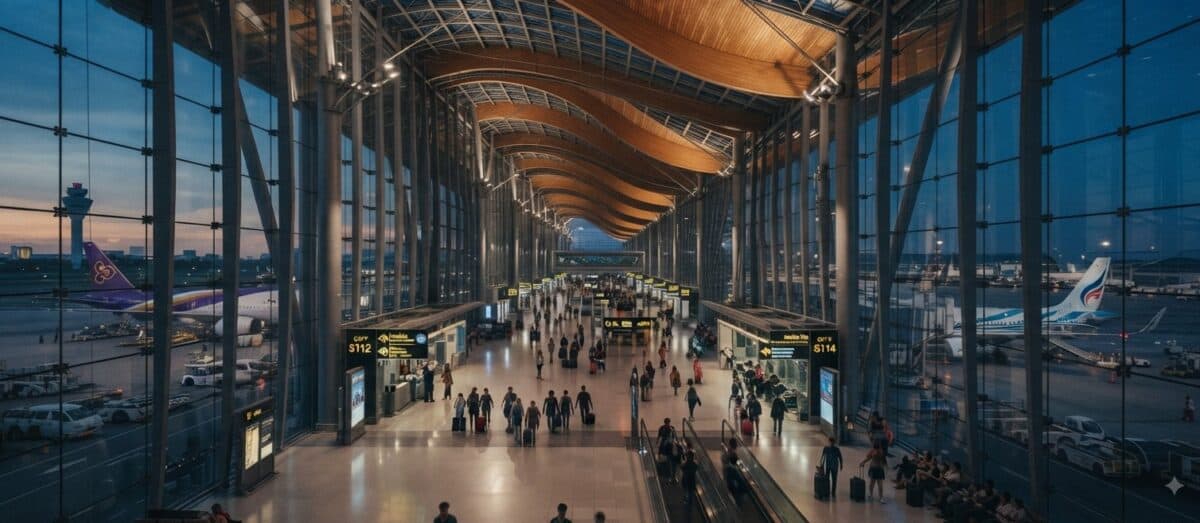
Image generated with Ai
The landscape of global aviation is undergoing a historic transformation, with Southeast Asia airport expansions leading the charge into an unprecedented era of connectivity. As of August 2026, nations across the region are aggressively upgrading their primary aviation infrastructure to accommodate surging post-pandemic passenger demand. These strategic initiatives are not merely construction projects; they are vital economic engines designed to solidify regional transit dominance, bolster tourism, and future-proof national economies. From Singapore’s groundbreaking mega-terminals to multi-billion-ringgit overhauls in Malaysia, these expansive, state-of-the-art infrastructure developments promise to redefine international travel, streamline complex logistical capabilities, and elevate the global passenger experience today.
The global aviation industry has witnessed remarkable fluctuations over the current decade, but by mid-2026, the narrative has shifted firmly from recovery to aggressive, unprecedented growth. At the epicentre of this global resurgence is the Association of Southeast Asian Nations (ASEAN). Driven by a rapidly expanding middle class, the resurgence of international tourism, and robust cross-border trade, existing aviation infrastructure across the region has been pushed to its absolute operational limits. In response, governments and private consortiums are executing Southeast Asia airport expansions on a scale never before seen in aviation history.
These multibillion-dollar capital expenditure programmes are designed to transform traditional transit points into sprawling, self-sustaining aerotropolises. The investments span from architectural marvels in Singapore to vast terminal network upgrades in Malaysia and Indonesia. By scaling capacity, integrating cutting-edge biometric technologies, and adopting stringent sustainability standards, these regional air travel hubs are aggressively competing to become the premier gateways between the East and the West.
To understand the sheer magnitude of these current infrastructure projects, one must look back at the extreme bottlenecks experienced during the rapid travel rebound of 2023 and 2024. As borders reopened, airports that were originally designed for late-20th-century traffic volumes found themselves overwhelmed by a sudden influx of both legacy carriers and low-cost airlines. The realisation was stark: without immediate and massive intervention, Southeast Asia risked losing its competitive edge to rapidly expanding Middle Eastern hubs.
Advertisement
Advertisement
By 2026, this realisation has manifested into concrete action. Passenger demand in the Asia-Pacific region has not only recovered but has consistently surpassed pre-pandemic forecasts. Consequently, the airport capacity upgrades currently underway are not merely stopgap measures. They are deeply calculated, long-term masterplans envisioned to comfortably handle the projected passenger throughput of the 2030s and 2040s, ensuring that ASEAN nations remain interconnected and economically resilient regardless of future global supply chain disruptions.
The overarching ambition driving these projects is heavily supported by proactive government policies. Through various ministries of transport and state-owned airport operators, national governments are heavily subsidising or facilitating public-private partnerships to fund these mega-projects. The ASEAN Open Skies agreement has further catalysed this growth, liberalising airline access and encouraging regional carriers to dramatically expand their fleets.
This regulatory alignment means that airport operators are no longer building in isolation; they are developing interconnected nodes within a broader, unified ASEAN aviation network. Consequently, the race for airspace supremacy is no longer just about having the largest runway; it is fundamentally about operational efficiency, passenger experience, sustainability, and technological integration.
Consistently ranked among the best in the world, Singapore Changi Airport is taking its infrastructure to an entirely new echelon with the highly anticipated Terminal 5 (T5) project. Representing one of the most complex engineering endeavours in the island nation’s history, T5 is not just an extension; it is effectively a brand-new airport being built adjacent to the existing Changi infrastructure.
Advertisement
Advertisement
The groundbreaking ceremony for Terminal 5 officially took place in May 2025, officiated by Singapore’s Prime Minister, Lawrence Wong. Set within the massive 1,080-hectare Changi East development area, T5 is slated to open its first phase in the mid-2030s. Upon completion, this single mega-terminal is engineered to handle an astonishing 50 million passengers annually.
To bring this colossal vision to life, a world-class engineering consortium comprising SJ Group, Arup, and Mott MacDonald was appointed to deliver full consultancy services. These firms, alongside Changi Airport Planners and Engineers, are tackling unprecedented civil engineering challenges. The terminal’s striking architectural design features an assembly of overlapping roof leaves with varying heights. This brilliant design choice serves to break down the immense scale of the mega-terminal, creating spaces that feel human-scaled, cosy, and exceptionally welcoming for weary international travellers.
A crucial element of the Singapore aviation infrastructure upgrade is its seamless integration with the broader urban transit network. For the very first time in Changi’s history, Terminal 5 will house a dedicated ground transportation centre. This state-of-the-art facility will seamlessly integrate heavy rail trains, public buses, taxis, and ride-hailing services, dramatically enhancing connectivity between the airport and the rest of the island state.
Furthermore, Terminal 5 will not exist in isolation. It will be inextricably linked to the existing Changi terminals through an extensive network of underground automated people mover (APM) tunnels. These high-speed transit tunnels, contracts for which were rapidly awarded in early 2025, will ensure that transfer times remain minimal, preserving Changi’s renowned reputation for operational efficiency. There will also be a strategic extension to Terminal 2 to further facilitate seamless passenger transitions across the entire airport ecosystem.
In a post-pandemic era increasingly defined by climate change realities, T5 is setting a global benchmark for sustainable aviation hubs. Drawing on hard-learned lessons from global health crises, the terminal is ingeniously designed with the flexibility to operate as smaller, fully independent sub-terminals. This allows for the rapid segregation of high-risk passengers or the deployment of large-scale health testing operations without disrupting wider airport operations.
Environmentally, T5 is engineered to achieve the stringent Green Mark Platinum Super Low Energy certification. It will feature one of the largest rooftop solar panel systems in Singapore, generating enough clean energy to potentially power up to 20,000 four-room HDB flats for an entire year. Additionally, to combat rising sea levels and intense tropical storms, the entire Changi East airfield is meticulously elevated to 5.5 metres above sea level, ensuring absolute operational continuity amidst the harshest climate scenarios.
Thailand’s flagship aviation gateway, Suvarnabhumi Airport (BKK), is currently executing a phenomenally ambitious masterplan. Managed by the Airports of Thailand (AoT), the strategic goal is to exponentially increase the airport’s annual passenger handling capacity from its current baseline of roughly 60 to 65 million passengers to an eventual target of between 120 and 150 million passengers. This 142-billion-baht comprehensive upgrade plan is specifically designed to elevate Suvarnabhumi into the top ten busiest and most efficient airports globally.
The first major victory in this long-term expansion was the successful opening of the Midfield Satellite Concourse 1 (SAT-1). Partially opened in late 2023 and brought to full operational capacity in early 2024, SAT-1 is a sprawling 251,400-square-metre facility designed to alleviate acute congestion in the main terminal.
Featuring 28 new gates, including eight dedicated gates specifically engineered to accommodate super-jumbo jets like the Airbus A380 and Boeing 747-8, SAT-1 has significantly enhanced Thailand’s wide-body handling capabilities. The concourse is flawlessly connected to the main terminal via an advanced underground automated people mover (APM) system provided by Siemens, utilising innovative NeoVAL technology to shuttle passengers rapidly beneath the active tarmac.
With SAT-1 operational, AoT has aggressively shifted its focus to the highly anticipated East Expansion project. Valued at roughly 12 billion baht, this vital infrastructure upgrade was submitted to the Ministry of Transport and the National Economic and Social Development Council (NESDC) for definitive approval in late 2025.
Slated for a robust bidding process in early 2026, the East Expansion will physically enlarge the main terminal’s footprint to 480,000 square metres. Expected to be fully completed by 2028 or 2030 depending on phased delivery schedules, this specific project will unilaterally boost the airport’s capacity by an additional 15 million passengers annually. It directly addresses the bottlenecks currently experienced at international departures and arrivals, offering expanded security checkpoints, wider retail spaces, and a heavily upgraded 3.9-billion-baht inbound baggage handling system.
Looking slightly further into the future, AoT’s updated masterplan incorporates the colossal South Terminal project. Designed to independently accommodate a staggering 55 million passengers annually, the South Terminal alone will be comparable in sheer size and throughput to major global airports like Chongqing in China.
This development, coupled with the opening of Suvarnabhumi’s third 3,700-metre runway in November 2024—which instantly increased operational capacity from 68 to 94 flights per hour—ensures that Bangkok remains the undisputed aviation crossroads of mainland Southeast Asia.
Malaysia is systematically overhauling its national aviation infrastructure to capture a larger share of the booming ASEAN transit market. In June 2026, Malaysia Airports Holdings Berhad (MAHB) unveiled a monumental capital expenditure programme, committing over RM11 billion over the next five years to heavily modernise and aggressively expand its nationwide airport network.
This massive investment pipeline represents the very first strategic initiative since MAHB was taken private in 2025 by a powerful consortium comprising Khazanah Nasional Berhad, the Employees Provident Fund (EPF), and the Abu Dhabi Investment Authority (ADIA). Unshackled from short-term public market pressures following its delisting, MAHB is now executing its long-term KLIA Development Plan.
The primary objective for Kuala Lumpur International Airport (KLIA) is to thoroughly future-proof the facility to comfortably handle passenger demand exceeding 100 million travellers annually. The allocated funds are actively being poured into sweeping engineering asset replacement programmes, complex pavement rehabilitation, essential utility upgrades, and total terminal reconfiguration. A key focus is the total modernisation of the automated baggage handling systems and the deployment of new, highly reliable aerotrains to ensure uninterrupted intra-terminal transit for millions of connecting passengers.
The RM11 billion airport capacity upgrades are not confined solely to the capital. Recognising the immense value of regional tourism and semiconductor-driven business travel, MAHB is funnelling significant capital into two vital regional hubs: Penang International Airport and Kota Kinabalu International Airport.
In Penang, ongoing expansion works are meticulously designed to nearly double the annual passenger handling capacity, taking it from 6.5 million to a robust 12 million passengers. Similarly, proposed upgrading works in Sabah’s Kota Kinabalu aim to increase capacity from 9 million to 12 million passengers annually. These regional expansions are critical for decentralising air traffic and promoting direct international flight access to Malaysia’s key secondary cities, bypassing the need for mandatory layovers in Kuala Lumpur.
During its inaugural Procurement and Project Showcase in mid-2026, MAHB leadership articulated a clear vision: as infrastructure projects grow increasingly complex, the entire domestic construction and technology ecosystem must evolve concurrently. By engaging the market early, Malaysia is actively fostering highly specialised expertise capable of delivering these mega-projects on time and under budget, thereby establishing the nation as a regional centre of excellence for aviation engineering.
As the primary gateway to the largest economy in Southeast Asia, Jakarta’s Soekarno-Hatta International Airport is undergoing relentless expansion to meet the demands of Indonesia’s booming domestic and international aviation sectors. Managed by state-owned operator PT Angkasa Pura Indonesia (InJourney Airports), the strategic vision is clear: transform Soekarno-Hatta into one of the world’s top ten busiest and most efficient airports by 2029.
A major milestone in this ongoing transformation was reached in November 2025 with the highly successful full operational activation of the revitalised Terminal 1C. Originally opened in the 1980s, Terminal 1 underwent a comprehensive, multi-year overhaul. The revitalisation seamlessly blended traditional, culturally resonant Indonesian architectural design with the latest in advanced passenger processing technology.
Featuring 40 modernised check-in counters, seven high-speed baggage conveyors, and vastly improved, decentralised security checkpoints, Terminal 1C’s capacity leaped drastically. Combined with earlier renovations to Terminal 1B, the overall capacity of Terminal 1 doubled from a baseline of 9 million to a staggering 18 million (and structurally up to 36 million under extended operations) passengers per annum.
The activation of these upgraded terminal facilities officially pushed Soekarno-Hatta’s total annual passenger handling capacity to an impressive 96 million. However, the Indonesian Ministry of Transportation remains aggressively forward-looking, setting a firm target to definitively breach the 100-million-passenger capacity threshold by the end of 2026 or early 2027.
This expansion is absolutely critical for Indonesia. As an archipelago of over 17,000 islands, reliable, high-volume air connectivity is not merely a luxury; it is a fundamental requirement for national cohesion, political administration, and economic distribution.
Terminal expansions mean nothing if the airside infrastructure cannot handle the corresponding aircraft movements. Recognising this, InJourney Airports has invested trillions of Rupiah into severe airside upgrades. The construction of the massive East Cross Taxiway (ECT) effectively connects the existing north and south runways, dramatically increasing aircraft mobility on the ground.
Coupled with the operational integration of a third massive runway—measuring 3,000 metres by 60 metres and capable of handling wide-body Boeing 777s—these airside improvements have successfully increased Soekarno-Hatta’s takeoff and landing frequency from a congested 81 movements per hour to a highly efficient 114 movements per hour.
The sheer scale of these Southeast Asia airport expansions carries macroeconomic implications that extend far beyond the aviation sector. These infrastructure mega-projects are serving as massive fiscal stimuli, generating profound multiplier effects across the entire ASEAN economic bloc.
Infrastructure spending of this magnitude—totalling over $50 billion regionally when combining Singapore, Thailand, Malaysia, and Indonesia—directly translates to massive job creation. From civil engineering, architectural design, and heavy construction to the manufacturing of advanced baggage handling systems and smart surveillance technologies, these projects are employing hundreds of thousands of highly skilled workers.
Furthermore, once operational, these expanded airports require vast armies of personnel to function. Retail staff, ground handlers, air traffic controllers, security personnel, and hospitality workers all benefit directly from the increased passenger throughput. Economic studies routinely indicate that every dollar invested in core aviation infrastructure yields exponential returns in regional GDP growth by facilitating smoother trade, faster air freight logistics, and enhanced foreign direct investment (FDI) appeal.
Tourism remains a foundational pillar for Southeast Asian economies. The ability to comfortably, safely, and rapidly process hundreds of millions of travellers directly correlates to increased tourism revenue. As major airports in Bangkok, Singapore, Kuala Lumpur, and Jakarta scale their capacities, they effectively remove the historical bottlenecks that previously deterred high-yield international tourists.
Moreover, the expansion of regional hubs like Penang and Kota Kinabalu ensures that the wealth generated by tourism is more evenly distributed across provincial economies, rather than being strictly concentrated in capital cities. Despite a somewhat slower-than-anticipated recovery from certain legacy markets like China, the structural readiness of these airports ensures that ASEAN nations are perfectly positioned to capture surges in tourism from emerging markets in India, the Middle East, and a reinvigorated European travel sector.
Building massive concrete terminals is only half the battle; ensuring these facilities operate harmoniously requires immense policy coordination and deep industry alignment across national borders.
The success of these expanded hubs relies heavily on the continued liberalisation of airspace through frameworks like the ASEAN Single Aviation Market (ASAM). By removing restrictive bilateral quotas, airlines are heavily incentivised to establish new routes, lower ticket prices, and increase flight frequencies. The respective civil aviation authorities are working in unprecedented tandem to harmonise air traffic control protocols, ensuring that the skies above Southeast Asia remain safe, navigable, and highly efficient despite the massive surge in aircraft movements.
To handle upward of 100 million passengers per airport annually, traditional manual processing is mathematically impossible. Therefore, these expansions are heavily underpinned by massive digital transformations. Across Changi T5, Suvarnabhumi SAT-1, KLIA, and Soekarno-Hatta, airport operators are uniformly deploying next-generation smart technologies.
This includes end-to-end biometric facial recognition for contactless boarding, AI-driven predictive maintenance for baggage carousels, and decentralised, automated security screening lanes that utilise advanced computed tomography (CT) scanners. These technologies drastically reduce queue times, minimise required floor space for administrative processing, and ultimately allow passengers to spend more time—and money—in high-end airport retail and dining environments.
As we look past 2026, the trajectory of the Southeast Asian aviation market is undeniably steep and highly lucrative. The strategic foresight demonstrated by regional governments in funding these expansions during periods of global uncertainty is now yielding massive geopolitical and economic dividends.
The global aviation transit market is fiercely competitive, with Middle Eastern hubs aggressively vying for the highly lucrative Europe-to-Australasia transfer traffic. By investing tens of billions into superior passenger experiences, ultra-efficient transit times, and sustainable operations, Southeast Asian airports are aggressively defending their market share. The integration of high-end retail, indoor forests, automated transit systems, and luxury lounges ensures that these airports remain destinations in their own right, rather than mere transit layovers.
As the decade progresses towards 2030, the completion of projects like Changi’s Terminal 5 and Suvarnabhumi’s East Expansion will permanently alter the global aviation map. These regional air travel hubs will not only comfortably absorb the projected doubling of global air traffic but will actively stimulate new demand.
Ultimately, the aggressive, coordinated, and heavily funded Southeast Asia airport expansions witnessed in 2026 are laying down the concrete foundations for a deeply integrated, highly prosperous, and remarkably resilient ASEAN economic future. They stand as soaring testaments to the region’s unwavering commitment to global connectivity, technological innovation, and long-term sustainable growth.
The ambitious Southeast Asia airport expansions unfolding in 2026 mark a definitive turning point for the region’s aviation sector. By investing billions into passenger capacity, sustainable infrastructure, and smart technology, Singapore, Thailand, Malaysia, and Indonesia are effectively future-proofing their domestic economies. These monumental projects will streamline global transit, stimulate domestic job creation, and drive unprecedented tourism growth across all ASEAN member nations. As these massive mega-terminals move carefully from blueprints to physical reality, they rapidly solidify Southeast Asia’s undisputed position as a premier global aviation hub. Ultimately, these strategic upgrades ensure the entire region remains highly competitive for many decades.
Advertisement
Tags: ASEAN aviation, Changi Terminal 5, Southeast Asia airport expansions, Suvarnabhumi Airport, Travel News
Advertisement
Advertisement













Saturday, September 5, 2026

Friday, September 4, 2026

Saturday, September 5, 2026

Friday, September 4, 2026

Thursday, September 3, 2026

Wednesday, September 2, 2026

Saturday, September 5, 2026