
Catalonia Tourism Hits a Stunning Spending Record as Foreign Visitors Pour In €3.7 Billion

Published
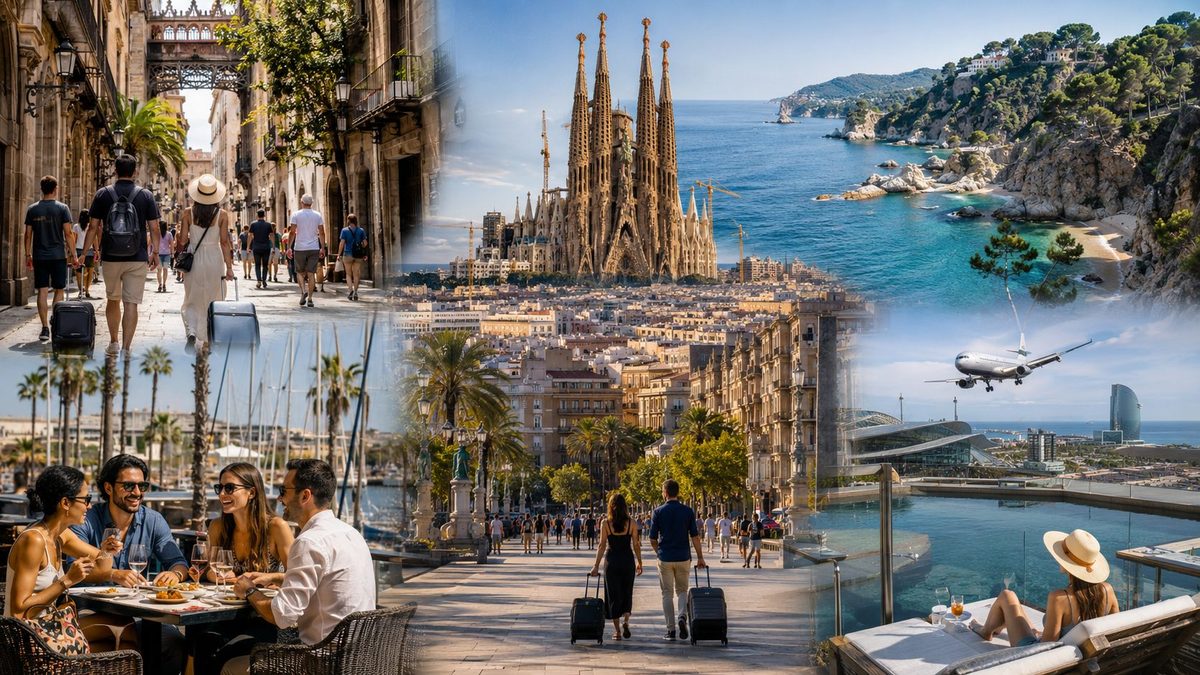
Image generated with Ai
Tourism in Catalonia is entering a new phase of record visitor spending, with international travellers generating €3.707 billion in July 2026. That figure is a provisional official statistic and represents a 13% annual increase. The region received 2.37 million foreign tourists in July, up 0.8 percent year-on-year.
Catalonia has become one of the main destinations for international visitors in Spain, with 11.94 million people arriving in the first seven months of the year. The surge in spending has been much stronger than the rise in visitor numbers. Average spending per foreign tourist was €1,561, with daily spending rising to €241.
For travel companies, that distinction matters because Catalonia is attracting visitors while extracting a lot more economic value from each visit. The latest figures point to a tourism market increasingly fuelled by visitor spend, not just growth in arrivals.
The Numbers Behind Catalonia’s Record Summer
The latest statistics reveal a striking gap between visitor growth and expenditure growth. Foreign arrivals increased by less than 1% in July, yet total tourist spending jumped by 13%. That divergence suggests that travellers are spending more during their visits, even though overall visitor numbers have remained relatively stable.
Advertisement
Advertisement
| Indicator | July 2026 | Change From July 2025 |
|---|---|---|
| Foreign tourists | 2.37 million | +0.8% |
| Foreign tourist spending | €3.707 billion | +13.0% |
| Average spend per tourist | €1,561 | +12.1% |
| Average daily spend | €241 | +5.5% |
| Foreign hotel travellers | 1.80 million | +3.1% |
| Hotel occupancy rate | 81.3% | +1.8 percentage points |
| Foreign hotel overnight stays | 6.05 million | +0.3% |
The figures create a compelling picture for hotels, restaurants, attractions and transport operators. Visitor value is rising faster than visitor volume, which can strengthen tourism revenues without requiring an equivalent increase in arrivals. That shift is particularly relevant for destinations facing pressure from congestion and overtourism.
Advertisement
Advertisement
France and Britain Remain Crucial Markets
Catalonia continues to draw heavily from established European markets, with France retaining its position as a major source of visitors. France supplied around 458,100 tourists in July, while the United Kingdom contributed approximately 252,200 visitors. British arrivals increased sharply compared with the same month last year.
Spending data reveal an even more diverse international market. France generated around €452 million, while the Netherlands contributed approximately €398 million during July. The United States generated about €382 million, with American spending increasing by 16.4%.
| Market | July Visitors | July Spending | Annual Spending Change |
|---|---|---|---|
| France | 458,100 | €452m | +16.5% |
| United Kingdom | 252,200 | — | — |
| Netherlands | — | €398m | +36.9% |
| United States | — | €382m | +16.4% |
The pattern matters because long-haul markets can generate disproportionate economic value. Consequently, tourism operators have an incentive to develop experiences that appeal to premium international travellers. Gastronomy, cultural tourism, shopping, wellness and curated regional itineraries could all benefit from this trend.
Barcelona Is Only Part of the Story
Barcelona remains Catalonia’s most recognisable international gateway, but the latest figures reinforce the importance of the wider region. Visitors can combine the capital with Girona, Tarragona, the Costa Brava, wine country and inland mountain destinations. That geographical spread can help distribute tourism revenue beyond the busiest central districts.
Hotel statistics provide further evidence of sustained demand. Catalonia recorded 2.70 million hotel travellers in July, including around 1.80 million foreign guests. Hotel occupancy reached 81.3%, showing that accommodation demand remained exceptionally strong during the peak summer period.
Advertisement
Advertisement
However, overnight stays tell a slightly different story. Foreign hotel overnight stays reached roughly 6.05 million, representing only a 0.3% annual increase. This suggests that stronger expenditure is not necessarily being generated by significantly longer hotel stays.
Where the Money Is Actually Going
The composition of visitor spending provides a clearer picture of the economic impact. Accommodation accounted for approximately €923 million in foreign tourist expenditure during July. International transport outside package tours represented another €843 million.
| Major Spending Area | Catalonia, July 2026 |
|---|---|
| Accommodation | €923m |
| International transport outside packages | €843m |
| Total foreign tourist spending | €3.707bn |
| Average daily spending | €241 |
| Average spending per tourist | €1,561 |
The impact therefore extends well beyond hotels. Airlines, airports, restaurants, retailers, attractions, car-hire companies and tour operators all participate in the visitor economy. Stronger spending can consequently produce a wider commercial benefit across Catalonia’s tourism supply chain.
Catalonia Leads Spain on Visitor Spending
Catalonia’s performance becomes more significant when measured against the wider Spanish tourism market. The region welcomed 11.94 million international tourists between January and July, representing a 2.9% increase from the same period in 2025. It also accounted for 18.9% of Spain’s international tourist expenditure during the first seven months.
That combination gives Catalonia considerable weight within Spain’s tourism economy. The region is not simply benefiting from international demand; it is capturing a substantial share of the money generated by those visitors.
Advertisement
Advertisement
| Indicator | Catalonia | Spain |
|---|---|---|
| July foreign arrivals | 2.37m | 11.54m |
| July arrival growth | +0.8% | +4.6% |
| July tourist spending | €3.707bn | €18.218bn |
| Spending growth | +13.0% | +10.9% |
| Average spend per tourist | €1,561 | €1,579 |
| Average daily spend | €241 | €218 |
The comparison reveals an important distinction. Catalonia’s average expenditure per visitor was broadly comparable with the national figure, but daily expenditure was significantly higher. That points towards a destination where visitors are spending heavily during each day of their stay.
What The Spending Surge Means for Travellers
For travellers, the record spending figures carry both opportunities and challenges. Strong demand can encourage airlines, hotels and attractions to maintain extensive international capacity, while also supporting a broader range of experiences. However, high occupancy can contribute to elevated prices during the busiest summer weeks.
Hotel occupancy of 81.3% in July demonstrates how intense the peak season can become. Travellers seeking better value may therefore benefit from considering May, June, September or October instead of concentrating their trips in July and August.
Shoulder-season travel can also provide a different experience of Catalonia. Cultural attractions, restaurants, vineyards, hiking routes and coastal destinations can be explored with less intense summer pressure. For travellers planning popular Barcelona itineraries, advance accommodation and attraction bookings remain advisable during peak periods.
A More Valuable Visitor Matters More
The latest figures fit into a broader European tourism debate about visitor volume and destination value. Popular destinations increasingly need to manage congestion, infrastructure demand and resident concerns while maintaining tourism revenue. Higher spending per traveller can help destinations generate stronger economic returns without pursuing unlimited arrival growth.
Advertisement
Advertisement
Catalonia’s July data demonstrate that dynamic particularly clearly. Visitor numbers increased only 0.8%, while spending rose 13%. The gap indicates that the economic value generated by international tourism is expanding considerably faster than visitor volumes.
That does not remove the challenges associated with mass tourism. Barcelona and other popular destinations still face pressure from congestion, accommodation demand, transport use and environmental impacts. Nevertheless, the latest figures strengthen the argument for measuring tourism success through economic value as well as arrivals.
How Catalonia Compares With Spain
Spain’s wider tourism performance also provides important context. The country welcomed 11.54 million international tourists in July, representing annual growth of 4.6%. International arrivals across the first seven months reached approximately 58.11 million, also showing strong annual growth.
Catalonia’s visitor growth was therefore slower than Spain’s national rate in July. Yet its spending growth was stronger, with Catalonia recording a 13% increase compared with 10.9% nationally.
The contrast suggests that Catalonia is experiencing a particularly strong spending environment. Its €241 average daily expenditure also exceeded Spain’s national figure of €218, highlighting the economic importance of each day spent by international visitors in the region.
Advertisement
Advertisement
What Travel Businesses Should Watch Next
The next major question is whether the spending momentum will continue beyond the peak summer season. Hotels will watch occupancy and room rates, while airlines and airports will monitor international capacity and passenger demand. Restaurants, attractions and retailers will also be looking closely at discretionary visitor expenditure.
The strength of individual markets provides useful signals. Dutch tourist spending increased by 36.9%, while spending from US visitors rose 16.4% in July. Such growth reinforces the commercial value of targeting markets according to spending potential rather than arrival numbers alone.
For destination marketers, the opportunity lies in developing products that encourage deeper engagement with the region. Premium accommodation, gastronomy, cultural experiences, shopping, wellness and multi-destination itineraries could all help increase visitor value. Meanwhile, stronger links between Barcelona and secondary destinations could distribute economic benefits more widely.
Official Data Offer a Reliable Benchmark
The latest figures come from Spain’s National Statistics Institute (INE) and Catalonia’s statistical authority, Idescat. The expenditure figures are produced through Spain’s EGATUR Tourist Expenditure Survey, while visitor movements are measured through FRONTUR.
The statistical system draws on information collected from major international entry points. These include airports, ports, roads and rail connections. The methodology provides a substantial dataset for assessing international visitor behaviour and spending patterns.
Advertisement
Advertisement
However, the July 2026 figures remain provisional. Official statistics can be revised as additional information becomes available. Therefore, the current figures should be treated as the latest official estimates rather than final annual results.
For tourism businesses and investors, that distinction is important. Nevertheless, the direction of travel is already clear. Catalonia is experiencing a strong expansion in international tourism expenditure during 2026.
A Record Built on Visitor Value
Catalonia tourism starts the second half of 2026 with a potent mix of international demand and growing visitor spend. By the end of July some 12 million foreign tourists had visited the region, while July alone generated some €3.707 billion in international tourist spending.
The most telling statistic is the difference between arrivals and expenditure. The number of visitors increased only slightly, but spending jumped 13%. This suggests a market driven more by a rise in international demand at a higher value than a rapid rise in visitor numbers.
The figures highlight the need for travellers to plan for peak-season demand. For businesses they strengthen the case for experiences that drive spending in accommodation, food, culture, retail and transport.
Advertisement
Advertisement
The challenge now is to maintain that economic value without adding more pressure to popular destinations. So, perhaps Catalonia’s next tourism milestone will be not the volume of visitors but the contribution each visitor makes to a sustainable tourism economy.
FAQs About Catalonia Tourism
How many foreign tourists visited Catalonia in July 2026?
Catalonia welcomed 2.37 million foreign tourists in July 2026, representing a 0.8% increase compared with July 2025.
How much did foreign tourists spend in Catalonia in July 2026?
International visitors spent a record €3.707 billion in Catalonia during July 2026. Total spending increased by 13% year on year.
What was the average tourist spending in Catalonia?
Foreign visitors spent an average of €1,561 per trip in July. Average daily expenditure reached €241, highlighting the growing value of international tourism.
How many international tourists visited Catalonia in 2026?
Between January and July 2026, Catalonia received approximately 11.94 million foreign tourists. Arrivals during this period increased by 2.9% compared with the same period in 2025.
Advertisement
Advertisement
Which countries send the most tourists to Catalonia?
France remains one of Catalonia’s largest international source markets, with around 458,100 visitors recorded in July. The United Kingdom was another major market, contributing approximately 252,200 visitors.
Which international visitors spent the most in Catalonia?
France generated approximately €452 million in tourist spending during July. The Netherlands contributed around €398 million, while visitors from the United States spent approximately €382 million.
Why is Catalonia’s tourism spending growing faster than arrivals?
The key difference is visitor value. Foreign arrivals increased only 0.8% in July, while expenditure climbed 13%, indicating that visitors were spending substantially more during their trips.
Is Barcelona responsible for Catalonia’s tourism boom?
Barcelona is a major international gateway, but the tourism economy extends across the wider region. Costa Brava, Girona, Tarragona and other Catalan destinations also contribute to international visitor demand and spending.
Advertisement
