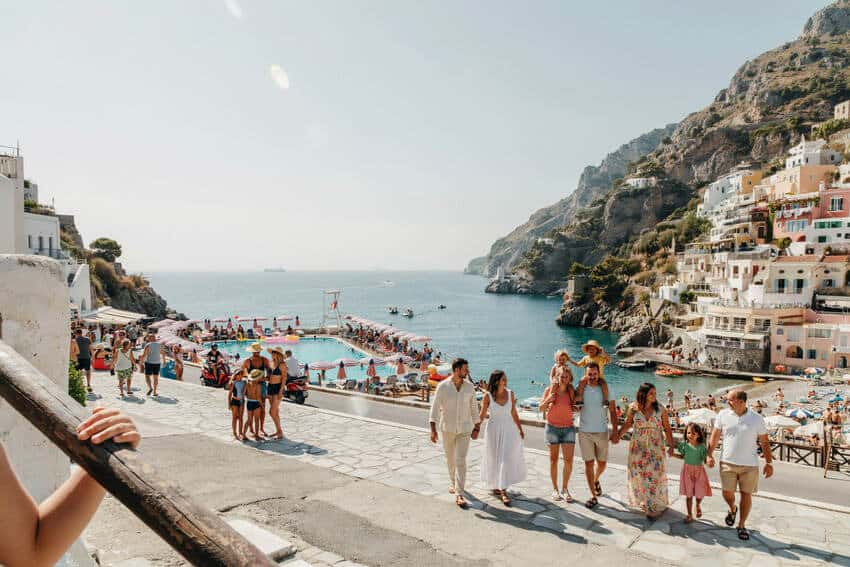
Image generated with Ai
Portugal, Greece, France, Turkey and several other Mediterranean destinations are tightening child safety messaging as Spain issues a renewed alert for UK families travelling this summer, driven by worsening heatwave conditions, rising hotel pool accidents, coastal beach hazards and ongoing balcony safety risks across crowded resort areas. The coordinated response comes at a time when Europe’s most visited holiday regions are experiencing record-breaking tourist inflows, placing additional pressure on beaches, accommodation facilities and public spaces. Authorities are increasingly focusing on prevention and awareness as extreme summer temperatures and high visitor density combine to elevate risks for children in popular Mediterranean travel destinations.
The development comes during one of the busiest travel periods of the year, when millions of British and international tourists head to Southern Europe’s coastal resorts. Authorities across the region are responding to a combination of rising temperatures, overcrowded beaches, and increased seasonal incidents involving children in resort environments.
Spain, which remains a leading destination for UK holidaymakers, has placed renewed emphasis on practical child safety measures in response to conditions created by extreme heatwaves and peak tourism flows.
Spain’s updated travel safety focus highlights the growing challenges linked to extreme summer weather patterns and high visitor density across coastal and island destinations.
Advertisement
Advertisement
Regions such as the Balearic Islands, Canary Islands, Andalusia, and parts of mainland Spain are experiencing prolonged periods of high temperatures, significantly increasing exposure risks for young travellers. Health authorities continue to stress that children are particularly vulnerable to dehydration, heat exhaustion, and sun-related illness during extended outdoor activity.
Swimming pools and resort water facilities remain a key area of focus. Even in well-managed hotel environments, authorities warn that brief lapses in supervision can quickly lead to dangerous situations, especially in crowded peak-season conditions.
Beach safety is also under renewed attention, with flag warning systems and lifeguard instructions playing a critical role in preventing water-related accidents.
Across Mediterranean tourism destinations, swimming pools, beaches, and water parks continue to represent both central attractions and primary risk zones during peak summer travel.
In countries such as Spain, Greece, Portugal, France, and Turkey, hotel pools remain one of the most common locations for child-related safety incidents during busy holiday periods. These environments often combine high occupancy rates, relaxed holiday behaviour, and unfamiliar surroundings, increasing risk exposure for families.
Coastal waters present additional challenges. Strong currents, sudden depth changes, and wind-driven movement can create hazardous conditions even when seas appear calm. Inflatable devices, while popular with children, can also contribute to risk when wind or currents carry users away from supervised areas.
Authorities continue to emphasise that water safety incidents often occur quickly and quietly, reinforcing the importance of continuous adult supervision.
Alongside water-related risks, balcony safety continues to be a recurring focus in Mediterranean travel advisories.
High-rise hotels and apartment complexes across Spain, Greece, Turkey, and other coastal destinations frequently feature balconies with open views that are attractive to tourists but require careful supervision, particularly where children are involved.
Safety campaigns across Europe highlight preventable behaviours linked to balcony accidents, including climbing furniture placed near railings, sitting on edges, or moving between adjoining rooms in unsafe ways.
Risk factors can increase during evening hours when fatigue, unfamiliar surroundings, and holiday relaxation reduce situational awareness. Authorities continue to stress that balcony safety is primarily dependent on responsible behaviour rather than structural design alone.
A key driver behind the current safety focus is the ongoing pattern of extreme heat affecting large parts of Southern Europe.
Portugal, Spain, France, Italy, Greece, and Turkey have all experienced repeated heatwave conditions during the peak summer season, intensifying risks for tourists, particularly families with young children.
Children are especially susceptible to heat-related illness due to faster dehydration and reduced ability to regulate body temperature. Extended outdoor exposure during midday hours is considered a major risk factor in travel health advisories.
Tourism authorities are encouraging visitors to adapt daily routines by avoiding peak sun hours, increasing fluid intake, wearing protective clothing, and using shaded or indoor spaces during the hottest parts of the day.
Urban tourist areas also face heightened risk due to crowd density, limited shade, and long walking distances between attractions.
While Spain has taken a prominent role in issuing updated child safety guidance for UK travellers, similar messaging is being reinforced across Portugal, Greece, France, Turkey, and Croatia.
These countries collectively form the core of Europe’s Mediterranean tourism corridor, where shared climate conditions and high visitor volumes create similar seasonal risk patterns.
The coordinated approach reflects a growing recognition that travel safety challenges in peak summer are regional rather than isolated. High tourist flows, extreme weather conditions, and common resort infrastructure all contribute to overlapping safety concerns.
Authorities across these destinations continue to underline that tourism remains safe overall, but stress the importance of awareness, preparation, and responsible behaviour during high-risk seasonal periods.
Travel safety experts consistently recommend a set of simple but effective precautions for families visiting Southern Europe during peak summer months.
Continuous supervision of children near water remains the most important safety measure, particularly in hotel pools, beaches, and water parks. Distractions such as mobile phone use during supervision are strongly discouraged.
Families are also advised to establish clear meeting points in crowded public areas such as beaches, shopping zones, and amusement parks to reduce the risk of separation in high-density environments.
In accommodation settings, checking balcony safety arrangements, ensuring doors are secured, and maintaining awareness of furniture placement near railings are widely recommended precautions.
Heat management strategies—including regular hydration, use of sunscreen, scheduling outdoor activities outside peak heat hours, and frequent rest breaks—are also considered essential during summer travel.
As Portugal joins Greece, France, Turkey and other European destinations in reinforcing child safety messaging alongside Spain’s renewed alert for UK families, the broader Mediterranean region is entering a critical phase of peak-season tourism management.
Record visitor numbers, sustained heatwave conditions, and high-density resort environments are collectively shaping a heightened awareness of seasonal travel risks.
Despite these pressures, Mediterranean Europe continues to be regarded as one of the world’s most popular and well-established holiday regions, with strong safety frameworks in place.
The central message from authorities remains consistent: with proper supervision, awareness of local conditions, and adherence to basic safety guidance, families can continue to enjoy safe and memorable summer holidays across Europe’s most visited destinations.
Advertisement
Tags: Greece travel news, Portugal Travel News, Spain travel news, Travel News, United Kingdom Travel News
Advertisement
Advertisement











Tuesday, September 1, 2026
Tuesday, September 1, 2026

Wednesday, September 2, 2026

Wednesday, September 2, 2026
Tuesday, September 1, 2026

Tuesday, September 1, 2026

Tuesday, September 1, 2026

Tuesday, September 1, 2026