
Italy Teams Up With Greece And Other Nations At Euro Mediterranean Water Forum 2026 To Build Climate Resilient Tourism Future
Published
The Rome Convention Centre La Nuvola will host the Euro-Mediterranean Water Forum from the 29th of September to the 2nd of October. About 5 000 attendees including government representatives, researchers and business people, are expected to participate in this important conference. The attendees will identify and address the water security challenges that threaten the Mediterranean region’s tourism, cities and economy. Drought, and the strategic and sustainable management of water, are among the topics that will be covered by the forum. Adaptation and mitigation of the effects of climate change in the tourism industry of the region will be addressed by the forum. Investment, innovation and technological solutions will be offered to improve the region’s tourism.
The conference is expected to play a major role to transform the Mediterranean region. The forum organizing committee is expected to broaden the traditional North-South Mediterranean discussions to include the Wider Black Sea Region, Balkans, the Middle East and other adjacent areas. Water security plays an important role in the Mediterranean tourism industry. Many tourism destinations in the Mediterranean region face drought. Water security is also important for the tourism industry to provide services that will bring repeat visitors. This is particularly important for historic and urban tourism destinations, as well as airports, cruise and tourism ports and rural tourism areas.
Mediterranean Tourism Enters New Era Where Water Security Shapes Destination Competitiveness
The Mediterranean remains one of the world’s most important tourism regions, attracting travellers with beaches, cultural heritage, natural landscapes, historic cities and culinary experiences. However, climate change is creating new pressures on destinations across southern Europe, North Africa and the Middle East. The Mediterranean basin contains around 7 per cent of the world’s population but only about 3 per cent of global freshwater resources. Agriculture consumes approximately 70 to 80 per cent of regional water supplies, creating competition between farming, households, industry and tourism.
Tourism adds another important dimension. Hotels require water for accommodation services, restaurants, swimming pools, gardens, cleaning operations and guest facilities. Coastal resorts and island destinations often face seasonal demand increases when visitor numbers peak during warmer months. Airports, transport networks, entertainment facilities and urban tourism infrastructure also depend on reliable water systems.
Advertisement
Advertisement
The Euro-Mediterranean Water Forum 2026 addresses these challenges by promoting cooperation between governments, scientific institutions and private companies to create more resilient destinations. The forum’s objective is to move from short-term crisis management towards long-term water planning through innovation, investment and regional cooperation.
Rome Hosts Historic Forum At La Nuvola Connecting Water Diplomacy With Travel Growth
The choice of Rome as the host city carries both practical and symbolic importance. For centuries, Rome has been recognised as a city shaped by water engineering, aqueducts, fountains and river systems. Today, the Italian capital is becoming a meeting point for global discussions on the future of water management.
Advertisement
Advertisement
The event takes place at La Nuvola, the Roma Convention Center designed by architect Massimiliano Fuksas. The venue is one of Rome’s leading international conference locations and provides space for high-level meetings, exhibitions and innovation showcases. The forum also strengthens Rome’s position as a major destination for business tourism and international events. Business events focused on sustainability, technology and infrastructure are increasingly contributing to destination economies by attracting global professionals, investors and industry leaders.
Euro Mediterranean Water Forum 2026 At A Glance
| Category | Details |
|---|---|
| Event | Euro-Mediterranean Water Forum 2026 |
| Location | Roma Convention Center La Nuvola, Rome, Italy |
| Dates | September 29 – October 2, 2026 |
| Theme | Working together to ensure water security in the Mediterranean |
| Expected Participants | More than 5,000 delegates |
| International Participation | 40–50 national delegations |
| Sessions | More than 100 conferences, roundtables and workshops |
| Exhibition | OneWater Expo |
| Public Programme | Festival dell’Acqua and innovation initiatives |
| Main Organisers | One Water, IME, Union for the Mediterranean |
The forum combines political dialogue, scientific discussions, business meetings and technology exhibitions to create practical solutions for regional water challenges.
Major Governments And Global Institutions Unite For Mediterranean Water Security
The Euro-Mediterranean Water Forum brings together some of the most influential institutions working on water, climate and sustainable development.
The institutional organising committee includes Italian ministries responsible for:
- Foreign Affairs and International Cooperation
- Environment and Energy Security
- Agriculture
- Infrastructure
- Civil Protection
- Research and innovation
The event also receives support from Rome Capitale and the Lazio Region.
International organisations participating in the wider forum include:
Advertisement
Advertisement
| Organisation | Focus Area |
|---|---|
| Union for the Mediterranean | Regional cooperation |
| UNESCO-IHP | Water science and research |
| UNIDO | Industrial innovation and blue economy |
| UNECE | Environmental cooperation |
| UN Special Envoy on Water | Global water diplomacy |
| Arab Water Council | Regional water partnerships |
| CIHEAM Bari | Agriculture and water management |
| Cassa Depositi e Prestiti | Infrastructure finance |
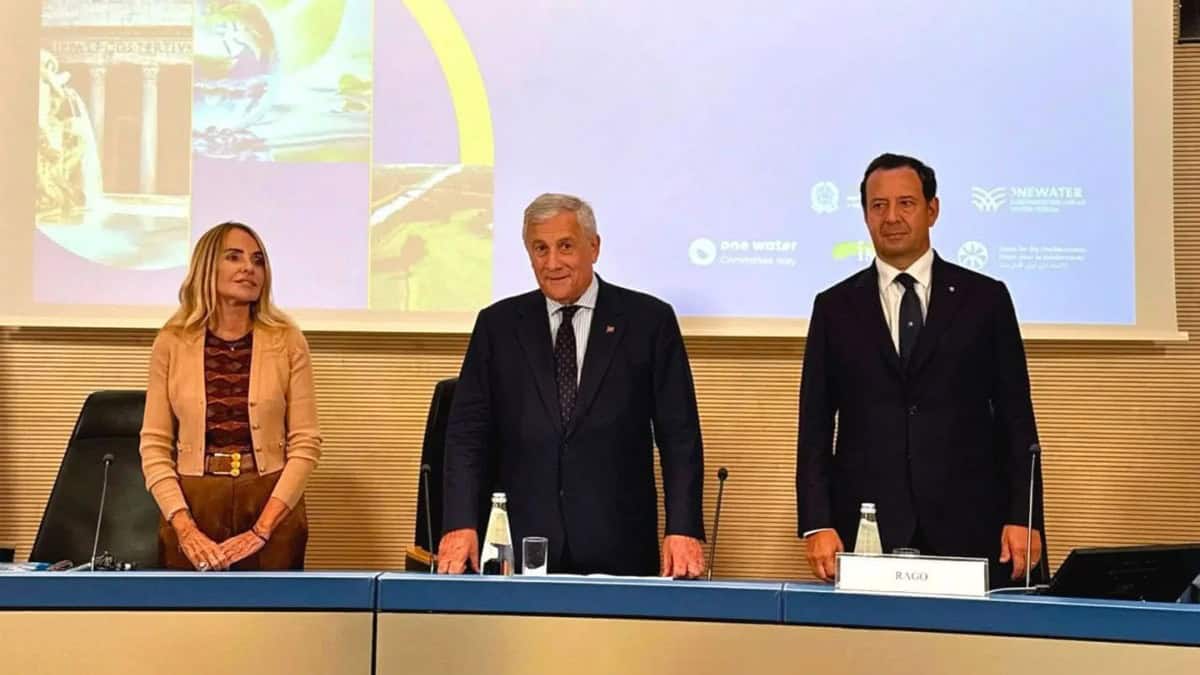
The forum’s high-level participation includes Italian Deputy Prime Minister and Foreign Minister Antonio Tajani, European Commissioner for the Mediterranean Dubravka Šuica, European Commissioner Jessika Roswall, UN Special Envoy on Water Retno Marsudi and representatives from Mediterranean governments.
Water Diplomacy Becomes Strategic Priority For Mediterranean Stability And Tourism
One of the biggest changes highlighted by the forum is the transformation of water from a technical subject into a geopolitical and economic priority. Water resources frequently cross national borders through rivers, underground aquifers and coastal ecosystems. This makes cooperation essential between neighbouring countries.
The forum promotes water diplomacy between:
- European Union countries
- Western Balkan nations
- North African states
- Middle Eastern countries
- Arabian Peninsula partners
For tourism, stronger water cooperation can help destinations maintain infrastructure reliability, protect natural landscapes and support sustainable visitor growth. The discussions also connect with wider international milestones, including the 2026 UN Water Conference and the 2027 World Water Forum in Riyadh.
Eleven Strategic Pillars Driving Future Mediterranean Water And Tourism Transformation
The forum agenda is built around several strategic themes designed to address both current and future water challenges.
1. Water Scarcity And Non-Conventional Water Resources
Countries are exploring desalination, wastewater recycling, stormwater collection and improved irrigation systems. These solutions are becoming increasingly important for tourism destinations where traditional water sources face pressure.
Advertisement
Advertisement
2. Water Footprint In Business And Tourism Economy
The forum examines how industries can measure water consumption throughout supply chains. Hotels, restaurants and tourism businesses are increasingly adopting water efficiency strategies to reduce environmental impact.
3. New European Water Vision
The discussions align with European water policies and recommendations focused on faster infrastructure development, regulatory improvement and climate adaptation.
4. Blue Finance And Sustainable Investment
The forum explores new financial models including:
- Green bonds
- Public-private partnerships
- Development bank financing
- Blended finance
A major discussion includes moving beyond the traditional three financing pillars of tariffs, taxes and transfers towards innovative mechanisms such as tokenisation.
5. Water Energy Food Ecosystem Nexus
The WEFE approach focuses on managing connections between:
- Water resources
- Food production
- Energy systems
- Environmental protection
This approach is important for destinations where agriculture, tourism and ecosystems share the same resources.
Advertisement
Advertisement
6. Beyond Source-To-Sea Management
The forum focuses on protecting:
- Coastal ecosystems
- Marine environments
- River systems
- Urban waterfronts
This directly supports coastal tourism destinations.
7. Digital Innovation And Artificial Intelligence
Technology discussions include:
- AI-based leak detection
- Digital twins for water networks
- Satellite monitoring
- Smart distribution systems
8. Extreme Events And Climate Adaptation
The forum examines responses to:
- Severe droughts
- Flooding
- Storm surges
- Urban climate risks
These measures are increasingly important for tourism cities exposed to extreme weather.
OneWater Expo Showcases Technologies Transforming Future Tourism Destinations
The OneWater Expo creates a business platform where companies demonstrate solutions for modern water management.
Advertisement
Advertisement
Participating companies and technology providers include:
- ACEA
- Webuild
- Suez
- Schneider Electric
- Mann+Hummel
- Microsoft
- Xylem
- Acquedotto Pugliese
- Sorical
The exhibition focuses on:
- Water treatment systems
- Advanced filtration
- Desalination
- Smart monitoring
- Digital infrastructure
- Sustainable irrigation
For hospitality companies, these technologies provide opportunities to reduce consumption, improve efficiency and strengthen environmental credentials.
Mediterranean Countries Bring Different Water Strategies To Rome Forum
European Countries
Italy leads the event as host nation. Spain contributes experience from drought management, water transfer systems and reuse programmes. Greece and Cyprus focus on island water security, desalination and emergency drought planning. Malta highlights groundwater protection and energy-efficient desalination. The Netherlands shares expertise in flood protection and water reclamation. France contributes through institutions including Caisse des Dépôts et Consignations and regional cooperation agencies.
North Africa
Egypt focuses on:
- Nile basin management
- Irrigation efficiency
- Water reuse projects
Tunisia addresses:
Advertisement
Advertisement
- Reservoir shortages
- Climate adaptation
Morocco highlights:
- Solar-powered desalination
- Agricultural efficiency
- Water infrastructure expansion
Algeria focuses on:
- Aquifer management
- Deep-water resources
- Desalination development
Mauritania participates through wider Sahel-Mediterranean resilience cooperation.
Middle East And Arabian Peninsula
Jordan focuses on:
- Water scarcity
- Transboundary cooperation
- Regional water sharing
Saudi Arabia participates as a major partner connected with the 2027 World Water Forum in Riyadh.
Lebanon focuses on:
Advertisement
Advertisement
- Municipal infrastructure recovery
- Energy-water solutions
Palestine highlights:
- Water access
- Shared water resources
- Humanitarian infrastructure
Türkiye contributes expertise in river systems and hydro-diplomacy.
Balkan Countries
Albania focuses on:
- River management
- Hydro-energy balance
Kosovo contributes environmental planning perspectives.
Croatia, Slovenia, Montenegro and Bosnia and Herzegovina address:
- Adriatic basin governance
- Karst aquifer protection
- Coastal water quality
Sustainable Water Strategy Becomes Foundation For Future Mediterranean Travel
The 2026 International Forum on Water and Sustainable Development in the Mediterranean (EFSDM) will address the integration of water and sustainable development to reinforce resilience against climate change and its impact on tourism. Water security, especially in the Mediterranean, directly impacts the tourism and hospitality sectors (hotels and resorts), air and sea transport (airports and cruise terminals), and cultural and heritage facilities.
The 2026 EFSDM recognizes the challenges of the tourism sector in the Mediterranean and environs, and provides a platform for integrating different approaches to cope with the challenges of climate change. Security of water for various uses, especially in tourism, is fast assuming an important place in planning and directing sustainable tourism. The 2026 forum seeks to consolidate the opportunities for transforming the Mediterranean tourism sector.
Advertisement
