
Morocco’s Five New Marrakech Air Routes Could Turn the Red City Into a Three-Day Tourism Gateway

Published
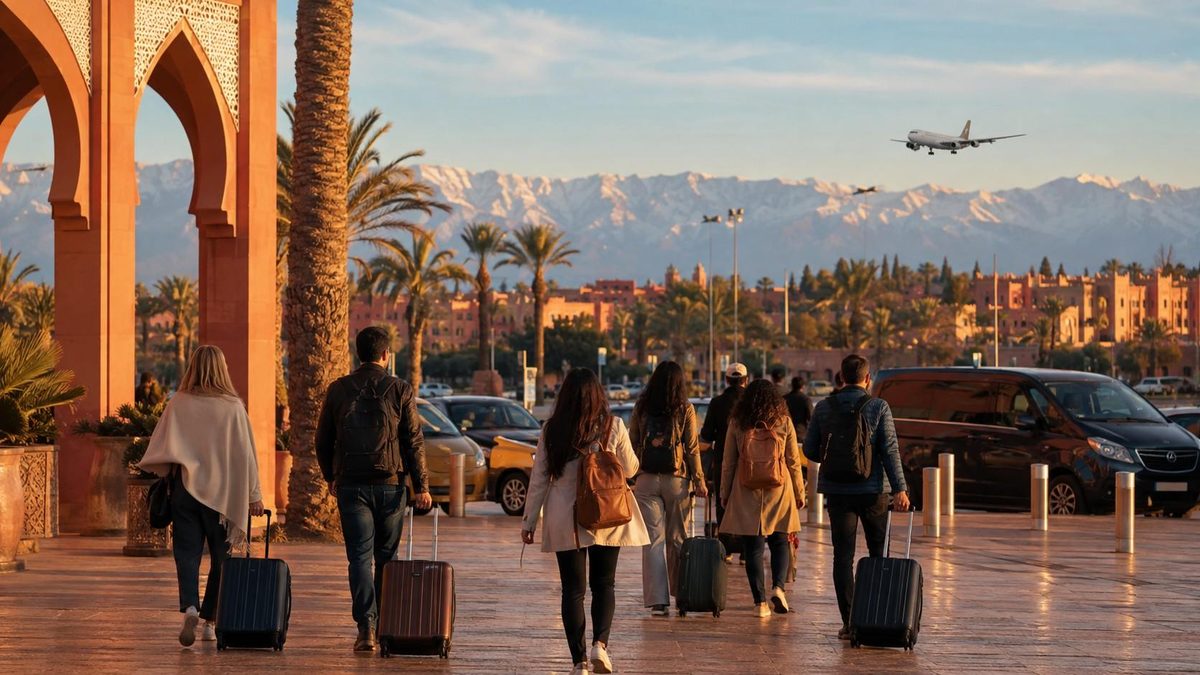
Morocco’s five new Marrakech air routes could strengthen the Red City’s position as a three‑day tourism gateway from winter 2026. The Moroccan National Tourism Office announced on 7 August that Ryanair would add five Marrakech connections within its Moroccan winter programme. The wider schedule covers 156 routes, including 17 links, 5.3 million seats and access, from 14 European countries. For Marrakech, connectivity matters because compact city breaks can channel visitors towards the medina, museums, gardens, restaurants and local businesses. Travellers must confirm routes, launch dates and schedules before booking because the announcement did not list endpoints.
Morocco Places Air Connectivity at the Centre of Tourism Growth
Morocco is expanding its international aviation network as it works to attract more visitors, distribute tourism across its regions and support local economic development. Marrakech occupies an important position within that strategy because it already has strong recognition across major European markets.
The official announcement from the Moroccan government confirms that Ryanair will operate 156 routes to Morocco during winter 2026. These include 17 new connections and a total capacity of 5.3 million seats.
The programme will connect Morocco with 14 European countries. Marrakech will receive five new routes, while Rabat and Agadir will gain seven and five new connections respectively.
Advertisement
Advertisement
| Winter 2026 connectivity measure | Officially announced figure |
|---|---|
| Total Ryanair routes serving Morocco | 156 |
| New connections | 17 |
| Available seats | 5.3 million |
| Connected European countries | 14 |
| New Marrakech routes | 5 |
| New Rabat routes | 7 |
| New Agadir routes | 5 |
The official release does not identify every endpoint for the five new Marrakech air routes. It also does not provide individual frequencies, exact operating days, introductory fares or route-specific launch dates.
Those details should therefore be checked through the airline and airport booking systems before publication or travel. The confirmed news is the scale of the programme and Marrakech’s allocation within it.
Advertisement
Advertisement
Why Marrakech Is Well Suited to a Three-Day Break
Marrakech offers a dense concentration of attractions within a relatively small tourism area. Visitors can combine heritage, food, shopping, museums, gardens and nightlife without travelling between distant regions.
The historic medina provides the foundation. Its narrow lanes lead towards traditional souqs, riads, workshops, palaces and Jamaâ El Fna, the city’s best-known public square.
Advertisement
Advertisement
Outside the old walls, Gueliz and the wider Ville Nouvelle offer a different experience. Travellers can visit contemporary galleries, design shops, modern restaurants and cultural institutions without abandoning the city-break format.
That combination makes Marrakech suitable for travellers arriving on short European flights. A carefully planned trip can cover the main districts over three days, although queues and advance-booking requirements may affect the schedule.
The First Day Can Centre on Marrakech’s Historic Heart

A first day in Marrakech can begin around Jamaâ El Fna and the southern part of the medina. The area provides access to street life, markets, food stalls and several important heritage attractions.
Visitors can walk through Rue Riad Zitoun El Jdid towards Bahia Palace. The route passes shops and small businesses selling crafts, textiles, decorative objects and other locally associated products.
Advertisement
Advertisement
Bahia Palace remains one of the city’s most recognised architectural attractions. Its courtyards, painted woodwork, zellige decoration and garden spaces help explain the artistic traditions that shaped elite residences in nineteenth-century Morocco.
The wider area also contains culinary, cultural and retail experiences. These can extend visitor spending beyond admission tickets and accommodation.
Jamaâ El Fna changes after sunset. Food stalls, performers and musicians turn the square into a major evening attraction, allowing tourism activity to continue after museums and monuments have closed.
The Second Day Can Connect the Medina With Modern Marrakech
A three-day itinerary becomes more balanced when visitors move beyond the old city. Jardin Majorelle, the Pierre Bergé Museum of Berber Arts and the Yves Saint Laurent Museum form one of Marrakech’s strongest cultural clusters.
These attractions require more planning than an unstructured walk through the souqs. Travellers should consult official ticketing platforms and reserve timed entry where necessary.
Gueliz then provides access to contemporary Moroccan art, independent businesses and modern dining. This part of the itinerary can help distribute tourists away from the busiest sections of the medina.
Advertisement
Advertisement
That distribution has commercial value. Spending reaches restaurants, galleries, retailers, taxis and other businesses operating outside the traditional tourism core.
It also gives visitors a broader understanding of Marrakech. The destination is not limited to historic walls, palaces and markets.
A Third Day Can Build a Deeper Cultural Experience
The final day can focus on education, photography, music and wellbeing. Ben Youssef Madrasa, Maison de la Photographie and the spice-market area around Rahba Kedima can form a practical walking route.
Ben Youssef Madrasa offers an important introduction to Moroccan religious architecture and scholarship. Its carved plaster, cedar work and tiled surfaces make it one of the medina’s most striking heritage sites.
Maison de la Photographie presents another view of Morocco through historical images. The museum helps travellers place the streets and communities they see into a wider social and historical context.
A traditional hammam or professionally managed wellness experience can complete the day. Visitors should confirm prices, treatment duration and whether advance reservations are required.
Advertisement
Advertisement
Morocco’s Tourism Performance Creates a Strong Market
The new air programme arrives after Morocco recorded its strongest tourism year to date. The Ministry of Tourism says the country welcomed 19.8 million visitors in 2025.
That represented a 14% increase over 2024, with 2.4 million additional arrivals. The result was also 53% higher than the level recorded in 2019.
European markets made significant contributions. Arrivals from France increased by 11%, Spain by 12%, the United Kingdom by 18%, Belgium by 10% and Italy by 21%.
| Morocco tourism indicator | 2025 performance | Change |
|---|---|---|
| Total visitor arrivals | 19.8 million | 14% above 2024 |
| Additional visitors | 2.4 million | Compared with 2024 |
| Growth from 2019 | — | 53% |
| Tourism receipts | MAD138 billion | 21% above 2024 |
| Classified accommodation nights | 43.4 million | 9% above 2024 |
The Ministry’s official tourism statistics show that international tourism receipts reached MAD138 billion in 2025. That was 21% higher than in 2024 and 75% above 2019.
Classified tourism accommodation establishments recorded 43.4 million overnight stays. This represented annual growth of 9%.
These are national results. They should not be presented as Marrakech-only performance because the official data cover the whole of Morocco.
Advertisement
Advertisement
Short Breaks Can Support More Than Airport Traffic
Five additional routes can produce benefits well beyond passenger numbers. Every arrival can generate demand for accommodation, airport transfers, guides, restaurants, museums, retail businesses and cultural activities.
Hotels and riads may gain access to additional European markets. Short stays can help fill rooms during periods when longer touring holidays are less common.
Tour operators can build two-night and three-night products around direct flights. They can also combine Marrakech with the Atlas Mountains, Essaouira or other destinations when schedules permit.
Local guides may benefit from travellers seeking structured experiences within limited time. A visitor staying for only three days has less room for delays and may value reliable planning more highly.
Restaurants and food businesses also have an important role. Marrakech’s tourism offer includes traditional dining, contemporary Moroccan food, street stalls, cooking classes and social-enterprise projects.
Airlines Gain a Recognisable Leisure Destination
Marrakech has strong visual identity and international name recognition. These qualities can support route marketing because potential passengers already associate the city with riads, souqs, gardens, architecture and winter sunshine.
Advertisement
Advertisement
Ryanair’s wider schedule indicates that the airline and ONMT are using capacity growth to connect Moroccan regions with large European source markets. The programme covers 14 European countries rather than relying on one national market.
The five routes can also strengthen competition. More capacity may give travellers additional departure points and schedule choices, although lower fares are not guaranteed.
Ticket prices will depend on demand, season, baggage selection, booking time and ancillary charges. Travellers should compare the full journey cost rather than the advertised base fare.
The programme is especially relevant during winter. Marrakech can appeal to European travellers seeking milder weather, cultural experiences and a short flight instead of a long-haul holiday.
Marrakech Menara Airport Faces Greater Passenger Demand
Additional flights will place more attention on Marrakech Menara Airport. Passenger processing, immigration, baggage delivery, taxis and departure facilities all shape the quality of a short visit.
Morocco’s National Airports Office has been implementing its Airports 2030 strategy. The programme includes operational and passenger-facing improvements across the national airport network.
Advertisement
Advertisement
ONDA has previously announced work involving a new departure area at Marrakech Menara. Such improvements matter because additional airline capacity must be matched by efficient terminal operations.
For a three-day visitor, an extended arrival queue or delayed airport transfer takes away a meaningful part of the trip. Airport performance therefore becomes part of Marrakech’s destination competitiveness.
Travellers can consult the official ONDA passenger portal for flight information, airport guidance, travel documents, baggage rules and available passenger services.
Hotels and Riads Could Reach New Source Markets
Marrakech has a varied accommodation sector. It includes traditional riads, hostels, classified hotels, luxury resorts, apartments and smaller guesthouses.
New routes can expose these properties to travellers from cities that previously required a connection. Direct access can make a two-night or three-night stay more practical.
Independent riads may gain from travellers seeking accommodation inside the medina. Larger hotels can target weekend leisure, meetings, events and combined business-and-leisure demand.
Advertisement
Advertisement
Higher connectivity does not automatically guarantee equal benefits. Properties with effective digital booking, clear transfer instructions and multilingual communication may be better positioned to convert interest into reservations.
Accommodation operators will also need to manage expectations. Medina properties can be difficult to reach directly by vehicle, while modern hotels outside the old city may require daily transport to heritage attractions.
Local Businesses Can Capture Wider Tourism Spending
Marrakech’s appeal depends heavily on businesses operating outside conventional hotel chains. Artisans, market traders, restaurant workers, guides, drivers, gallery operators and wellness providers form part of the visitor economy.
A well-designed three-day itinerary can spread spending across several districts. The first day may support medina businesses, while the second directs visitors towards Gueliz and the third towards museums and wellness services.
This is important for regional development. The ONMT says the winter aviation programme is intended to improve access, distribute tourist flows and support more balanced tourism growth.
The wider schedule also strengthens services across 13 Moroccan airports. Officially highlighted destinations include Fez, Tetouan, Essaouira, Ouarzazate, Dakhla and Nador.
Advertisement
Advertisement
Marrakech can therefore function as one component of a broader national network. It should not be treated as the sole beneficiary of the programme.
Government Strategy Goes Beyond New Flights
Morocco’s Tourism Roadmap for 2023–2026 places air connectivity alongside accommodation, tourism products, investment and service quality. The strategy seeks to make the sector more competitive while creating value across different regions.
The 2025 tourism results show that Morocco moved beyond several earlier performance benchmarks. Record arrivals, receipts and overnight stays created a stronger base for the winter 2026 aviation programme.
Tourism investment also includes workforce development. The government’s KAFAA programme had certified more than 6,000 tourism professionals by June 2026, with over 20,000 registrations since the programme began in 2024.
Training matters because routes alone cannot guarantee a good visitor experience. Airport staff, hotel employees, restaurant teams, guides and transport providers determine whether travellers recommend a destination or return.
Morocco is also preparing transport and urban infrastructure for future demand. However, projects still under construction must not be described as completed visitor benefits.
Advertisement
Advertisement
Tourism Revenue Could Circulate Through Marrakech
Morocco’s MAD138 billion in tourism receipts during 2025 shows the sector’s value as a source of foreign currency. Travel income also supports businesses purchasing local goods and services.
Marrakech can capture part of that value through accommodation, food, cultural admission, transport and shopping. A short-stay visitor may spend less overall than a long-stay traveller, but direct routes can increase the number and frequency of trips.
Weekend travel can also reduce dependence on traditional annual holidays. Travellers may book several shorter journeys during the year instead of one extended trip.
No official release attached to the new routes gives a forecast for Marrakech tourism receipts, hotel occupancy or employment. Any precise claim about the programme’s future financial contribution would therefore be unsupported.
The responsible conclusion is that additional capacity creates opportunity. Actual economic performance will depend on passenger uptake, route continuity, spending patterns and the ability of local businesses to serve the new demand.
Sustainability Requires Better Distribution
Air expansion increases access, but sustainable destination management requires more than adding seats. Visitor flows need to be distributed across neighbourhoods, seasons and tourism products.
Advertisement
Advertisement
The combination of the medina and Gueliz can support this goal. Visitors do not need to spend every hour around Jamaâ El Fna or the central souqs.
Museums, galleries, gardens, culinary experiences and wellness businesses offer alternatives. They can encourage travellers to stay longer and spend across a wider area.
Water use, waste management, traffic and pressure on historic spaces remain relevant concerns. The official connectivity announcement does not set new environmental conditions for the five Marrakech routes.
Tourism businesses can still reduce pressure through advance scheduling, smaller guided groups, responsible waste practices and accurate visitor information. Those actions improve the experience without requiring exaggerated sustainability claims.
What International Travellers Need to Know
The five new routes form part of the winter 2026 programme, but the official announcement does not provide all route-level details. Travellers should not assume that every connection is already on sale.
Before booking, passengers should confirm:
Advertisement
Advertisement
- The precise origin and destination.
- The first operating date.
- Weekly frequency and operating days.
- Whether the service is seasonal.
- Cabin and checked-baggage charges.
- Airport transfer arrangements.
- Accommodation check-in times.
- Passport and visa requirements.
Entry conditions vary by nationality. The aviation announcement does not introduce a visa exemption or change Morocco’s passport rules.
Travellers should use Morocco’s official visa platform or the relevant Moroccan diplomatic mission. Airline permission to board does not replace the passenger’s responsibility to meet immigration requirements.
Visitors planning a three-day break should also reserve high-demand attractions before arrival. A compact itinerary can fail quickly if timed tickets, restaurant reservations or airport transfers are left until the last moment.
Future Outlook Is Tied to Published Capacity
The confirmed outlook for winter 2026 is a Ryanair network of 156 Moroccan routes, 17 new connections and 5.3 million available seats. Marrakech is officially allocated five of those new routes.
The ONMT says it will continue working with national and international airlines, strengthening capacity in priority markets and creating development opportunities across Morocco’s regions.
Those are published strategic intentions. They do not confirm further Marrakech routes beyond the five already announced.
Advertisement
Advertisement
Future route continuity will depend on airline scheduling decisions and commercial performance. No official passenger forecast has been published for each new Marrakech service.
Marrakech enters this expansion with strong destination recognition and a national tourism sector operating at record levels. Its next challenge is converting additional seats into efficient, well-distributed and valuable visitor experiences.
Frequently Asked Questions
When will the five new Marrakech routes begin?
The routes form part of Ryanair’s winter 2026 programme. However, the ONMT announcement did not list every endpoint, operating date or frequency. Travellers must check the airline’s live schedule before arranging accommodation or connecting transport.
Can travellers see Marrakech properly in three days?
Three days can cover Jamaâ El Fna, parts of the medina, Bahia Palace, Jardin Majorelle, selected museums and Gueliz. Advance booking is advisable because queues, timed admission and airport transfers can reduce available sightseeing time.
Do the new flights change Morocco’s visa or passport rules?
No visa or passport reform was announced with the routes. Entry requirements remain dependent on nationality, passport status and length of stay. Travellers should check Morocco’s official visa platform before purchasing non-refundable tickets.
Conclusion
Moroccos five new Marrakech routes give the Red City a foundation for short European breaks during winter 2026. The expansion is part of a 156-route programme that offers 5.3 million seats from 14 countries. Marrakech can use that access to boost hotel stays, cultural visits, restaurant spending and business, for guides, drivers and artisans.. Routes alone will not guarantee lasting growth. Airport efficiency, service quality, heritage protection and wider visitor distribution will still be important. Travelers should check schedules, entry rules and attraction bookings before they leave. If handled properly more connections can make a focused three-day Marrakech visit simpler and more rewarding.
Advertisement
