
The World’s Most Beautiful Train Journeys Revealed, With Australia’s Ghan Taking Top Spot

Published
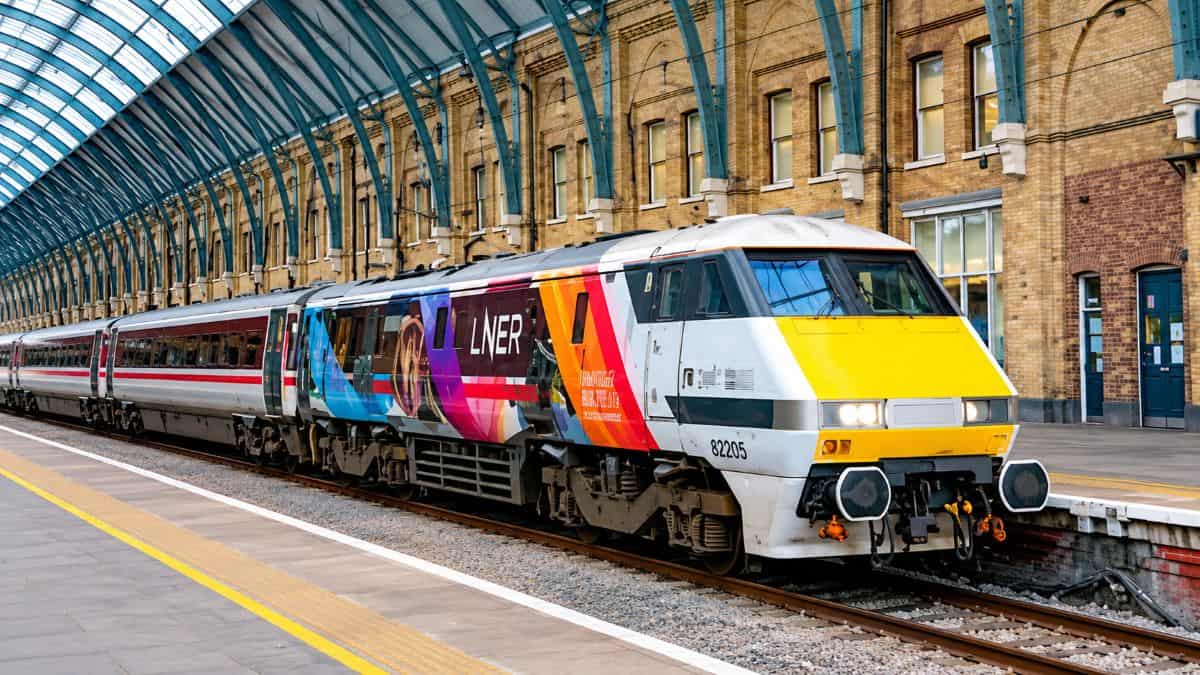
The world’s most beautiful train journeys are being reshaped by comfort, scenery and wilderness access, with Australia’s Ghan leading a global list that puts luxury rail firmly back in focus.
The world’s most beautiful train journeys are attracting renewed attention as travellers look beyond conventional sightseeing. According to the Holafly Express Train Index 2026, Australia’s Ghan leads a global selection that combines dramatic scenery, onboard comfort, heritage, accessibility and access to protected landscapes.
Advertisement
Advertisement
The Blue Train, Glacier Express, Eastern & Oriental Express and California Zephyr also feature prominently. Importantly, the ranking highlights a growing preference for journeys that turn travel itself into the destination. Instead of simply moving between cities, these train journeys allow passengers to experience deserts, mountains, forests, national parks and historic rail corridors directly from the window.
The World’s Most Beautiful Train Journeys Revealed, With Australia’s Ghan Taking Top Spot
The world’s most beautiful train journeys are attracting renewed attention as travellers look beyond conventional sightseeing. According to the Holafly Express Train Index 2026, Australia’s Ghan leads a global selection that combines dramatic scenery, onboard comfort, heritage, accessibility and access to protected landscapes.
Advertisement
Advertisement
The ranking places luxury sleeper services alongside celebrated daytime scenic trains, revealing how different forms of rail travel are competing for travellers seeking memorable journeys. From Australia’s red centre and South Africa’s mountains to Switzerland’s Alpine valleys and Canada’s Rockies, the selected routes demonstrate how rail travel can provide a slower and more immersive way to experience a destination.
What makes a train journey stand out?
The Holafly Express Train Index 2026 assesses several elements that can influence the overall appeal of a rail holiday. These include access to protected national parks, operating history, booking simplicity, scenery and the availability and comfort of onboard accommodation.
Advertisement
Advertisement
This approach creates a broader picture than a traditional scenic railway list. A spectacular daytime route may offer extraordinary views but limited accommodation, while a luxury sleeper can combine scenery with several days of onboard travel.
The index consequently places strong emphasis on journeys where the train itself becomes part of the holiday. That distinction is particularly visible in the top positions, where overnight and multi-day services perform strongly.
Advertisement
Advertisement
Why has The Ghan taken the top position?
Australia’s Ghan ranks first in the supplied index with a score of 70.8, making it the highest-scoring journey in the 2026 selection.
The transcontinental route links Adelaide with Darwin and crosses some of Australia’s most distinctive landscapes. Travellers experience the changing geography of the continent as temperate southern environments gradually give way to the dry interior and, eventually, the tropical north.
The journey is particularly associated with Australia’s Red Centre, remote landscapes and the dramatic transition between different climatic regions. Excursions form an important part of the experience, allowing passengers to leave the train and explore destinations along the route.
Its combination of scenery, accommodation, heritage and excursion opportunities helps explain why the Ghan performs strongly in the index. Rather than treating rail travel simply as transportation, the service presents the journey as a multi-day travel experience.
Advertisement
Advertisement
How does the Blue Train combine luxury and scenery?
South Africa’s Blue Train ranks second with a score of 69.2. The service has operated since 1937 and has become closely associated with luxury rail travel between Pretoria and Cape Town.
The experience is centred on comfort, attentive service and suites designed for extended travel. Rather than functioning like a conventional intercity train, the Blue Train is positioned as a premium hospitality experience on rails.
Outside the carriage, the landscape changes dramatically during the journey. Passengers can watch South Africa’s interior scenery unfold before reaching the Western Cape, creating a contrast between wide open landscapes and the mountainous environment surrounding Cape Town.
The train’s long operating history also gives it a strong heritage dimension. For travellers interested in classic rail experiences, the combination of historic identity and contemporary luxury remains central to its appeal.
Why does the Glacier Express remain a global rail icon?
Switzerland’s Glacier Express ranks third with a score of 58.8 in the supplied index, despite operating as a daytime service rather than an overnight sleeper.
The journey between Zermatt and St Moritz is one of Europe’s best-known scenic rail experiences. It crosses mountain landscapes, bridges, tunnels and high-altitude terrain while offering passengers extensive views of the Swiss Alps.
Advertisement
Advertisement
The route is particularly notable for its engineering. Travellers experience steep gradients, mountain passes and spectacular railway structures while moving through some of Switzerland’s most recognisable Alpine scenery.
Unlike the luxury sleeper services near the top of the ranking, the Glacier Express demonstrates that an overnight cabin is not essential to creating a memorable rail journey. Its strength lies in the density of scenery available during a single day.
What makes the Eastern & Oriental Express different?
The Eastern & Oriental Express ranks fourth with a score of 57.8, bringing Southeast Asia into the upper tier of the global list.
The service provides a distinctly different visual experience from European and African mountain routes. Tropical vegetation, rural landscapes and historic settlements form the backdrop as the train travels through the region.
Its appeal is also linked to onboard accommodation and the atmosphere of classic luxury rail travel. Refurbished carriages and full-service hospitality reinforce the idea of travelling slowly while experiencing multiple destinations.
For international travellers, the journey provides another interpretation of scenic rail travel. Instead of dramatic Alpine peaks or desert landscapes, the emphasis is on tropical environments, cultural contrasts and the changing scenery of Southeast Asia.
Advertisement
Advertisement
Why is the California Zephyr among the leading journeys?
The California Zephyr ranks fifth with a score of 55. Operated by Amtrak, the route connects Chicago and the San Francisco Bay Area, crossing a substantial section of the American West.
Its appeal comes from the sheer geographical scale of the journey. Passengers can experience the changing landscapes of the United States, including the Colorado Rockies, river canyons and the Sierra Nevada.
The service also offers a different proposition from luxury trains. Its importance comes from combining long-distance rail travel with extensive scenic exposure, making it possible to experience a substantial part of the American landscape without driving or flying between each stage.
For travellers seeking a classic cross-country rail experience, that combination remains a major attraction.
What makes the Venice Simplon-Orient-Express so famous?
The Venice Simplon-Orient-Express ranks sixth with a score of 54.2. Its identity is strongly connected with restored historic carriages, elegant interiors and the mythology surrounding European luxury rail travel.
The service passes through historic railway corridors and destinations associated with classic European travel. Its restored 1920s-style carriages provide a setting that differs considerably from contemporary high-speed trains.
Advertisement
Advertisement
However, according to the supplied index, availability and seasonal scheduling can make the experience more complicated to book than regularly operating rail services. That illustrates an important distinction between exclusivity and accessibility.
For travellers, the train represents the heritage side of modern luxury rail, where the atmosphere of the journey can be as important as the landscape outside the window.
Which British railway route makes the list?
Scotland’s West Highland Line ranks seventh with a score of 53 and provides one of the most accessible scenic experiences in the selection.
The route is particularly known for its landscapes around the Scottish Highlands, including lochs, mountains and the famous Glenfinnan Viaduct. The railway has also gained international recognition through its association with Scotland’s cinematic landscape.
Unlike several luxury services in the ranking, the West Highland Line is fundamentally a public railway. That makes it possible for travellers to incorporate a spectacular rail journey into a wider Scottish itinerary without booking an exclusive luxury train.
Its presence demonstrates that memorable rail travel does not necessarily require a premium fare or private accommodation.
Advertisement
Advertisement
How does the Belmond Andean Explorer showcase Peru?
The Belmond Andean Explorer ranks eighth with a score of 52.9. The luxury service crosses Peru’s high-altitude landscapes between Cusco and Lake Titicaca, creating an experience built around the Andean environment.
The route travels through the Peruvian altiplano, where expansive highland scenery provides a dramatic backdrop. Sleeping accommodation, observation facilities and onboard hospitality allow passengers to experience the journey over an extended period rather than rushing between destinations.
Its comparatively recent launch also differentiates it from historic rail services. The train demonstrates how luxury rail operators are adapting traditional slow travel for modern travellers seeking distinctive experiences.
Why does the Rocky Mountaineer remain a major Canadian attraction?
Canada’s Rocky Mountaineer ranks ninth with a score of 52.5. The service is specifically designed around daytime sightseeing through the Canadian Rockies.
Passengers travel through spectacular mountain scenery while remaining in daylight, maximising opportunities to view peaks, valleys, rivers and forests. Routes connect major destinations in western Canada and provide access to landscapes associated with the country’s national parks.
Its daytime operating model is also central to its identity. Unlike sleeper trains, the Rocky Mountaineer focuses on visibility and observation rather than overnight accommodation.
Advertisement
Advertisement
That distinction shows why different travellers may value different elements of a rail journey, whether they prioritise scenery, sleeping onboard, heritage or luxury.
What does the Danube Express offer?
The Danube Express completes the top 10 with a score of 48.9. It operates as a luxury sleeper experience across parts of Central and Eastern Europe, connecting historic destinations and major cultural landscapes.
The journey can include destinations such as Budapest and Vienna, alongside historic railway routes and UNESCO-associated heritage areas. Overnight accommodation allows passengers to continue travelling while avoiding repeated hotel changes.
According to the supplied index, its relatively recent operating history and limited seasonal scheduling affect its position. The service nevertheless illustrates the continuing development of luxury rail tourism in Europe.
Why are sleeper trains gaining attention?
One of the clearest themes in the 2026 index is the strength of overnight luxury rail. Sleeper trains allow travellers to combine accommodation, transportation, dining and sightseeing into one continuous experience.
That model also responds to a broader interest in slower forms of tourism. Instead of treating the journey between two destinations as lost time, rail operators can turn that movement into a central component of the holiday.
Advertisement
Advertisement
Luxury sleeper services can also reduce the need for frequent hotel changes. For travellers taking multi-day trips, that can make the overall experience more cohesive, particularly when the train crosses several regions.
Daytime scenic trains remain important, however. The Glacier Express, West Highland Line and Rocky Mountaineer show that a concentrated period of spectacular scenery can be equally compelling.
How can travellers stay connected during long rail journeys?
Connectivity becomes increasingly important when trains cross remote landscapes, mountains and international borders. Mobile coverage can change repeatedly as a train moves between different regions, while onboard Wi-Fi can become congested when many passengers connect simultaneously.
A travel eSIM can provide another option for travellers who need mobile data while moving between destinations. Depending on the route, network availability and eSIM provider, a device may connect to local mobile networks without requiring a physical SIM swap.
Travellers should still check destination coverage, roaming terms and compatibility before departure. Remote railway corridors can have limited mobile coverage regardless of the connectivity solution.
For international journeys, preparing connectivity before boarding can therefore remove one practical concern and leave passengers free to concentrate on the landscape outside the window.
Advertisement
Advertisement
What does the global ranking reveal about rail tourism?
The ranking shows that modern rail tourism is no longer defined by one type of journey. Historic luxury trains, public railways, daytime scenic services and cross-country sleepers can all attract travellers for different reasons.
The strongest routes combine several elements: distinctive landscapes, comfortable accommodation, reliable operations, accessible booking and meaningful opportunities to explore destinations along the way.
For the travel industry, this represents an important opportunity. Rail journeys can connect accommodation, attractions, national parks, cultural sites and regional destinations into a single travel product.
For passengers, the appeal is simpler. A train window offers something that an aircraft cabin rarely can: a continuous visual connection with the destination. Mountains rise gradually, deserts stretch for hours and towns appear before disappearing behind the next curve.
That slower perspective is helping rail travel retain its place in modern tourism. The journey is no longer merely the space between two points. Increasingly, it is the destination itself.
Image: LINR
Advertisement
