
Saskatchewan Features An Extraordinary Dark Tourism Paradise That Will Deeply Inspire Every Travel Fan In Canada, All You Need To Know

Published
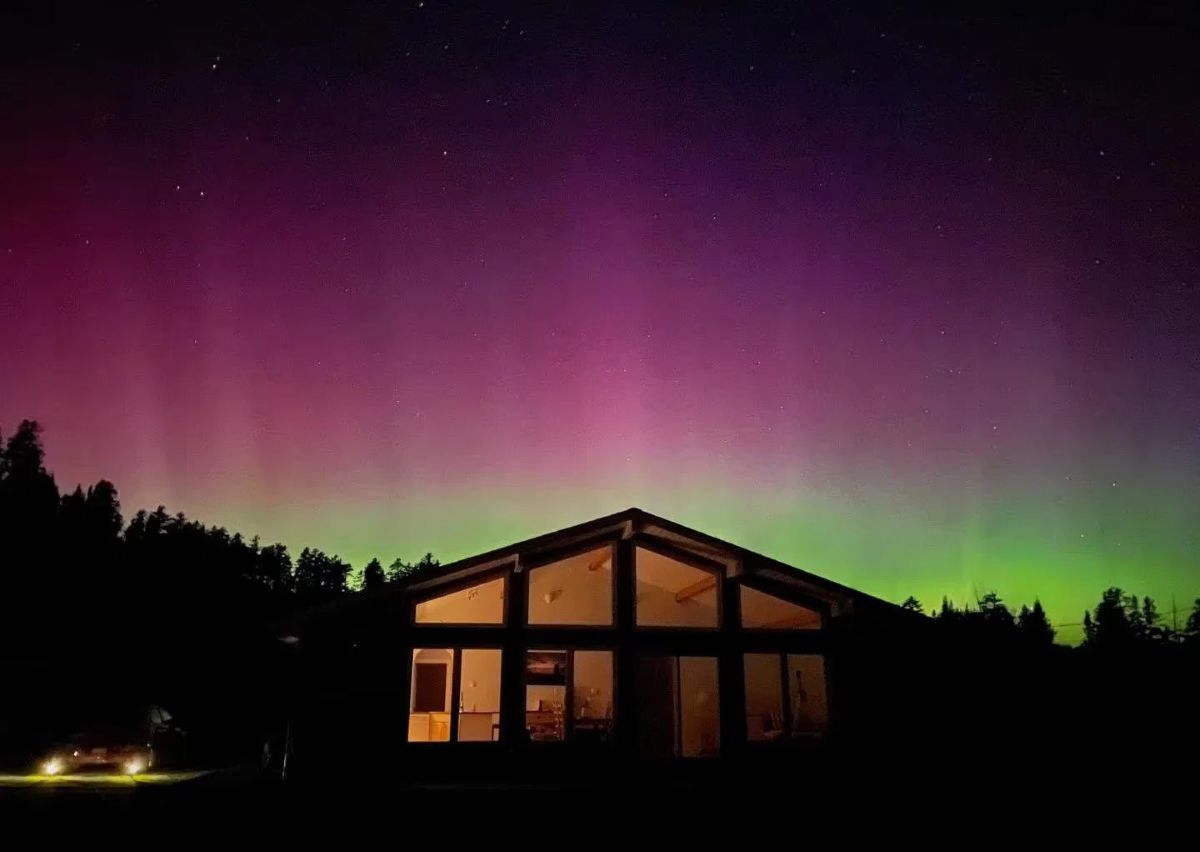
Image Credit darkskydestinations.ca
Come and see the Milky Way over the prairies yourself! Photographs really don’t do it justice. There are other beautiful, serene places in Saskatchewan. Grasslands and Cypress Hills are just a couple. All of these places leave you with a sense of awe as you look at the seemingly endless night sky. Take some time to see Saskatchewan for yourself. As with other national and provincial parks, Saskatchewan gives you a calm, peaceful experience. However, Saskatchewan really allows you to explore and experience other areas of the universe with no limits.
Advertisement
Advertisement
Why Is Saskatchewan’s Dark Tourism Headline Revolutionising Eco-Travel Across North America?
The answer lies in the province’s vast prairie landscapes and high-elevation plateaus. Minimising artificial light pollution creates optimal natural conditions for night-sky preservation. Saskatchewan hosts two of Canada’s most celebrated Dark-Sky Preserves that actively safeguard the natural day-night cycle for native prairie flora and fauna. By removing human light pollution across hundreds of square kilometres, these reserves offer tourists a rare, pristine glimpse into deep space. The surrounding rural communities benefit immensely from this growing interest in sustainable, eco-friendly night travel. High plateaus and open horizons allow stargazers to view celestial phenomena without light intrusion.
Advertisement
Advertisement
How Does Grasslands National Park Maintain Its Status As Canada’s Darkest Night Sky Reserve?
Designated by the Royal Astronomical Society of Canada on October 2, 2009, this 907-square-kilometre preserve protects a rare mixed-grass prairie environment. Grasslands National Park achieves pristine Bortle Scale Class 1 optics alongside an ambient darkness measurement of 22.0 mag/arcsec². Exceptional atmospheric clarity allows visitors in the Frenchman River Valley near Val Marie to observe natural airglow along the horizon. The West Block Sector provides dramatic views framed by eroded coulees and historic homestead plateaus. Meanwhile, the East Block Sector near Wood Mountain offers wide vistas across raw badlands topography and the Cretaceous-Paleogene boundary.
Advertisement
Advertisement
What Makes Cypress Hills Interprovincial Park A Geologically Superior Destination For Astronomy?
Established in 2004 as Canada’s first interprovincial dark-sky preserve, this 400-square-kilometre reserve sits atop an erosional plateau 600 metres above surrounding prairies. Cypress Hills Interprovincial Park sits at an elevation of 1,466 metres above sea level, elevating observers far above low-level prairie humidity and atmospheric dust. The Centre Block Infrastructure houses an active public observatory with research-grade equipment, hosting regular interpreter-led stargazing sessions for visitors. In contrast, the West Block Wilderness Area offers primitive, completely dark campsites surrounding the historic perimeter of Fort Walsh National Historic Site. This unique topography delivers high-contrast visual observations with a sky brightness reading of 21.8 mag/arcsec².
When Are The Prime Astronomical Gatherings And Dark-Sky Events Held In Saskatchewan?
The Saskatchewan Summer Star Party (SSSP) takes place every August at Meadows Campground within Cypress Hills Interprovincial Park. Organised by RASC Saskatoon and Regina Centres, SSSP stands as one of Canada’s premier astronomical conventions, drawing amateur and professional stargazers from across North America. The event features technical lectures, equipment demonstrations, and multi-night group observation sessions under pristine conditions. Additional bi-annual outreach events in May and July offer guided night-sky walks through the Frenchman River Valley in Grasslands National Park. These gatherings encourage public participation while raising awareness for nocturnal environmental protection.
How Do Official Parks Protocols Protect Nocturnal Wildlife And Preserve Dark Skies?
Parks Canada and provincial authorities enforce strict lighting guidelines to maintain dark adaptation across protected lands. Visitors must strictly use red-filtered lighting because white light destroys human night vision and requires 30 minutes for visual recovery. Transport Canada regulations strictly govern the use of green laser pointers near flight paths to preserve safety and prevent visual pollution. Stargazers are advised to schedule trips between July and September during New Moon phases to secure maximum darkness. These enforceable rules prevent habitat disruption for sensitive nocturnal animals residing in the reserves.
Advertisement
Advertisement
What Impact Does Night Tourism Have On Local Economies And Conservation Efforts?
Astrotourism directs sustainable funding into rural gateway communities such as Val Marie, Maple Creek, and Wood Mountain.
Dark-sky travel effectively expands traditional tourist seasons into the cooler autumn and winter months, providing consistent economic support to small prairie towns. Local hospitality businesses, accommodation providers, and eco-tour guides experience elevated demand during off-peak times. Furthermore, restricting light pollution directly protects threatened species such as the black-tailed prairie dog and the burrowing owl. Sustainable conservation strategies ensure that the local ecosystem remains fully intact for future generations.
What Do Scientific Photometric Readings and Sky Quality Meters Reveal About Saskatchewan’s Pristine Atmosphere?
Saskatchewan features some of the clearest and darkest skies in North America. Astrophysicists measure celestial clarity using specialized Sky Quality Meters that record sky brightness. In addition, astronomers evaluate the visual magnitude threshold to determine how faint an object can be seen with the naked eye. Grasslands National Park provides an ideal environment for scientific observations. The park registers an ambient night-sky brightness of 22.0 magnitudes per square arcsecond. This reading places the reserve at Class 1 on the Bortle Scale. Under these dark conditions, the visual limit reaches between +7.5 and +8.4 magnitude. Consequently, observers can view atmospheric airglow along the horizon without optical aid.
Cypress Hills Interprovincial Park also maintains exceptionally dark skies. The reserve records a sky brightness measurement of 21.8 magnitudes per square arcsecond. This level of clarity allows astronomers to view deep-sky objects with high precision. The contrast between protected reserves and urban centres highlights the need for night-sky preservation. Major cities such as Saskatoon and Regina record sky quality levels below 18.0 magnitudes per square arcsecond. Urban light pollution obscures more than 95 percent of visible stars. In contrast, Saskatchewan’s Dark-Sky Preserves offer unblemished views of the night sky.
Advertisement
Advertisement
How Does Protecting Dark-Sky Ecosystems Safeguard Threatened Prairie Wildlife and Nocturnal Biodiversity?
Eliminating artificial light pollution helps protect delicate prairie ecosystems. Night-sky preservation preserves natural day-night cycles for plant and animal species. This protection supports healthy foraging, navigation, and reproductive behaviors across native wildlife populations.
Southern Saskatchewan serves as a vital corridor along the Central Flyway migration route. Over 300 bird species rely on natural starlight and pitch-black skies for seasonal navigation. Artificial lighting can disorient migratory birds, causing them to deviate from flight paths and expend energy unnecessarily. Maintaining dark skies along this migration corridor helps species complete their journeys safely. Dark-sky protection directly benefits endangered prairie species within the Frenchman River Valley. The area supports black-tailed prairie dogs, burrowing owls, swift foxes, and 14 native bat species. Research shows that Artificial Light at Night (ALAN) can reduce nocturnal insect populations by up to 40 percent. By preventing light encroachment, these preserves safeguard the base of the food web and protect biodiversity.
What Financial and Economic Impact Does Dark Tourism Generate for Gateway Prairie Communities?
Astrotourism creates sustainable economic opportunities for rural communities. By drawing visitors during off-peak months, night tourism helps extend the traditional summer travel season into autumn and winter. Grasslands National Park attracts between 15,000 and 18,000 visitors each year. Dark-sky travelers account for a growing portion of overnight stays, increasing demand for local services.
Gateway towns like Val Marie, Maple Creek, and Wood Mountain benefit directly from tourism spending. Visitors support local businesses by booking hotels, dining at restaurants, purchasing supplies, and hiring guides. During major celestial events such as the August New Moon and meteor showers shoulder-season accommodation and campsite bookings rise by 15 to 20 percent. This steady influx of tourists helps diversify local prairie economies.
Advertisement
Advertisement
How Do Indigenous Star Knowledge and Traditional Cree Celestial Maps Shape Saskatchewan’s Cultural Astrotourism?
Indigenous star knowledge provides a deep cultural foundation for night-sky exploration across the northern plains. Long before modern observatories were established, First Nations communities—including the Cree, Saulteaux, Nakota, Lakota, and Dakota—developed detailed celestial mapping systems to track seasonal shifts and navigate the terrain.
Central to Cree astronomy is Atchakosuk, a rich body of star lore passed down through generations. In this tradition, the constellation known modernly as the Big Dipper is identified as Mistikosow Atchak, or the Fisher Star. Similarly, the North Star is known as Keewatin, serving as a reliable navigational marker for travel across the prairies. Archaeological sites throughout southern Saskatchewan feature ancient medicine wheels and vision quest locations. Many of these stone structures align with solar solstices and key stellar positions. Incorporating Indigenous perspectives into stargazing programs provides visitors with a holistic understanding of the region’s cultural and astronomical heritage.
Why Does Saskatchewan’s Geographic Position Make It a Premier High-Latitude Hub for Aurora Borealis Tracking?
Saskatchewan’s high-latitude location makes it an ideal destination for observing the Aurora Borealis. The province offers unobstructed northern horizons and minimal light pollution, creating optimal conditions for tracking space weather and geomagnetic activity.
Geographically, central and northern Saskatchewan sit between 50°N and 60°N latitude. This position places the province directly beneath the auroral oval—the ring-shaped zone where solar particles interact with Earth’s atmosphere. As a result, auroral activity occurs here more frequently than in regions further south. Due to the province’s atmospheric clarity and location, vibrant displays can be seen even during minor geomagnetic storms. While lower latitudes often require a storm index of KP 6 or higher, observers in Grasslands or Cypress Hills can view brilliant green and purple auroras at a KP index of 3 to 4.
Advertisement
Advertisement
What Specialized Optical Equipment and Astronomical Infrastructure Power Saskatchewan’s Public Observatories?
Saskatchewan’s dark-sky preserves feature dedicated infrastructure and high-powered optical equipment designed to enhance public viewing. These installations allow visitors to observe deep-sky targets, including distant galaxies and nebulae.
The Cypress Hills Dark Sky Observatory serves as a primary site for public astronomy programs. The observatory features a rollout roof design housing a 14-inch (356 mm) Celestron Schmidt-Cassegrain telescope equipped with precision tracking systems. The facility also provides specialized solar-filtered optics for daytime viewing. During community gatherings and outreach events, amateur and professional astronomers set up portable equipment across the parks. Field setups range from 8-inch (200 mm) Dobsonian reflectors to motorized 20-inch (508 mm) deep-sky tracking rigs. This combination of fixed infrastructure and portable hardware offers visitors exceptional views of the universe.
Which Municipal Light Policies and Shielding Protocols Ensure Long-Term Sky Preservation across Saskatchewan?
Preserving dark skies requires clear municipal lighting policies and strict environmental standards. Provincial authorities and local municipalities enforce lighting guidelines to prevent light pollution from encroaching on protected reserves. Under these regulations, park facilities use full cut-off light fixtures. These shielded designs direct 100 percent of light downward, preventing upward spill and reducing glare across the surrounding landscape.
Outdoor lighting within the preserves is capped at a colour temperature of 2700 Kelvin. Limiting warm-toned LEDs helps minimize high-energy blue light scatter, which degrades night-sky clarity. Additionally, 30-kilometre buffer zones surround protected boundaries. Within these buffer areas, commercial and industrial lighting is regulated to protect the darkness of Saskatchewan’s dark-sky preserves.
Advertisement
Advertisement
What Atmospheric Seeing Metrics and Optical Parameters Make Saskatchewan an Elite Astrophotography Destination?
Saskatchewan offers excellent atmospheric conditions for astrophotographers seeking to capture clear night-sky images. High elevation, low humidity, and minimal air turbulence combine to produce stable visual conditions across the region.
Cypress Hills sits on an elevated plateau rising to 1,392 metres above sea level. As the highest point in Canada between Labrador and the Rocky Mountains, the park rises above low-altitude humidity, haze, and thermal turbulence. The dry prairie air provides high optical transparency across the night sky. Photographers can use settings of ISO 3200 to 6400 with fast f/2.8 lenses for 20- to 30-second exposure times without urban light pollution washing out details. These pristine conditions allow camera sensors to capture intricate features of the Milky Way with exceptional clarity.
The Final Verdict
The Saskatchewan prairies are vast. Living away from there takes some time to adjust to. The views from Grasslands and Cypress Hills are postcard-worthy. There is something to be said about sitting in peace and silence, appreciating the stars. Almost everywhere else, civilization has dulled our senses to appreciation, and we take so many things for granted. A hint of wilderness and peace in people helps restore a connection to and appreciation for the immensity of the universe. Most of the protected areas in Saskatchewan merit the same, if not more. I believe the province deserves as much conservation efforts as possible.
Frequently Asked Questions
Advertisement
Advertisement
- What is a Dark-Sky Preserve?
A Dark-Sky Preserve is a dedicated region that restricts artificial light pollution to protect nocturnal habitats, support scientific research, and enable unobstructed astronomical viewing.
- Which locations in Saskatchewan are official Dark-Sky Preserves?
Grasslands National Park and Cypress Hills Interprovincial Park are the two officially designated Royal Astronomical Society of Canada (RASC) Dark-Sky Preserves in Saskatchewan.
- Why is red light required during stargazing?
Red light allows human eyes to maintain dark adaptation, whereas white light disrupts night vision and requires up to 30 minutes for full eye recovery.
Advertisement
