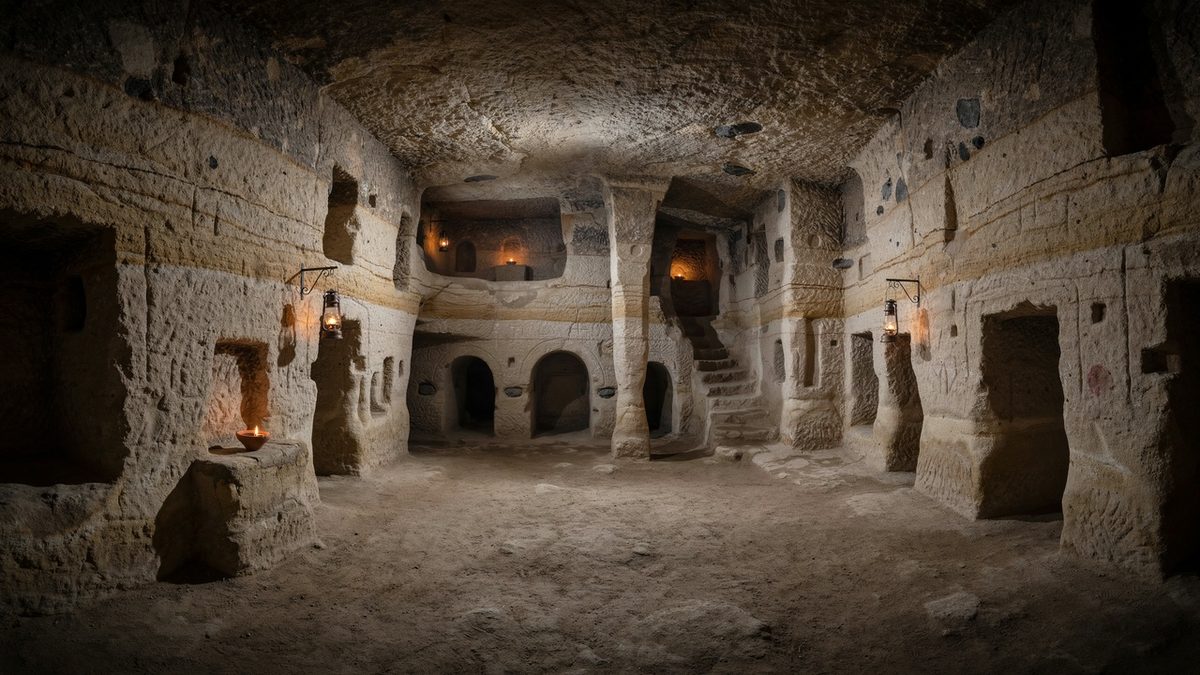
Image generated with Ai
Turkey’s multi-level underground cities with ancient secrets that have been hidden deep beneath the surface have shocked modern architects. As a result, inquisitive tourists are travelling to unearth these amazing chambers. Besides, these tunnels show off the smarts of the people who built them.
Turkey’s multiple-levelled underground cities with ancient secrets that have been concealed deep below the surface have amazed modern-day experts. Besides, these excavations indicate that the builders were geniuses. Consequently, modern-day tourists are impressed by the ancient structures since they thrived in these deep underground volcanic rock shelters along with proper ventilation. As a result, modern-day tourists keep digging up these ancient relics.
Advertisement
Modern metropolitan areas are transforming hidden historical tunnels, ancient rock cavities, and massive subterranean civil engineering networks into thriving climate-controlled cultural hubs, transit arteries, and tourist destinations. This shift demonstrates how global cities are successfully adapting the forgotten spaces beneath their streets to combat surface overcrowding and extreme weather patterns.
Central Anatolia features remarkable multi-level subterranean cities carved deeply into soft volcanic tufa rock formations by ancient civilizations seeking survival. These expansive underground complexes historically functioned as secure emergency refuges from invading armies during turbulent historical periods across the region. Modern municipal planners and archaeological teams now protect these troglodytic wonderlands to showcase sophisticated ancient urban planning to curious global travellers. The stable thermal properties of volcanic rock maintain a moderate year-round internal temperature within these deep historical excavations. Sophisticated vertical ventilation shafts provide fresh air while simultaneously doubling as deep water wells for the inhabitants.
Advertisement
Advertisement
Explore official national infrastructure data and heritage policies via the National Portal of India.
The historic Wieliczka Salt Mine near Kraków plunges deep into massive geological salt deposits that have been mined continuously since the thirteenth century. This former industrial powerhouse has successfully evolved into an extraordinary underground cultural marvel featuring miles of intricate labyrinthine tunnels. Miners and traditional sculptors have carved stunning chapels, altars, statues, and enormous chandeliers entirely out of solid rock salt over many generations. The crowning architectural achievement is the breathtaking Chapel of St. Kinga, which sits over one hundred meters underground and hosts regular concerts and wedding ceremonies. Unique hyper-saline air creates a beneficial microclimate that is actively utilised for specialized respiratory therapy tourism and underground health sanatoriums.
“This fascinating exploration into subterranean architecture brilliantly highlights how major metropolitan areas are creatively reclaiming forgotten spaces beneath our feet. From the volcanic tufa dwellings of Cappadocia to the vast salt cathedrals of Wieliczka and the complex pedestrian networks of Montreal, underground spaces are no longer viewed merely as industrial remnants or hidden hazards. Instead, forward-thinking urban planners and modern engineers are successfully transforming these deep subterranean marvels into climate-controlled cultural hubs, vibrant transit arteries, and sustainable urban extensions that redefine the very concept of modern city living and tourism.”
Canadian metropolises like Montreal have mastered the art of the multi-functional vertical city to cope with severe seasonal weather shifts throughout the year. Montreal’s extensive PATH network successfully connects over thirty kilometers of underground tunnels linking downtown skyscrapers, universities, and major metro transit hubs. These bustling subterranean corridors are seamlessly integrated with permanent art installations, underground sculpture gardens, and commercial shopping plazas. Shifting high-density pedestrian traffic beneath the surface significantly alleviates street-level congestion while optimizing year-round commuter mobility for thousands of daily citizens.
Advertisement
Advertisement
The French capital conceals an intricate web of historic infrastructure beneath its dense urban sprawl that originated from centuries of intensive stone quarrying. Ancient limestone networks mined to construct classical Paris were later repurposed in the late eighteenth century to house the skeletal remains of millions of Parisians. While curated historical public tours offer safe access to authorized sections of the catacombs, vast unmapped stretches continue to attract unauthorized urban explorers. Managing this porous underworld requires continuous structural monitoring by municipal inspection teams to prevent ground subsidence beneath modern surface buildings and roadways.
Turkey’s multi-level underground cities are home to ancient secrets and constructions that excavated from the depths of the planet leaving the modern person speechless. However, what could lead to the creation of such structures many years ago – this is the question that requires a detailed response. The existence of ancient multi-level underground cities are a great inspiration to people living in modern society.
Turkey’s multi-level underground cities are the result of ancient secrets and constructions that excavated from the depths of the planet leaving the modern person speechless. This assumption, however, raises the question of what natural and social factors could have affected the development and construction of such buildings. The answer lies in the fact that ancient people needed safe places to hide from enemies. It is worth noting that the main reason for creating this unique construction was the threat of invasion from neighboring states. People lived in caves made of volcanic rock, and the purpose of these buildings was to provide the population with safe shelter.
Advertisement
Tags: Cappadocia Turkey, Paris Catacombs, Subterranean Exploration, underground cities, urban infrastructure
Advertisement
Advertisement













Saturday, September 5, 2026

Friday, September 4, 2026

Saturday, September 5, 2026

Saturday, September 5, 2026

Thursday, September 3, 2026

Wednesday, September 2, 2026

Saturday, September 5, 2026