
Iran Joins Bahrain, Saudi Arabia, Kuwait, UAE, Iraq, Qatar, Jordan, and Others in Securing a Breakthrough in Oil and LNG Supplies as US Lifts the Strait of Hormuz Blockade and Reaches a Permanent Peace Deal, Supporting the Revival of Tourism, Travel, and Economic Stability Across Middle East

Published
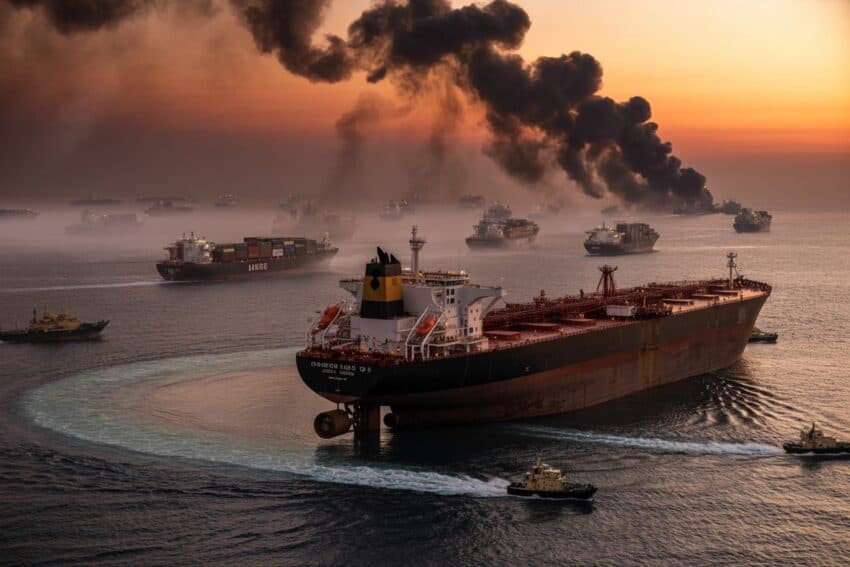
A breakthrough in oil and LNG supplies is strengthening economic stability across the Middle East. Following the US decision to lift the Strait of Hormuz blockade and reach a permanent peace deal, Iran, Bahrain, Saudi Arabia, Kuwait, the UAE, Iraq, Qatar, and Jordan benefit from a corridor carrying 20% of global oil and LNG trade, supporting tourism, travel, and regional growth.
The agreement is also expected to reduce freight insurance premiums, ease supply chain disruptions, and improve investor confidence across the Gulf. With up to 6.7 million barrels per day of disrupted production returning and energy prices stabilizing, regional economies could see stronger trade, aviation, tourism, infrastructure investment, and business activity.
Advertisement
Advertisement
US Lifts the Strait of Hormuz Blockade and Reaches a Permanent Peace Deal with Iran
As of June 14, 2026, the United States has officially lifted its naval blockade on Iranian ports and authorized the full reopening of the Strait of Hormuz for toll-free international maritime commerce following a landmark peace agreement with Iran. Announced by US President Donald Trump, the breakthrough permanently ends military operations between the two sides and is expected to restore stability to one of the world’s most critical energy corridors. The Strait of Hormuz handles approximately 20% of global oil and liquefied natural gas (LNG) trade, making its reopening a major development for global energy markets, shipping companies, and international trade. The agreement, brokered with the support of Pakistan, is scheduled to be formally signed in Switzerland on June 19, 2026, while a subsequent 60-day negotiation process will focus on nuclear issues and sanctions relief. The move is expected to reduce energy costs, lower freight insurance premiums, restore disrupted exports, and strengthen economic stability across the Middle East and Asia.
Key Numbers, Statistics, and Economic Impact
| Category | Data / Statistic |
|---|---|
| Date of US Blockade Removal | June 14, 2026 |
| Formal Peace Agreement Signing | June 19, 2026 |
| Signing Location | Switzerland |
| Follow-up Negotiation Period | 60 Days |
| Share of Global Oil & LNG Passing Through Strait of Hormuz | Approximately 20% |
| GCC Production Disruption During Crisis | 6.7 Million Barrels Per Day |
| Iranian Export Capacity Affected | 80% of Exports Restricted |
| Estimated Economic Loss to Iran | Nearly US$6 Billion |
| Potentially Unfrozen Iranian Assets | Up to US$24 Billion |
| Brent Crude Price Decline After Announcement | 4%–5% |
| Brent Crude Price Level | Around US$83 Per Barrel |
| Major Gulf Countries Directly Impacted | Saudi Arabia, Kuwait, Iraq, UAE, Qatar, Iran |
| Major Asian Beneficiaries | China and India |
| Qatar LNG Export Status | Force Majeure Restrictions Expected to End |
| Maritime Transit Toll Fees | Eliminated |
| Operational Charges | Minor Route-Mapping and Navigation Service Fees |
| Mediation Country | Pakistan |
Economic and Trade Impact by Country
| Nation / Region | Key Impact |
|---|---|
| Iran | Restoration of export capacity and access to foreign assets |
| Saudi Arabia | Resumption of uninterrupted crude exports |
| Kuwait | Recovery of blocked oil shipments |
| Iraq | Restoration of export revenues and energy trade |
| UAE | Increased trade security and continued infrastructure investment |
| Qatar | Full resumption of LNG exports |
| China | Stabilized crude oil supplies from the Middle East |
| India | Lower import bills and reduced inflation pressures |
| Global Shipping Industry | Lower freight insurance costs and reduced maritime risks |
| Global Energy Markets | Improved supply certainty and lower volatility |
The lifting of the blockade and the reopening of the Strait of Hormuz represent one of the most consequential geopolitical and economic developments of 2026, restoring confidence in global energy supply chains, reducing trade disruptions, and creating a more secure environment for oil, LNG, shipping, tourism, and regional economic growth.
Advertisement
Advertisement
Anup Kumar Keshan, CEO and Editor-in-Chief of Travel And Tour World, said: “If the lifting of the Strait of Hormuz blockade and the permanent peace agreement move forward as expected, it could create a positive ripple effect across the global travel and tourism industry. More stable energy markets may help reduce fuel costs, which are a major component of airline operating expenses. Lower energy prices could support more affordable air travel, encourage route expansion, and strengthen tourism demand worldwide. Improved trade flows and greater economic stability across the Middle East would also enhance traveller confidence, benefiting airlines, destinations, hotels, cruise operators, and the wider global travel ecosystem. This would be a welcome development for both the tourism sector and the global economy.”
Iran: Restoring Exports, Unlocking Assets, and Reviving Regional Connectivity
Iran is positioned to gain the most immediate economic relief from the US decision to lift the Strait of Hormuz blockade and finalize a permanent peace agreement. During the crisis, nearly 80% of Iran’s export capacity was constrained, resulting in an estimated US$6 billion in lost revenues. The reopening of maritime trade routes restores access to critical energy markets and could facilitate the release of up to US$24 billion in overseas assets. As tanker traffic resumes, Iran’s ports, aviation sector, and tourism industry are expected to benefit from renewed international confidence. Religious tourism, cultural travel, and business investment could accelerate as geopolitical risks decline. Improved trade flows also strengthen supply chains, support employment, and provide a foundation for broader economic recovery across the country.
Advertisement
Advertisement
Bahrain: Leveraging Regional Stability to Expand Tourism and Financial Services
Bahrain may not be a major Strait of Hormuz oil exporter, but it stands to benefit substantially from the reopening of a corridor that carries approximately 20% of global oil and LNG trade. Lower energy price volatility, reduced shipping insurance costs, and improved investor confidence support Bahrain’s role as a Gulf financial hub. The kingdom is closely integrated with neighbouring Saudi Arabia and other GCC economies, meaning stronger regional trade directly benefits its banking, logistics, and hospitality sectors. Bahrain’s tourism industry, which has increasingly focused on business events and leisure travel, could experience stronger visitor flows as security concerns ease. Increased regional air connectivity and economic activity are expected to reinforce growth across multiple sectors.
Saudi Arabia: Reopening a Critical Energy Corridor and Supporting Vision 2030
Saudi Arabia routes approximately 5.43 million barrels per day of crude oil and 0.80 million barrels per day of refined products through the Strait of Hormuz. While the kingdom partially mitigated disruptions by redirecting nearly 5 million barrels per day through its East-West pipeline to the Red Sea, reopening the strait significantly reduces logistics costs and restores direct access to Asian markets. Saudi Aramco can now optimize exports through Gulf terminals, enhancing efficiency and profitability. The resulting economic stability supports Vision 2030 initiatives, including NEOM, the Red Sea Project, AlUla, and Riyadh’s entertainment sector. Increased investor confidence and improved regional security are also expected to stimulate tourism, aviation growth, and international business travel.
Advertisement
Advertisement
Kuwait: Recovering Lost Revenue and Restoring Energy Exports
Kuwait was among the countries most affected by the blockade because virtually all of its energy exports depend on access through the Strait of Hormuz. The country normally ships around 1.40 million barrels per day of crude oil and 0.97 million barrels per day of refined products through the waterway. During the crisis, Kuwait reportedly suffered a sharp decline in revenues as exports were disrupted. With maritime routes reopening, Kuwait Petroleum Corporation is expected to restore approximately 70% of production within six to eight weeks, with full recovery following shortly thereafter. The return of energy revenues supports government spending, economic growth, and infrastructure investment. Tourism, aviation, and business travel are also likely to benefit from enhanced regional stability.
United Arab Emirates: Unlocking Export Capacity and Expanding Global Connectivity
The UAE normally moves approximately 2.02 million barrels per day of crude oil and 1.22 million barrels per day of refined products through the Strait of Hormuz. During the crisis, the country partially relied on the Habshan-Fujairah pipeline, which transported between 1.5 and 1.8 million barrels per day directly to the Gulf of Oman. With the blockade removed, ADNOC can fully utilize its export infrastructure while reducing transportation and insurance costs. Dubai and Abu Dhabi stand to gain from stronger investor sentiment and growing international visitor demand. The UAE’s tourism industry, airlines, ports, cruise terminals, and financial centres are expected to benefit from a more stable regional environment that supports trade, travel, and foreign direct investment.
Iraq: Rebuilding Export Flows and Supporting Long-Term Economic Recovery
Iraq depends heavily on southern Gulf export terminals, moving approximately 3.32 million barrels per day of crude oil and 0.31 million barrels per day of refined products through maritime routes connected to the Strait of Hormuz. During the blockade, storage facilities filled rapidly, forcing production cuts and contributing to estimated losses of around US$5.53 billion in a single month. The reopening of the strait allows Iraq to gradually restore output and rebuild export revenues. Increased government income could support infrastructure projects, public services, and economic development. Improved regional stability also benefits Iraq’s growing religious tourism sector, particularly destinations such as Najaf and Karbala, while encouraging greater regional trade and investment.
Qatar: Restoring LNG Leadership and Strengthening Global Energy Security
Qatar is among the largest beneficiaries of the Strait of Hormuz reopening because it exports approximately 80 million tonnes of LNG annually through the chokepoint, alongside around 0.73 million barrels per day of liquids. During the crisis, disruptions reportedly affected LNG operations and forced QatarEnergy to invoke force majeure provisions on several contracts. The removal of maritime restrictions enables Qatar to resume normal export operations and clear backlogs of delayed shipments. This supports both European and Asian energy markets while strengthening Qatar’s global energy influence. Doha’s aviation and tourism sectors are also expected to benefit as lower regional tensions encourage international travel. Improved confidence supports airline growth, hotel demand, and investment across the wider economy.
Advertisement
Advertisement
Jordan: Benefiting from Lower Energy Costs and Stronger Tourism Demand
Although Jordan is not a major oil exporter, it stands to gain significantly from the economic effects of the Strait of Hormuz reopening. The decline in Brent crude prices by approximately 4% to 5%, toward US$83 per barrel, reduces import costs and eases inflationary pressures for the energy-importing kingdom. Lower fuel expenses support consumers, businesses, and transportation networks across the country. Jordan’s tourism industry could be among the biggest winners as international travellers regain confidence in visiting the Middle East. Attractions such as Petra, Wadi Rum, the Dead Sea, and Amman may see stronger demand. Increased regional air connectivity, trade activity, and investment flows further strengthen Jordan’s economic outlook and long-term stability.
How the Strait of Hormuz Breakthrough Is Boosting Economic Stability Across the Middle East
The lifting of the US blockade on Iranian ports and the reopening of the Strait of Hormuz are strengthening economic stability across the Middle East by restoring one of the world’s most critical energy and trade corridors. As approximately 20% of global oil and LNG shipments once again move freely through the waterway, Gulf economies are regaining export revenues, reducing supply chain disruptions, and improving investor confidence. The peace agreement between the United States and Iran is also helping lower geopolitical risk, resulting in a 4%–5% decline in Brent crude prices toward US$83 per barrel and a reduction in maritime insurance costs. The renewed flow of energy exports is expected to support government revenues, infrastructure spending, tourism development, airline connectivity, and foreign direct investment across the region. From Saudi Arabia and the UAE to Qatar, Iraq, Bahrain, Jordan, and Iran, the agreement is creating conditions for stronger economic growth, increased trade activity, and long-term regional stability.
Economic Stability Impact Across the Middle East
| Factor | Key Data / Impact | Economic Benefit |
|---|---|---|
| Strait of Hormuz Trade Flow | About 20% of global oil and LNG shipments pass through the strait | Restores global energy supply security |
| GCC Production Recovery | Up to 6.7 million barrels per day of disrupted production can return | Higher export revenues |
| Iran Export Recovery | Up to 80% of constrained export capacity restored | Economic recovery and increased foreign exchange earnings |
| Iranian Overseas Assets | Up to US$24 billion potentially unlocked | Increased liquidity and investment capacity |
| Brent Crude Oil Price | Fell 4%–5% toward US$83 per barrel | Lower fuel and transportation costs |
| Freight Insurance Premiums | Expected to decline significantly | Reduced shipping expenses |
| LNG Exports | Qatar resumes normal LNG shipments | Improved global gas market stability |
| Regional Trade Routes | Maritime traffic resumes without transit toll fees | Faster and cheaper trade flows |
| Foreign Direct Investment | Investor confidence expected to improve | Increased capital inflows |
| Tourism Recovery | Reduced geopolitical tensions across the Gulf | Stronger visitor arrivals and tourism spending |
| Aviation Growth | Improved regional security and travel confidence | Increased airline demand and connectivity |
| Infrastructure Development | Continued investment in ports, logistics, and pipelines | Long-term economic diversification |
| Business Travel | Greater regional stability encourages corporate travel | Higher hotel and convention revenues |
| Energy Importers | China, India, Jordan, and others benefit from lower prices | Reduced inflation and import costs |
| Regional Economic Outlook | Improved trade, investment, and tourism environment | Stronger Middle East economic stability |
Winners from the Strait of Hormuz Peace Breakthrough
Iran joins Bahrain, Saudi Arabia, Kuwait, UAE, Iraq, Qatar, Jordan, and others in securing a breakthrough in oil and LNG supplies as the US lifts the Strait of Hormuz blockade and reaches a permanent peace deal, supporting tourism, travel, and economic stability.
| Country | Primary Economic Gain |
|---|---|
| Iran | Export recovery, asset access, renewed trade |
| Saudi Arabia | Higher crude exports and tourism investment growth |
| UAE | Stronger trade hub status and aviation expansion |
| Kuwait | Restoration of oil revenues and export flows |
| Iraq | Recovery of energy exports and government income |
| Qatar | Resumption of LNG exports and shipping operations |
| Bahrain | Growth in financial services, logistics, and tourism |
| Jordan | Lower energy costs and increased tourism demand |
| China | Stable energy imports and supply security |
| India | Reduced import bills and lower inflation pressure |
Conclusion
Iran joins Bahrain, Saudi Arabia, Kuwait, UAE, Iraq, Qatar, Jordan, and others in securing a breakthrough in oil and LNG supplies as the US lifts the Strait of Hormuz blockade and reaches a permanent peace deal, creating one of the most significant economic turning points for the region in recent years. By restoring access to a maritime corridor that carries roughly 20% of global oil and LNG trade, the agreement reduces shipping risks, lowers freight insurance costs, stabilizes energy markets, and strengthens investor confidence. The reopening of trade routes supports the revival of tourism, travel, and economic stability across the Middle East while helping energy exporters recover revenues and import-dependent nations benefit from lower costs. As geopolitical tensions ease and commercial activity accelerates, the breakthrough positions the region for stronger growth, deeper trade integration, and a more secure and prosperous future.
Advertisement
