
Cuba Tourism Is Crippled in 2026 as US Sanctions and Energy Crisis Fuel a Record 60% Drop from More Than Sixteen Nations

Published
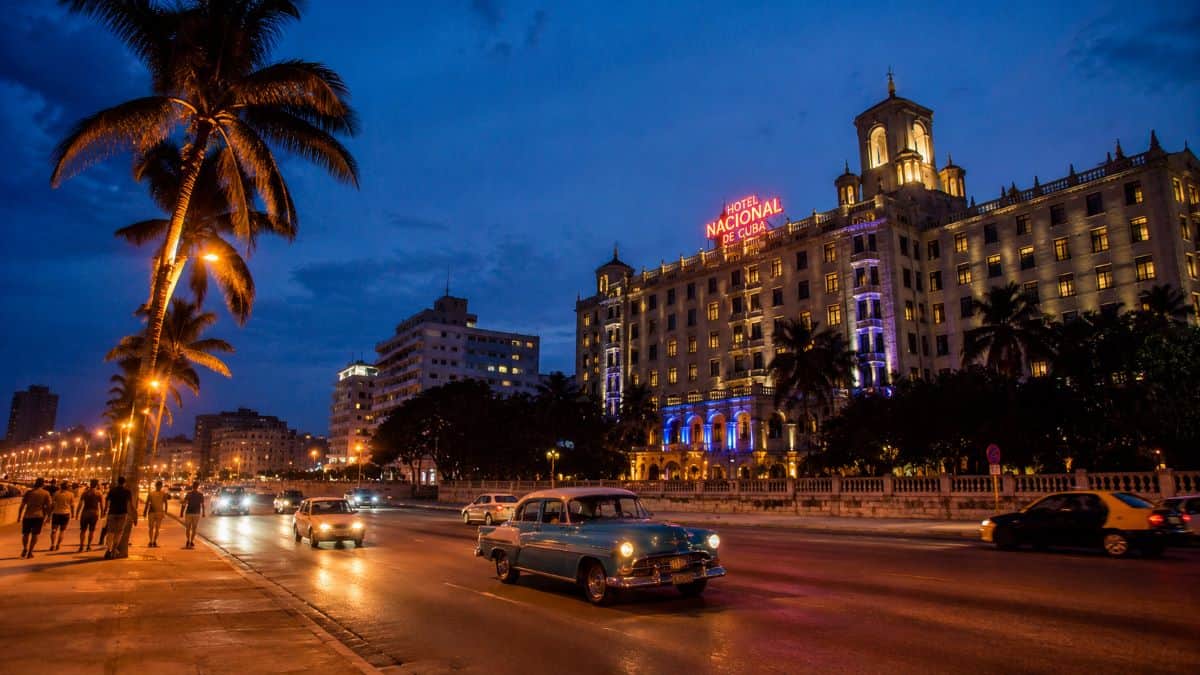
Cuba tourism is crippled in 2026 as US sanctions and an escalating energy crisis fuel a record 60% drop in visitor arrivals from more than sixteen international markets. The collapse has been driven by falling demand from major source countries, severe fuel shortages, prolonged power disruptions and growing operational challenges that have weakened hotels, transport networks and the wider tourism economy. With Cuba receiving only 387,591 visitors through June 2026 compared with 985,606 a year earlier, the island’s tourism sector is facing one of its most severe downturns in decades.
Canada Delivers the Biggest Blow to Cuba’s Tourism Engine
Canada remains Cuba’s largest international source market in the supplied data, but it is also responsible for the most dramatic numerical loss.
Advertisement
Advertisement
Canadian arrivals plunged from 428,118 during January-June 2025 to 126,937 in 2026, a collapse of 70.3%. Cuba therefore lost more than 301,000 Canadian visitors in only six months.
Canada’s share of the market also dropped from 43.4% to 32.8%.
Advertisement
Advertisement
If the six-month pace continues through July, Canadian arrivals would reach only around 148,000, compared with an equivalent seven-month 2025 pace of roughly 499,000.
| Canada Tourism Indicator | 2025 | 2026 | Change |
|---|---|---|---|
| Jan–June visitors | 428,118 | 126,937 | -70.3% |
| Market share | 43.4% | 32.8% | Down sharply |
| Approx. Jan–July pace* | ~499,471 | ~148,093 | ~ -70.3% |
Canada matters enormously because Cuba historically relied on its combination of winter sun demand, resort packages and direct air connectivity. Losing such a large share of that market places immediate pressure on resort destinations such as Varadero and other beach areas.
Advertisement
Advertisement
Russia’s Cuban Holiday Boom Goes Into Reverse
Russia, another strategically important source of visitors, has also fallen dramatically.
Russian arrivals dropped from 64,010 to 21,235 during January-June, representing a 66.8% collapse. At the current pace, the January-July figure would be roughly 24,800, compared with an equivalent 74,700 pace a year earlier.
| Russia Tourism Indicator | 2025 | 2026 | Change |
|---|---|---|---|
| Jan–June visitors | 64,010 | 21,235 | -66.8% |
| Market share | 6.5% | 5.5% | Lower |
| Approx. Jan–July pace* | ~74,678 | ~24,774 | ~ -66.8% |
The decline is particularly painful because Russia had become an increasingly valuable alternative market as Cuba attempted to diversify away from its traditional Western visitor base.
United States Arrivals Collapse Despite Cuba’s Geographic Proximity
The United States sits only around 90 miles from Cuba at the closest point, but geography has never translated into normal tourism flows because US travel remains heavily restricted.
Arrivals identified as coming from the US dropped from 67,086 to 31,001, a decline of 53.8% through June.
At the same pace, the seven-month figure would reach roughly 36,200, compared with an equivalent 78,300 in 2025.
Advertisement
Advertisement
| US Tourism Indicator | 2025 | 2026 | Change |
|---|---|---|---|
| Jan–June arrivals | 67,086 | 31,001 | -53.8% |
| Market share | 6.8% | 8.0% | Higher share despite lower volume |
| Approx. Jan–July pace* | ~78,267 | ~36,168 | ~ -53.8% |
The unusual rise in US market share does not indicate growth. It simply means some other markets have contracted even faster.
US rules remain a major structural barrier. Americans subject to US jurisdiction cannot simply travel to Cuba for an ordinary beach holiday. US Treasury rules permit travel-related transactions under specified authorised categories, while transactions for pure tourist activities remain prohibited.

Argentina Holds Up Better — But Still Falls Sharply
Argentina is one of the comparatively stronger performers, although “stronger” is relative in a market experiencing extraordinary contraction.
Arrivals fell from 23,862 to 14,559, representing a 39.0% decline.
If that pace holds, approximately 17,000 Argentine visitors would be recorded through July, against an equivalent 2025 pace of about 27,800.
Argentina’s market share nevertheless climbed from 2.4% to 3.8%. Again, this reflects its slower decline compared with several larger markets rather than genuine growth.
Advertisement
Advertisement
Mexico Shrinks as a Regional Source Market
Mexico should theoretically provide Cuba with a natural regional market. But Mexican arrivals are also retreating.
Cuba recorded 16,834 Mexican visitors through June, compared with 26,693 a year earlier. That represents a 36.9% decline.
A continuation of that pace would put January-July arrivals at approximately 19,600, versus an equivalent 31,100 in 2025.
The fall shows that Cuba’s tourism crisis cannot be explained purely by long-haul accessibility. Even geographically closer Latin American markets are producing fewer visitors.
France Delivers One of Europe’s Steepest Falls
France has suffered one of the most dramatic contractions among the markets in the dataset.
French arrivals collapsed 65.2%, from 22,049 to just 7,683 during January-June.
Advertisement
Advertisement
At the same average pace, Cuba would receive only about 9,000 French visitors through July, compared with roughly 25,700 on an equivalent 2025 pace.
For Cuba, losing European visitors can be particularly damaging because European travellers support hotels, cultural tourism, restaurants and longer-stay itineraries beyond traditional resort areas.
Spain Falls by More Than Half
Spain tells a similarly difficult story.
Spanish arrivals fell from 20,807 to 8,810, a decline of 57.7%.
If that trend continues, January-July arrivals would reach roughly 10,300, against an equivalent 2025 pace of approximately 24,300.
The decline carries additional symbolism because Spanish hospitality groups have historically played an important role in Cuba’s hotel sector. The operating environment has deteriorated substantially as sanctions, energy shortages and financial problems have intensified.
Advertisement
Advertisement
China Falls — But Less Severely Than Several Western Markets
Chinese arrivals declined from 12,676 to 8,663, representing a 31.7% fall.
That would translate into approximately 10,100 arrivals through July at the current pace, compared with roughly 14,800 on the equivalent 2025 trajectory.
China’s percentage decline is therefore smaller than Canada’s, Russia’s, France’s, Spain’s or the United States’, but the market remains relatively small in absolute terms and cannot compensate for the hundreds of thousands of visitors disappearing elsewhere.
Colombia Cannot Escape Cuba’s Regional Tourism Slump
Colombian arrivals dropped 51.7%, falling from 16,606 to 8,026.
A simple continuation through July would produce approximately 9,400 visitors, against roughly 19,400 on the comparable 2025 pace.
The Colombian decline reinforces the scale of Cuba’s challenge. Latin American markets that could theoretically offset losses from Europe and North America are themselves shrinking.
Advertisement
Advertisement
Cuba’s Major Source Markets Are Falling Together

The country-by-country picture leaves little room for ambiguity.
| Source Market | Jan–Jun 2025 | Jan–Jun 2026 | Change | Approx. Jan–Jul 2026* |
|---|---|---|---|---|
| Canada | 428,118 | 126,937 | -70.3% | ~148,093 |
| Russia | 64,010 | 21,235 | -66.8% | ~24,774 |
| Argentina | 23,862 | 14,559 | -39.0% | ~16,986 |
| USA | 67,086 | 31,001 | -53.8% | ~36,168 |
| China | 12,676 | 8,663 | -31.7% | ~10,107 |
| Mexico | 26,693 | 16,834 | -36.9% | ~19,640 |
| France | 22,049 | 7,683 | -65.2% | ~8,964 |
| Spain | 20,807 | 8,810 | -57.7% | ~10,278 |
| Colombia | 16,606 | 8,026 | -51.7% | ~9,364 |
| Cubans living abroad | 119,867 | 74,068 | -38.2% | ~86,413 |
| Others | 183,832 | 69,775 | -62.0% | ~81,404 |
| Total | 985,606 | 387,591 | -60.7% | ~452,190 |
*January-July figures are simple projections based on the January-June average monthly pace. They are estimates, not reported official July arrivals.
Stopover Tourism Shows the Crisis Was Already Deep by March
The weakness was already visible much earlier in 2026.
The supplied stopover data show Cuba received 298,057 visitors through March, down from 573,363 in the same period of 2025. That represents a 48.0% contraction.
Canada remained the largest source at 124,794, but was down 54.2%. US arrivals fell 56.8%, France 54.4%, Brazil 51.6%, Germany 76.0% and Spain 40.4%.
Only Argentina came close to holding its ground, slipping just 0.5%.
Advertisement
Advertisement
| Stopover Market | YTD March 2025 | YTD March 2026 | Change |
|---|---|---|---|
| Canada | 272,319 | 124,794 | -54.2% |
| Russia | 33,463 | 20,917 | -37.5% |
| USA | 39,465 | 17,034 | -56.8% |
| Argentina | 12,274 | 12,212 | -0.5% |
| Mexico | 11,585 | 9,520 | -17.8% |
| France | 14,748 | 6,725 | -54.4% |
| China | 6,923 | 6,531 | -5.7% |
| Spain | 9,819 | 5,851 | -40.4% |
| Germany | 17,240 | 4,133 | -76.0% |
| Brazil | 4,905 | 2,376 | -51.6% |
| Total | 573,363 | 298,057 | -48.0% |
The comparison with June is even more worrying. Total visitor arrivals were down 60.7% through June, indicating that the overall contraction had become substantially deeper as 2026 progressed.
Tourists Are Staying Slightly Less — While Hotel Occupancy Collapses
Cuba’s problems extend beyond the number of people arriving.
Through March, international tourists generated 1.82 million overnight stays, down from 3.60 million a year earlier. That represents a dramatic 49.5% decline.
Average length of stay slipped from 6.28 nights to 6.10 nights, a relatively modest 2.9% reduction.
The far more alarming figure is hotel occupancy.
Average hotel room occupancy fell from 23.7% to just 12.9%.
Advertisement
Advertisement
| Tourism Indicator | YTD March 2025 | YTD March 2026 | Change |
|---|---|---|---|
| International tourists | 573,363 | 298,057 | -48.0% |
| Overnight stays | 3,601,511 | 1,817,952 | -49.5% |
| Average length of stay | 6.28 nights | 6.10 nights | -2.9% |
| Hotel room occupancy | 23.7% | 12.9% | -10.8 percentage points |
That occupancy rate tells the story in brutally simple terms: Cuba has hotel rooms, but increasingly fewer international visitors are filling them.
Every Age Group Is Retreating From Cuba
The decline stretches across every major age group.
Visitors aged 60 and above fell 51.3%, the deepest contraction in the supplied demographic data. Travellers under 15 declined 49.5%, while the 45-59 segment dropped 48.1%.
Even the 25-44 market — crucial for active tourism, nightlife and independent travel — fell 43.6%.
| Age Group | YTD March 2025 | YTD March 2026 | Change |
|---|---|---|---|
| Under 15 | 40,007 | 20,200 | -49.5% |
| 15–24 | 41,653 | 21,908 | -47.4% |
| 25–44 | 153,123 | 86,309 | -43.6% |
| 45–59 | 173,655 | 90,161 | -48.1% |
| 60+ | 163,334 | 79,479 | -51.3% |
| Total | 573,363 | 298,057 | -48.0% |
This is not a decline confined to retirees, young travellers or families. Cuba is losing demand across generations.
Women Pull Back Faster Than Men
The gender data reveal another notable divide.
Advertisement
Advertisement
Female visitors fell from 288,603 to 141,925, a 50.8% decline. Male visitors dropped from 283,170 to 156,132, representing a smaller but still severe 44.9% contraction.
| Gender | YTD March 2025 | YTD March 2026 | Change |
|---|---|---|---|
| Male | 283,170 | 156,132 | -44.9% |
| Female | 288,603 | 141,925 | -50.8% |
| Total | 573,363 | 298,057 | -48.0% |
The statistics do not establish why female travel fell faster. But the difference adds another layer to an already broad-based tourism contraction.
Fuel Has Become Cuba Tourism’s Most Immediate Problem
The tourism crisis cannot be separated from Cuba’s energy emergency.
Reuters reported this week that power outages in many provinces have exceeded 20 hours a day, disrupting food production, transport and tourism. Cuba’s grid suffered multiple nationwide failures during July alone as the island struggled with fuel scarcity and deteriorating infrastructure.
For a tourism economy, fuel scarcity hits almost everything at once.
It can affect:
Advertisement
Advertisement
- Airport and aviation operations
- Taxis and airport transfers
- Coaches and tour buses
- Hotel generators
- Food and beverage supply chains
- Excursions and attractions
- Domestic transportation
- Refrigeration and air conditioning
- Water pumping and other hotel services
In February, Cuba warned of jet-fuel shortages, and Reuters found that tourism operations were being disrupted across the island.
Blackouts Are Turning a Tourism Problem Into a Visitor Experience Problem
Cuba’s ageing electricity system is another major obstacle.
Recent blackouts have stretched for extraordinarily long periods. Reuters reported that outages exceeding 20 hours per day have affected many provinces, while the national grid has suffered repeated collapses.
For residents, this is a humanitarian and economic crisis. For tourism, it creates an additional reliability problem.
Hotels can install generators and solar systems, but the tourism experience depends on much more than the hotel itself. Restaurants, transport, shops, museums, private rentals and local attractions all require reliable electricity and fuel.
Reuters found tourism businesses in the Zapata region struggling with cancelled bookings because visitors could not reliably reach attractions when taxis and other vehicles lacked fuel.
Advertisement
Advertisement
US Sanctions Add Another Wall Around Cuban Tourism
US restrictions are another central part of the story, although Cuba’s tourism problems cannot be attributed to sanctions alone.
Washington maintains extensive sanctions against Cuba. For people subject to US jurisdiction, ordinary tourism to Cuba remains prohibited. Travel-related transactions are permitted only under specified authorised categories, including family visits, journalistic activity, certain educational activities, religious activities and humanitarian projects, among others.
The Trump administration has tightened pressure further in 2026, including restrictions affecting Cuba’s access to oil. Reuters reports that the resulting energy squeeze has intensified shortages and placed additional stress on transport and tourism.
Cuba tourism is crippled in 2026 as US sanctions and the energy crisis fuel a record 60% drop in arrivals from more than sixteen nations, with visitor losses, fuel shortages and power disruptions creating one of the island’s deepest tourism downturns.
In conclusion, Cuba tourism is crippled in 2026 as US sanctions and the energy crisis fuel a record 60% drop in arrivals from more than sixteen nations, with major source markets including Canada, Russia, the United States and Europe recording sharp declines. The collapse highlights how fuel shortages, power disruptions, operational challenges and external restrictions have combined to create one of Cuba’s most severe tourism downturns in decades. Recovery will depend on restoring visitor confidence, improving infrastructure reliability and rebuilding demand across key international markets.
Advertisement
