
Copenhagen Unites with San Sebastian, Lyon, Bologna, and More as a New Era of ‘Reservation-First’ Global Travelers Trades Traditional Sightseeing for Elite Tasting Menus, Triggering an Unprecedented Multi-Billion-Euro Economic Awakening Across the Continent’s Most Iconic Food Corridors

Published
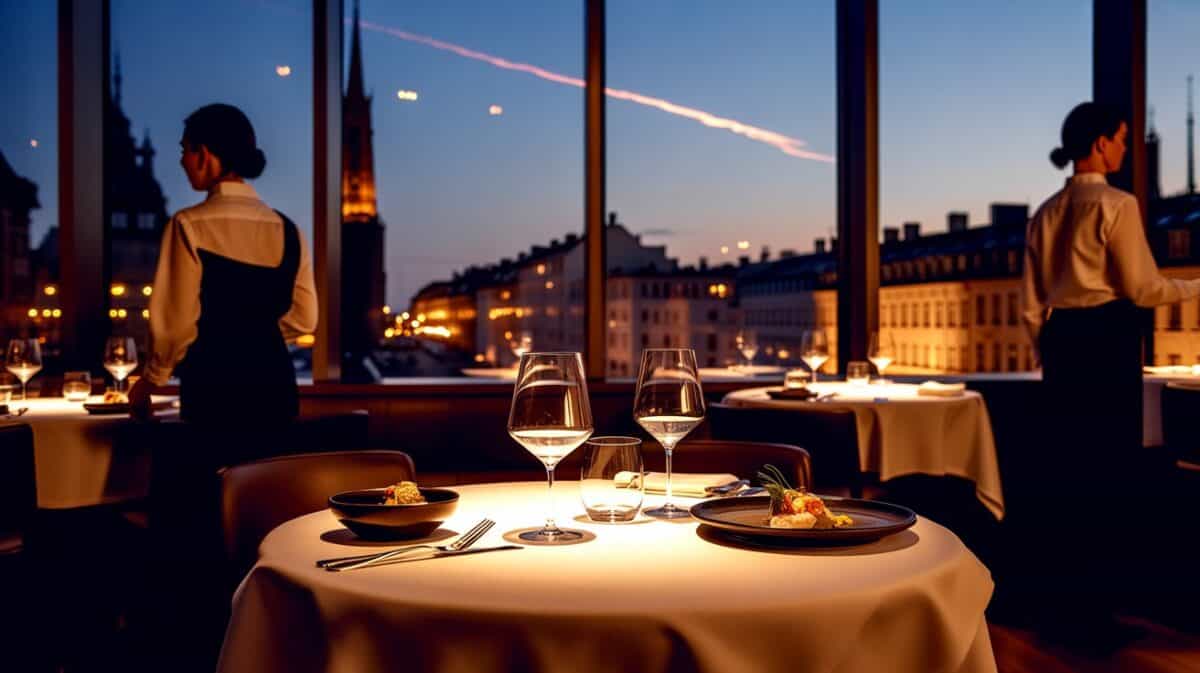
Global Travelers are driving a striking reservation first travel economy across Europe, with Copenhagen, San Sebastian, Lyon, Bologna, and adjacent food corridors being transformed into destinations where holidays are increasingly being organised around secured restaurant seats, chef led tastings, market walks, and region branded culinary routes rather than traditional landmark queues. In Copenhagen, official guides are urging tables to be arranged before arrival, while a 2026 Michelin recognition is reinforcing the citys growing dining influence. In San Sebastian, official tourism platforms are highlighting gastronomic escapes, Michelin strength, and Basque culinary identity. In Lyon, gastronomy is being connected with heritage, themed experiences, and the wider Valley of Gastronomy route. In Bologna and the wider Emilia Romagna Food Valley, official itineraries are being developed around the Quadrilatero, product museums, markets, and tasting trails. Behind this transformation, major spending, employment, overnight stays, and regional tourism impacts are being recorded, proving that elite tasting menus are not only attracting visitors but are also being converted into a powerful economic driver across Europe. Traditional sightseeing is still being maintained, yet it is increasingly being positioned around reservation windows, tasting schedules, and destination led food storytelling.

Copenhagen Redefines Luxury Travel as Michelin Reservations Drive New City Break Trends
In Copenhagen, the strongest official signal of a reservation first culture is being delivered with unusual bluntness. It is stated by the official city guide that table reservations can be hard to get and that a table may need to be ordered before arrival. On individual flagship listings, the same message is being sharpened. At Jordnaer, popularity is being linked to the need for booking well in advance. At Noma, a tiny room capacity is being emphasized and tables are being described as needing to be secured months ahead. What is being sold, then, is not a casual dinner add on. It is an anchor commitment around which flights, hotels, and walking routes are being arranged. In classic sightseeing cities, the museum ticket may have once been booked first. In this Copenhagen model, the opposite sequence is increasingly being normalized.
Advertisement
Advertisement
That pressure is being reinforced by the scale of the citys fine dining offer. It is reported by the official Copenhagen guide that the 2026 Michelin Nordic Cities edition awarded 31 stars to 21 restaurants in the capital. Such density is not merely being used as glossy branding. A practical planning framework is being created from it. Once a destination is being marketed through limited seat restaurants rather than only through open access landmarks, the visitor is being taught to commit early. Scarcity, rather than abundance, is being made into the decisive lure. In premium urban tourism, priority is habitually being driven by scarcity.

San Sebastian Turns Gastronomy into a Regional Tourism Engine
In San Sebastian, a similar hierarchy is being made visible through official destination language, yet it is being expressed in a more layered Basque form. Gastronomic societies, pintxos routes, workshops, markets, txakoli experiences, and Michelin dining are being presented on the city portal as the core components of a gastronomic escape. Around the city, 10 Michelin starred restaurants are being highlighted, three of them holding the highest distinction. Through the convention bureau, Donostia San Sebastian is being described as one of the cities with the most Michelin stars per inhabitant on the planet. Sightseeing is not being abandoned there, but it is being consumed through the plate first.
Advertisement
Advertisement
The same pattern is being widened beyond the city core by the Basque public tourism system. Through Euskadi Gastronomika, enogastronomic tourism is being promoted under a joint destination brand, and cooperation between tourism actors is being encouraged around the Basque culinary product. What is being marketed, therefore, is not a single restaurant sprint but an integrated food territory in which recognition, local identity, and visitor movement are being tied together. That territory logic matters, because tourist nights, wine detours, inland visits, and local purchases are all being pulled forward by the meal that has already been booked.

Lyon Builds a New Gastronomy Driven Travel Model
In Lyon, gastronomy is being woven into public destination identity with equal force, although it is being expressed through breadth rather than through exclusivity alone. A metropolitan tourism industry supporting 42,000 jobs, 9.56 million overnights in 2024, more than 20 award winning bouchons, 17 Michelin starred restaurants, over 40 themed guided tours, and a street food festival that drew 52,000 festival goers is described in official key figures. Here too, the message is being structured carefully. Gastronomy is being made to stand beside museums, festivals, and heritage as a first order reason to travel.
Advertisement
Advertisement
That city role is being enlarged by the official Valley of Gastronomy, a route stretching from Dijon to Marseille via Lyon and created by the participating regions as a shared reference point for gastronomic excellence. The significance of that project is substantial. Instead of one urban hotspot being promoted, a corridor is being branded, and Lyon is being positioned inside a long ribbon of culinary mobility. At the same time, official city experiences are fusing gastronomy with historic interpretation, so heritage and eating are being packaged as one continuous product rather than as rival uses of time.

Europe’s Reservation First Food Revolution Takes Shape
In Bologna and the wider Emilia Romagna Food Valley, the official structure may be the clearest of all. Places of taste, product museums, Grand Tour Italia, wines, and themed Food Valley itineraries are being placed by the regional tourism site at the center of trip design. A 48 hour official route through Bologna and Modena is built around the Quadrilatero market, a historic osteria, the gelato museum, the Mercato Albinelli, and tastings of local PDO and PGI goods. Even the official one day Bologna itinerary directs visitors from major monuments toward the Quadrilatero for lunch and toward the citys food quarter as a defining urban experience.
Advertisement
Advertisement
Once these official signals are placed side by side, the emerging reservation first model becomes difficult to dismiss. In Copenhagen, booking before arrival is being recommended because scarcity is real. In San Sebastian, gastronomic experiences are being packaged as official small group activities. In Lyon, themed food tours and the wider valley route are being foregrounded. In Bologna, the market and tasting quarter are being made unavoidable in short stay itineraries. In each case, the urban day is being bent around food timing rather than around monument sequencing. The table is being treated as the new ticketed attraction. This synthesis is an inference drawn from the official tourism material.
Billions behind the plate
The economic force behind this shift is not being left to imagination. In Denmark, total tourism consumption in 2023 is placed by official analysis at 162.056 billion Danish kroner. Of that sum, 25.2 billion kroner were spent on restaurant and cafe visits, while commercial overnight forms accounted for 106.4 billion kroner and hotel guests alone generated 47.3 billion kroner. Using the European Central Bank reference rate for 6 July 2026, that total tourism consumption is equivalent to about 21.68 billion euros, while restaurant and cafe spending alone is equivalent to about 3.37 billion euros. Dining is thus being placed in the spending vanguard of the Danish visitor economy. When official city messaging is then added to that national spending base, Copenhagen can be seen not as an isolated luxury theater, but as a city where restaurant demand is being linked directly to a measurable revenue stream.
In the Basque Country, the same macroeconomic story is being told with even greater clarity. It is shown in official data that tourism expenditure reached 6.665 billion euros in 2024, up 8.6 percent on the previous year and equal to 6.8 percent of Basque gross domestic product. Incoming tourism represented 60.6 percent of that total. Against such figures, the culinary centrality of San Sebastian cannot be treated as decorative. It must be read as one of the most visible urban expressions of a regional tourism machine that is already being measured in the billions. When gastronomic prestige and regional expenditure are placed together, a strong inference is supported. A seat in San Sebastian is not only being sold as pleasure. It is being used as an entry point into a broader Basque economy of hotels, local transport, wine, food retail, and inland travel.
Across Emilia Romagna, the official picture is being strengthened by both volume and spending behavior. More than 13.2 million arrivals and over 44.1 million overnight presences in 2025 were reported by the regional government, with growth being recorded not only on the Riviera but also in cities of art, hill areas, and the Apennines. The same regional reporting adds a crucial spending insight, because restaurants are identified as the first item of visitor expenditure in Emilia Romagna. That single fact gives Bologna and the wider Food Valley story unusual economic sharpness. If the first spending item is being captured by restaurants, then the traveler who arrives for tortellini, cured meat, wine, fresh pasta, or a product museum is not marginal. That traveler is being placed at the center of the regions commercial logic.
Advertisement
Advertisement
The Billion Euro Rise of Food Driven Travel
Lyon supplies another part of the awakening through metropolitan scale rather than through explicit spending totals. By official tourism figures, 42,000 jobs in the tourism industry, 45,318 hotel rooms available in 2024, and 9.56 million overnights across the metropolitan area are identified. Gastronomy and culture are being fused in the same official statistical frame through Michelin restaurants, bouchons, museums, themed visits, and the Lyon Street Food Festival. What is being captured here is a city where food is not a boutique edge. It is being embedded in employment, accommodation demand, events, and destination branding at metropolitan scale. When a city with that many jobs and overnights is also being defined through gastronomy, the economic role of dining can no longer be dismissed as supplemental entertainment.
The Italian national picture demonstrates how large this food led turn can become when it is scaled beyond one city. By the 2023 Italian Tourism Satellite Account, internal tourism consumption is estimated at 202.7 billion euros. The direct tourism contribution to gross domestic product is placed at 106.8 billion euros, while direct and indirect effects lift it to 206.4 billion euros, or 9.6 percent of GDP. More than 4.3 million jobs are being allocated to tourism industries. Within tourism consumption by product, accommodation accounts for 35 percent, shopping for 19 percent, and food and beverage for 15 percent. In other words, dining is being placed among the main national expenditure pillars of tourism itself. When Bologna is being inserted into that wider Italian context, its officially promoted Food Valley status is being supported by a national economy in which travel and eating are already deeply intertwined.
The continental frame makes the shift even harder to ignore. By Eurostat, the European Unions food and beverages subsector was shown in 2022 to employ 8.4 million people, contribute value added of 180.7 billion euros, and represent the larger share of accommodation and food services activity. By Eurostat, 1.5 million enterprises were also shown to be active in that subsector. These figures do not measure only elite dining, but they do show the immense economic field into which destination led food travel is now being pushed. When official city and regional tourism portals across Copenhagen, San Sebastian, Lyon, and Bologna are prioritizing culinary experiences, those strategies are being inserted into a sector that is already one of the largest service workforces in Europe.
A reordered urban future
Why, then, is traditional sightseeing being overtaken within premium urban travel planning even when historic assets remain powerful. The answer is being suggested by the structure of official itineraries themselves. A monument may be visited in a flexible hour. A celebrated dining room cannot. A square may be entered freely. A twenty seat tasting menu can be entered only through pre allocation, careful timing, and sometimes long lead times. Scarcity is therefore being priced into the plate more effectively than into the piazza. In Bologna, lunch in the Quadrilatero is being inserted directly into the official day plan. In Lyon, food and heritage are being sold together. In San Sebastian, culinary experience pages are being built around Michelin rooms, markets, societies, and workshops. In Copenhagen, the most sought after seats are being presented as so limited that travel is sensibly being planned around them first. This synthesis is an inference drawn from the official itinerary design and booking language.
A second shift is being produced by the way food can compress several urban desires into one act. Through one booked meal, authenticity can be sampled, status can be signaled, local produce can be encountered, and a memory with stronger emotional texture can be taken away. That compression effect appears to have been understood by official tourism bodies. In San Sebastian, gastronomy is being linked with societies, markets, and neighborhood routes. In Lyon, gastronomy is being tied to themed visits, UNESCO space, and festivals. In Emilia Romagna, gastronomy is being stretched across museums, countryside products, city markets, and regional itineraries. Because so many meanings are being packed into one meal, a longer museum circuit is more easily being sacrificed than a reservation that secures culture, prestige, and appetite all at once. This reading is an inference supported by the way official tourism pages cluster food with culture.
The supply side is also being reshaped by this pattern. If restaurant and cafe spending is being tallied in the billions, then staffing, training, agriculture, fisheries, wine, logistics, design, and branded retail are all being touched by the same demand cycle. In the Basque Country, gastronomic tourism is being promoted under a shared public brand. In Emilia Romagna, places of taste are being linked with museums, product trails, and territorial storytelling. In Lyon, food is being connected with guided tours, festivals, and a corridor strategy. In Copenhagen, fine dining demand is being linked with hotel nights and advance trip planning. The plate, therefore, is not being supported by the destination economy. The destination economy is increasingly being organized around the plate. This conclusion is an inference drawn from the official economic and destination material.
Advertisement
Advertisement
Beyond Michelin Stars The Battle for Sustainable Food Tourism
This does not mean that the new order is being distributed evenly. A tension is also being created. The more a city is being defined by exclusive access, the more travel appeal is being concentrated in a narrow set of high demand venues. In Copenhagen, this pressure is being stated openly through hard to get tables and months ahead windows. In San Sebastian, a famous concentration of Michelin awards is being placed beside bars and societies, creating a ladder from democratic snacking to rarefied dining. In Lyon and Bologna, broader food landscapes are being used as balancing mechanisms so that demand can be diffused outward into markets, tastings, quarters, and regional routes. That balancing effort will matter, because a sustainable boom will be protected only if the spend is dispersed and the symbolic burden of a few headline venues is reduced. This is an inference based on the official distribution of products and routes.
Sustainability is also being pulled into the frame, not as decoration but as an operational necessity. If food led travel is being expanded, then transport patterns, sourcing claims, waste volumes, and labor conditions are being scrutinized more closely. Official responses are already being made visible. Lyon is placing responsible tourism and sustainable gastronomy into its public material. Emilia Romagna is linking culinary tourism with broader territorial itineraries and rural assets, which can help distribute visitation beyond a single urban core. Even Copenhagen, while being celebrated for elite tables, is being framed by official tourism messaging that often pushes visitors toward wider local experiences. If exclusivity is being enlarged without stewardship, backlash will be invited. If it is being managed through local sourcing, dispersion, and quality control, then longer term gains are more likely to be secured.
For hotels, airlines, rail links, and city authorities, the implications are already being felt. A guest journey built around one or two major reservations is typically more time sensitive, more premium, and more likely to generate spillover spending than a loosely planned sightseeing break. Early arrivals, later departures, concierge demand, upgraded rooms, wine retail, guided neighborhood walks, and linked regional excursions are all more easily sold when the traveler has already committed to a meal that cannot be missed. In that model, the tasting menu functions almost like a transport magistrate. Around it, the rest of the itinerary is being ordered, compressed, and monetized. That is why the apparent cultural story is also being revealed as a systems story about scheduling, capacity, yield, and urban spend per visitor. This systems reading is an inference grounded in the booking scarcity and spending data.
The Reserved Table Becomes Europe’s New Travel Anchor
A change in traveler hierarchy is also being suggested by the way official food pages are being framed as planning tools rather than as optional inspiration. Copenhagen pages are being used to warn about limited access. San Sebastian pages are being used to bundle workshops, societies, wineries, and Michelin rooms into one culinary getaway. Lyon pages are being used to connect bouchons, markets, guided visits, and a regional valley route. Emilia Romagna pages are being used to connect product museums, food quarters, and bookable taste experiences with broader landscape travel. When official destination pages are being read in that way, the meal stops behaving like a pleasant add on. The rest of urban discovery is being made to orbit the reserved meal. This interpretation is inferred from the structure and emphasis of the official destination pages.
Taken together, the official record points toward a profound reshaping of European city breaking. In Copenhagen, it is being shown that scarcity and advance booking can turn dinner into the first line of itinerary design. In San Sebastian, it is being shown that culinary prestige can drive a wider Basque spending machine. In Lyon, it is being shown that gastronomy can be scaled from elite dining to festivals, tours, and regional corridors. In Bologna, it is being shown that a city of art can be reweighted through markets, museums, and a regional Food Valley identity. Traditional sightseeing is not being erased. It is being repositioned around meals, after meals, or between meals. And because the spending, employment, and tourism consumption attached to that rearrangement are already being measured in the billions, a genuine continental awakening is being registered through the superior revenue power of the reserved table. Across these cities, the booked table is being treated as valuable urban infrastructure. By that logic, museums, markets, rail timetables, hotel check ins, and neighborhood walks are increasingly being arranged as supporting acts for the reserved daily culinary centerpiece.
Advertisement
