
Japan Keeps Pace with South Korea and Singapore in a Christmas Tourism Showdown as Illuminations, Hotel Prices and Winter Travel Compete

Published
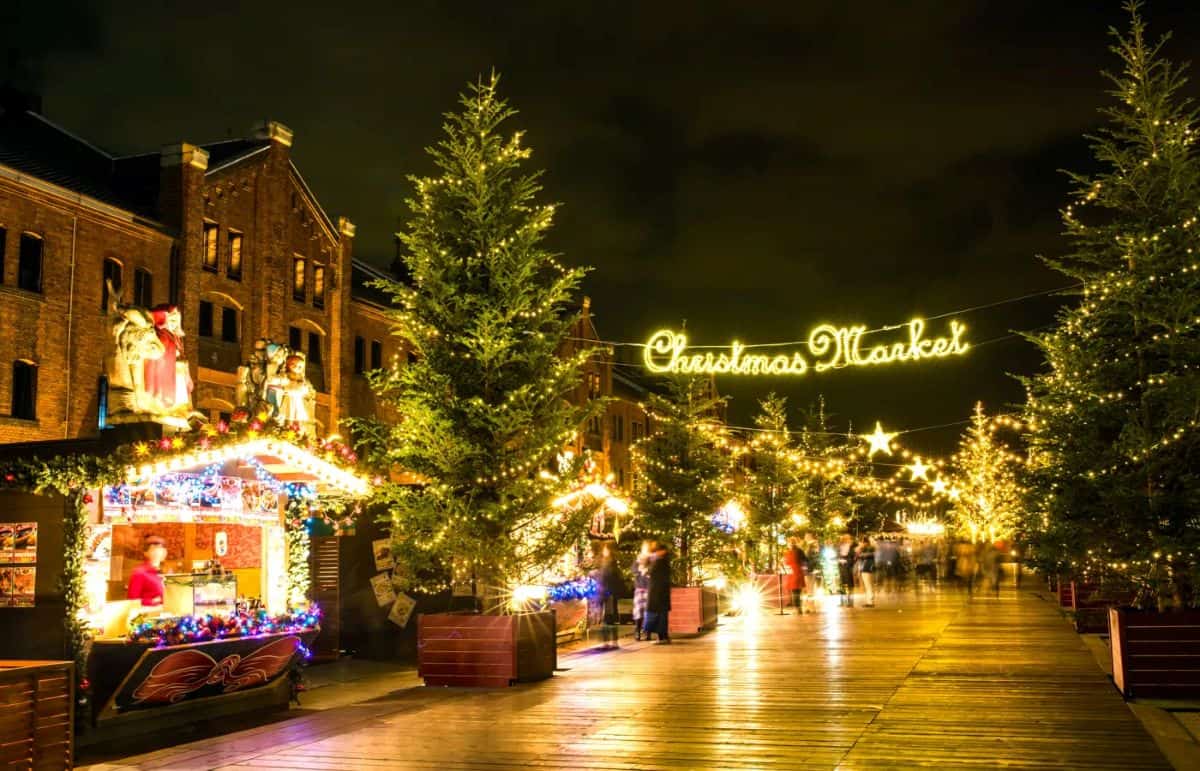
The Christmas tourism showdown in Asia is intensifying as Japan, South Korea, Singapore and Hong Kong compete for international visitors during the 2026 festive season. Their attractions range from Tokyo’s winter illuminations and Seoul’s seasonal festivals to Singapore’s tropical celebrations and Hong Kong’s spectacular waterfront displays. However, festive appeal represents only one part of the competition. International arrivals, hotel costs, airline connectivity and visitor expenditure will also influence where travellers choose to spend their year-end holidays. Japan recorded 42.68 million international visitors in 2025, while Singapore welcomed 16.9 million visitors and Hong Kong recorded nearly 49.9 million arrivals. These figures establish the scale of the contest, although differing tourism definitions prevent a direct ranking.
Japan’s Winter Glow Gives Christmas a Distinctive Asian Identity
Japan enters the festive contest with a substantial international visitor base and a well-developed winter tourism proposition. The Japan National Tourism Organization recorded 42,683,600 international visitors in 2025, an increase of 15.8% from the previous year. December alone attracted 3,617,700 visitors, establishing a monthly record and highlighting demand around school holidays, Christmas and New Year.
Tokyo’s appeal rests on illuminated shopping districts, seasonal food, premium retail and immersive evening experiences. Marunouchi, Ginza, Omotesando and Shinjuku provide different settings for exploring the capital after dark. Moreover, travellers can combine urban festivities with day trips, cultural attractions and longer winter itineraries.
The official Tokyo Midtown Christmas programme runs from 26 November to 25 December 2026, under the theme Midwinter Night’s Dream. The installation includes an approximately 8.5-metre fir tree, illuminated garden displays and a seasonal lounge. An outdoor skating rink is scheduled to open on 5 December, adding another activity for visitors.
Advertisement
Advertisement
Tokyo’s December climate also shapes the experience. The city’s official travel guide gives average daytime temperatures of approximately 8.1°C, with typical highs of 13.2°C and lows of 3.8°C. Visitors should prepare for chilly evenings, although these conditions generally suit outdoor illumination walks.
Japan’s wider advantage is the ability to combine Christmas city breaks with snow-based holidays. Travellers can build itineraries around Tokyo and then consider Hokkaido or other mountain destinations. However, snow activities introduce additional transport, equipment and accommodation expenses, making route planning essential.
Advertisement
Advertisement
For visitors seeking the strongest combination of urban spectacle and winter scenery, Japan offers considerable variety. Yet its size can become a disadvantage for short-break travellers. Moving between distant regions requires additional time, while popular ski destinations can command substantial seasonal premiums.
South Korea Turns Winter Culture Into a Citywide Attraction
South Korea is strengthening its international tourism position through urban festivals, cultural experiences and growing long-haul demand. The Ministry of Culture, Sports and Tourism reported 10,709,919 international visitors between January and June 2026, up approximately 21% from the corresponding period in 2025. Arrivals from Europe increased 20.2%, while those from the Americas rose 12.7%.
Advertisement
Advertisement
These figures show that the country’s visitor base extends beyond nearby Asian markets. Nevertheless, first-half arrivals cannot establish how many travellers will visit for Christmas. December-specific statistics and accommodation bookings will be necessary to assess festive demand accurately.
Seoul’s Winter Festival provides a strong anchor for the season. The city has scheduled its 2026 programme from 4 December 2026 to 31 January 2027, spanning 59 days across several urban locations. Gwanghwamun Square, Cheonggyecheon Stream, Seoul Plaza, Bosingak Pavilion and Dongdaemun Design Plaza form part of the wider festival footprint.
The programme combines illuminated installations, media art, seasonal markets, ice skating and New Year celebrations. Seoul Plaza’s skating rink is advertised with admission starting at KRW 1,000 under the city’s 2026 pricing information. Such relatively inexpensive activities can help visitors manage their spending, although equipment rental and other charges should be checked separately.
Seoul also offers a different festive rhythm from Tokyo. Visitors can combine evening light displays with department-store shopping, cafés, Korean cuisine and K-culture attractions. Meanwhile, travellers seeking snow sports can arrange separate excursions outside the capital, although these require additional transport and potentially overnight accommodation.
Advertisement
Advertisement
The principal consideration is winter weather. Visitors should prepare for freezing conditions and check local forecasts before planning extended outdoor walks. Layered clothing, insulated footwear and flexible indoor alternatives can make a city break more comfortable.
South Korea’s strongest proposition is therefore a combination of winter atmosphere, contemporary culture and accessible urban entertainment. Its final value ranking will depend on flight prices, hotel rates and the costs of travelling beyond Seoul.
Singapore Reimagines Christmas Without a Winter Chill
Singapore challenges the assumption that a convincing Christmas holiday requires cold weather or snowfall. Its festive identity centres on tropical evenings, elaborate urban decorations, shopping, dining and premium hospitality. The Singapore Tourism Board recorded 16.9 million international visitor arrivals in 2025, up 2.3% from 2024.
The country’s tourism receipts reached S$23.9 billion during the first nine months of 2025, an increase of 6.5% year on year. The result highlights the importance of visitor expenditure alongside arrival volumes. However, the nine-month figure should not be confused with the full-year tourism receipts total.
Orchard Road’s annual Christmas on A Great Street remains a central element of Singapore’s festive identity. The shopping boulevard provides a setting for illuminated displays, retail promotions and seasonal entertainment. The precise 2026 event dates and programme should be confirmed through official announcements before travellers finalise their plans.
The tropical climate creates a different set of practical considerations. Visitors can enjoy outdoor decorations without heavy winter clothing, but humidity, rainfall and sudden showers may affect evening plans. Lightweight clothing, comfortable walking shoes and a compact umbrella are sensible additions to a festive packing list.
Advertisement
Advertisement
Singapore’s hotel market also warrants close attention. The tourism board reported a 2025 average room rate of S$273.56, average occupancy of 81.9% and revenue per available room of S$224.04. These figures describe the annual market rather than Christmas-specific prices. They nevertheless provide a useful baseline for understanding the destination’s accommodation economics.
For travellers, Singapore’s strength lies in combining festive displays with established attractions, dining and convenient urban transport. Families can build varied itineraries without changing hotels, while couples can prioritise restaurants, shopping and premium experiences. The challenge is balancing those benefits against accommodation and dining expenditure.
Singapore is consequently a strong candidate for travellers who value warm-weather comfort, polished infrastructure and a concentrated city break. Its appeal should be measured through the complete holiday budget rather than the cost of individual attractions alone.
Hong Kong Builds a Compact Festive Experience
Hong Kong combines a dense retail landscape, harbour views and a concentrated programme of seasonal entertainment. The Hong Kong Tourism Board recorded 49,894,832 visitor arrivals in 2025, up 12% year on year. December accounted for 4,645,397 arrivals, indicating substantial year-end demand.
However, Hong Kong’s visitor total includes different travel patterns, including same-day visitors. It should not be compared directly with overnight tourist counts elsewhere without accounting for those differences. For hotel operators, the distinction matters because day visitors and overnight guests contribute differently to accommodation demand.
Hong Kong WinterFest is scheduled to run from 1 November 2026 to 3 January 2027. The official tourism calendar lists the event alongside the Hong Kong New Year Countdown, scheduled for 31 December 2026 to 1 January 2027.
Advertisement
Advertisement
Central’s Christmas Town, festive installations and harbourfront views provide a strong starting point for an evening itinerary. Visitors can also combine the celebrations with shopping districts, restaurants and major family attractions. Because many experiences sit within a relatively compact urban area, travellers can organise a short visit without extensive intercity transfers.
The city’s airport performance offers another measure of its international reach. Hong Kong International Airport handled approximately 61 million passenger trips in 2025, while December passenger traffic reached 5.8 million. These figures demonstrate airport activity, but they do not measure scheduled seat capacity or inbound tourists alone.
Accommodation remains a key variable. Premium hotels can command substantial festive rates, and some properties impose minimum stays around New Year’s Eve. Travellers should therefore compare the full booking cost, including service charges, taxes and restrictions, rather than relying on the advertised nightly price.
Hong Kong is particularly attractive to travellers seeking an energetic city break with shopping, dining and spectacular evening views. Its compact geography can save time, but peak-season accommodation may reduce the value of that convenience.
The Numbers Behind Asia’s Festive Competition
Annual visitor totals reveal tourism scale, but they do not independently determine which destination offers the best Christmas holiday. The four markets also differ in their visitor definitions, seasonal weather, accommodation structures and dependence on short-haul travel. The following comparison brings together the latest verified figures available for this investigation.
| Destination | Latest verified tourism indicator | What it reveals |
|---|---|---|
| Japan | 42.68 million visitors in 2025 | Record international demand and a strong winter travel proposition |
| South Korea | 10.71 million visitors, January–June 2026 | Rising inbound demand and growing long-haul reach |
| Singapore | 16.9 million visitors in 2025 | Strong visitor volumes alongside a high-value tourism strategy |
| Hong Kong | 49.89 million arrivals in 2025 | Large-scale visitor traffic and pronounced December demand |
The figures are not a like-for-like ranking. Japan’s published total measures international visitor arrivals, South Korea’s figure covers six months, Singapore reports international visitor arrivals, and Hong Kong’s total includes same-day visitors. A fair comparison must align the reporting periods and definitions before drawing conclusions.
Advertisement
Advertisement
Hong Kong’s data illustrates why this distinction matters. The city’s 2025 total included approximately 23.19 million overnight visitors and 26.70 million same-day visitors. Overnight visitors stayed an average of 3.1 nights, giving hotels a different revenue opportunity from attractions and retailers serving day-trippers.
Japan’s spending data offers another useful indicator. The Japan Tourism Agency reported inbound visitor expenditure of ¥2.2076 trillion in July–September 2026, up 3.2% year on year. Average expenditure per general visitor reached approximately ¥234,000, a 6.1% increase. These quarterly figures reveal spending trends, not the amount Christmas travellers will spend.
Hotel Prices Could Decide the Final Destination
Accommodation is one of the most important variables for travellers comparing festive city breaks. Yet the published annual hotel indicators do not reveal the price of a room during Christmas week. A reliable comparison must use matching dates, equivalent room types and consistent booking conditions across all four destinations.
Singapore’s 2025 average room rate of S$273.56 provides a useful market benchmark. However, travellers should not treat it as a December quotation or assume that a comparable room costs the same in Tokyo, Seoul or Hong Kong. Each destination requires a separate, date-specific rate check.
The following framework shows how the research should compare festive accommodation without misleading readers.
| Price test | Dates to examine | Key question |
|---|---|---|
| Early December | 4–7 December 2026 | Can travellers secure better value before peak dates? |
| Christmas | 23–26 December 2026 | How do room rates change over Christmas? |
| New Year | 30 December 2026–2 January 2027 | Which destinations impose the largest festive premiums? |
| Budget category | Standard room for two adults | What is the lowest realistic accommodation cost? |
| Mid-range category | Centrally located three- or four-star hotel | What does a convenient city break cost? |
| Premium category | Upscale hotel with comparable room standards | How much does luxury hospitality add to the budget? |
These dates form a research template, not a verified price survey. Rates should be collected on the same day, with taxes, service charges, breakfast and cancellation conditions recorded. Median rates across comparable properties will offer a more credible comparison than isolated luxury-room quotations.
Advertisement
Advertisement
Travellers should also check whether attractions require timed tickets and whether hotels impose minimum stays. A low nightly rate can become less attractive if the property sits far from festive districts or requires expensive transfers. Conversely, paying slightly more for a central location may reduce transport costs and save valuable sightseeing time.
Flight Capacity Shapes the Real Holiday Budget
Air connectivity determines more than the ease of reaching a destination. It influences journey time, fare competition, itinerary flexibility and the number of nights travellers can spend enjoying festive attractions. However, airport passenger totals cannot substitute for scheduled airline capacity.
Hong Kong International Airport’s approximately 61 million passenger trips in 2025 demonstrate its substantial aviation activity. Yet this figure includes different passenger movements and does not show how many seats airlines will offer on specific routes during December 2026.
A proper aviation comparison should examine scheduled seats and weekly frequencies for 15–31 December 2026. It should also compare the same source markets across Tokyo, Seoul, Singapore and Hong Kong, distinguishing direct services from connecting itineraries.
| Aviation indicator | Why it matters |
|---|---|
| Scheduled international seats | Measures planned passenger capacity |
| Weekly flight frequencies | Indicates flexibility around departure dates |
| Direct-route coverage | Reduces transfer time and connection risk |
| Return economy fares | Establishes the initial transport cost |
| Arrival and departure timings | Determines usable holiday time |
| Airport-to-city transfers | Reveals additional transport expenses |
For the final editorial ranking, the investigation should compare identical travel dates and fare conditions. Baggage allowances, seat selection, change fees and airport transfers should be included wherever possible. Without these matched observations, naming the cheapest destination would be premature.
Spending Patterns Reveal Four Different Tourism Models
The destinations also compete through different commercial strategies. Japan combines major metropolitan attractions with regional travel, while South Korea integrates urban entertainment with cultural exports. Singapore focuses on premium hospitality and concentrated visitor experiences, whereas Hong Kong benefits from shopping, dining and substantial cross-border traffic.
Advertisement
Advertisement
Singapore’s 2025 hotel occupancy rate reached 81.9%, while revenue per available room stood at S$224.04. These indicators suggest a well-utilised hotel sector, although they cannot establish Christmas occupancy or the profitability of individual properties.
Hong Kong’s visitor mix adds another dimension. Its 2025 overnight arrivals and same-day arrivals were relatively close in scale, making trip duration particularly important for assessing tourism value. A visitor staying three nights has different accommodation needs from someone arriving for shopping and returning home the same day.
Japan’s recent expenditure data points towards another important distinction: higher spending per visitor does not necessarily mean a more expensive holiday for every traveller. A destination can generate substantial receipts because visitors stay longer, travel between regions, shop extensively or purchase premium experiences. Personal affordability requires a separate calculation.
For South Korea, the investigation should add comparable visitor expenditure figures from the Korea Tourism Organization and the Ministry of Culture, Sports and Tourism. These figures should use a consistent reporting period and currency conversion date. Without that consistency, a four-way spending league table could exaggerate differences between the markets.
A Three-Night Holiday Shows What Travellers Really Pay
The most useful reader-facing comparison is a standard three-night holiday for two adults. It should include return economy flights, accommodation, airport transfers, local transport, meals and two paid attractions. Free public illuminations should remain separate, allowing readers to see which destinations provide the strongest mix of complimentary and ticketed experiences.
The table below establishes the components that should form the final budget. It deliberately avoids invented prices: a reliable comparison requires live flight quotations, matching hotel rates and current attraction charges.
Advertisement
Advertisement
| Budget component | Japan | South Korea | Singapore | Hong Kong |
|---|---|---|---|---|
| Return flights | Verify by origin | Verify by origin | Verify by origin | Verify by origin |
| Three hotel nights | Check festive dates | Check festive dates | Check festive dates | Check festive dates |
| Airport transfers | Compare rail and taxi | Compare rail and taxi | Compare MRT and taxi | Compare rail and taxi |
| Local transport | Metro and rail | Metro and rail | MRT and buses | MTR and buses |
| Festive attractions | Mix of free and paid | Mix of free and paid | Mix of free and paid | Mix of free and paid |
| Meals and refreshments | Estimate daily spend | Estimate daily spend | Estimate daily spend | Estimate daily spend |
The traveller’s departure city will significantly affect the result. A direct flight may make one destination more economical, while a connecting itinerary could alter the ranking. Travellers should therefore compare the full trip cost from their own departure airport rather than relying on destination-only price claims.
Practical Booking Tips for the Festive Season
- Book around confirmed event dates. Check official programmes before paying for non-refundable flights or accommodation.
- Compare total hotel charges. Include taxes, service charges, breakfast and minimum-stay requirements.
- Prioritise transport access. Staying near a railway or metro station can reduce transfers and make evening sightseeing easier.
- Check attraction reservation rules. Popular skating rinks, theme parks and special dining experiences may require advance bookings.
- Prepare for local weather. Pack warm layers for Japan and South Korea, while Singapore requires lightweight clothing and rain protection.
- Leave room for price changes. Monitor fares and accommodation availability before finalising optional excursions.
What the Competition Means for Travel Businesses
The four destinations illustrate why festive tourism is increasingly about differentiated experiences rather than decorations alone. Seasonal events can encourage longer evening visits, support retail and hospitality spending, and give travellers reasons to choose a particular city during a crowded holiday calendar.
For hotels, the commercial opportunity lies in combining room sales with dining, festive packages and attraction partnerships. However, higher demand does not automatically translate into stronger profitability. Staffing, energy, event production and distribution costs can rise alongside revenue, making occupancy and room-rate data important but incomplete performance measures.
Airlines and destination marketers face a related challenge. Expanded flight capacity can improve access, but the additional seats must align with visitor demand and attractive on-the-ground experiences. South Korea’s reported growth in European and American arrivals demonstrates why source-market diversification deserves attention.
The comparison also highlights the importance of public spaces. Free illumination trails and outdoor displays can broaden access to festive experiences, while paid attractions and premium hotels capture a different segment of visitor spending. Destinations that offer both may appeal to a wider range of budgets, although the balance must be assessed using actual visitor behaviour.
For travel businesses, the most valuable lesson is to track overnight stays, average expenditure, hotel performance and air capacity together. Arrival growth alone cannot show whether visitors are staying longer, spending more or distributing their spending across a broader range of businesses.
Advertisement
Advertisement
Which Destination Fits Each Traveller Best?
The strongest destination depends on the holiday a visitor wants to create. Japan is the natural option for travellers combining sophisticated city illuminations with the possibility of snow-based excursions. South Korea suits visitors seeking winter festivals, shopping and contemporary cultural experiences, particularly in Seoul.
Singapore offers a warm-weather alternative with illuminated shopping streets, dining and family attractions. Hong Kong is well suited to compact city breaks built around harbourfront displays, shopping and festive entertainment. These are experience-based recommendations, not a final affordability ranking.
The most important distinction is that the biggest tourism market is not necessarily the best-value Christmas destination. The final winner for each traveller will depend on departure fares, hotel dates, trip length and preferred activities. A transparent comparison of those factors will provide more useful guidance than an unsupported claim that one city is universally cheaper or better.
For the 2026 season, travellers should confirm event schedules and booking conditions before departure. For future seasons, the same comparison can be refreshed with updated tourism statistics and matched price observations, preserving its value beyond a single Christmas.
Four Cities, Four Ways to Celebrate
Asia’s festive travel contest reflects four distinct approaches to attracting international visitors. Japan combines metropolitan illuminations with regional winter adventures, South Korea blends seasonal festivities with contemporary culture, Singapore offers tropical celebrations, and Hong Kong concentrates shopping and waterfront entertainment within a compact urban setting.
The decisive comparison will emerge from verified hotel quotations, scheduled flight capacity and consistent holiday budgets. Annual arrivals already demonstrate substantial tourism demand, but they cannot identify the most affordable destination by themselves. Travellers should match their preferred experiences with realistic transport and accommodation costs before booking. For tourism businesses, the broader opportunity lies in converting seasonal attention into longer stays and stronger visitor spending. A transparent, regularly updated comparison can therefore serve travellers and industry professionals beyond the 2026 festive season.
Advertisement
