
Albania Tourism Is Going Wild With Vjosa Rafting And Rural Slow-Food Escapes

Published
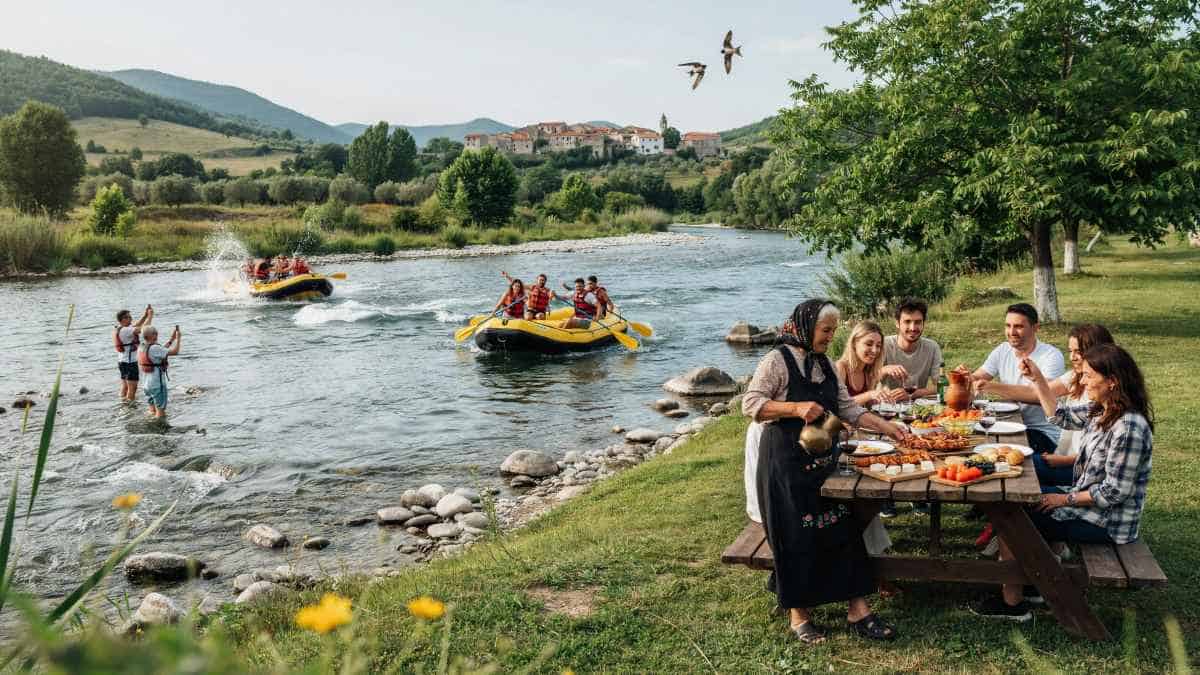
Image generated with Ai
While Albanian tourism was largely based on its coastal regions and beaches on the Adriatic coast, other destinations have been developing over recent years, such as Vjosa Wild River National Park and towns like Përmet and Tepelenë. There are options to go rafting and kayaking along the Vjosa River, and thermal baths in Përmet. In addition to that, bujtina – the rural guesthouses which offer connections with farm communities – have been developing in northern and central parts of Albania. This trend in tourism creates an opportunity for the development of an entirely new model, which is slower by nature. There is no need to rush between destinations as one can spend several days hiking, kayaking, enjoying local products, and staying at small family-run accommodations.
Vjosa Is Albania’s Wild-River Superstar
The Vjosa Wild River National Park is at the heart of Albania’s expanding eco-tourism offer.
The park protects the Vjosa River and surrounding landscapes across a large section of southern Albania. It is internationally recognised for preserving one of Europe’s last major free-flowing river systems.
The national park was officially established in March 2023, making it a major milestone for river conservation in Europe.
Advertisement
Advertisement
For tourism, the river provides opportunities for rafting, kayaking, hiking, wildlife observation and nature photography.
The destination’s conservation status also places limits on how tourism infrastructure can develop.
Advertisement
Advertisement
That creates a low-impact tourism model where outdoor experiences are the attraction rather than large-scale construction.
Përmet Is Mixing Adventure With Wellness
Përmet gives the Vjosa experience a particularly attractive combination of adventure and relaxation.
Advertisement
Advertisement
The town is surrounded by mountains, river landscapes and rural communities, while the nearby Bënjë thermal springs provide a natural wellness attraction.
Visitors can spend one day rafting or kayaking and another exploring the countryside before finishing with time in the thermal waters.
The combination suits travellers who want activity without turning the entire holiday into an endurance challenge.
Përmet’s food culture adds another layer.
Advertisement
Advertisement
The region is known for traditional products, preserves, honey, gliko and other locally produced foods that can be incorporated into rural culinary experiences.
That makes the destination particularly well suited to the growing slow-tourism market.
Tepelenë Opens Another Gateway To The River
Tepelenë provides another important access point to the Vjosa landscape.
The town sits near the meeting point of the Vjosa and Drino rivers and is historically associated with Ali Pasha of Tepelena and its prominent fortress.
Its location allows visitors to combine cultural sightseeing with outdoor activities.
For adventure-tourism operators, the wider Tepelenë area provides access to river landscapes, hiking routes and rafting experiences.
Advertisement
Advertisement
The combination of nature and heritage means travellers do not need to choose between outdoor adventure and cultural tourism.
Rafting Is A Low-Impact Tourism Product
Rafting on the Vjosa is particularly compatible with Albania’s eco-tourism strategy.
Unlike large infrastructure projects, rafting requires relatively limited permanent development.
The river itself provides the experience.
Visitors travel through landscapes that include forests, mountains, villages and open river valleys, while guides provide information about safety and the surrounding environment.
Kayaking provides another option for experienced paddlers.
Advertisement
Advertisement
Both activities can generate income for local guides, accommodation providers, restaurants and transport operators.
The economic benefits therefore extend beyond the riverbank.
Rural Guesthouses Are Changing Albania’s Food Tourism
The eco-tourism story does not stop with rivers.
Across northern and central Albania, traditional rural accommodation known as bujtina is becoming increasingly important.
These guesthouses often operate within family homes or restored rural properties and combine accommodation with locally prepared food.
The model creates a direct link between tourism and agriculture.
Advertisement
Advertisement
Visitors can eat products sourced from nearby farms, learn about traditional cooking and experience rural landscapes without staying in a conventional hotel.
For farming communities, tourism can provide an additional source of income while helping preserve traditional food production.
Slow Food Is Creating Longer Rural Stays
Farm-to-table tourism is particularly effective at encouraging visitors to stay longer.
A rural guesthouse can offer accommodation, meals, cooking experiences, farm visits and guided walks.
Instead of a two-hour excursion, the experience becomes a two- or three-night stay.
That changes the economic impact.
Advertisement
Advertisement
More money is spent locally on accommodation, food, transport and activities, while farmers and producers gain another route to market.
The model also gives visitors a closer connection with Albanian food traditions.
Regional cheeses, meats, vegetables, herbs, preserves, honey and homemade drinks can all form part of rural culinary experiences.
Northern Albania Is Building A Different Tourism Identity
Northern Albania has long been associated with dramatic mountains and hiking routes.
The expansion of bujtina adds a hospitality network to those landscapes.
Travellers can hike during the day before staying in a rural guesthouse and eating locally prepared food in the evening.
Advertisement
Advertisement
This creates a natural connection between adventure tourism and gastronomy.
It also spreads tourism revenue beyond major cities and coastal resorts.
For communities in remote areas, that diversification can be particularly important because seasonal agriculture can be combined with tourism income.
The Model Is Built Around Local Communities
The common thread connecting Vjosa and rural agriturismo is community participation.
The river provides the natural attraction, but local guides, restaurants, accommodation providers and transport businesses deliver the visitor experience.
Similarly, a bujtina depends on local families, farmers and food producers.
Advertisement
Advertisement
This makes community participation central to the tourism model.
It also helps preserve cultural traditions because cooking methods, agricultural practices, hospitality and local knowledge become part of the tourism product.
Travel Details For Albania’s Eco-Tourism Circuit
Travellers can base themselves in Përmet for Vjosa adventures, thermal springs and rural food experiences.
Tepelenë can be combined with river activities and historic attractions, while longer journeys can continue towards Gjirokastër and southern Albania.
Northern and central Albania offer numerous rural guesthouse experiences that can be paired with hiking and cultural exploration.
Rafting and kayaking should be arranged through experienced local operators, with activities dependent on river levels and weather.
Advertisement
Advertisement
Visitors staying in rural accommodation should expect a more traditional experience than a conventional hotel, including locally prepared meals and sometimes limited facilities.
Key Stats And Tourism Indicators
2023: Vjosa Wild River National Park established.
Major river: Vjosa.
Principal southern hubs: Përmet and Tepelenë.
Signature activities: Rafting, kayaking, hiking and thermal wellness.
Major rural accommodation: Bujtina guesthouses.
Advertisement
Advertisement
Core culinary model: Farm-to-table and locally sourced food.
Primary tourism strategy: Low-impact nature travel and community-based rural tourism.
FAQ: Albania Eco-Tourism
1. What makes Vjosa important?
Vjosa is protected as a Wild River National Park, supporting nature conservation alongside low-impact activities such as rafting and kayaking.
2. What can visitors do in Përmet?
Travellers can combine river adventures, hiking, local food experiences and visits to the Bënjë thermal springs.
3. What is a bujtina?
A bujtina is a traditional Albanian guesthouse, often family-run and connected with locally produced food and rural tourism.
Timeline And Key Travel Windows
March 2023: Vjosa Wild River National Park officially established.
Advertisement
Advertisement
Spring-Autumn: Strong period for river adventures, hiking and rural tourism, subject to weather and river conditions.
Summer: Popular period for rafting, kayaking and mountain travel.
Year-round: Rural guesthouses and culinary tourism can support off-peak travel.
Conclusion
The development of the tourism industry in Albania has started to move inwards. Vjosa Wild River National Park has become a popular destination for rafting and kayaking as well as nature tourism, and the towns of Përmet and Tepelenë have offered tourism in the form of outdoor adventures and thermal baths. At the same time, bujtina hotels are serving the purpose of tourism in the form of a rural experience in terms of food, agriculture, and hospitality in northern and central Albania.
Advertisement
