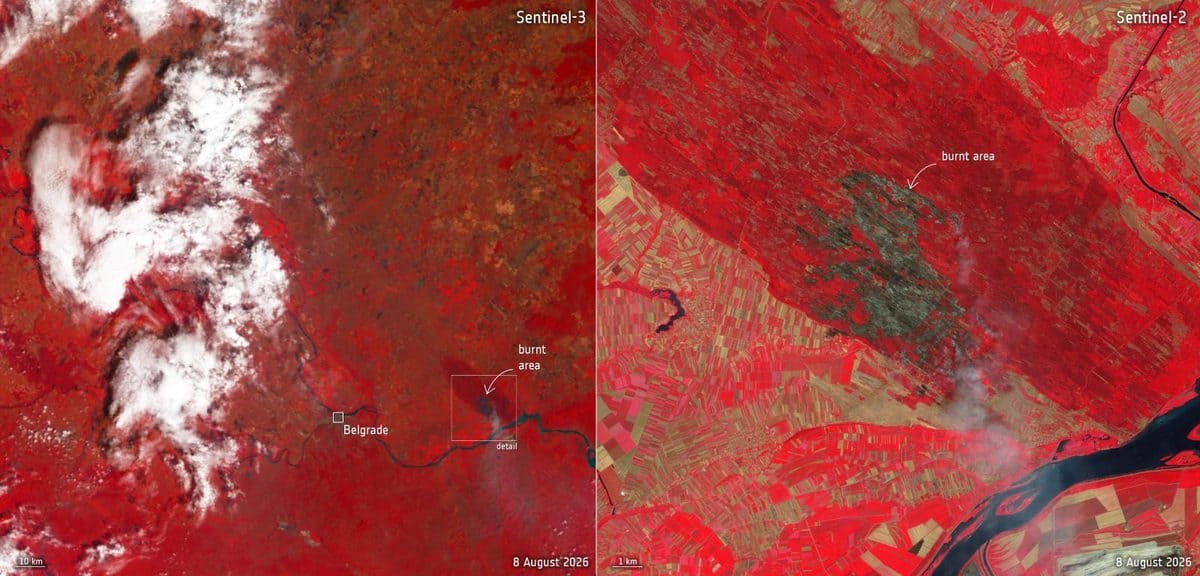
Travellers face a growing environmental risk as wildfires and heatwaves undermine global air-quality gains, according to the World Meteorological Organization. The UN weather agency says increasingly severe fires are increasing exposure to toxic PM2.5 pollution, despite lower industrial and transport emissions across Europe and North America. The warning matters for tourism because polluted air can affect destinations far beyond the original fire zone. Extreme fire-smoke events have tripled globally since the 1990s, while wildfire-related exposure can also distort conventional health-risk assessments. At the same time, intense heat increases ground-level ozone, creating another hazard for visitors. The latest findings suggest that air quality must become a core travel-planning consideration, particularly during extreme weather seasons.
The latest WMO Air Quality and Climate Bulletin places air pollution and climate change firmly within the same risk equation. Its September 2026 edition examines developments during 2025 and highlights the increasingly complex interaction between aerosols, extreme heat, fires and human health.
For travellers, that relationship changes the traditional understanding of a wildfire destination. A visitor does not necessarily need to be close to flames to experience deteriorating conditions. Smoke can travel considerable distances, allowing pollution to affect cities, resorts and transport corridors far from the original fire.
PM2.5 represents one of the most important concerns. These particles measure less than 2.5 micrometres across and can penetrate deep into the respiratory system.
Advertisement
Advertisement
The WHO’s 2021 guidelines recommend an annual PM2.5 concentration of 5 micrograms per cubic metre and a 24-hour guideline of 15 micrograms per cubic metre. These figures are health-based recommendations rather than legally binding standards.
The problem becomes particularly complex during major fire episodes. Conventional pollution-control policies can reduce emissions from vehicles, factories and other sources. However, a major wildfire can suddenly introduce a powerful additional pollution source.
The WMO says regulations have reduced industrial and transport PM2.5 emissions in Europe and North America. Yet exposure to fire-related PM2.5 has increased.
That creates a difficult paradox for destinations. A city can improve its conventional emissions profile while becoming more vulnerable to episodic smoke pollution.
Advertisement
Advertisement
| Air-quality factor | Main source | Travel relevance |
|---|---|---|
| PM2.5 | Wildfires, transport, industry and agriculture | Can reduce outdoor comfort and increase health risks |
| Ground-level ozone | Heat, sunlight and stagnant air | Can worsen during heatwaves |
| Black carbon | Combustion and wildfire smoke | Affects air quality and climate processes |
| Dust aerosols | Drylands, drought and wind | Can reduce visibility and affect respiratory comfort |
| Microplastics | Degraded plastic waste | Increasingly detected across air, land and oceans |
Wildfires are only one part of the emerging travel challenge. Extreme heat can independently deteriorate air quality through the formation of ground-level ozone.
Ozone at ground level behaves very differently from the protective ozone layer high above Earth. It forms when pollutants react in sunlight, with high temperatures and stagnant atmospheric conditions encouraging accumulation.
That combination is particularly relevant to tourism. Summer holidays often involve extensive walking, sightseeing and outdoor dining. Heat and ozone can therefore overlap with the very activities that make urban and resort destinations attractive.
The WMO warns that increased ozone exposure could contribute to tens of thousands of additional premature deaths, particularly through respiratory disease.
China, Europe and the southeastern United States have all experienced conditions conducive to increased ozone pollution during recent heatwaves.
For tourism operators, this creates a more complicated risk environment. A destination can have clear skies while still experiencing harmful ozone concentrations.
That makes visual assessment unreliable. Travellers cannot always determine air quality simply by looking towards the horizon.
Europe illustrates the contradiction particularly clearly. Long-term policies have helped reduce several forms of air pollution. Yet the continent remains exposed to health risks from particulate matter and ozone.
The European Environment Agency estimates that 95% of Europe’s urban population remains exposed to pollutant concentrations above WHO recommendations. At the same time, PM2.5-attributable premature deaths in the EU fell by 57% between 2005 and 2023.
That improvement is significant. It demonstrates that sustained regulation can deliver measurable health benefits.
However, climate-driven extremes introduce a different challenge. Wildfires, drought and heatwaves can generate short-term pollution episodes that conventional emissions reductions cannot fully prevent.
For travel businesses, this distinction matters. Annual air-quality averages may provide useful background information. They do not necessarily describe conditions during a severe smoke or heat event.Development Earlier policy direction Emerging challenge Transport emissions Stronger emissions standards Extreme fire events can overwhelm local improvements Industrial pollution Cleaner technologies and tighter controls Pollution can arrive from outside national borders Urban air monitoring Increasingly sophisticated networks Short-lived smoke events require rapid warnings Climate policy Emissions reduction Heat and drought can intensify fire conditions Tourism planning Seasonal weather forecasting Air-quality forecasts increasingly matter too
For years, holiday planning has focused on temperature, rainfall, storms and sunshine. That model now looks incomplete in fire-prone or heat-exposed destinations.
A weather forecast may show comfortable temperatures while an air-quality alert remains active. Conversely, smoke may move into a destination after travellers have already arrived.
Travellers should therefore consider air-quality information alongside conventional weather forecasts when visiting regions experiencing fires, drought or extreme heat.
Official monitoring platforms can provide information about PM2.5, ozone and other pollutants. Local emergency authorities may also issue evacuation orders or health advisories during severe incidents.
The US Environmental Protection Agency’s 2026 wildfire-smoke guidance emphasises preparedness, public communication and protective measures during smoke events.
For tourism companies, the message is equally important. Customer communication should not stop at weather disruptions. Operators should have procedures for smoke-related excursions, outdoor events and itinerary changes.
One of the most important implications for international tourism is geographical reach.
Smoke does not respect administrative boundaries. Atmospheric circulation can transport fine particles across regions and, in some cases, across national borders.
The WMO has repeatedly highlighted this cross-border dimension. Its atmospheric monitoring programme brings together observations across global and local scales because pollutants can move well beyond their original sources.
This means a destination without major fires can still experience deteriorating conditions.
For airlines and airports, poor visibility can also become an operational concern in severe smoke episodes. Tourism authorities face an additional challenge because visitors may remain unfamiliar with local warning systems.
That creates a strong case for clearer multilingual alerts in major visitor destinations.
The scale of the risk becomes clearer when the latest findings are considered together.
The WMO report notes that extreme fire-smoke events have tripled globally since the 1990s. One cited study estimated nearly 100,000 additional deaths annually between 2010 and 2018 from extreme fire-smoke exposure, although the report says the figure may underestimate the true burden.
Another striking finding concerns mortality modelling. Conventional approaches based on total PM2.5 concentrations may underestimate wildfire-attributable mortality by up to 93%.
These figures should not be interpreted as individual traveller risk calculations. Instead, they demonstrate the difficulty of measuring the health impact of increasingly intense fire seasons.
For the tourism industry, the wider message is clear. Climate resilience increasingly includes atmospheric resilience.Indicator Latest reported finding Why tourism should care Extreme fire-smoke events Tripled since the 1990s More destinations may face episodic disruption Additional deaths linked to extreme smoke Nearly 100,000 annually, 2010–2018 estimate Highlights the scale of public-health exposure Potential mortality underestimation Up to 93% Conventional models may miss wildfire-specific risks EU PM2.5-related premature deaths 182,000 in 2023 above WHO guideline exposure Shows persistent health burden despite improvement EU PM2.5 mortality reduction 57% between 2005 and 2023 Demonstrates the value of long-term regulation
The European figures refer specifically to deaths attributable to long-term exposure above the WHO guideline and should not be compared directly with short-term wildfire mortality estimates.
Travellers visiting fire-prone destinations should treat air-quality alerts as seriously as other extreme-weather warnings.
Checking the local air-quality index before leaving accommodation is a simple first step. Visitors should also monitor official emergency notifications, especially when authorities issue smoke or evacuation warnings.
During severe pollution episodes, reducing prolonged outdoor exposure can be sensible. Travellers can also reconsider strenuous activities such as hiking, cycling or long walking tours.
Hotels and tour operators should provide clear advice when conditions deteriorate. Indoor alternatives can help preserve the visitor experience without exposing guests unnecessarily.
Travellers with particular health vulnerabilities should follow advice from qualified medical professionals and local public-health authorities.Before travel During a pollution event For tourism businesses Check official air-quality information Monitor local alerts Establish smoke-event procedures Review wildfire conditions Reduce prolonged outdoor exposure Prepare alternative itineraries Check travel advisories Reassess strenuous activities Communicate changes quickly Understand local emergency systems Follow evacuation orders Coordinate with local authorities Keep plans flexible Follow health guidance Train frontline staff
The tourism industry has traditionally invested heavily in weather resilience. Airports prepare for storms, hotels plan for heat, and operators monitor hurricanes and flooding.
Air quality now deserves similar attention.
Destination management organisations can incorporate pollution forecasts into visitor information. Tour operators can build smoke contingencies into excursions. Hotels can communicate indoor alternatives when outdoor conditions deteriorate.
Airlines and airports also have a role in communicating disruption when smoke affects operations or surrounding communities.
The opportunity extends beyond crisis response. Better monitoring can strengthen destination planning and improve public confidence.
The WMO stresses the need for stronger atmospheric observation systems, particularly for fine particles, ozone, black carbon and other aerosols.
That investment can support tourism as well as public health.
Lorenzo Labrador of the WMO’s Global Atmosphere Watch network underlined the central issue on 7 September 2026: “Air quality and climate change can’t be dealt with separately. If one worsens, the other does too.”
That principle increasingly applies to travel.
Cleaner transport and industrial policies remain essential. However, they cannot fully address pollution generated by climate-amplified wildfires and heat.
Likewise, climate policy cannot ignore short-lived air pollutants. Black carbon, aerosols and ozone interact with atmospheric processes in complicated ways.
The WMO therefore calls for coordinated air-quality and climate policies rather than treating the two challenges separately.
For tourism, that means destination resilience should extend beyond physical infrastructure. Clean air is becoming part of the visitor experience itself.
The latest WMO warning arrives as tourism faces a broader shift in how travellers assess destinations. Temperature and rainfall remain important, but they no longer tell the entire environmental story.
A destination can offer sunshine, comfortable temperatures and open attractions while experiencing unhealthy air.
That reality places greater responsibility on governments, tourism boards and travel businesses. Accurate monitoring and fast communication can help visitors make informed decisions without creating unnecessary alarm.
The policy record also offers grounds for optimism. Europe has demonstrated that sustained regulation can substantially reduce long-term exposure. The challenge now is ensuring those gains withstand increasingly severe climate-related events.
For travellers, the practical lesson is straightforward. Check the air as carefully as the weather, particularly during wildfire and heatwave seasons. For the tourism sector, clean-air resilience is rapidly becoming a core component of responsible destination management.
Advertisement
Advertisement
Advertisement













Monday, September 7, 2026

Monday, September 7, 2026

Monday, September 7, 2026

Monday, September 7, 2026
Monday, September 7, 2026

Monday, September 7, 2026