
Spain Tourism Economy Surges Ahead of Europe as Business Travel and International Visitor Spending Accelerate: All You Need to Know

Published
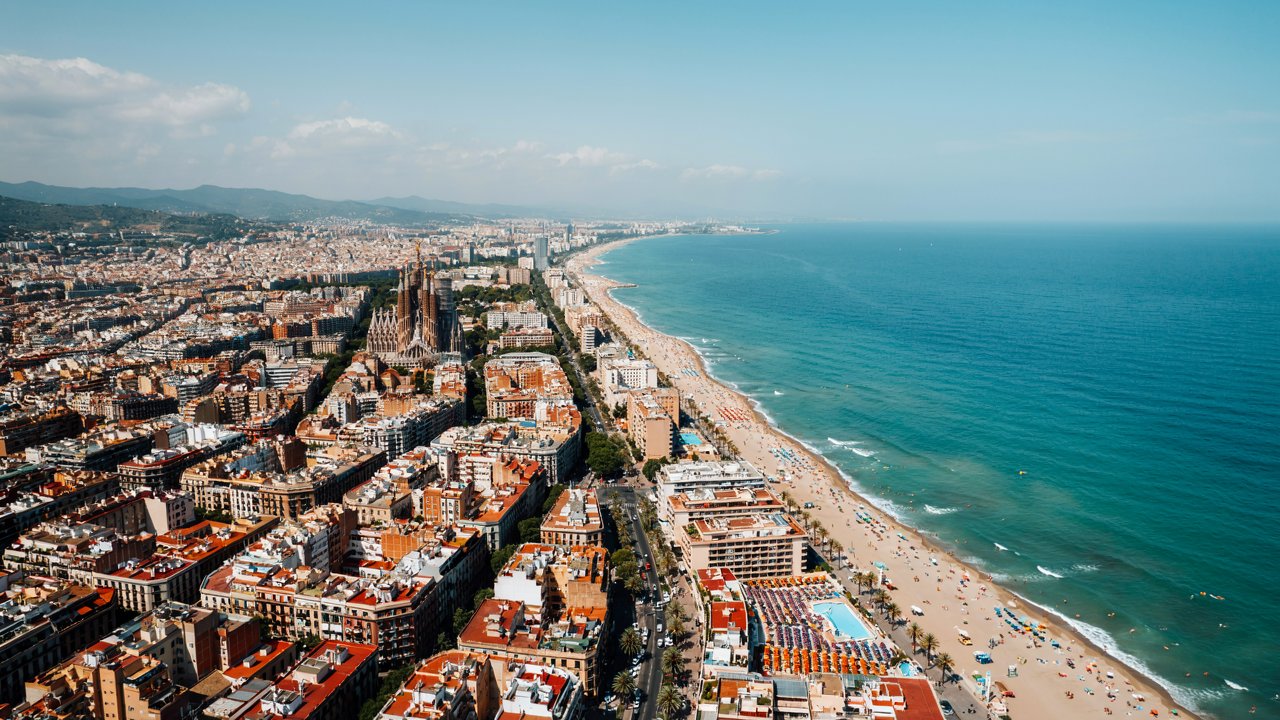
Spain’s travel and tourism industry is expected to contribute more than €269 billion to the national economy in 2026, supported by expanding international demand, stronger business travel expenditure and continued hospitality investment. The latest projections from the World Travel & Tourism Council (WTTC) indicate that tourism-related economic activity could grow by 4.1%, exceeding the anticipated expansion of Spain’s overall economy and the wider European travel sector. With international business visitor spending forecast to rise by 8.1%, the outlook reinforces Spain’s importance as a destination for leisure holidays, corporate travel, conferences and hotel development.
Spain’s Tourism Economy Enters a New Phase of Expansion
Spain’s tourism industry is moving towards another significant economic milestone as its contribution to national output is forecast to exceed €269 billion.
Advertisement
Advertisement
The projection represents growth of 4.1% in 2026, an upward revision from the earlier estimate of 3.7%.
This improvement suggests that the tourism sector continues to benefit from international demand, established transport connectivity and a diversified hospitality market.
Advertisement
Advertisement
Tourism growth is also expected to exceed the country’s projected overall economic expansion of 2.7%.
The difference highlights the importance of tourism as a source of economic activity across accommodation, aviation, food services, entertainment and visitor experiences.
Advertisement
Advertisement
However, the €269 billion figure represents the sector’s estimated total economic contribution, including direct, indirect and induced effects. It should not be interpreted as hotel revenue or international visitor spending alone.
Spain Outpaces European and Global Tourism Growth Forecasts
Spain’s projected tourism expansion compares favourably with estimates for Europe and the wider world.
Advertisement
Advertisement
WTTC anticipates growth of 3.1% across European travel and tourism and 2.5% globally in 2026.
Spain’s stronger projection reflects its established international visitor market and substantial domestic tourism infrastructure.
| Economic indicator | 2026 forecast |
|---|---|
| Spain travel and tourism contribution | More than €269 billion |
| Spain tourism economic growth | 4.1% |
| Previous Spain tourism growth forecast | 3.7% |
| Spain overall economic growth | 2.7% |
| European travel and tourism growth | 3.1% |
| Global travel and tourism growth | 2.5% |
| Spain international business visitor spending growth | 8.1% |
International Business Travel Creates Fresh Opportunities for Spanish Hotels
One of the most important developments in the 2026 outlook is the expected increase in international business visitor spending.
WTTC forecasts an 8.1% rise, indicating growing opportunities for accommodation providers, conference venues and business-oriented hospitality services.
Advertisement
Advertisement
Madrid and Barcelona are particularly relevant to this segment because of their established convention infrastructure, international airports and corporate activity.
Valencia, Málaga and other Spanish cities also offer conference facilities and business tourism experiences.
Higher business visitor expenditure can support hotel demand beyond traditional summer holiday periods.
Corporate travellers may also generate additional spending through restaurants, local transport, meeting facilities and cultural activities.
The forecast nevertheless concerns expenditure growth, not an equivalent increase in business traveller numbers.
Record Tourism Performance in 2025 Provides a Strong Foundation
Spain’s latest outlook follows a substantial contribution from travel and tourism during 2025.
Advertisement
Advertisement
WTTC estimates that the industry generated €259 billion in economic activity, equivalent to 15.3% of national GDP.
The sector also supported approximately 3.2 million jobs, representing around one in seven positions across the country.
International visitor expenditure reached €115.8 billion, while Spain welcomed approximately 96.8 million international arrivals.
These figures demonstrate the scale of the tourism economy and its importance to employment and business activity.
They also establish the previous year’s performance against which the 2026 forecasts can be assessed.
Spain’s Tourism Performance in Numbers
| Tourism indicator | 2025 performance |
|---|---|
| Total travel and tourism economic contribution | €259 billion |
| Tourism contribution to GDP | 15.3% |
| Jobs supported | 3.2 million |
| Share of national employment supported | Approximately one in seven |
| International visitor spending | €115.8 billion |
| International visitor arrivals | 96.8 million |
| International leisure visitor spending | €98.5 billion |
| Share of global international visitor spending | 6.5% |
| Share of European international visitor spending | 15.6% |
| International visitor share of total tourism spending | 58.7% |
The figures underline Spain’s substantial international tourism presence while illustrating the broader importance of domestic travel and related economic activity.
Advertisement
Advertisement
International Tourism Spending Strengthens Spain’s Global Position
International visitors remain central to Spain’s tourism economy, accounting for 58.7% of total tourism expenditure in 2025.
Their spending reached €115.8 billion, representing 6.5% of worldwide international visitor expenditure and 15.6% of Europe’s total.
The performance reflects demand for Spanish coastal holidays, city breaks, cultural experiences and leisure travel.
International leisure visitors alone generated €98.5 billion.
Spain also recorded international visitor spending 21% above its 2019 level, compared with growth of 2.3% across Europe.
These figures suggest that Spain’s recovery has extended beyond visitor numbers to substantial tourism expenditure.
Advertisement
Advertisement
Barcelona, Madrid and Spain’s Coastal Regions Support a Diversified Tourism Market
Spain’s tourism economy extends across major cities, Mediterranean resorts, Atlantic destinations and island communities.
Barcelona and Madrid attract international visitors through cultural attractions, business events, shopping and urban hospitality.
Andalusia combines historic destinations such as Seville, Granada and Córdoba with established coastal tourism centres.
The Balearic Islands, including Mallorca and Ibiza, remain important Mediterranean holiday destinations, while the Canary Islands offer year-round leisure opportunities.
Valencia and the Costa Blanca contribute further diversity through beaches, gastronomy and cultural attractions.
Official 2025 arrival figures illustrate the geographical distribution of international tourism.
Advertisement
Advertisement
| Spanish destination region | International tourist arrivals in 2025 |
|---|---|
| Catalonia | 20.06 million |
| Balearic Islands | 15.71 million |
| Canary Islands | 15.69 million |
| Andalusia | 14.47 million |
| Valencian Community | 12.42 million |
| Madrid Region | 9.11 million |
These are regional arrival figures, not individual city totals.
United Kingdom, France and Germany Remain Essential International Markets
European travellers continue to play an important role in Spain’s visitor economy.
The United Kingdom, France and Germany were the country’s three largest international source markets in 2025.
Official statistics show that Spain received approximately 19.07 million visitors from the United Kingdom, 12.80 million from France and 12.02 million from Germany.
These markets support airlines, accommodation providers, travel agencies and regional tourism businesses.
Their importance also demonstrates how Spain’s geographical accessibility and extensive air connectivity contribute to international demand.
Advertisement
Advertisement
However, changes in household spending, airline capacity and travel preferences can influence future arrivals.
Tourism Growth Creates Opportunities for Hotels and Investors
Spain’s economic outlook offers important considerations for hotel operators and hospitality investors.
Increasing visitor expenditure can support demand for accommodation, restaurants, entertainment and premium tourism experiences.
Business travel growth may also create opportunities for conference hotels and properties serving corporate customers.
However, national tourism expansion does not guarantee stronger financial performance for every hotel.
Operating costs, labour availability, regional competition and seasonal demand remain important factors.
Advertisement
Advertisement
Investors must therefore distinguish between overall tourism economic growth and individual property profitability.
Sustainable Destination Management Becomes a Strategic Priority
The tourism industry’s future development will depend on how effectively Spain balances economic opportunities with environmental and community considerations.
WTTC has identified sustainability, responsible destination management, innovation and workforce development as important priorities.
These include reducing excessive seasonal concentration, encouraging travel beyond established tourism hotspots and supporting residents’ quality of life.
Greater destination diversification could help smaller communities benefit from tourism expenditure.
Digital technology and artificial intelligence may also improve operational efficiency and visitor services.
Advertisement
Advertisement
At the same time, investment in workforce training remains essential for maintaining hospitality standards and supporting smaller tourism businesses.
Frequently Asked Questions
1. How much is Spain’s tourism economy expected to contribute in 2026?
WTTC forecasts a contribution exceeding €269 billion, representing projected growth of 4.1%.
2. Is Spain’s tourism industry growing faster than Europe’s?
According to WTTC’s 2026 projections, Spain’s 4.1% growth exceeds the European tourism forecast of 3.1%.
3. Which countries send the most international tourists to Spain?
Advertisement
Advertisement
The United Kingdom, France and Germany were Spain’s largest international source markets in 2025.
4. Which Spanish regions receive the most international tourists?
Catalonia, the Balearic Islands, the Canary Islands and Andalusia recorded particularly substantial international arrival volumes in 2025.
5. Why is business tourism important for Spain?
Business visitors support accommodation, conference venues, restaurants and transport services. Their expenditure is forecast to increase by 8.1% in 2026.
6. Does the €269 billion forecast represent international tourist spending?
Advertisement
Advertisement
No. It represents the estimated overall economic contribution of travel and tourism, including its wider effects on the national economy.
Spain’s Tourism Outlook Signals Continued Economic Opportunities
Spain’s projected €269 billion tourism contribution illustrates the sector’s continuing importance to national economic activity, employment and international competitiveness.
Strong leisure demand, expanding business travel expenditure and established international source markets provide a foundation for further development.
However, maintaining that momentum will require responsible destination management, workforce investment and improved tourism infrastructure.
As 2026 progresses, Spain’s challenge will be to convert its considerable international appeal into sustainable economic benefits across its cities, coastal regions and island communities.
Advertisement
