
Ladakh Hanle Dark Sky Reserve: How Women Lead India’s Astro-Tourism Revolution

Published
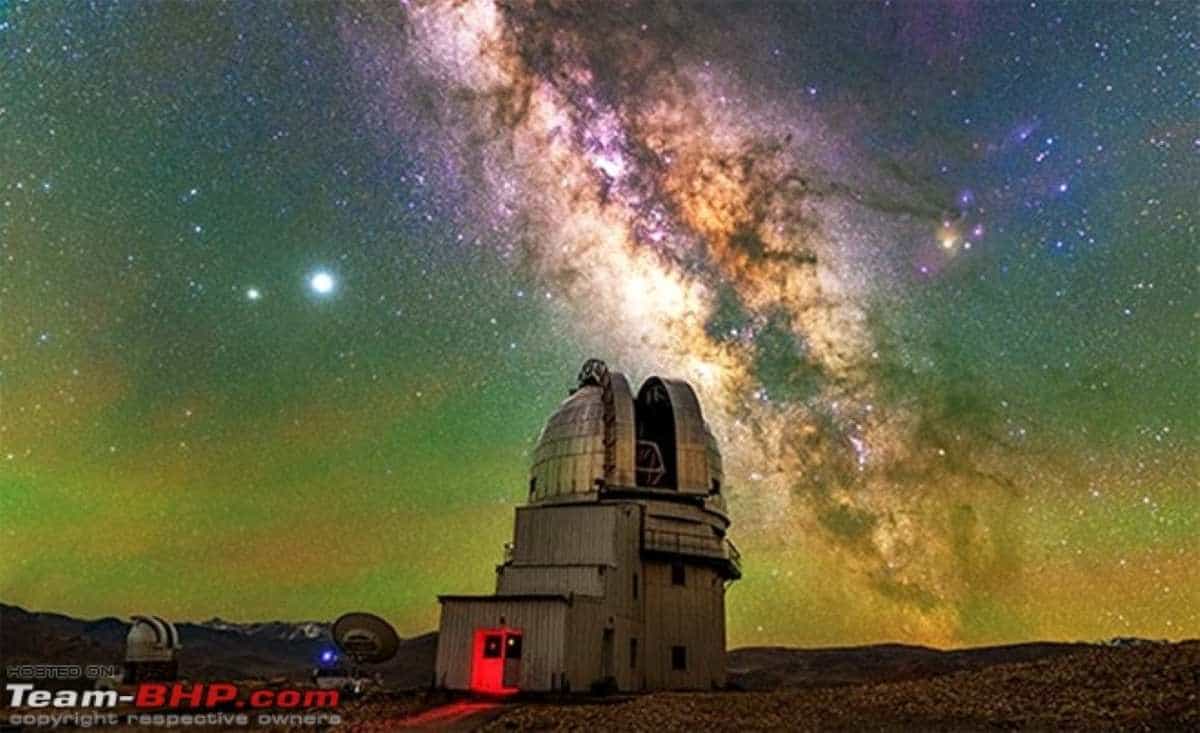
In the remote high-altitude heights of Hanle, Ladakh, a remarkable transformation is observed as a new generation of villagers rewrites the narrative of life in the high Himalayas. Situated at an elevation of 4,500 metres above sea level, Hanle is home to India’s first designated Dark Sky Reserve, established in December 2022. This high-altitude, low-moisture environment within the Changthang Wildlife Sanctuary provides exceptional sky clarity and minimal light pollution, rendering it an optimal location for astronomical observation. Since the installation of the 2-metre Himalayan Chandra Telescope in the year 2000 by the Indian Institute of Astrophysics (IIA), several instruments have been established atop Dig-pa-ratsa Ri and its foothills. To involve local communities directly in the preservation and management of this pristine resource, a collaborative initiative was launched by the Union Territory administration, the Ladakh Autonomous Hill Development Council (LAHDC) Leh, and the Indian Institute of Astrophysics. Through this program, locally trained astronomy ambassadors—predominantly women—have been equipped with telescopes and week-long training to guide visitors, thereby bridging the gap between cutting-edge astronomical science and local community engagement.
Impact on travellers
Travelers arriving in the high-altitude region are offered an immersive cosmological experience that diverges significantly from conventional tourism. Visitors are welcomed by local homestay hosts and guided through some of the clearest night skies on Earth, where celestial wonders such as the Milky Way, Jupiter, Andromeda, and Neptune are observed with remarkable clarity. By day, tourists engage with the rugged landscapes, local culture, and historical landmarks such as the 17th-century monastery; by night, they participate in structured stargazing sessions facilitated by trained local experts. This form of astro-tourism encourages a deeper connection with the cosmos, prompting travelers to respect local environmental guidelines, adhere to strict light management protocols, and appreciate the unique nocturnal ecosystem of the Changthang region.
Industry insights
Advertisement
Advertisement
The emergence of Hanle as a premier astro-tourism hub provides critical industry insights into the intersection of scientific research, sustainable community development, and niche tourism. Institutional stakeholders, including officials from the Department of Science and Technology and the Indian Institute of Astrophysics, note that the integration of local populations into scientific preservation serves as a viable model for remote regions. By transforming traditional nomadic herders and unemployed youth into skilled astronomy ambassadors, the local economy is substantially stimulated. Homestays and hospitality ventures have expanded across the village, empowering women economically and generating new streams of livelihood. Furthermore, the establishment of the Hanle Dark Sky Reserve Local Area Committee ensures that traditional governance structures work alongside institutional observers to monitor light pollution and protect the natural night sky as a shared economic and scientific asset.
Practical information
Advertisement
Advertisement
Practical navigation and participation within the Hanle Dark Sky Reserve require adherence to specific conservation and travel guidelines. Visitors typically access the remote village via Leh, journeying through high mountain passes while preparing for extreme cold and high-altitude conditions. Accommodation is largely managed through community-run homestays, where visitors are hosted by local residents who double as astronomy guides. Strict light management plans are enforced throughout the village to prevent light pollution, requiring outdoor lights to be shielded and indoor lighting to be managed with curtains. Astronomy ambassadors utilize portable telescopes provided through institutional partnerships to guide small groups, offering a structured educational experience that highlights both deep-sky objects and local cultural heritage.
Comparison with previous policies or developments
Historically, the remote communities of Hanle relied primarily on pastoral nomadism, subsistence agriculture, or seasonal labor, with limited economic integration into mainstream tourism or scientific endeavors. Previous developmental paradigms often overlooked local populations in the management of high-altitude scientific installations, treating the Indian Astronomical Observatory as an isolated entity. The contemporary framework established by the Dark Sky Reserve notification and subsequent community-led initiatives marks a distinct policy shift. Instead of excluding residents from conservation zones, current policies actively position local youth and women as primary stewards of the environment. By providing formal training, telescopes, and structured homestay opportunities, recent developments have successfully aligned scientific preservation with grassroots economic empowerment, contrasting sharply with historical models of passive conservation.
Image Source- Team BHP
Advertisement
