

Spain Joins France and More to Tighten Schengen Border Checks as Europe Faces a Growing Travel Security Divide

Published
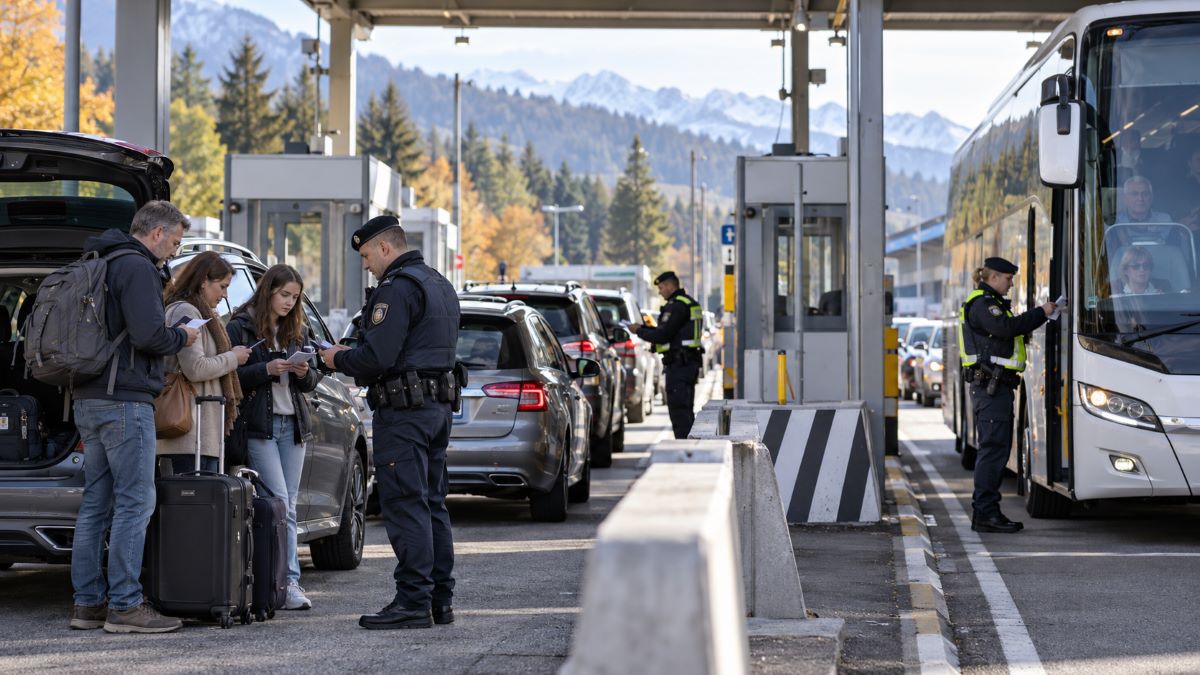
Europe’s border-free travel system is facing a fresh security challenge as Spain, France, Italy, Germany and Austria maintain temporary Schengen border checks. Spain’s latest restrictions involving Italy began on 8 October 2026, while France, Germany and Austria continue separate controls across major European travel routes. Migration concerns, organised crime and geopolitical tensions are driving these decisions. For tourists, the changes raise practical questions about passports, airport checks, ferry journeys and cross-border holidays. Schengen remains open, but travelling between certain European countries may now involve additional document inspections. Understanding where these checks apply is becoming increasingly important for planning a smooth European holiday.
Schengen Border Controls in October 2026: Which Countries and Travel Routes Are Affected?
The European Commission’s official notifications confirm that the five countries have introduced or extended restrictions covering different borders.
| Country | Current control period | Affected travel corridors |
|---|---|---|
| Spain | 8–22 October 2026 | Air and sea connections with Italy |
| Italy | 1–16 October 2026 | Air and sea connections with Spain |
| France | Until 31 October 2026 | Land, air and sea borders with Spain, Italy, Germany, Belgium, Luxembourg and Switzerland |
| Germany | Until 15 March 2027 | Land borders with nine neighbouring countries |
| Austria | Until 15 March 2027 | Specified borders with Czechia, Hungary, Slovakia and Slovenia |
These restrictions are not a Europe-wide border closure. Each country has different security concerns and inspection arrangements.
For travellers, the essential distinction is which country is conducting checks, at which border and through which transport route.
Advertisement
Advertisement
Spain–Italy Border Dispute: How the Ceuta Migration Crisis Reached European Tourism Routes
The Spain–Italy disagreement provides the clearest example of how a local migration emergency can affect international travel.
Italy introduced temporary controls involving Spain on 1 August 2026, following exceptional irregular migration movements into Ceuta, Spain’s autonomous city in North Africa.
Advertisement
Advertisement
Madrid challenged Rome’s decision. Spain argued that Ceuta’s special Schengen arrangements prevent irregular entrants from automatically travelling throughout the wider area.
Spain subsequently imposed corresponding checks on travellers arriving from Italy.
Advertisement
Advertisement
Italy’s Foreign Ministry confirmed the measures and strengthened consular assistance for its citizens travelling to Spain.
The wider significance extends beyond migration. A dispute concerning an external European border has created additional security procedures on established Mediterranean tourism connections.
This demonstrates how national disagreements can influence travel arrangements far from the original source of concern.
France Maintains Schengen Travel Checks Across Western Europe’s Busiest Holiday Corridors
France’s restrictions cover several important international travel routes, including connections with Spain, Italy and Germany.
Advertisement
Advertisement
French authorities cite terrorism, irregular migration, criminal smuggling networks and international instability among their security concerns.
The current notification remains valid until 31 October. France has already registered a further control period from November 2026 through April 2027.
For tourists, this means that international journeys involving France may include identity inspections even when both destinations belong to Schengen.
Rail passengers, motorists and international coach travellers should pay particular attention to their travel documents.
However, the existence of border checks does not establish that every service faces delays or that specific routes have been suspended.
Germany and Austria Expose a Little-Known Schengen Border Rule That Travellers Often Overlook
Germany maintains controls at its land borders with Austria, France, Poland, Switzerland, the Netherlands and four other neighbours.
Advertisement
Advertisement
Its current notification extends until March 2027.
Austria also maintains security measures, but these apply to specified borders with Czechia, Hungary, Slovenia and Slovakia.
One detail makes this particularly important for road travellers: Germany lists its border with Austria, but Austria does not list Germany under its current notification.
Border-control arrangements are therefore not necessarily identical in both directions.
For holidaymakers driving through the Alps, the country conducting an inspection can matter more than simply whether the journey crosses an international boundary.
The distinction also shows why travellers should consult official national guidance instead of relying on general Schengen travel headlines.
Advertisement
Advertisement
European Flights, Ferries and Road Trips: Where Extra Border Checks Could Affect Holiday Plans
The practical effects depend on how travellers move between destinations.
An Italy–Spain flight or ferry journey falls within the scope of the two countries’ corresponding notifications.
France’s wider controls may affect international rail journeys, road holidays and other cross-border transport services.
German checks are particularly relevant to motorists travelling across its land borders.
The main concern for multi-country itineraries is uncertainty. Travellers arranging tightly connected transport services have less flexibility if an inspection takes longer than expected.
This does not mean tourists should cancel European holidays.
Advertisement
Advertisement
There is currently no verified evidence establishing widespread tourism cancellations or a uniform increase in waiting times caused by these restrictions.
The more useful approach is to assess each journey separately.
Schengen Travel Documents in 2026: What Tourists Must Carry Before Crossing Borders
Temporary controls do not automatically introduce new visas or cancel existing Schengen travel rights.
However, travellers should keep their documents readily available.
Essential preparations include:
- EU travellers: Carry a valid passport or national identity card.
- Non-EU tourists: Keep a valid passport and any required visa or residence documentation accessible.
- Connecting passengers: Allow flexibility between international flights, trains and ferries.
- Road travellers: Check the relevant country’s current border-control notification.
- Families: Ensure children carry the required individual travel documents.
For eligible non-EU visitors, the standard Schengen short-stay limit remains 90 days within any 180-day period.
Advertisement
Advertisement
Europe’s Entry/Exit System, fully operational since April 2026, separately records eligible non-EU travellers crossing external borders. It does not replace temporary internal identity checks.
Spain, France, Germany and Italy’s Tourism Growth Reveals the Economic Stakes
The consequences of uncertain cross-border travel arrangements matter because European tourism operates on an enormous scale.
According to Eurostat, EU tourist accommodation establishments recorded 1.321 billion overnight stays during January–June 2026, increasing 1.7% from the previous year.
International visitors accounted for 48.9% of those nights.
Spain’s latest official tourism figures provide another illustration.
In August 2026, Spain received 12.3 million international tourists, including:
Advertisement
Advertisement
| Visitor country of residence | Arrivals in Spain, August 2026 |
|---|---|
| France | 2.06 million |
| Germany | 1.36 million |
| Italy | 893,562 |
These figures reflect strong international tourism connections, not measured losses from border controls.
Nevertheless, they explain why predictable travel procedures matter to airlines, hotels, tour operators and visitors planning several European destinations.
Europe’s Schengen Security Divide Deepens as EU Leaders Prepare for Crucial October Talks
Europe’s security debate now extends beyond migration management.
European Council President António Costa’s invitation for the 15–16 October 2026 summit places migration, Russia’s hybrid activities, security and economic competitiveness on the agenda.
The wider policy challenge is significant.
The European Commission’s 2026 State of Schengen Report recorded a 26% decline in irregular crossings at external borders during 2025.
Advertisement
Advertisement
Despite that reduction, individual governments continue to identify security threats requiring internal controls.
The central issue is whether national border inspections remain proportionate when Europe is strengthening shared security systems.
For the tourism industry, the greatest long-term risk is not necessarily an individual document check. It is losing the predictability that makes multi-country European travel convenient.
October 2026 Schengen Border Deadlines: What Travellers Should Watch Next
The following dates will help determine whether the present restrictions change.
| Date | Development to monitor |
|---|---|
| 15–16 October | European Council summit on migration and security |
| 16 October | Scheduled expiry of Italy’s current controls involving Spain |
| 22 October | Scheduled expiry of Spain’s current corresponding controls |
| 31 October | End of France’s present notification; a further period is already registered |
| 15 March 2027 | Current notified expiry for Germany and Austria |
An expiry date does not guarantee that checks will end. Governments can notify further measures where EU law permits.
Travellers should verify the latest restrictions close to departure.
Advertisement
Advertisement
What Europe’s Growing Schengen Border Security Divide Ultimately Means for Tourists
Spain joins France and more European countries in maintaining tighter Schengen border checks as governments respond to migration concerns and wider security threats. Italy’s dispute with Spain, France’s extensive restrictions and Germany’s and Austria’s separate controls highlight different national approaches.
Yet Schengen remains open for tourism.
The real challenge is preserving convenient international travel while protecting public safety.
For visitors, reliable documents, flexible connections and updated official information offer the best preparation. For Europe’s tourism economy, the priority is ensuring that necessary security measures do not gradually erode the freedom and convenience that make cross-border European holidays so attractive.
In conclusion, Spain joins France and more European countries, including Italy, Germany and Austria, in tightening Schengen border checks as Europe faces a growing travel security divide. These isolated national measures are being pushed by migration pressure, organised crime and geopolitical threats and are causing worries about seamless cross-border tourism. Schengen will be open, but there could be some extra checks of identities on some flights, ferries and land routes. Tourists will need to be ready for a different way of traveling as security concerns will dictate the shifting of travel priorities in Europe.With security concerns reshaping European travel, tourists need to bring the appropriate documentation with them and plan flexible travel. Europe’s challenge is to make the border more secure without sacrificing freedom of movement that is essential to the tourism industry.
Advertisement
