
Morocco’s Skoura and Drâa Valley Bring New Date Harvests, and Kasbah Stays Together

Published
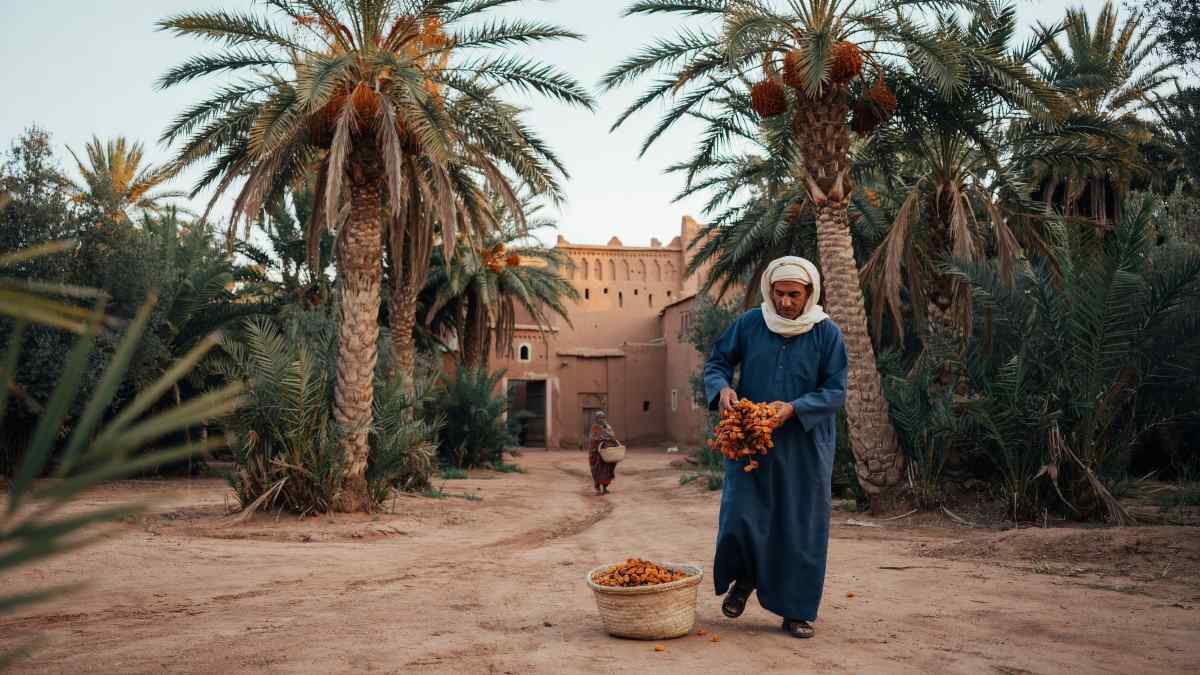
Image generated with Ai
The Skoura oasis and Drâa valley in Morocco are in the middle of their date harvest season, thus attracting visitors to a land where agriculture, renovated mud-brick buildings, mountain views, and desert encounters make up their travel experience. This date harvest gives visitors a chance to visit other parts of southern Morocco apart from the cities. Travellers can have walks in the morning in the oasis groves, stay in kasbahs, visit the local agricultural lands, and travel to the Drâa valley.
Skoura’s Oasis Becomes a Seasonal Tourism Destination
Advertisement
Advertisement
Skoura, located east of Ouarzazate, is one of southern Morocco’s best-known oasis landscapes. Its palm groves contain date palms alongside olive, almond and fruit trees, creating a productive agricultural environment around historic settlements.
The Skoura palm grove is also associated with a concentration of kasbahs and ksour built from local earth. These structures form part of the cultural landscape surrounding the oasis and provide an important link between agriculture, architecture and tourism.
Advertisement
Advertisement
During the date season, the palms become particularly relevant to visitors interested in local food and traditional farming. Harvesting dates remains a seasonal agricultural activity across Morocco’s oasis regions, with timing varying according to location, variety and weather.
Date Harvest Adds an Agricultural Dimension
Advertisement
Advertisement
Morocco is one of North Africa’s significant date-producing countries, with production concentrated across oasis areas in the south and southeast.
The country’s Ministry of Agriculture has continued to support the development of the date sector through programmes covering palm-grove rehabilitation, irrigation, production and value-added activities.
For visitors, the harvest season provides a way to understand how oasis agriculture operates in an environment where water availability shapes settlement and farming. Guided walks can introduce travellers to palm cultivation, irrigation systems and the crops grown beneath the date canopy.
The agricultural landscape also creates opportunities to sample fresh and dried dates and other regional products, depending on local availability and harvest schedules.
Rammed-Earth Kasbahs Remain Central to the Experience
The architecture of Skoura is closely connected to its oasis environment. Traditional kasbahs and fortified villages were constructed using earth-based materials, including rammed earth, known locally as pisé.
Advertisement
Advertisement
Rammed-earth construction uses layers of compacted soil to create thick walls. In southern Morocco, the technique developed alongside the availability of local materials and the need for buildings suited to hot, dry conditions.
Several historic kasbahs around Skoura have been restored or adapted for tourism. Some operate as accommodation, allowing visitors to sleep within traditional architectural settings while remaining close to the palm groves.
Restoration projects can also help preserve architectural knowledge and maintain historic buildings that form part of the oasis landscape.
Morning Walks Offer Access to the Oasis
September and October can provide more comfortable conditions for exploring southern Morocco during the cooler parts of the day.
Travellers staying in Skoura can walk or cycle through sections of the palm grove, passing agricultural plots, irrigation channels, mud-brick structures and villages.
Advertisement
Advertisement
Morning excursions are particularly suited to the oasis environment because temperatures can rise considerably later in the day. Visitors should still carry water, use sun protection and follow locally recommended walking routes.
The surrounding Atlas landscapes provide an additional dimension. From Skoura, travellers can arrange excursions towards the High Atlas foothills, Ouarzazate and the wider Valley of Roses.
The Drâa Valley Extends the Journey South
The Drâa Valley stretches south from the Zagora area through a long chain of palm groves, villages and fortified settlements.
Agdz provides an important gateway to the valley, while Zagora is one of its principal tourism bases. The route between these destinations passes through landscapes where date palms line sections of the Drâa River and traditional settlements sit among arid mountains.
The valley’s oasis system is closely connected with agriculture. Dates, cereals, olives and other crops are cultivated where irrigation allows farming to continue in the dry environment.
Advertisement
Advertisement
For travellers, this creates a landscape in which agricultural communities and historic architecture remain visible along the journey.
Kasbah Stays Connect Heritage With Rural Tourism
Accommodation in southern Morocco includes restored kasbahs, guesthouses, boutique properties and desert camps.
Staying in a restored kasbah can place visitors directly within historic villages and oasis landscapes. Properties vary considerably, from simple traditional accommodation to higher-end guesthouses with gardens, courtyards, restaurants and organised excursions.
Travellers can combine these stays with guided cultural visits, cooking experiences, agricultural walks and trips into the surrounding desert.
A multi-night itinerary can therefore connect Ouarzazate with Skoura before continuing towards Agdz and Zagora, allowing visitors to experience different forms of southern Moroccan landscape and accommodation.
Advertisement
Advertisement
Desert Nights Add Another Travel Experience
The low population density around sections of the Drâa Valley provides opportunities for visitors to experience darker night skies than in Morocco’s larger urban centres.
Desert and oasis accommodation frequently offers outdoor terraces and courtyards where guests can experience the night environment without extensive urban lighting.
For travellers interested in astronomy, local conditions should still be checked because moon phase, cloud cover, dust and seasonal weather can affect visibility.
The region’s dry climate and open landscapes also make sunrise and sunset experiences a significant part of desert itineraries.
Getting Around Skoura and the Drâa Valley
Advertisement
Advertisement
Ouarzazate is the main transport gateway for travellers arriving by air, with road connections linking the city to Skoura and the wider southern region.
Skoura is approximately 40 kilometres northeast of Ouarzazate. The journey takes visitors from the city towards the oasis landscape and its historic kasbahs.
From Skoura, travellers can continue south towards Agdz and the Drâa Valley. Zagora is considerably farther south, making the route more suitable for a multi-day itinerary rather than a short excursion.
Private transfers, rental cars and organised tours are commonly used for journeys through the region. Travellers should allow additional time for mountain and rural roads.
Autumn Brings Agriculture and Heritage Together
With autumn being the season for dating in Skoura and the Drâa Valley, it forms part of a tourist circuit where tourism and agriculture blend into one experience. The experience that tourists get is one where they traverse palm groves, ancient mud villages, and mountainous areas while enjoying local food and farming activities. Kasbahs that have been renovated and the Drâa Valley forming part of their journey to Zagora, make the region of southern Morocco an ideal route during the autumn period.
Advertisement
