Angana Dutta Angana Dutta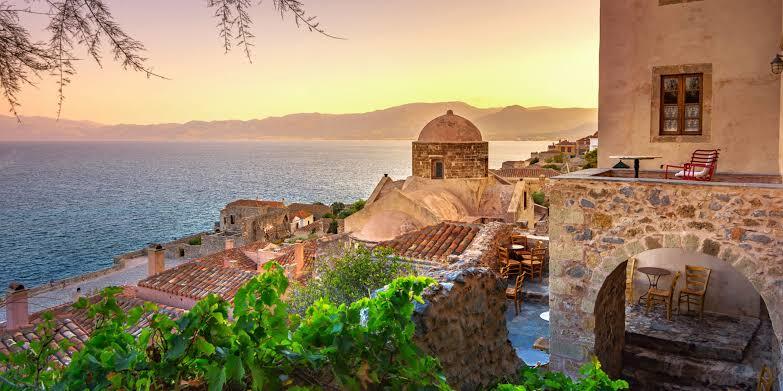
Image Credit :https://greeceinsiders.travel/castles-fortresses-of-the-peloponnese/
Greece aims to build a stronger connection with high-worth US travel buyers, which is why the Peloponnese is taking a new tourism campaign to Manhattan and Long Island. The Region of Peloponnese says their push for tourism will target New York on 10 and 11 November 2026. The Peloponnese will offer two B2B workshops focused on luxury travel. The workshops are meant to connect local tourism businesses to tour operators and travel agents as well as buyers and other professionals that are interested in travel. This is important because it aims to promote partnerships to better build on the region’s strategy for a greater global reach beyond its European tourist base.
Advertisement
The Region of Peloponnese announced on 4 September 2026 that Visit Peloponnese will participate in ten international tourism exhibitions and specialised business-to-business workshops between September and December. The programme covers several priority European markets while also strengthening the region’s presence in North America.
The New York component is particularly significant. On 10 and 11 November 2026, Visit Peloponnese is scheduled to participate in the Greek Luxury Tourism Workshop through two B2B sessions in Manhattan and Long Island, with an explicit focus on luxury travel.
Advertisement
Advertisement
The campaign is not framed simply as destination advertising. The regional authority says the wider programme is intended to generate direct contact with tour operators, travel agents, buyers and tourism professionals, creating opportunities for new commercial partnerships.
That distinction gives the New York activity greater importance for the local tourism industry. The objective is not merely to make American travellers aware of the Peloponnese, but to place its hotels, experiences and destinations closer to companies that design and sell international holidays.
New York is one part of a much wider international schedule.
According to the official 4 September announcement, Visit Peloponnese plans ten appearances across tourism exhibitions and B2B events from September through December. The programme stretches from European source markets to the United States.
The strategy includes activity connected with Paris, Naples, Rotterdam, London, Athens, New York, Stockholm and Warsaw. It targets established European markets while giving additional attention to North America and specialist travel segments.
The regional authority identifies luxury, active and experiential tourism among those specialist segments. That creates a more diversified proposition than marketing the Peloponnese solely around conventional summer holidays.2026 tourism activity Market or destination Main purpose International tourism programme September–December Expand international trade presence WTM London London, 3–5 November International tourism trade engagement B2B activity at WTM London, 3 November Direct meetings with travel professionals Marathon Expo Athens, 4–7 November Promote sports, outdoor and experiential travel Greek Luxury Tourism Workshop Manhattan, 10–11 November Luxury travel B2B engagement Greek Luxury Tourism Workshop Long Island, 10–11 November Luxury travel B2B engagement Wider campaign European and North American markets Develop new tourism partnerships
Source: Region of Peloponnese, announcement dated 4 September 2026.
The Region has described North America as an area where it wants to strengthen the destination’s presence. The decision to use dedicated luxury workshops therefore sits within an officially stated market-development strategy rather than an isolated promotional appearance.
For tourism companies in the Peloponnese, specialised B2B workshops offer a different route to market from large consumer advertising campaigns. Travel designers and tour operators can build itineraries around specific hotels, experiences, archaeological sites, outdoor products and local destinations.
This can be especially relevant in luxury tourism, where holidays are often built around several components rather than one standard package. Accommodation, private transport, cultural activities, gastronomy, wellness and personalised excursions may all become part of a single itinerary.
The regional announcement does not publish booking or revenue targets for the New York workshops. It would therefore be premature to attach a forecast for US visitor numbers or spending to the initiative.
The New York campaign follows earlier trade-focused work during 2026.
In May, the Region organised the AdventureWEEK Peloponnese Marketplace in cooperation with the Adventure Travel Trade Association and the Greek National Tourism Organisation. The B2B event was designed to connect the region’s tourism businesses directly with international tour operators, travel designers and media.
The official programme included 18 international buyers from markets including the United States, United Kingdom, France, Canada, Netherlands, Italy and Poland. Each selected Peloponnese participant was expected to hold roughly 20 to 30 pre-arranged meetings, based on a specialist matchmaking process.
That earlier initiative helps explain the direction of the September announcement. The Region is increasingly using structured business meetings alongside conventional tourism promotion.
This creates continuity between adventure tourism, experiential travel and the new luxury-focused activity in New York.
The Peloponnese has a tourism product that spans very different travel segments.
The Region’s AdventureWEEK initiative focused on adventure, nature, wellness and authentic experiences. Its September-to-December international programme now adds stronger visibility for luxury tourism while continuing to promote active and experiential travel.
This mix is important because it allows the destination to approach different travel buyers with different products.
A travel company specialising in hiking or nature holidays requires a different proposition from a luxury travel designer arranging high-end accommodation, private touring and gastronomy. The Region’s strategy is increasingly structured to accommodate both.
The official programme also includes the Marathon Expo in Athens from 4 to 7 November, where the Peloponnese plans to promote sports, active, outdoor and experiential tourism.
Outdoor tourism has become another visible part of the destination strategy.
The Region describes Peloponnese Trails as a developing network of major routes and landmark paths connecting landscapes, settlements and cultural sites across the Peloponnese. The project has featured prominently in its adventure-tourism activity.
That network can support the broader attempt to market the destination beyond traditional beach holidays. Hiking and active tourism can create reasons to travel during periods when summer resort demand is lower.
The Region has not presented the New York luxury programme as a hiking campaign. However, the coexistence of luxury, outdoor and experiential products shows how Visit Peloponnese is building several tourism propositions under one destination brand.
For international travel sellers, this can provide more flexibility when creating itineraries for different traveller profiles.
The international campaign comes during a strong year for Greece’s visitor economy.
According to Bank of Greece provisional data released on 21 August 2026, travel receipts reached €8.80 billion during January–June 2026, increasing by 14.8% compared with the same period in 2025. Inbound traveller flows increased by 15.4%.
June alone generated €3.48 billion in travel receipts, up 1.2% year on year. Inbound travel during the month increased by 6.9%, although average expenditure per trip declined by 6.2%.
These are national Greek tourism figures, not Peloponnese-specific results. They should not be used to claim that the region itself recorded equivalent growth.
They do, however, show the tourism environment in which the regional campaign is operating.Official Greek tourism indicator Period Result Year-on-year change Travel receipts Jan–Jun 2026 €8.80 billion +14.8% Inbound travel flows Jan–Jun 2026 — +15.4% June travel receipts June 2026 €3.48 billion +1.2% June inbound flows June 2026 — +6.9% June average spending per trip June 2026 — -6.2% Travel balance surplus Jan–Jun 2026 €6.93 billion —
Source: Bank of Greece, provisional travel balance data released 21 August 2026.
The national data contain an important lesson for destination marketing.
Arrivals alone do not measure the complete economic value of tourism. Spending levels, length of stay, accommodation choices and the distribution of visitor expenditure across the local economy also matter.
That strengthens the logic behind targeting specialist travel markets.
A regional tourism authority seeking luxury, experiential or adventure travellers is not necessarily pursuing only the largest possible visitor count. It may also be trying to attract travellers interested in more complex itineraries and a wider range of local products.
The Region has not published a specific economic return target for the New York workshops, so their success will need to be judged against future commercial partnerships and measurable tourism results rather than promotional activity alone.
International tourism development in the southern Peloponnese is closely connected with Kalamata International Airport.
The Greek Government described Kalamata Airport in May 2026 as a gateway for aviation tourism to the southern Peloponnese and an important asset for the wider region. It said completing the airport’s concession process was a key condition for further tourism development.
The government noted that the airport had been placed in a separate concession process because of its passenger growth, the tourism development of western Messinia and the particular requirements of the airport.
The concession introduces a major infrastructure dimension to the destination’s international marketing strategy.
Marketing can create demand, but airport capacity, passenger services and air links determine how easily many international visitors can reach the region.
The Region of Peloponnese announced in June 2026 that completion of the concession process marked a new phase for Kalamata International Airport. The regional authority linked it with infrastructure upgrades, improvements to the passenger experience and stronger international connectivity.
Earlier regional announcements said planned changes included improvements to airport infrastructure and operations, longer operating hours, additional staffing and plans for a new terminal.
These developments give the wider international tourism campaign a physical transport component.
If the Region succeeds in generating stronger commercial interest through markets such as the United States and Britain, international access will remain an important part of translating that interest into actual holidays.
The Hellenic Civil Aviation Authority reported continued passenger growth across the 24 airports it manages, a group that includes Kalamata.
From January through July 2026, those airports handled 6,990,875 passengers, compared with 6,653,887 during the same seven months of 2025. That represented growth of 5.1%.
The figure includes domestic and international arrivals and departures across all 24 airports. It is therefore not a passenger total for Kalamata Airport alone.
That distinction matters because broad aviation growth should not be presented as direct evidence of equivalent growth in the Peloponnese.
The official data nevertheless demonstrate that the region’s aviation gateway is operating within a national regional-airport system experiencing increased passenger demand.
The B2B model has practical implications for accommodation businesses.
A Peloponnese hotel participating in an international trade programme can potentially meet companies that package or recommend Greek holidays to overseas clients. This is different from marketing directly to individual consumers.
The May AdventureWEEK marketplace explicitly included hotels and tourism accommodation providers, alongside incoming destination management companies, activity providers, municipalities, tourism organisations and destination bodies.
The November New York workshops continue that broader commercial direction.
No official announcement guarantees new hotel contracts as a result of the workshops. Any such outcome should only be reported once confirmed.
Tour operators and travel designers can play an important role in converting destination awareness into bookable itineraries.
The Region’s September announcement repeatedly emphasises direct engagement with tourism professionals. The ten-event programme is structured around both exhibitions and specialised B2B activity.
For the Peloponnese, this is particularly relevant because international travellers may combine several destinations during one journey.
A tour operator can package archaeological sites, coastal stays, historic towns, outdoor experiences and gastronomy into one route. That creates an opportunity for tourism spending to reach several local communities rather than remain concentrated in one resort.
The regional strategy also has implications for smaller operators.
Individual experience providers, destination management companies and local accommodation businesses may find it difficult to build relationships with overseas buyers independently. A regional B2B programme can create a structured point of contact.
AdventureWEEK demonstrated that approach by bringing international buyers into direct meetings with local tourism businesses.
The new international programme extends the concept across multiple markets.
This does not guarantee international sales, but it can give local businesses access to professional networks that influence how destinations appear in future tour programmes.
The choice of New York for a luxury-focused B2B campaign adds another layer to the region’s international positioning.
The Peloponnese already combines archaeological heritage, coastal areas, mountain landscapes, local food, wellness experiences and accommodation across several market levels.
A luxury strategy can package those assets differently.
Instead of competing only on conventional Mediterranean summer demand, specialist travel sellers can build journeys around private or small-group experiences, premium accommodation and personalised itineraries.
The Region itself identifies luxury travel as one of the specialist segments being targeted.
Claims about how much wealthy US travellers will spend in the Peloponnese should, however, wait for official regional data.
Tourism activity supports employment across accommodation, food services, transport, attractions and travel services, but there is no verified official figure linking the November New York campaign to a specific number of new jobs.
No employment estimate should therefore be attached to the workshops.
The relevant economic mechanism is indirect.
If international trade partnerships lead to additional visits and overnight stays, businesses can receive additional demand. Whether that produces measurable employment gains can only be assessed once official labour and tourism data become available.
This approach avoids turning a marketing initiative into an unsupported economic forecast.
The New York luxury travel workshops do not introduce a new visa policy for US visitors.
The Region of Peloponnese announcement concerns destination marketing and B2B tourism partnerships. It does not announce immigration, border or entry-rule changes.
Travellers should therefore continue to check current Greek and Schengen entry requirements through the appropriate official authorities before departure.
This distinction is useful because tourism marketing initiatives and immigration policy are separate matters.
The November activity is a travel-industry event, not a new consumer tourism programme in Manhattan or Long Island.
American travellers are not being offered a new government holiday package as part of the announcement. The workshops are intended to connect tourism professionals and develop commercial relationships.
For travellers, the potential relevance comes later.
New partnerships could influence how Peloponnese holidays are packaged, promoted and distributed through travel companies, but no specific new US package, route or price has been officially confirmed in the 4 September announcement.
Visitors planning the region should therefore continue to book through existing airlines, accommodation providers and authorised travel companies.
The region’s international appeal is broader than any single resort.
The Peloponnese contains internationally recognised archaeological and cultural destinations, historic towns, coastal areas and mountain landscapes. These assets allow tourism operators to construct multi-stop itineraries rather than single-location holidays.
That structure is well suited to experiential travel, which the Region has explicitly identified as a target market.
It also helps explain why B2B distribution matters.
Complex regional itineraries often require coordination between accommodation providers, transport companies, guides and activity businesses. Tour operators and travel designers can connect those elements into products that overseas visitors can purchase more easily.
The official direction is clear.
Visit Peloponnese will continue its international programme through December 2026, using major tourism exhibitions and specialist B2B workshops to reach priority markets in Europe and North America.
Luxury, active and experiential travel remain identified areas of focus.
Infrastructure development is progressing alongside destination marketing, particularly through the new management and planned investment at Kalamata International Airport.
The official announcements do not establish future US arrival targets, tourism receipts or hotel occupancy resulting from the Manhattan and Long Island workshops.
Those outcomes should be measured only when reliable data become available.
The official announcement describes them as B2B luxury tourism workshops scheduled for 10–11 November 2026. Their purpose is professional engagement in the US travel market rather than a new public tourism attraction or consumer event.
No new direct New York–Peloponnese air service is announced as part of the 4 September campaign. Travellers should not interpret the B2B programme as confirmation of a new airline route.
Kalamata International Airport remains an important gateway to the southern Peloponnese, and the Greek Government is advancing its new concession and development framework.
No. The Visit Peloponnese initiative is a destination-marketing and tourism-trade programme. It does not introduce new visa, passport or border rules.
US travellers should check the latest official Greek and Schengen requirements that apply on their actual travel date.
From 10–11 November, the Peloponnese moves into Manhattan and Long Island. Because new events centered around commercial tourism partnerships are a focal point of the Peloponnese’s New York-specific US strategy, this campaign demonstrates strong investment in the sector. The Peloponnese’s strategy also includes an international marketing campaign with ten total events constructed around major European destinations and specialized tourism segments. Tourism promotion from Visit Peloponnese attempts to create direct partnerships between local businesses and international travel buyers. The Peloponnese’s strategy is supported by the planned investment on the developing side of Kalamata International Airport. Of most concern to the regional tourism industry will be concrete data on the international travel impact measured in hotel stays and visits to the Peloponnese.
Region of Peloponnese — Visit Peloponnese international tourism programme, 4 September 2026:
Official Visit Peloponnese announcement
Bank of Greece — Developments in the balance of travel services, June 2026:
Official Bank of Greece tourism data
Greek Government — Kalamata International Airport concession, 26 May 2026:
Official Greek Government announcement
Advertisement
Tags: Greece tourism, Peloponnese, Tourism news, Travel News
Advertisement
Advertisement













Monday, September 7, 2026

Monday, September 7, 2026

Monday, September 7, 2026

Monday, September 7, 2026

Monday, September 7, 2026