
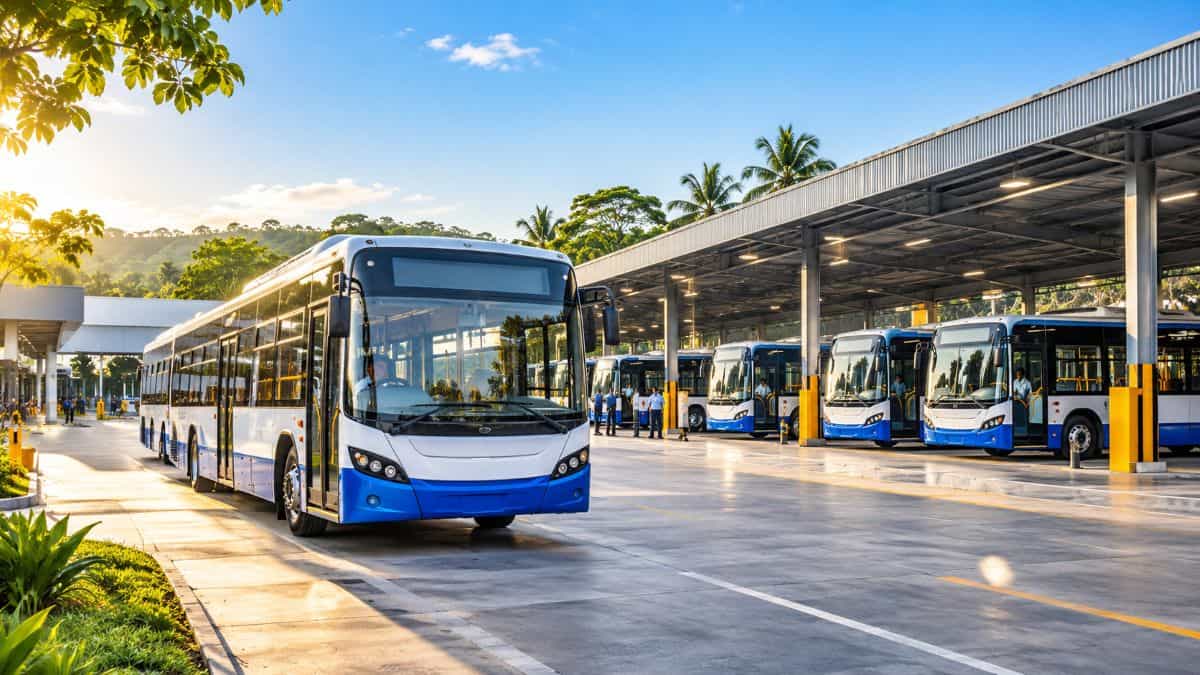
Image generated with Ai
Sri Lanka has expanded its urban public transport infrastructure with the opening of a new metro bus depot in Kadawatha, strengthening the operational foundation for improved bus services across the Western Province. The facility, which began operations on September 7, represents the country’s second metro bus depot and is being managed by Lanka Metro Transit (Private) Company, an organisation established to modernise public transport services.
The development comes as Sri Lanka increases investment in its metro bus network and seeks to improve the efficiency of public transportation. For residents and travellers moving through the Western Province, the expansion could support more organised bus operations and strengthen connectivity between key urban areas. The Transport, Highways and Urban Development Ministry has identified the Kadawatha facility as part of a broader plan to expand metro bus services, alongside additional infrastructure planned elsewhere in the province.
The new Kadawatha depot commenced operations under Lanka Metro Transit (Private) Company, marking another step in the development of Sri Lanka’s metro bus infrastructure. The facility has been established to support a more structured operating system for the country’s expanding bus fleet.
The Transport, Highways and Urban Development Ministry says the depot forms part of a wider programme aimed at expanding metro bus services throughout the Western Province. Kadawatha’s strategic importance within the region makes the new operational base relevant to daily urban mobility as well as travel between surrounding communities.
Advertisement
Advertisement
The introduction of a dedicated depot is significant because bus networks require supporting infrastructure to maintain reliable operations as fleets expand. Running yards and workstations can provide the physical base needed for vehicle deployment, maintenance and operational coordination.
For passengers, the wider objective is to create a more efficient public transport system capable of supporting increasing demand across urban and suburban corridors.
The Kadawatha facility is not an isolated infrastructure project. Plans outlined by the ministry include additional running yards in Ratmalana and central workstations in Talangama and Homagama.
This planned network of facilities indicates that Sri Lanka is developing its metro bus system through a broader operational structure rather than relying on a single depot. The approach could allow services to be supported from multiple locations as the network grows.
Advertisement
Advertisement
The Western Province is particularly important to Sri Lanka’s transport system because of its concentration of population, commercial activity and urban travel. Improvements to public transport infrastructure in the region therefore have implications beyond individual bus routes.
For domestic and international travellers, stronger public transport operations can also contribute to easier movement through urban areas, particularly where visitors depend on buses to reach residential districts, commercial centres and transport connections.
Sri Lanka’s metro bus expansion is also being supported by growth in the vehicle fleet. According to the ministry information cited in the report, 104 new metro buses have been added to the fleet in recent months.
The increase provides additional capacity for the expanding network and creates greater demand for properly organised operating facilities. The Kadawatha depot is therefore part of a wider transition involving both vehicles and supporting infrastructure.Metro Bus Development Current Position Kadawatha depot Second metro bus depot in Sri Lanka and now operational Operating company Lanka Metro Transit (Private) Company Primary expansion area Western Province New metro buses 104 added in recent months Planned running yard Ratmalana Planned central workstations Talangama and Homagama Main operational objective Greater efficiency and streamlined metro bus services
The combination of additional buses and new infrastructure could provide a stronger foundation for future service expansion. However, the available information does not specify individual route changes, passenger capacity figures, service frequencies or expected journey-time reductions.
The development is relevant to travellers because dependable public transport plays an important role in navigating busy metropolitan regions. A larger and more systematically managed bus network can give passengers additional options for reaching destinations without relying exclusively on private vehicles.
Kadawatha’s new depot could support the operational management of buses serving the surrounding urban area, while the planned facilities in Ratmalana, Talangama and Homagama could extend the infrastructure supporting the wider network.
The ministry’s stated aim is to streamline and improve the efficiency of metro bus operations. From a travel perspective, the value of the programme will ultimately depend on how effectively these facilities translate into consistent services, convenient routes and reliable passenger experiences.
At present, the source does not provide detailed passenger forecasts or confirmed schedules associated with the new depot. Therefore, the immediate significance is best understood as an infrastructure and operational development rather than a confirmed announcement of specific new tourist routes.
Sri Lanka’s move to expand metro bus infrastructure reflects the importance of modern public transportation to a growing travel market. Efficient mobility can influence how easily visitors explore destinations, connect between urban areas and access commercial and cultural attractions.
A well-supported bus system can also complement other modes of transport by providing connections between residential areas and major transport corridors. The development of multiple operational bases could eventually allow the network to function with greater flexibility as demand changes.
The addition of 104 buses further demonstrates that fleet expansion is occurring alongside investment in supporting facilities. Maintaining this balance will be important as the network develops because additional vehicles require appropriate operational and maintenance infrastructure.
For travellers, the most important outcome will be whether the investment produces dependable and accessible services. The Kadawatha depot provides one part of that infrastructure, while planned facilities elsewhere in the Western Province could contribute to a more extensive metro bus operating system.
Sri Lanka’s metro bus programme now moves beyond the opening of its second depot towards the development of a wider network of running yards and central workstations.
Ratmalana is identified for a new running yard, while Talangama and Homagama are planned locations for central workstations. Together with Kadawatha, these facilities could create a more distributed operational structure for metro bus services across the Western Province.
The expansion is also taking place against the backdrop of a larger fleet, with 104 new metro buses already introduced in recent months. Continued development of the supporting infrastructure will be important if the additional vehicles are to be integrated efficiently into the public transport system.
For Sri Lanka’s travel sector, the development offers a potentially important improvement in urban mobility. Its longer-term impact will depend on the delivery of planned infrastructure and the quality, frequency and coverage of the services ultimately supported by the expanding network.
1. What is the latest metro bus development in Sri Lanka?
Sri Lanka’s second metro bus depot has commenced operations in Kadawatha.
2. Where is the new metro bus depot located?
The new depot is located in Kadawatha in the Western Province.
3. Which company manages the Kadawatha metro bus depot?
The facility is managed by Lanka Metro Transit (Private) Company.
4. Why has the Kadawatha depot been established?
The depot forms part of a broader programme to modernise and improve the efficiency of Sri Lanka’s public transport operations.
5. How many new metro buses have recently been added?
A total of 104 new metro buses have been added to the fleet in recent months.
6. Are more metro bus facilities planned?
Yes. A new running yard is planned in Ratmalana, while central workstations are planned in Talangama and Homagama.
7. Which region is the main focus of the expansion?
The current expansion programme focuses on the Western Province.
8. Will the Kadawatha depot create new tourist routes?
The available source does not confirm specific tourist routes or individual route changes.
9. How could the development benefit travellers?
Improved metro bus operations could provide more organised and efficient public transport options for people travelling through the Western Province.
10. What is the broader objective of the depot network?
The depot system is intended to streamline metro bus operations and improve their overall efficiency.
Advertisement
Tags: Kadawatha bus depot, metro bus services, Sri Lanka metro bus, Sri Lanka public transport, Sri Lanka Travel, Urban Mobility, Western Province transport
Advertisement
Advertisement













Monday, September 7, 2026

Monday, September 7, 2026

Monday, September 7, 2026

Monday, September 7, 2026

Monday, September 7, 2026