
Tokyo Overtakes Kyoto and Other Cities in Dwindling Asian Tourism Through the Chinese Tourist Arrivals Up for Recharge and Boom in Japan

Published
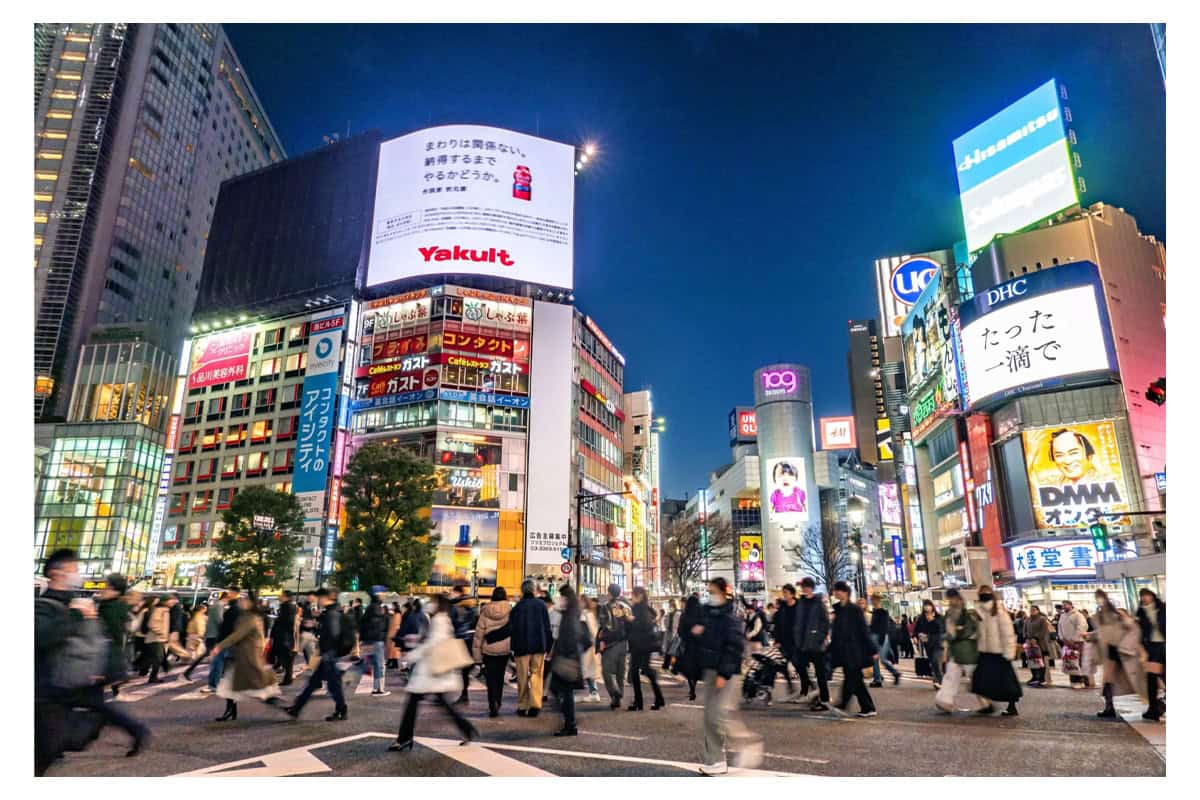
The flow of international tourism from East Asia is undergoing major transitions, and estimates of Chinese nationals entering Japan in 2026 will likely demonstrate these changes. Recently, different political and economic situations combined with changes in consumer preference have resulted in sudden changes to international travel. While international visitors from the West have kept some countries beneficial, other countries have experienced negative consequences. Tokyo has become a more popular travel destination than Kyoto, and with the new wealth in Asia, international travel is expected to continue growing. People from Asia are estimated to comprise a large portion of the international travel market in the future.
ackground: The Historical Weight of Asian Inbound Tourism
To fully comprehend the current fluctuations within the East Asian travel sector, it is essential to contextualise the historical importance of regional visitors to the Japanese economy. For the better part of the last decade, mainland China served as the undisputed engine of Japan’s inbound tourism growth. Prior to the global border closures, the demographic accounted for a monumental share of international arrivals. In 2019, Chinese arrivals reached a staggering 9.6 million, nearing a third of all foreign arrivals to the archipelago. This era was characterised by volume-heavy group tours and the cultural phenomenon of “bakugai,” or explosive buying, which fundamentally reshaped the retail strategies of major Japanese cities.
Following the end of strict border controls and China’s zero-COVID policies, the recovery trajectory appeared to be following historical precedents. The rapid resurgence saw mainland arrivals climb exponentially from 2.4 million in 2023 to a formidable 9.1 million in 2025. This rapid reclamation of market dominance pushed China’s share of Japan’s foreign-visitor market from 9.7% back up to 21.3% by the end of 2025. During this period, the expectation among industry analysts and government agencies was that traditional volume-based tourism would continue indefinitely, providing a reliable, albeit highly concentrated, source of foreign capital.
However, this reliance on a single primary source market created underlying vulnerabilities within the national tourism infrastructure. Entire sectors of the hospitality and retail industries became structurally dependent on the sheer volume of these specific arrivals. Consequently, when macroeconomic and geopolitical variables began to shift in late 2025, the Japanese tourism industry was forced into a rapid and complex recalibration, setting the stage for the dramatic demographic realignments observed throughout 2026.
Advertisement
Advertisement
The 2025–2026 Geopolitical Disruption and Market Contraction
The turning point for Chinese tourist arrivals in Japan 2026 can be traced directly to geopolitical developments in the final quarter of the preceding year. In November 2025, remarks by prominent political figures regarding regional security protocols and a potential Taiwan contingency drew sharp rebukes from Beijing. The diplomatic friction quickly cascaded into the economic sphere, mirroring previous instances where tourism has been utilised as a mechanism for geopolitical leverage, akin to historical contractions observed in South Korea and Palau.
The impact was immediate and severe. Growth reversed sharply in December 2025, with Chinese arrivals plummeting from 604,200 in December 2024 to just 330,400. This downward trajectory solidified into a structural trend throughout the first three quarters of 2026. Airlines and tour operators subsequently reduced Japan-bound capacity, cutting off the logistical pipelines that had previously facilitated mass group travel.
Advertisement
Advertisement
By the first seven months of 2026, Chinese visitors accounted for only 10.2% of the market, effectively halving their 2025 share. The contraction underscored a critical lesson in international tourism economics: while economic leverage can severely disrupt specific sectors, it does not necessarily guarantee total economic control over a diversified host nation. Japan’s subsequent resilience in the face of this targeted boycott has become a defining narrative of the 2026 fiscal year.
Latest Official Statistics: Analysing the 2026 Data Reports
Official data released by the Japan National Tourism Organization (JNTO) provides a granular look at the current state of the industry. In the first half of 2026, Japan welcomed 21.1 million foreign visitors, representing a slight 2.0 percent decrease from the previous year, directly attributable to the shortfall in mainland Chinese travellers. However, this aggregate figure masks profound shifts in the composition of these arrivals.
July 2026 saw a record-breaking 3.44 million overall foreign visitors, demonstrating the immense compensatory power of alternative markets. Yet, within that record month, only 428,200 visitors came from China, representing a steep 56.1% decline compared to July 2025. This divergence accelerated in the most recent reporting period. In August 2026, total tourist arrivals to Japan stood at 3,098,900. Concurrently, tourist arrivals from the Chinese mainland plunged by an astonishing 59% year-on-year to just 418,000.
Conversely, long-haul markets have surged, capitalising on favourable exchange rates. United States arrivals increased by 6.5%, and German arrivals rose by 7.3% through July 2026. Japan is currently on track to set an all-time annual record for American visitors. These statistics unequivocally confirm that while the aggregate volume of Asian inbound tourism has dwindled, the deficit is being robustly offset by a surge in Western arrivals, fundamentally altering the demographic profile of the average tourist in Japan.
How Tokyo Overtakes Kyoto in the New Tourism Landscape
The demographic shift has precipitated a profound geographic realignment within Japan. Historically, Kyoto stood alongside Tokyo as the twin pillar of the inbound tourism boom. However, as the profile of the inbound traveller changes, Tokyo is rapidly outpacing Kyoto and other regional centres in capturing the remaining, highly lucrative segments of Asian tourism.
Kyoto has long struggled with the infrastructural realities of its historical urban planning. The city’s narrow grid system and reliance on municipal buses proved disastrously inadequate for the volume of tourists experienced between 2018 and 2025. The resulting civic friction led to strict anti-overtourism measures, culminating in the highly publicised bans preventing tourists from entering private alleys in the historic Gion district. Kyoto’s defensive posture, while necessary for civic preservation, inherently capped its ability to adapt to sudden market shifts.
Advertisement
Advertisement
In contrast, Tokyo boasts a sprawling, multi-nodal transit infrastructure and an unparalleled density of luxury retail and high-end hospitality. As mass-market group tours from Asia dwindle, they are being replaced by independent, high-net-worth individuals (HNWIs). These affluent travellers eschew the crowded, checklist-style temple tours of Kyoto in favour of the bespoke culinary experiences, contemporary art scenes, and exclusive retail environments that Tokyo effortlessly provides. Consequently, Tokyo has successfully absorbed the upper echelon of the remaining Asian tourist demographic, transforming a crisis of volume into an opportunity for premium yield.
The Changing Profile of the Modern Traveller in Japan
The contraction in raw numbers has forced a qualitative evolution in the type of tourism Japan now hosts. The era of the budget-conscious, volume-driven group tour is rapidly fading. Today, the demographic driving the Chinese tourist arrivals in Japan 2026 is distinctly different from its pre-pandemic predecessor.
Modern travellers from the mainland are increasingly younger, highly educated, and fiercely independent. They utilise digital platforms to bypass traditional tour agencies, curating bespoke itineraries that prioritise cultural immersion over superficial sightseeing. Wealthy elites continue to visit, but their spending patterns have shifted drastically. Instead of stripping pharmacy shelves of mass-market cosmetics, they are investing in high-end experiential activities, such as private traditional craft workshops, exclusive omakase dining, and niche, luxury wellness retreats.
This shift mirrors the broader changes in the global travel market, where authenticity and exclusivity command significant premiums. By catering to this refined demographic, Tokyo has insulated itself against the raw volume drops that have severely impacted other regions. The city’s ability to offer hyper-modern convenience intertwined with elite cultural access makes it the ideal destination for the evolving, sophisticated Asian traveller.
Economic Implications: The Shift from Volume to Yield
The economic ramifications of these demographic shifts are profound, illustrating a transition from a volume-based economic model to a yield-based one. During the first half of 2026, foreign visitors injected an astonishing ¥4.9 trillion (approximately $30.4 billion) into the Japanese economy. Crucially, this economic windfall was achieved despite the massive reduction in Chinese visitor volume, proving that Japan did not need to replace every lost traveller—it merely needed to replace their aggregate spending.
The data highlights a stark contrast in per capita expenditure. In 2025, the average Chinese visitor spent ¥246,154 in Japan. In contrast, the average American visitor spent ¥341,383, and the average German spent ¥393,710. This disparity reached a historic milestone in the second quarter of 2026, when US travellers spent ¥384.8 billion, officially pushing past China in total aggregate spending for the first time.
Advertisement
Advertisement
The sustained weakness of the yen has been a primary catalyst for this yield explosion. With the yen fluctuating between ¥155 and ¥159 against the dollar throughout mid-2026, Japan has become an irresistibly premium-yet-affordable destination for long-haul travellers holding stronger currencies. Historically, a 1% real depreciation of the yen correlates with a 0.7% to 2.5% increase in tourist arrivals. This macroeconomic tailwind has effectively shielded the national economy from the targeted regional boycotts, validating the financial resilience of a diversified inbound portfolio.
Government Announcements and Policy Shifts
In response to the verified statistical realities of 2026, official government bodies, notably the Japan Tourism Agency (JTA) and the Ministry of Land, Infrastructure, Transport and Tourism, have formalised a strategic pivot. Recent policy directives explicitly state that the nation will no longer pursue arbitrary volume targets at the expense of civic harmony and environmental sustainability.
The government’s new framework heavily emphasises the concept of “value over volume.” Official initiatives are now designed to attract high-yielding visitors who stay longer, spend more per day, and are willing to travel beyond the heavily congested “Golden Route” (Tokyo-Kyoto-Osaka). By incentivising airlines to establish direct routes to regional airports and subsidising the development of luxury accommodations in rural prefectures, the government aims to disperse the economic benefits of tourism more equitably across the archipelago.
Furthermore, government reports have acknowledged the risks inherent in over-reliance on a single geopolitical bloc. The strategic diversification of source markets—aggressively marketing to North America, Europe, Southeast Asia, and the Middle East—is now a matter of official national economic security policy, ensuring that future diplomatic disputes cannot disproportionately cripple the domestic hospitality sector.
Industry Impact: Retail Sector Adaptations
Nowhere is the impact of dwindling Asian volume more visible than in Japan’s retail sector. Businesses that previously built their operational models entirely around the constant influx of tour buses have faced severe economic realities. For instance, Osaka’s average daily hotel room rate plummeted by 18.8% year-on-year in June 2026, directly reflecting the absence of regional volume. Similarly, tax-free sales to tourists dropped by roughly 20% in January 2026.
However, elite retail institutions are demonstrating remarkable agility. Major department store chains, such as Isetan Mitsukoshi, are quietly rewiring their entire approach to foreign shoppers. Moving away from the chaotic, volume-driven sales floors of the past, these retailers are implementing sophisticated digital strategies. By linking passport data directly to mobile applications, they are building long-term Customer Relationship Management (CRM) ecosystems.
Advertisement
Advertisement
This technological pivot allows retailers to track purchasing behaviours, offer personalised bespoke services, and maintain engagement with wealthy clients long after they return to their home countries. The transition from transactional retail to relationship-based experiential commerce ensures that while footfall may have decreased, the profit margins and lifetime value of the retained consumer base have significantly expanded.
Public Impact: A Healthy Reset for Local Communities
Beyond the macroeconomic data, the demographic shifts of 2026 have had a profound impact on the daily lives of Japanese citizens. For years, residents in hotspots like Kyoto, Kamakura, and parts of Osaka voiced intense frustration over the degradation of their civic environments due to unchecked overtourism. The sudden reduction in overwhelming tour group volumes has been widely embraced by the public as a necessary and “healthy reset”.
This reset has allowed municipalities to repair damaged infrastructure, refine local ordinances, and reclaim public spaces for domestic use. The alleviation of congestion on public transport and the return of a peaceful civic atmosphere have notably improved the quality of life for residents. Interestingly, this inbound recalibration coincides with a documented domestic shift; recent studies indicate that a significant portion of the Japanese public—up to 35%—has adopted a “never traveller” mindset regarding international trips. As a result, maintaining a high-quality, harmonious domestic environment has never been more politically and socially imperative.
By prioritising sustainable visitor metrics over raw volume, the government has successfully bridged the gap between economic necessity and public approval. The new tourism model proves that financial success does not have to come at the cost of local community well-being, fostering a more sustainable and mutually beneficial relationship between hosts and guests.
Future Outlook: Projections for the Q4 2026 Recharge
As the industry pivots toward the final months of the year, all official indicators point toward a strategic and highly profitable Q4 recharge. The concept of a “boom” in late 2026 is no longer defined by overwhelming crowds, but rather by exceptional economic yield. The upcoming October Golden Week, traditionally a period of massive outflow from mainland China, will serve as the premier stress test for Tokyo’s new value-driven model.
Projections suggest that while raw numbers of Chinese tourist arrivals in Japan 2026 will remain significantly lower than the 2019 and 2025 peaks, the aggregate revenue generated by these specific Q4 visitors will be exceptionally high. The winter season, featuring lucrative attractions such as Hokkaido’s premium ski resorts and Tokyo’s luxury retail winter illuminations, is perfectly aligned with the preferences of the modern, affluent Asian traveller.
Advertisement
Advertisement
Long-term econometric models suggest that Japan’s overall tourist arrivals will stabilise, trending around 3.3 million monthly through 2027 and 2028. Assuming the yen remains relatively stable and geopolitical tensions do not escalate further, Japan’s tourism sector has successfully completed a vital evolutionary leap. By transitioning from a fragile, volume-dependent market to a robust, diversified, high-yield economy, Tokyo has secured its position as the premier luxury destination in Asia, ensuring sustainable growth well into the next decade.
Advertisement
