
Moldova Joins Georgia and More as New European Travel Hubs Set the Stage for Extraordinary Escapes

Published
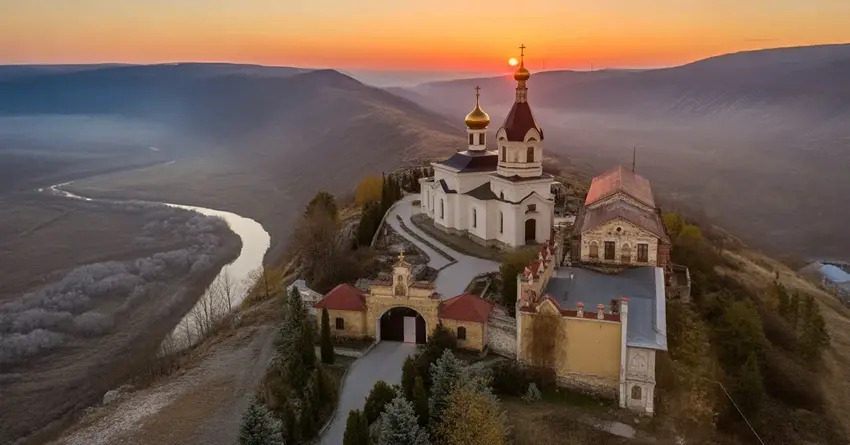 Image generated with Ai
Moldova joins Georgia and more emerging European travel hubs as new destinations set the stage for extraordinary escapes. Today, Moldova and Georgia are gaining attention alongside more European travel hubs offering fresh experiences for global travellers. From wine routes and historic cities to mountain landscapes and local gastronomy, these destinations create extraordinary escapes beyond Europe’s traditional hotspots. Moreover, Moldova joins this evolving travel story with its distinctive culture, heritage and countryside experiences. Meanwhile, Georgia and more new European travel hubs continue attracting travellers seeking memorable journeys. Travel And Tour World urges readers to explore the entire story and discover why these European travel hubs deserve attention.
Emerging European Travel Hubs: These Destinations Draw New Attention From Global Travellers
Europe’s tourism map is becoming more diverse as travellers increasingly look beyond the continent’s traditional gateway cities.
Countries across the Balkans and the wider Black Sea region are building stronger tourism offers around coastlines, historic towns, mountains, gastronomy, wine and wellness.
Moldova’s latest international tourism push fits into this broader European pattern. However, several other destinations already provide useful examples of how smaller European markets are attracting international visitors.
Advertisement
Advertisement
The following comparison focuses on Albania, Georgia, Montenegro and Serbia. Their official statistics use different definitions, so the figures should not be treated as a strict ranking.
Emerging European Travel Hubs: Five-Year Tourism Snapshot
| Destination | 2021 | 2022 | 2023 | 2024 | 2025 | Official measurement |
|---|---|---|---|---|---|---|
| Albania | 5,688,649 | 7,543,817 | 10,155,640 | 11,696,111 | 12,466,038 | Foreign citizen arrivals at borders |
| Georgia | 1.88m* | 5.43m | 7.10m | 7.40m | 7.80m | International non-resident traveller arrivals |
| Montenegro | 1.66m | 2.18m | 2.60m | 2.61m | 2.73m | Tourist arrivals |
| Serbia | 2,591,293 | 3,869,235 | 4,192,797 | 4,432,751 | 4,346,691 | Tourist arrivals |
*Georgia’s 2021 figure is the number of international non-resident traveller travels shown by Geostat; later figures are reported under the same broad inbound-travel framework. Albania’s figures count border entries rather than unique tourists. Serbia also changed its data source from a survey to the eTourist administrative system from 2022, affecting comparability.
Advertisement
Advertisement
The table shows a broad post-pandemic recovery across these markets. Albania recorded particularly strong growth in foreign border arrivals, reaching 12.47 million in 2025. Montenegro reached 2.73 million tourist arrivals, while Georgia recorded 7.8 million international non-resident traveller arrivals. Serbia recorded 4.35 million tourist arrivals in 2025.
Albania: Mediterranean Beaches Meet Historic Mountain Towns
Albania has become one of Europe’s most closely watched emerging tourism markets. Official border statistics show foreign citizen arrivals increasing from 5,688,649 in 2021 to 12,466,038 in 2025.
The progression was substantial. Albania recorded 7,543,817 foreign citizen arrivals in 2022, followed by 10,155,640 in 2023 and 11,696,111 in 2024. The 2025 total represented another 6.6% annual increase.
For travellers, the country offers a mixture of Adriatic and Ionian beaches, mountain scenery, archaeological heritage and historic settlements. Tirana works well as an arrival point for visitors wanting museums, cafés, restaurants and urban culture.
Travellers can continue towards Berat, known for its historic Ottoman-era architecture, or Gjirokastër, with its stone houses and castle setting. The Albanian Riviera provides a different experience, with destinations such as Himarë, Dhërmi and Sarandë offering coastal scenery.
Food is an important part of the journey. Travellers can try byrek, tavë kosi, qofte, seafood and regional cheeses. Coastal restaurants are particularly suitable for fresh fish and shellfish.
Advertisement
Advertisement
A seven-day itinerary could begin in Tirana before moving to Berat and Gjirokastër. The journey could then continue towards the southern coast before returning through the capital.
Albania’s tourism infrastructure is also expanding. INSTAT reported approximately 58,000 rooms and 130,000 bed places across accommodation establishments in 2023. The number of accommodation establishments was 24.7% higher than in 2021.
For international visitors, the figures require one important qualification. INSTAT defines arrivals as entries through air, sea and land border points. A person entering more than once can therefore be counted multiple times.
Albania’s Five-Year Tourism Data
| Year | Foreign citizen arrivals | Annual movement |
|---|---|---|
| 2021 | 5,688,649 | — |
| 2022 | 7,543,817 | +32.6% |
| 2023 | 10,155,640 | +34.6% |
| 2024 | 11,696,111 | +15.2% |
| 2025 | 12,466,038 | +6.6% |
The 2025 figures also show the dominance of European visitors. Europe accounted for 11,888,574 foreign citizen arrivals, or roughly 95.4% of the total. Southern Europe alone contributed 8,919,296 arrivals.
Georgia: A Black Sea Gateway With Mountains, Wine and Ancient Heritage
Georgia has developed a broad tourism proposition connecting the Black Sea with the Caucasus mountains, historic towns and centuries-old wine traditions.
Geostat recorded 7.8 million international non-resident traveller arrivals in 2025, up 5.9% from 2024. International visitor visits reached approximately 6.9 million, up 6.2%.
Advertisement
Advertisement
The five-year trajectory is notable. Georgia reported around 1.88 million international non-resident traveller travels in 2021, followed by 5.43 million in 2022. The total reached 7.1 million in 2023 and 7.4 million in 2024 before reaching 7.8 million in 2025.
Tbilisi is a natural starting point. Travellers can explore its old districts, sulphur bath area, churches, viewpoints and contemporary dining scene.
The journey can continue towards Mtskheta, an important historic centre, before heading to the Kakheti wine region. Georgia’s wine culture is especially distinctive because traditional winemaking in qvevri vessels forms part of the country’s recognised cultural heritage.
Food should be central to the itinerary. Travellers can sample khachapuri, khinkali, lobio, mtsvadi and churchkhela.
For mountain experiences, visitors can travel towards Kazbegi and Stepantsminda, where the landscape changes dramatically. Batumi offers a contrasting Black Sea experience with beaches, promenades, architecture and restaurants.
A seven-day journey can combine three geographic zones: Tbilisi and Mtskheta, Kakheti and the Caucasus mountains. A longer holiday can add Batumi and western Georgia.
Advertisement
Advertisement
Georgia’s Five-Year Tourism Data
| Year | International traveller arrivals | Annual change where officially reported |
|---|---|---|
| 2021 | 1.88m | — |
| 2022 | 5.43m | Strong post-pandemic recovery |
| 2023 | 7.10m | +30.3% |
| 2024 | 7.40m | +4.2% |
| 2025 | 7.80m | +5.9% |
The 2024 data also showed that travellers aged 31–50 represented 44.7% of international non-resident arrivals. In 2025, the same age group represented 43.6%.
Montenegro: Adriatic Coastlines With Mountain Escapes
Montenegro offers an unusually compact combination of beaches, medieval towns, national parks and mountain landscapes.
Official MONSTAT data recorded 2,728,564 tourist arrivals in 2025, compared with 2,606,854 in 2024. Foreign tourists accounted for 95.8% of total overnight stays in 2025.
The five-year sequence moved from approximately 1.66 million arrivals in 2021 to 2.18 million in 2022, 2.60 million in 2023, 2.61 million in 2024 and 2.73 million in 2025.
Kotor is an obvious starting point for first-time visitors. Its fortified old town sits beside the dramatic Bay of Kotor and provides a strong combination of architecture, scenery and waterfront dining.
Travellers can continue to Budva for beaches and nightlife, while Perast provides a smaller historic setting. Cetinje offers cultural and historical attractions away from the coast.
Advertisement
Advertisement
Mountain travellers can explore Durmitor National Park, while Žabljak works as a base for hiking and outdoor activities.
Montenegrin cuisine combines Mediterranean and Balkan influences. Travellers can look for Njeguški pršut, Njeguški cheese, seafood, grilled meats, cicvara and kačamak.
For accommodation, travellers can divide their stay between Kotor or Budva and a mountain base such as Žabljak.
The official 2025 statistics show that 92.6% of overnight stays were recorded in seaside resorts, compared with 2.8% in mountain resorts and 2.7% in the capital.
Montenegro’s Five-Year Tourism Data
| Year | Tourist arrivals | Approximate annual movement |
|---|---|---|
| 2021 | 1,660,000 | — |
| 2022 | 2,180,000 | +31.3% |
| 2023 | 2,600,000 | +19.3% |
| 2024 | 2,606,854 | Stable |
| 2025 | 2,728,564 | +4.7% |
Montenegro’s 2025 foreign overnight market was led by Serbia at 23.4%, followed by Russia at 16.4%, Bosnia and Herzegovina at 8.1%, Germany at 4.6%, Turkey at 4.3%, Ukraine at 4.3% and the United Kingdom at 4.1%.
Serbia: City Breaks, Spas, Wine Regions and Mountain Resorts
Serbia provides a different model for an emerging European travel hub because its tourism offer is centred around cities, spas, mountains, gastronomy and cultural experiences rather than a single coastal attraction.
Advertisement
Advertisement
Official Serbian statistics show tourist arrivals rising from 2,591,293 in 2021 to 3,869,235 in 2022 and 4,192,797 in 2023. Arrivals reached 4,432,751 in 2024 before easing to 4,346,691 in 2025.
Serbia recorded 12,282,212 tourist overnight stays in 2025, including 6,209,307 domestic and 6,072,905 foreign overnight stays.
Belgrade is the most practical gateway for international visitors. Travellers can explore the Belgrade Fortress, Kalemegdan, riverside districts, museums, cafés and restaurants.
Novi Sad provides a slower city-break alternative, particularly around Petrovaradin Fortress and the Danube.
For wellness travel, Vrnjačka Banja offers spa experiences. For mountains, travellers can consider Zlatibor and Kopaonik.
Food travellers can explore ćevapi, pljeskavica, sarma, kajmak, ajvar and traditional pastries. Serbia’s wine regions also provide opportunities for winery visits and tastings.
Advertisement
Advertisement
A seven-day itinerary could begin with three nights in Belgrade, followed by Novi Sad and nearby wine country. The final part could focus on Zlatibor or a spa destination.
Serbia’s official statistics require a methodological note. The Statistical Office changed from the TU-11 survey to the administrative eTourist source beginning in 2022. Consequently, comparisons between 2021 and later years are not fully equivalent at every level.
Serbia’s Five-Year Tourism Data
| Year | Tourist arrivals | Tourist overnight stays |
|---|---|---|
| 2021 | 2,591,293 | 8,162,430 |
| 2022 | 3,869,235 | 12,245,613 |
| 2023 | 4,192,797 | 12,440,935 |
| 2024 | 4,432,751 | 12,662,151 |
| 2025 | 4,346,691 | 12,282,212 |
In 2024, foreign tourists generated 6,097,749 overnight stays, representing 48% of the national total. Belgrade alone recorded more than 3.19 million foreign tourist overnight stays.
Five-Year Comparison: What the Numbers Reveal
| Destination | First year | Latest year | Change across period | Key tourism character |
|---|---|---|---|---|
| Albania | 5.69m | 12.47m | More than doubled | Coast, heritage, mountains |
| Georgia | 1.88m | 7.80m | More than quadrupled | Wine, mountains, culture, Black Sea |
| Montenegro | 1.66m | 2.73m | About +64% | Adriatic, heritage, mountains |
| Serbia | 2.59m | 4.35m | About +68% | Cities, spas, mountains, gastronomy |
These figures should not be interpreted as a league table because the statistical definitions differ. Albania measures border arrivals of foreign citizens, Georgia reports international non-resident traveller arrivals, while Montenegro and Serbia publish tourist-arrival statistics based on accommodation-related systems.
Detailed Travel Planning Guide
| Destination | Ideal trip length | Main base | Major experiences | Food focus | Suggested second base |
|---|---|---|---|---|---|
| Albania | 7–10 days | Tirana | Riviera, Berat, Gjirokastër | Byrek, tavë kosi, seafood | Sarandë/Himarë |
| Georgia | 7–10 days | Tbilisi | Wine, mountains, heritage | Khachapuri, khinkali | Kazbegi/Kakheti |
| Montenegro | 7 days | Kotor | Bay, beaches, old towns | Seafood, pršut, cheese | Žabljak |
| Serbia | 7 days | Belgrade | City, spas, mountains | Ćevapi, ajvar, kajmak | Zlatibor/Novi Sad |
A Seven-Day Multi-Destination Travel Concept
Travellers interested in discovering these emerging European markets could approach them as separate holidays rather than trying to combine all four into one rushed journey.
Day 1–2: Albania
Start in Tirana. Explore the central city, museums and local restaurants. On the second day, travel towards Berat or another heritage destination.
Advertisement
Advertisement
Day 3–4: Georgia
Begin in Tbilisi and explore its historic neighbourhoods. Dedicate the second day to Mtskheta or Kakheti, depending on whether heritage or wine is the priority.
Day 5: Montenegro
Use Kotor as the base for exploring the old town and Bay of Kotor. A coastal restaurant can provide an introduction to local seafood and regional cuisine.
Day 6: Serbia
Explore Belgrade’s historic centre and riverside districts. Spend the evening sampling Serbian cuisine.
Day 7: Mountain or Wellness Extension
Travellers can extend their Serbia trip towards Zlatibor or a spa destination. Alternatively, Montenegro can be extended towards Durmitor for a nature-focused itinerary.
For a more practical holiday, each country should instead receive its own seven-day itinerary. That allows travellers to reduce transit time and experience regional destinations more deeply.
Where Travellers Can Stay
Accommodation choices vary considerably between these markets.
Advertisement
Advertisement
In Albania, travellers can choose from city hotels in Tirana, boutique properties in historic towns and coastal accommodation along the Riviera. INSTAT reported about 130,000 available bed places across accommodation establishments in 2023.
In Georgia, Tbilisi provides the broadest urban accommodation choice. Kakheti adds vineyard and countryside properties, while mountain areas provide guesthouses and smaller accommodation businesses.
In Montenegro, coastal accommodation dominates the tourism market. Official 2025 data showed 92.6% of overnight stays in seaside resorts. Mountain accommodation therefore provides a distinctly different travel environment.
In Serbia, visitors can combine urban hotels in Belgrade and Novi Sad with spa accommodation and mountain resorts. The country’s accommodation network supports both city breaks and longer regional journeys.
What Travellers Should Know About Seasonality
| Destination | Strong travel period | Alternative season | Best suited to |
|---|---|---|---|
| Albania | Late spring to early autumn | Spring and autumn | Beaches, heritage, food |
| Georgia | Spring to autumn | Winter for mountains | Culture, wine, hiking |
| Montenegro | Late spring to early autumn | Spring/autumn for heritage | Coast and mountains |
| Serbia | Spring, summer, autumn | Winter for ski/spa trips | Cities, food, wellness |
Summer is particularly important for Albania and Montenegro because of their coastal tourism.
Georgia offers greater seasonal diversity because mountain resorts can support winter travel, while its cities and wine regions work well during milder months.
Advertisement
Advertisement
Serbia also has a broader four-season proposition, with spas, cultural attractions and urban tourism complemented by winter mountain destinations.
Why These Destinations Matter for Moldova’s Travel Story
Moldova is entering a European tourism environment where travellers have increasingly varied choices beyond traditional Western European capitals.
Albania demonstrates how coastlines, heritage and mountain landscapes can support a broader tourism offer.
Georgia shows how wine, food, culture and mountain tourism can operate together across one destination.
Montenegro demonstrates the strength of combining a compact coastline with historic towns and national parks.
Serbia illustrates how cities, wellness resorts, gastronomy and mountain destinations can create a diversified visitor economy.
Advertisement
Advertisement
Moldova has its own distinctive combination of wine, gastronomy, cultural heritage and countryside experiences. Its challenge is not simply attracting attention. It is converting international awareness into longer stays, regional travel and spending across local tourism businesses.
The latest tourism promotion therefore provides a useful moment to examine Moldova alongside other emerging European destinations without treating them as identical markets.
For global travellers, the larger opportunity is the ability to discover a less conventional side of Europe through wine routes, local food, heritage towns, mountains, wellness experiences and smaller cities.
The official statistics show that several of these destinations have already built substantial international visitor flows. Their different tourism models also demonstrate that there is no single formula for becoming a recognised European travel hub.
Conclusion
Moldova joins Georgia and more new European travel hubs as travellers look beyond familiar routes for extraordinary escapes. Together, these destinations offer wine, gastronomy, heritage, mountains, coastlines and authentic local experiences. Moldova brings its own distinctive character through historic attractions, countryside journeys and celebrated wine traditions. Georgia adds a compelling mix of Caucasus landscapes, ancient culture and culinary experiences. Meanwhile, other emerging European travel hubs provide even more choices for adventurous tourists. For global travellers planning their next European journey, Moldova, Georgia and more destinations are creating fresh reasons to explore. Travel And Tour World encourages readers to look beyond the usual European itinerary and discover these evolving travel experiences.
Advertisement
